What happens at a wedding reception?
Most receptions follow the same order: cocktail hour, the grand entrance and first dance, dinner with the toasts, parent dances, the cake cutting, then open dancing until the last dance and the send-off. Some couples hold the first dance until after dinner or give the toasts between courses; keeping the formalities together matters more than the exact order. The ceremony is where you marry, and most American ceremonies last 20 to 30 minutes. The reception is where you host, so most of the planning goes into it.
What are the main wedding reception traditions?
Most American receptions include some of the traditions below. None is required, so keep the ones that mean something to you and your families.
The grand entrance. The wedding party is announced in pairs, with the maid of honor and best man last, then the couple.
Greeting every guest. A receiving line isn't required, but the Emily Post Institute says the couple should still greet and thank every guest. Without one, visit each table during dinner.
The toasts. The host usually speaks first, often a parent, then the maid of honor and best man, and the couple may close with a thank you. The Emily Post Institute puts toasts at the start of the meal or just before dessert.
The first dance and parent dances. The first dance comes straight after the entrance or after dinner. Parent dances usually follow dinner, and then the floor opens to everyone.
Cutting the cake. Usually just before dessert, announced so guests can gather. The Emily Post Institute notes that it signals guests may leave, so a late cutting keeps older guests waiting.
The bouquet and garter toss. Optional. If you include them, they fit during the dancing.
The send-off. Guests line the exit with sparklers, bubbles or ribbon wands. Check the venue's rules before buying sparklers: they burn at about 2,000 degrees Fahrenheit, according to the Consumer Product Safety Commission.
How do you plan a wedding reception?
Work back from the dates you can't move: the venue's end time and the caterer's final headcount deadline. The Emily Post Institute's planning timeline puts the venue and vendor bookings a year or more out and the seating plan in the final weeks, and the rest falls in between.
A year or more before: choose the reception venue and book the caterer, musicians, florist and photographer. Ask the venue about its end time, noise rules, overtime fees and what its package includes.
Six to nine months before: choose the menu and the style of service, whether plated, buffet or family style.
One to three months before: walk the room with the site manager to plan the layout, lighting and sound, settle linens and centerpieces, and confirm who will give toasts.
Three to four weeks before: your RSVP deadline. Our guide to the wedding RSVP deadline shows how to set it from your caterer's headcount date.
Seven to fourteen days before: give the caterer your final headcount, on the date your contract sets.
The final week: finish the seating chart once the count is in, then print escort cards or place cards. If your caterer wants table assignments with the headcount, the chart moves up to that date.
Before the day: write out the reception timeline with names, times and music cues, and share it with every vendor working that day.
What stationery does a wedding reception need?
Each piece has one job, so plan them by where guests will see them.
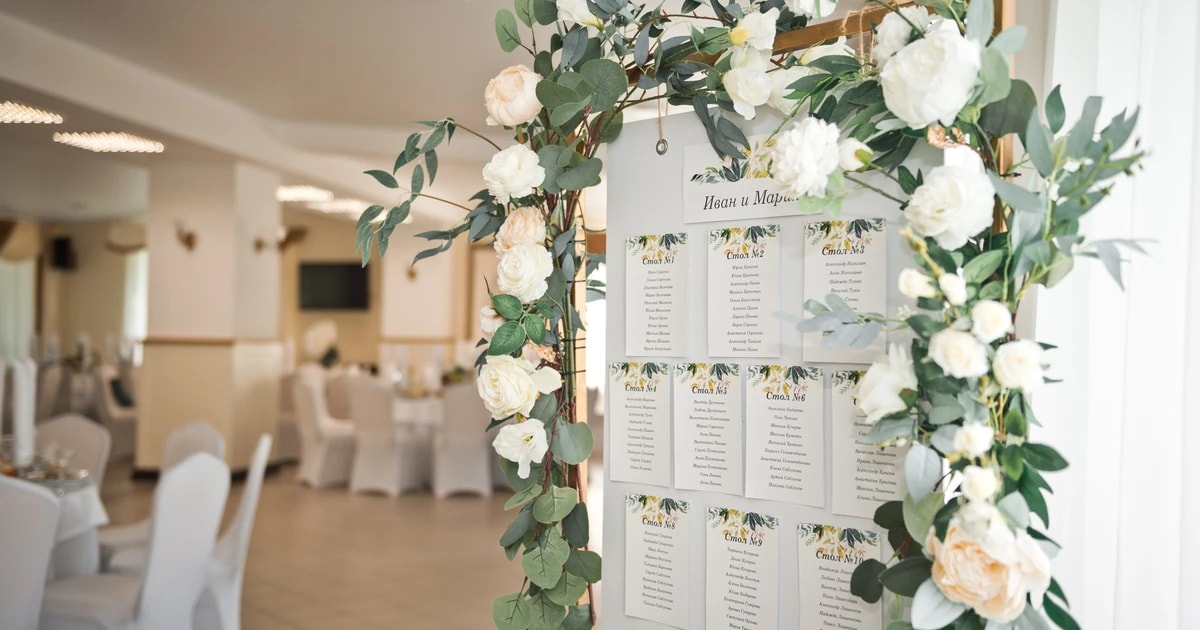
At the entrance: a wedding seating chart listing guests alphabetically with their table numbers, or escort cards, which are easier to change if someone drops out late.
At each seat: place cards, if you assign seats rather than tables. Most weddings need them only for a plated dinner with meal choices.
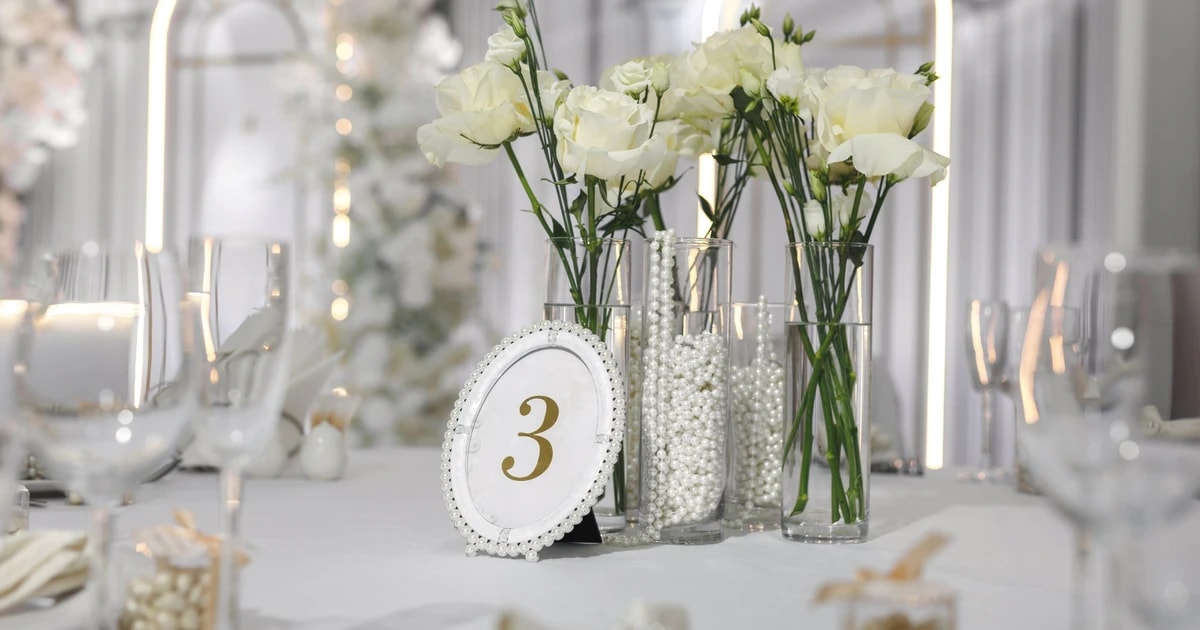
On every table: table numbers guests can read from across the room, and menu cards for a plated or family-style dinner, or one menu sign for a buffet.
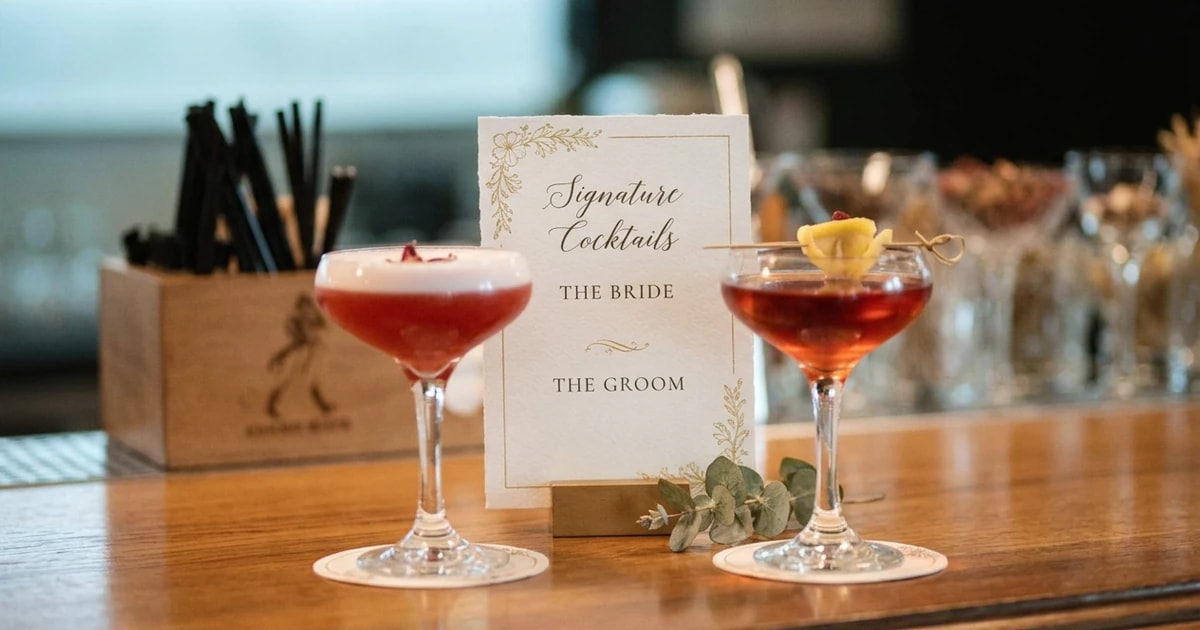
At the bar: a bar menu listing what is being poured, including any signature cocktails.
Around the room: reception signs for the cards and gifts table, the guestbook, an in loving memory table or the send-off.
Choosing everything as one set keeps the day consistent: our wedding day stationery bundle includes programs, place cards, menus, bar menus and table numbers in one design.
Where should you start?
With your venue and caterer, because their contracts fix the dates everything else hangs on. Once the replies are in, our guide on how to make a wedding seating chart takes you from the final guest list to the sign at the entrance. For the ceremony before the reception, see our wedding ceremony guides, and for invitations and RSVPs, our wedding etiquette guides.
How these guides are researched
Every guide is written by Tamjeeda Batool, who has covered the wedding industry for four years, and is checked against primary sources rather than other wedding blogs: the Emily Post Institute for etiquette and, where safety is involved, government agencies such as the Consumer Product Safety Commission. Where customs differ, such as the order of the toasts or when the first dance happens, the guides present the options rather than picking one as correct.