
Wedding Ceremony Order: A Complete Outline of Every Part
A wedding ceremony runs prelude, processional, welcome, readings, address, vows, rings, pronouncement, kiss, recessional. Most American ceremonies last 20 to 30 minutes. A Catholic Mass runs 60 to 90, a civil ceremony can finish in 10. The order barely changes; what changes is how much sits inside it.
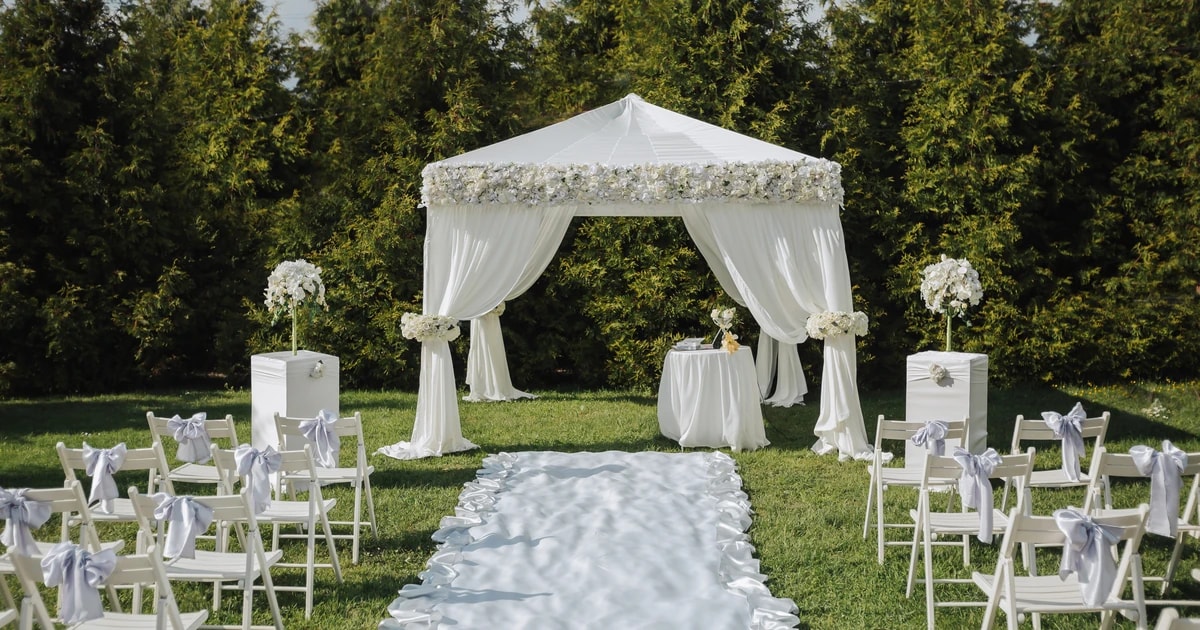
The wedding ceremony order is one of the few parts of a wedding with a genuine standard sequence. Caterers, florists and playlists are open questions. The ceremony is not: fourteen or so parts in a settled order, with your officiant making most of the structural calls.
What couples need is rarely the sequence. It is the timing, which decides when guests arrive and when cocktail hour starts, and the processional, which decides who walks with whom and is a family conversation rather than a logistical one. This guide covers both, plus how the order shifts across Catholic, Protestant, Jewish, civil and secular ceremonies, and how to put it on a program guests can follow.
What is the order of a wedding ceremony?
A wedding ceremony follows the same core sequence almost everywhere: the prelude, processional, welcome, readings, the officiant’s address, the declaration of intent, vows, ring exchange, pronouncement, kiss and recessional. Religious ceremonies add elements inside that frame rather than rearranging it.
Here is the full outline with typical timings. The clock starts when the processional music changes, not when guests sit down.
Part of the ceremony | What happens | Typical length |
Prelude | Guests arrive and are seated to background music. | 20 to 30 min before |
Seating of the parents | Grandparents, groom’s parents, then the mother of the bride last. | 2 to 3 min |
Processional | Officiant, partner one, wedding party, children, then partner two. | 3 to 5 min |
Welcome and opening words | The officiant greets guests and states why everyone is here. | 2 to 3 min |
Readings | One to three. Scripture, poetry or prose. | 2 to 3 min each |
Address or homily | The officiant speaks about marriage, often personally. | 5 to 10 min |
Declaration of intent | The "I do" moment. Legally required in some form. | 1 to 2 min |
Vows | Traditional, written, or repeated after the officiant. | 2 to 4 min |
Ring exchange | Rings blessed or handed over, then placed with a line each. | 2 to 3 min |
Unity ritual (optional) | Candle, sand, handfasting, wine. Sits after the rings. | 3 to 5 min |
Pronouncement | The officiant declares you married. | Under 1 min |
The kiss | Self-explanatory, and usually the loudest part. | Under 1 min |
Signing the license | Some sign before guests, most sign privately after. | 2 to 5 min if public |
Recessional | Couple first, wedding party in reverse, then family rows. | 2 to 4 min |
That adds up to a 20 to 30 minute ceremony for most non-religious weddings. What moves the total is the address, the number of readings, and whether a full liturgy sits inside the frame.
A planning note: build in five minutes of slack. Ceremonies rarely start on time, because the last three guests are always parking. If the invitation says four o’clock, tell your photographer to expect five past.
If it helps to have this on paper at the rehearsal, the same outline is available as a free downloadable ceremony planner you can fill in with your own names, readings and timings.
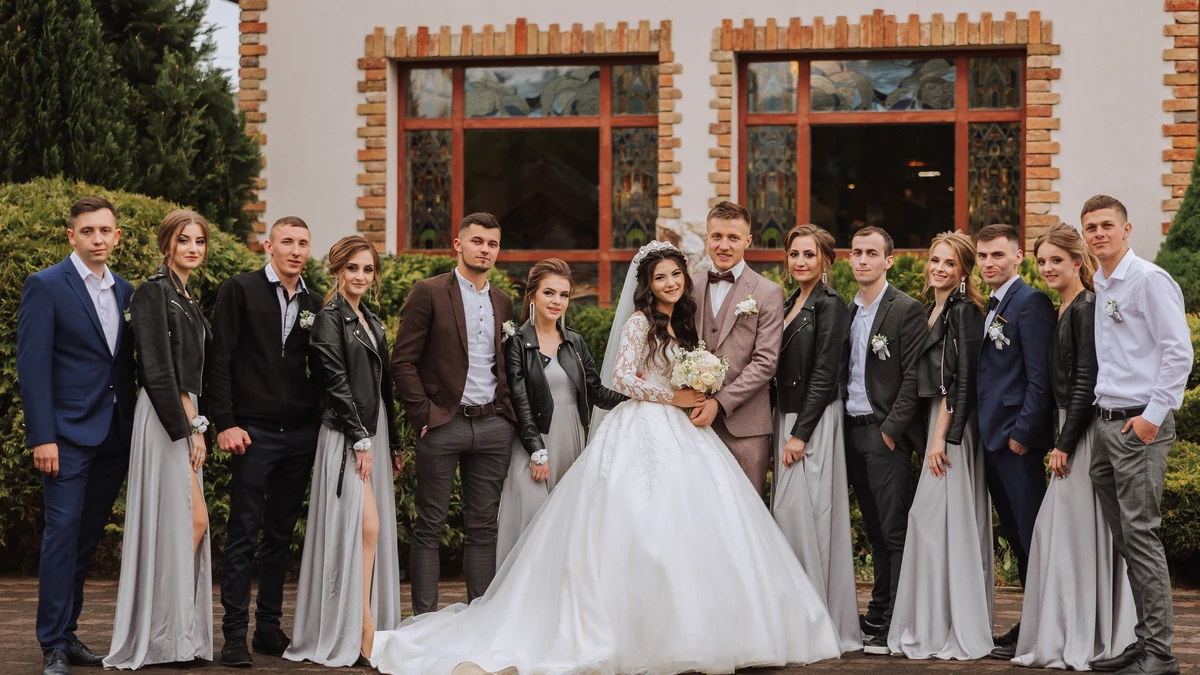
How long is a wedding ceremony?
Most American wedding ceremonies last 20 to 30 minutes. A civil ceremony can be over in 10, a Protestant church service runs 25 to 40, and a Catholic wedding inside a full Mass takes 60 to 90. The difference is almost entirely liturgy, not sentiment. Here is what to budget by type.
Civil ceremony: 10 to 20 minutes
A courthouse ceremony covers the legal minimum: declaration of intent, vows, pronouncement, signing. Some officiants add a short reading. No homily and usually no music, which is why it finishes so quickly.
Secular or non-religious ceremony: 20 to 30 minutes
The most common format for American weddings now. The structure matches the outline above, with the officiant’s address doing the work a homily would do in church. Couples wanting 20 minutes rather than 30 cut to one reading and ask the officiant to keep the address to five.
Protestant church ceremony: 25 to 40 minutes
Longer because of the sermon, hymns and prayers, and because the church usually has its own order of service you work within rather than around. Add 15 to 20 minutes if communion is included.
Catholic ceremony: 30 to 45 minutes without Mass, 60 to 90 with
The biggest variable in the whole topic, and it comes down to one question: Mass or no Mass. Without Mass, the ceremony runs through the Introductory Rites, Liturgy of the Word, Celebration of Matrimony and a final blessing, landing around 30 to 45 minutes. Add the Liturgy of the Eucharist and you are into a full nuptial Mass of 60 to 90, because communion for a few hundred guests takes real time.
Jewish ceremony: 30 to 45 minutes under the chuppah
The chuppah ceremony itself is short. What extends the day is everything around it: the kabbalat panim receptions, the ketubah signing, the bedeken, and the yichud afterwards. Guests often attend for two to three hours even though the ceremony runs under an hour.
Hindu ceremony: 1.5 to 3 hours, sometimes longer
Hindu ceremonies are structured very differently, with the baraat, ganesh puja, kanyadaan, saptapadi and mangalsutra each carrying their own ritual weight. Three hours is common and multi-day celebrations are standard. Your priest sets the running order, not any general guide.
Guests and timing: print the ceremony start time, not an arrival time. Guests reliably turn up 15 to 20 minutes early anyway. A wedding welcome sign at the entrance carrying the start time and a seating instruction keeps things moving better than any line on the invitation.
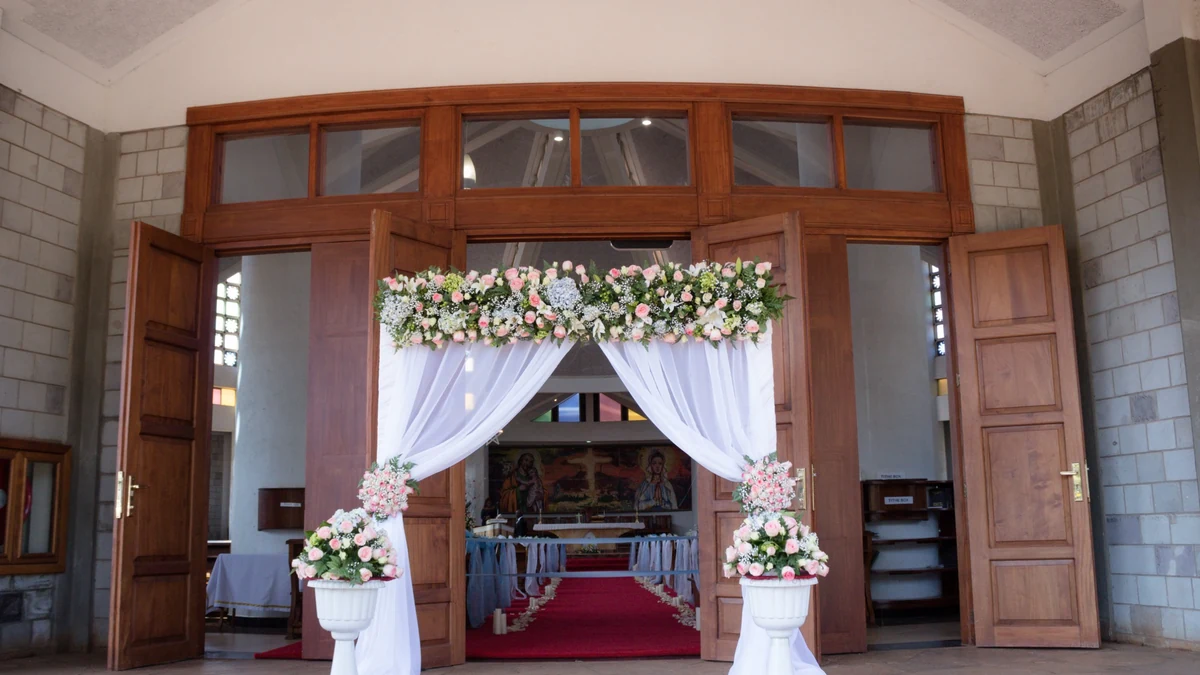
What is the correct order for a wedding processional?
The traditional processional order is: officiant, partner one and best man, grandparents, parents, bridesmaids, groomsmen, maid of honor, ring bearer, flower girl, then partner two escorted by their father. Variations are common and none of them is incorrect.
This is the part couples rewrite most, because it involves family rather than logistics. Work through it with the people concerned before the rehearsal, not during it.
The traditional order, step by step
Officiant takes their place, from the side or down the aisle.
Partner one and the best man enter, usually from a side door.
Grandparents are seated, bride’s side first.
The groom's parents walk together and are seated.
Mother of the bride, escorted in last. The aisle is now closed.
Bridesmaids, singly or paired with the groomsmen.
Maid or matron of honor, alone, immediately before the children.
Ring bearer, then flower girl.
Partner two, escorted by their father, as the music changes.
“Some churches seat the grandparents and parents first and bring the officiant and partner one in afterwards, which is the order in the outline table above. Both are correct, so follow your officiant’s lead.”
Two details people get wrong. The maid of honor does not walk with the best man, despite how it looks in films; she walks alone. And seating the mother of the bride last is a signal, not just a courtesy, which is why late arrivals go to the back rather than down the aisle.
When parents are divorced
If everyone gets along, divorced parents can share the front row. If not, the mother sits in the front row, with her family immediately behind. The father, after escorting his daughter, sits a few rows further back with his own family. Emily Post’s wedding ceremony seating arrangements cover the full protocol, including stepparents. The convention holds even when the father is hosting, which surprises people.
If relations are strained, give each parent a distinct role. One escorts, the other does a reading or lights a unity candle. Dividing honors is far less loaded than dividing the aisle.
When both parents walk a partner in
Increasingly common and entirely correct. Both parents walk either side, father on the left arm and mother on the right in the traditional Jewish arrangement, which many non-Jewish couples have adopted because it looks balanced.
If a parent has died, or is not part of your life, the escort can be anyone: a stepparent, a sibling, a grandparent, a close friend, or nobody at all. Emily Post is clear that walking alone is entirely acceptable, and a growing number of couples now walk in together, which neatly sidesteps the whole question.
Same-sex couples
There is no traditional order to follow, which most couples find freeing. Three arrangements work well:
Both partners process separately, each escorted by their own parents. Equal and symmetrical.
Both partners walk in together after the wedding party, putting the focus on the couple rather than who is given away.
One partner waits at the front and the other processes, keeping the traditional shape.
Attendants do not need splitting by gender. Mixed wedding parties on both sides are now the norm.
Blended families and children
If either of you has children, giving them a role does more for how the day feels than almost anything else. Older children can walk a parent in, act as attendants, or escort grandparents. Younger ones work better as ring bearers and flower girls, with a trusted adult in the front row to collect them. One rule: a child under about four has an even chance of refusing to walk at all, so have a plan that does not depend on them.
The recessional
The recessional reverses the processional, with one difference. The couple goes first.
The couple, together.
Flower girl and ring bearer, if still cooperating.
Maid of honor and best man, paired.
Bridesmaids and groomsmen, paired.
Both sets of parents.
Grandparents, then guests row by row from the front.
The officiant usually follows the families out, and guests then leave row by row from the front, which stops the back of the room emptying before the family.
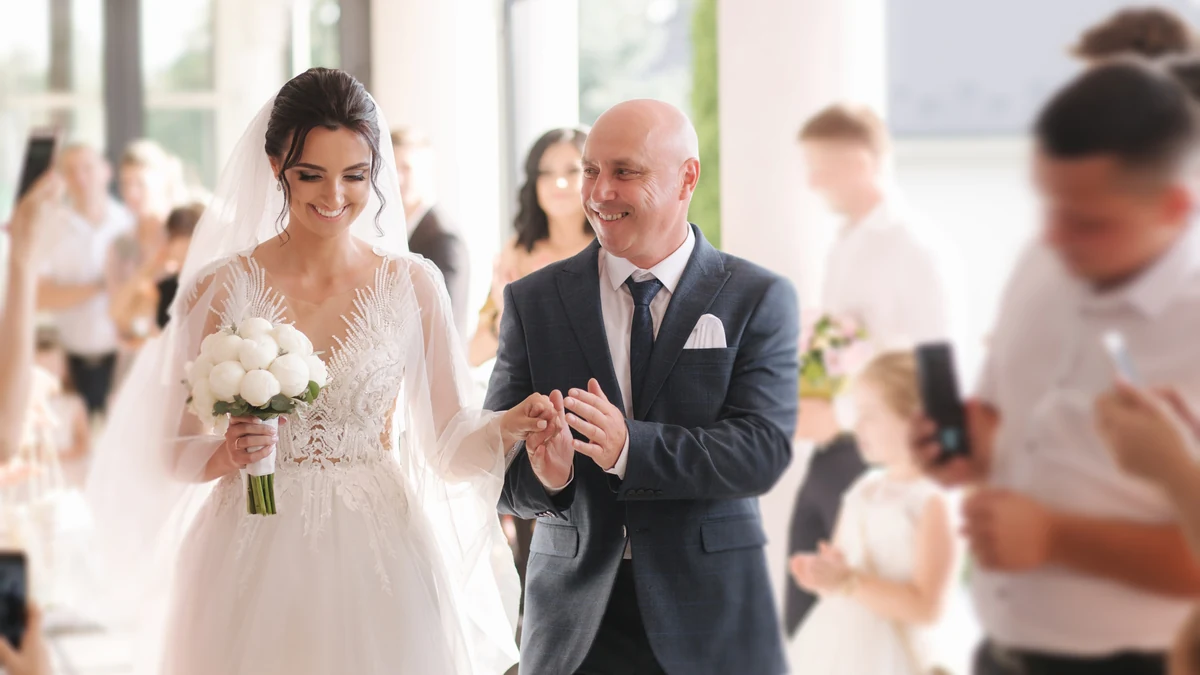
What is the prelude in a wedding ceremony?
The prelude is the music played while guests arrive and take their seats, starting 20 to 30 minutes before the ceremony. It is not part of the ceremony itself. Its job is to fill the room with something other than silence.
Three or four pieces covers it, instrumental rather than vocal, quiet enough to talk over. Strings, solo piano and acoustic guitar all work. The prelude ends when the parents are seated, and the processional music is a deliberate change of tone that tells guests the ceremony is starting. They stand when partner two enters. This is also when ushers hand out programs, which guests read during the prelude.
How does a religious ceremony order differ from a civil one?
A civil ceremony covers the legal essentials: consent, vows, pronouncement and signing. A religious ceremony keeps all of that and wraps it in liturgy, scripture, blessings and sometimes communion. The legal core is identical; everything around it differs.
Catholic
A Catholic wedding follows the Order of Celebrating Matrimony. The Introductory Rites, then the Liturgy of the Word with an Old Testament reading, psalm, New Testament reading and Gospel, then the Celebration of Matrimony itself, which has four parts: the Questions before the Consent, the Consent, the Reception of the Consent, and the Blessing and Giving of Rings. The USCCB sets out the full order within Mass if you want the detail.
Two things worth knowing. The Penitential Act is omitted at a wedding, which is unusual. And the Nuptial Blessing follows the Lord’s Prayer when there is a Mass, but the intercessions when there is not. Your parish will confirm which applies.
Protestant and Episcopal
Most Protestant ceremonies follow a recognizable version of the sequence in the outline above, with hymns, prayers and a sermon worked in. The Episcopal rite, The Celebration and Blessing of a Marriage, is set out in the Book of Common Prayer and is worth reading before you meet your priest, since much of the wording is fixed.
Methodist, Lutheran, Presbyterian and Baptist ceremonies vary in wording but share the shape. How much you can personalize depends far more on the individual church than the denomination.
Jewish
A Jewish wedding is really two ceremonies joined together. Kiddushin, the betrothal, is completed when the ring is given before witnesses. Nisuin, the marriage itself, is completed by the seven blessings, the sheva brachot. Reading the ketubah aloud bridges them, which is why it sits in the middle rather than the start.
Around that core sit the chuppah, the circling, the breaking of the glass and the yichud. Practice varies between Reform, Conservative and Orthodox communities, and Chabad’s account of the traditional order differs from the Reform one in several details. Your rabbi is the authority on which it applies.
Civil and secular
A civil ceremony is bound by state law rather than liturgy. Most states require an officiant, a declaration of intent in some recognizable form, a signed license, and in some jurisdictions two witnesses. Beyond that you are free.
Secular ceremonies led by a humanist or independent celebrant use the same legal core and build a fuller service around it, with readings chosen by the couple, a personal address and often a unity ritual. Structurally they look like a Protestant service with the theology removed.
Worth asking early: most Catholic parishes and many churches have rules on readings, music and photography that will shape your program. Ask at your first meeting, not after you have chosen a Beatles song for the recessional.
What optional elements can you add, and where do they fit?
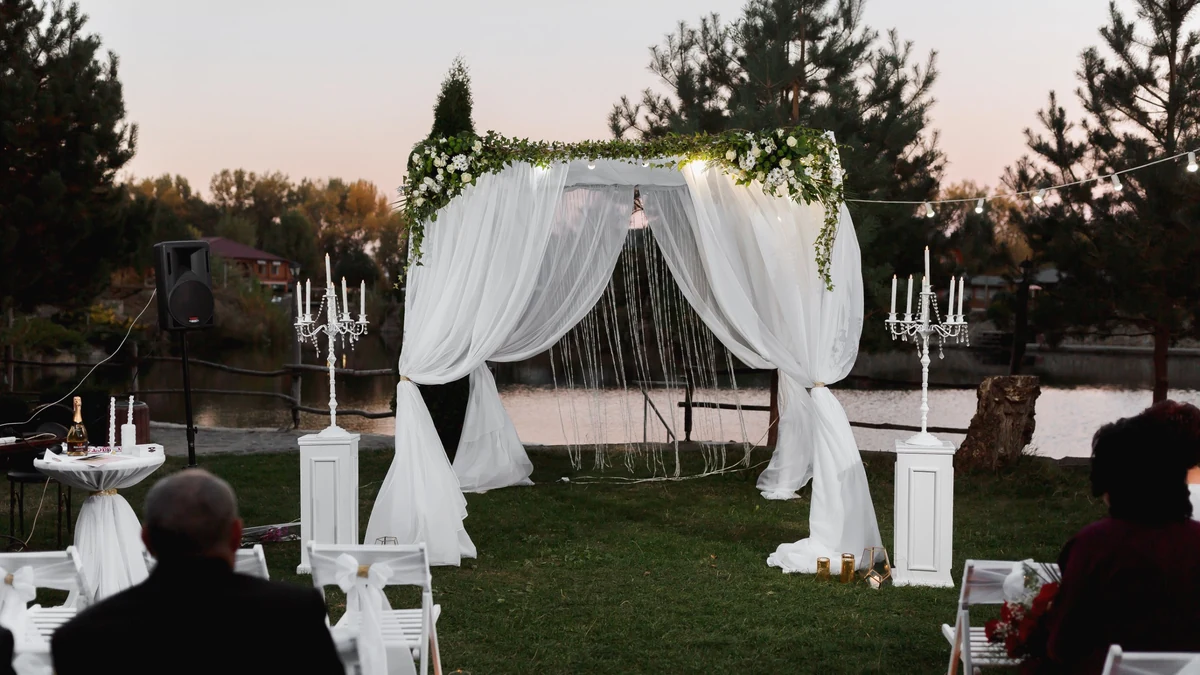
Optional elements almost all sit in the same place: after the ring exchange and before the pronouncement. That gap is the natural home for anything symbolic, because the legal work is done and the celebration has not started.
Unity rituals
Unity candle. Two tapers lit by the mothers during the processional, joined into one central candle. Does not work outdoors in any wind at all.
Sand ceremony. Two colors poured into one vessel. Survives weather that would defeat a candle.
Handfasting. Hands bound with cord or ribbon while vows are spoken. Celtic in origin and the source of "tying the knot." Common in secular ceremonies and increasingly in church ones.
Wine, tree planting or a time capsule. Same principle, three to five minutes each.
Readings
One to three is the usual range. More than three and the ceremony starts to feel like a recital. Give each reader the printed text in advance, ask them to read it aloud once at home, and put the title and author in the program.
Music moments
Beyond the prelude, processional and recessional, couples sometimes add a song during the signing or a unity candle. It covers a gap where nothing is happening visually and guests would otherwise be watching someone write.
Honoring someone who has died
A reserved seat with a single flower, a line in the program, or a candle lit during the prelude. The program is often gentlest, because it lets guests take the moment privately rather than collectively.
How do you put the ceremony order on your program?
A wedding program lists the order of events, names the people taking part, and credits readings and music. Usually one page, folded or flat. It exists so guests can follow a ceremony they may not know well, so keep it to the order and the names.
Emily Post’s guidance on printed items for your wedding is clear on what belongs: the sequence, who performs each part, and the title and author of readings and music. If guests are expected to join a response or hymn, print the words.
What to include
Your names, the date, and the venue
The ceremony order, from processional to recessional
Names of readings and music, with authors and composers
The wedding party, names only
The officiant
Any words guests are asked to say or sing
A short tribute to someone who has died, if you want one
What to leave off
Registry information, your wedding website, and anything that belongs on a details card. The same rule applies as to the invitation itself: a program is not a logistics document. Our guide to wording your wedding invitations covers where RSVP details and dress code actually belong.
When a program genuinely helps
A program earns its place when guests need it: interfaith or multicultural ceremonies, unfamiliar rituals, or a long wedding party you want named. Emily Post notes that the program is the best place to explain ceremony traditions, which is exactly right. A two-line note on what the chuppah means does more for a guest than any explanation afterwards.
If you are printing programs, print them with everything else. Our wedding program templates match the rest of the day-of stationery, so the order of service, signage and menus belong to the same wedding.
Quantity: print for about two thirds of your guest count, not one per person. Couples share, and a stack of leftovers is the normal outcome. Round up if your ceremony has responses guests need to read.
Programs sit alongside the rest of your day-of paper. Our ceremony and reception templates cover programs, menus, place cards, seating charts and signage in matching designs, which is the simplest way to keep everything consistent.
Where the program fits in your stationery timeline
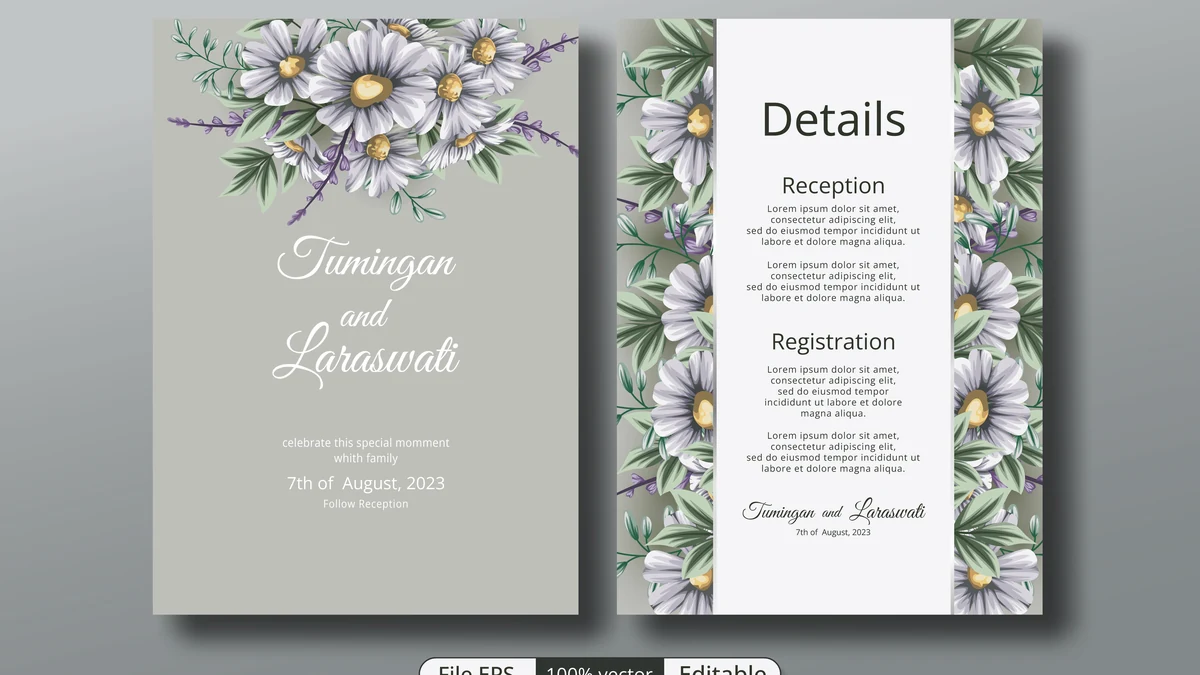
Programs come last. Save the dates first, then wedding invitation suites six to eight weeks out, then day-of stationery in the final month once readers have confirmed. Programs cannot be printed early, because readings and readers change. If you are still at the start of the chain, our printable wedding invitation templates are where most couples begin, and our guide to addressing the envelopes covers the step that follows.
Key Takeaways
Most American wedding ceremonies run 20 to 30 minutes, while a Catholic nuptial Mass takes 60 to 90 and a civil ceremony can finish in 10.
The prelude starts 20 to 30 minutes before the ceremony and ends when the mother of the bride is seated, which signals that the aisle is closed.
The maid of honor walks down the aisle alone, not paired with the best man, and enters immediately before the ring bearer and flower girl.
Divorced parents who are not on good terms sit separately, with the mother in the front row and the father a few rows behind, even when the father is hosting.
Unity rituals, handfasting and extra readings all belong after the ring exchange and before the pronouncement.
Print programs for around two thirds of your guest count, since couples share and leftovers are the normal outcome.
Frequently Asked Questions
What are the five parts of a wedding ceremony in order?
The five core parts are the processional, the welcome and readings, the declaration of intent and vows, the ring exchange, and the pronouncement followed by the recessional. Everything else, including music and unity rituals, is built around that spine rather than replacing it.
What is the correct order for a wedding processional?
Officiant, then partner one and the best man, grandparents, the groom’s parents, the mother of the bride, bridesmaids, groomsmen, maid of honor, ring bearer, flower girl, and partner two with their escort. Variations for divorced parents and same-sex couples are covered above.
How long is a wedding ceremony?
Most run 20 to 30 minutes. A civil ceremony takes 10 to 20, a Protestant church service 25 to 40, a Catholic wedding 30 to 45 without Mass and 60 to 90 with one. A Jewish chuppah ceremony runs 30 to 45 minutes.
What is the prelude in a wedding ceremony?
The prelude is the music played while guests arrive, starting 20 to 30 minutes before the ceremony begins. Three or four instrumental pieces is plenty. It ends when the parents are seated, and the change to processional music tells guests the ceremony is starting.
What should be included in a wedding ceremony?
Legally you need a declaration of intent, vows in some form, a pronouncement and a signed license, with requirements varying by state. Everything else is a choice. Readings, music, an address and even the rings are customary rather than required.
Who walks down the aisle first?
The officiant usually goes first, or takes their place from the side, followed by partner one. In blended families and same-sex ceremonies the order is yours to set, and many couples now walk in together, which removes the question entirely.
How does a religious ceremony order differ from a civil one?
A civil ceremony covers consent, vows, pronouncement and signing, and can be done in 10 minutes. A religious ceremony keeps that core and surrounds it with scripture, blessings, prayers and sometimes communion. That is what adds time, not any change of sequence.
Do you need a ceremony program?
No. Programs are optional and plenty of weddings skip them without anyone noticing. They earn their place when the ceremony has unfamiliar rituals, a long wedding party you want named, guests of different faiths, or spoken responses people are expected to read aloud.
Ready to put your ceremony on paper?
Once the order is settled and your readers have confirmed, the program is a short job. Browse our wedding program templates to find a design, then customize the order of service, fonts and names in your browser and download a print-ready PDF. Every piece matches, so the program, signage and menus look like one wedding rather than three.