Wedding RSVP Deadline and Wording: When to Set It and What to Write
Set your wedding RSVP deadline three to four weeks before the wedding, not six. A distant deadline feels ignorable and guests put the card down. Work backwards from your caterer’s final headcount date, leave a week to chase stragglers, and print the reply-by date where nobody can miss it.
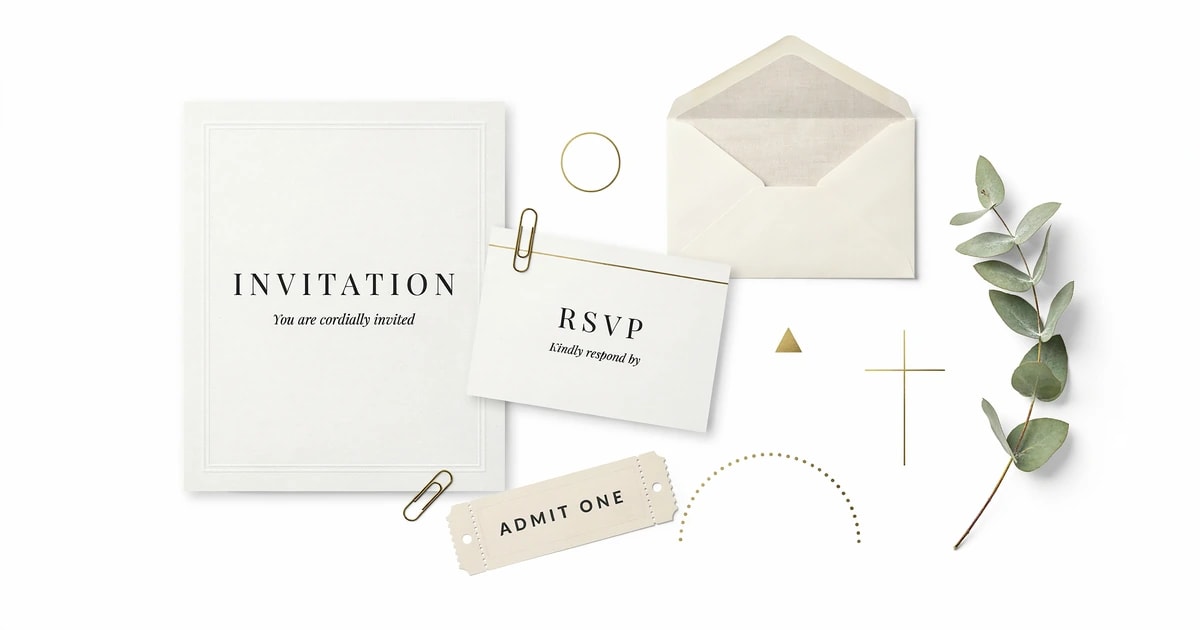
There are two questions behind every reply card, and they are inseparable. When should the deadline be, and what should the card actually say?
Most guides answer the first with a number and move on. The number is not the hard part. The hard part is that the date sits between two opposing pressures. Your caterer needs a final count. Your guests need a deadline that feels real enough to act on. Push it the wrong way on either side and you create work for yourself.
This guide covers both, with wording you can copy as written.
When should you set your wedding RSVP deadline?
Set your RSVP deadline three to four weeks before the wedding date. That window gives you enough replies to build a seating chart, enough runway to chase the people who have not answered, and a buffer before your caterer needs a final number. Anything earlier than four weeks tends to work against you.
Here is the chain it sits in. Save the dates go out six to eight months ahead. Invitations follow six to eight weeks before the wedding. The reply-by date lands three to four weeks out, which leaves guests roughly three to four weeks to respond from the day the invitation arrives.
That response window matters more than the deadline itself. Guests need long enough to check work schedules and arrange childcare, but not so long that the card goes into a drawer. If you are still choosing your RSVP card templates, settle the date before you finalize the design, because the deadline usually wants to be the largest text on the card.
Why the standard answer varies
Sources genuinely disagree here, and the gap is wider than most guides admit. The Emily Post Institute puts the reply-by date at two to three weeks before the wedding. Most of the wedding industry says three to four. A smaller group of stationers recommends four to six.
The disagreement is not really about etiquette. It reflects different assumptions about how fast guests reply and how much chasing a couple is willing to do. Emily Post assumes a tight window and prompt replies. The four-to-six week camp is planning for stragglers by building the delay into the deadline itself, which is the part that backfires.
Three weeks is the version that holds up in practice. If your guest list runs over 150, or a large share of guests are traveling, four weeks gives you more room without drifting into the territory where the date stops feeling urgent.
When to move the date earlier
Four weeks, occasionally five, makes sense in four situations:
Destination weddings. Guests are booking flights and hotels, and you may need rooming lists or welcome dinner counts well before the wedding week.
Guest lists over 150. Seating a large room takes longer, and place cards take longer to produce.
Holiday weekends. Replies slow badly over Thanksgiving, Christmas and the Fourth of July, so build in the lag.
Handwritten calligraphy for place cards or escort cards. Calligraphers need lead time, and their deadline usually falls earlier than your caterer’s.
What none of these justify is a deadline six weeks out or more. That is a different problem, and it is the next section.

Why is setting your RSVP deadline too early a mistake?
A deadline set too far out stops reading as a deadline. Guests who receive a card asking them to reply by a date eight weeks away treat it as something to deal with later, and later is when it gets forgotten. The further the date, the less urgent the ask, and the more replies you end up chasing by hand.
There is a second problem. A guest who cannot yet confirm childcare, leave or a flight will not reply with a maybe. They will wait. If the deadline arrives before they have an answer, they miss it, and now you are chasing someone who was always going to come.
The trade off in one line. Too early and guests ignore it. Too late and you cannot give your caterer a count or finish the seating chart. Three to four weeks is the point where both pressures stay survivable.
An early deadline also gives you information that goes stale. Replies collected eight weeks out will shift. People get sick, get promoted, get stuck. You end up revising a seating chart you built too soon.
If your real worry is late replies, the fix is a reminder, not an earlier date.
How do you work backwards from your vendors?
Start with your caterer’s final headcount deadline and count backwards from there. That date is in your contract, it is the one date you cannot move, and it is the only sensible anchor for everything else. Most couples pick an RSVP date first and then discover it does not line up.
Four dates matter, in this order:
Caterer or venue final count. Usually somewhere between seven and fourteen days before the wedding. Check your contract rather than assuming, because it varies by vendor and some count business days.
Seating chart. Has to be finished before place cards can be written or printed.
Place cards and escort cards. Printing is fast. Calligraphy is not, and a calligrapher may want two weeks.
Your own chasing window. Allow at least one full week between the RSVP deadline and the final count. You will need it.
A worked example
A wedding on Saturday, June 12, 2027, with a caterer who wants numbers eight days out:
Friday, April 16, 2027 Invitations mailed, eight weeks out
Friday, May 21, 2027 RSVP deadline, three weeks out
May 22 to May 28 Chase anyone who has not replied
Friday, June 4, 2027 Final headcount to caterer
June 5 to June 11 Seating chart and place cards
Saturday, June 12, 2027 Wedding day
Notice the chasing week is a scheduled task rather than an emergency. If your caterer wants fourteen days instead of eight, every date above moves back by six days, including the mailing date. This is why the deadline is worth settling before you order your printable wedding invitation templates, since the reply-by date has to be printed on the card.
If you are mailing later than eight weeks out, pull your save the date templates forward instead of squeezing the reply window. Guests need the same three to four weeks regardless of when the invitation lands.
What should your wedding RSVP card say?
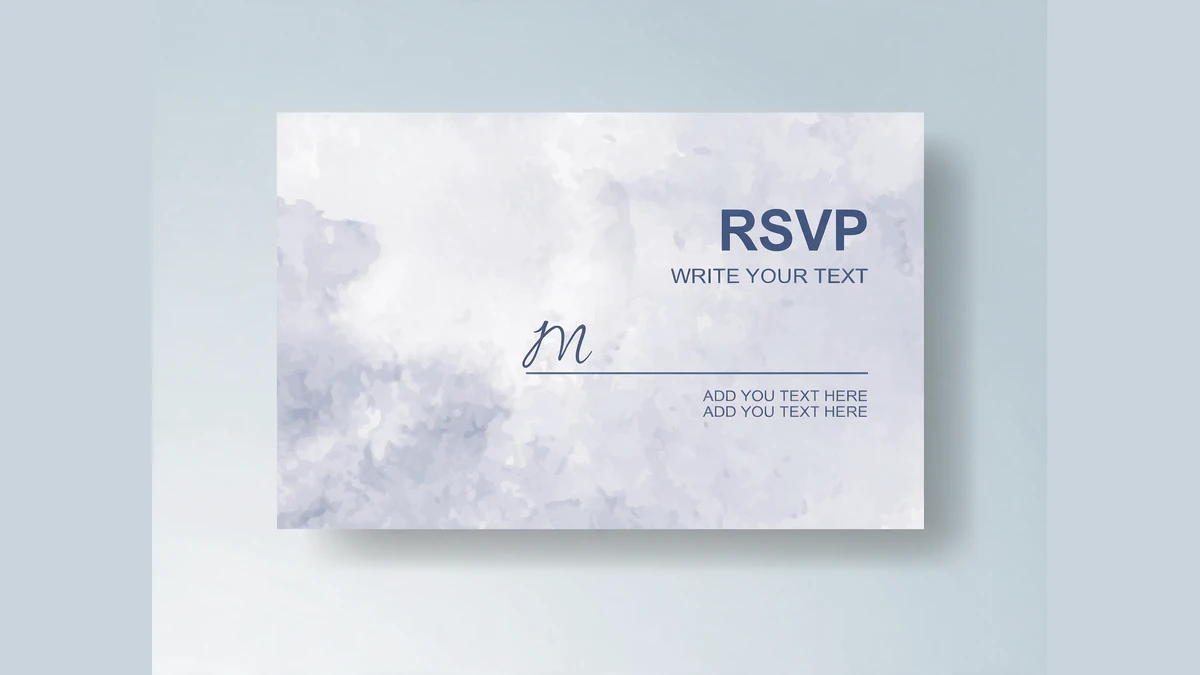
A reply card needs four things: a line for the guest’s name, a way to accept or decline, the reply-by date, and the method of replying. Everything else is optional. Meal choices, song requests and dietary lines are useful additions, but they are additions, and a crowded card gets read less carefully than a clear one.
The traditional response card format opens with an M line, which is the start of Mr., Mrs., Ms. or Miss. Guests write their title and name after it. Younger guests often have no idea what it is for, so plenty of modern cards replace it with a plain Name line. Both are correct.
For the wording on the invitation itself, see our guide to wedding invitation wording.
Formal reply card wording
Copy as written:
M _______________________________
____ accepts
____ regrets
The favour of a reply is requested
by the twenty-first of May
On a formal card, favour takes the British spelling if honour appears on your invitation. Keep the two consistent across the suite. The date is spelled out, and the year is usually omitted because the invitation already carries it.
Modern reply card wording
Copy as written:
Name _______________________________
____ Joyfully accepts
____ Regretfully declines
Kindly reply by May 21, 2027
Casual reply card wording
Copy as written:
Who’s coming? _______________________________
____ Wouldn’t miss it
____ Will celebrate from afar
Let us know by May 21
Casual wording suits a casual invitation, but keep the date unambiguous. Cute phrasing that buries the deadline costs you replies.
Online RSVP and QR code wording
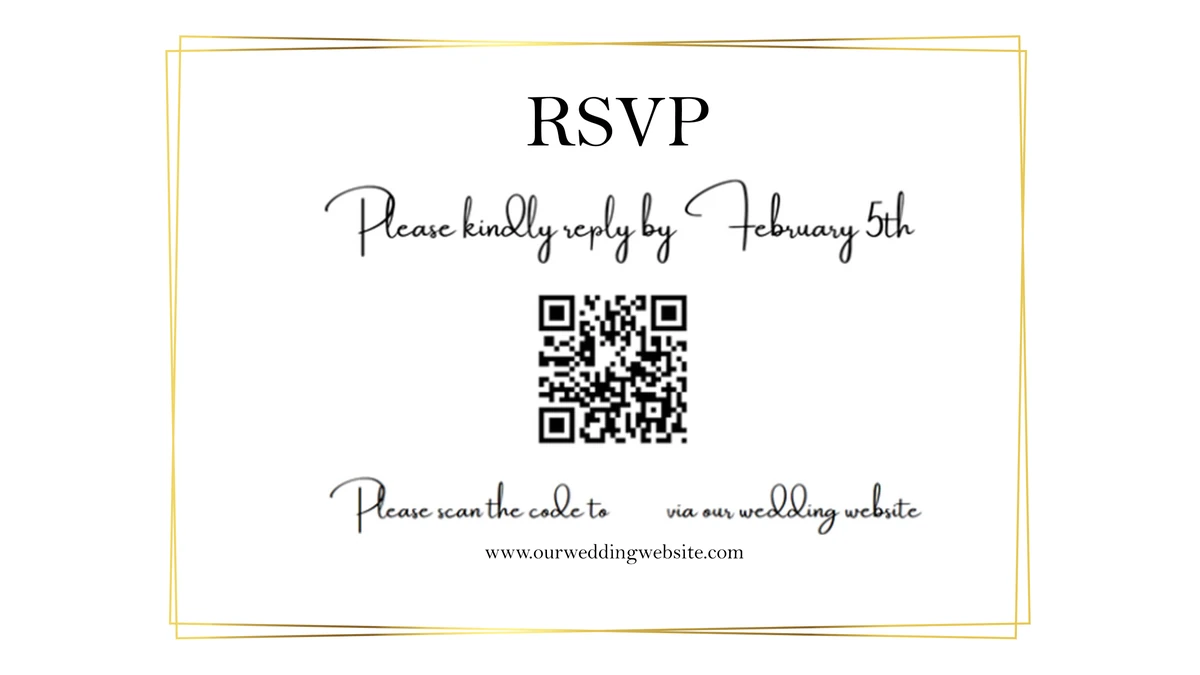
Online replies are now the majority preference. A WeddingWire guest study found guests across all age groups preferred replying online, up ten points on the previous comparison year, with younger guests more likely to prefer it than older ones.
Copy as written:
Kindly reply by May 21, 2027
at ellery-okafor.com
Or scan the code below
Three things to get right. Give one method rather than two, because a paper card running alongside a website produces duplicate replies and missing ones. Print the URL in full as well as the QR code, since not every guest will scan. And keep the URL short enough to type by hand.
Worth knowing. An online RSVP card needs no reply envelope, which removes a stamp from every invitation you mail. Across 120 guests that is a real saving.
Meal choice and dietary lines
Copy as written:
____ Beef
____ Chicken
____ Vegetarian
Please note any dietary requirements:
_______________________________
If you are inviting couples on one card, the meal selection needs a box per guest rather than per card, or you will not know who ordered what. Numbered meal boxes beside each name solve this cleanly.
A note on reply envelope postage
A pre-addressed, pre-stamped reply envelope is standard courtesy and it improves response rates. Address it to whoever is handling replies; our guide to addressing wedding invitations covers the return address. It also needs its own stamp, which couples routinely forget to budget for. As of current USPS First-Class Mail rates, a standard rectangular envelope stamp starts at $0.82 while a postcard stamp starts at $0.65. A reply card designed at postcard size, with no envelope at all, mails at a lower rate. Across 120 invitations that difference adds up.
How do you chase guests who have not replied?
Wait three or four days past the deadline, then message the people who have not responded individually. A group email gets ignored, because nobody believes it is aimed at them. A short personal text or call gets an answer the same day in most cases.
Split the work. Each of you takes your own side of the guest list, and your parents take theirs. Chasing twenty people is a half-hour job shared and a miserable afternoon alone.
Keep the wording light and assume nothing:
Copy and adapt:
Hi Marcus, we’re finalizing numbers for June 12 and I don’t think your reply reached us. Are you able to make it? Either way is completely fine, we just need to give the caterer a count by the end of next week.
That phrasing does three things. It gives them an out, so a no is easy to say. It gives a concrete reason, which makes the ask practical rather than reproachful. And it allows for the card having gone astray, which happens more often than people expect.
Resist the urge to apologize for asking. You are not imposing. They were sent a card with a date on it.
What do you do when the deadline passes?
Give non-responders one direct follow-up, wait three to four days, then count them as a no. Hold that line, because the alternative is paying for seats that stay empty and seating a chart around people who may not arrive.
Late replies are a different matter. A guest who responds a few days late, before your final count goes in, has cost you nothing. Take the yes and move on. Once numbers are with the caterer, a late yes becomes a genuine question of whether an extra cover can be added and what it costs.
Say this if someone asks after the count has gone in. We’d love to have you. Let me check with the venue whether we can still add a seat and come back to you today.
One small mercy: a handful of your non-responders will turn up anyway. Most venues can absorb two or three unexpected guests. Tell your coordinator you are expecting that possibility rather than discovering it on the day.
How many of your guests will actually say yes?
The honest answer is that there is no reliable published figure, and the ones circulating deserve suspicion. Several widely shared percentages trace back to secondary sources citing studies that do not appear to contain them. Planning a catering budget on a number nobody can source is a bad idea.
What holds up is the pattern rather than the percentage. Acceptance is driven almost entirely by travel distance and closeness of relationship, so estimate by segment instead of applying one rate across the whole list:
Immediate family and wedding party: nearly all will come
Local friends within an easy drive: most will come
Out-of-state relatives: expect a meaningful share to decline
Coworkers and distant acquaintances: the least predictable group
Destination weddings: expect noticeably lower acceptance across every category
Estimate each group separately, add them up, and treat the result as a range rather than a number. Then check it against your actual replies two weeks before the deadline and adjust.
Key Takeaways
Anchor the date to your caterer’s final headcount deadline, which usually falls seven to fourteen days before the wedding and is written into your contract.
Leave at least one full week between the reply-by date and the final count, so chasing stragglers is a scheduled task rather than an emergency.
Offer one reply method only, because a paper card running alongside an online RSVP produces duplicate replies and missing ones.
Chase non-responders individually three or four days after the deadline, then count them as a no after one direct follow-up.
A reply envelope needs its own stamp, while a postcard-sized reply card mails at the cheaper postcard rate instead.
Emily Post puts the reply-by date at two to three weeks out, tighter than the industry standard, so the conventions genuinely differ.
Frequently Asked Questions
How do you word an RSVP deadline on a wedding invitation?
Print the date plainly and make it prominent. Formal cards use "The favour of a reply is requested by the twenty-first of May." Modern cards use "Kindly reply by May 21, 2027." For online replies, use "Kindly reply by May 21, 2027 at yourwebsite.com." Keep the date the largest text on the card.
What do you do if an RSVP is late?
Take it if your final headcount has not gone to the caterer yet, which is usually the case for a reply arriving a few days late. Once numbers are submitted, tell the guest you will check with the venue about adding a seat. Most venues can accommodate one or two.
Is six weeks too early for an RSVP deadline?
Yes, in almost all cases. A deadline six weeks out reads as distant, so guests set the card aside and you end up chasing more replies rather than fewer. Guests who cannot yet confirm leave or childcare will simply wait. Three to four weeks keeps the date urgent enough to act on.
How long do guests have to RSVP?
Guests should reply as soon as they know, and always before the printed date. Etiquette treats the deadline as the latest acceptable response rather than the target. If you receive a wedding invitation and already know your answer, reply within a few days instead of holding the card.
When should wedding guests RSVP by?
Three to four weeks before the wedding is standard, which gives couples time to finalize counts and seating. Destination weddings often use four to five weeks, since travel and accommodation need locking in earlier. Emily Post puts the window slightly tighter, at two to three weeks before the date.
How do guests fill out an RSVP card?
Write your name after the M line, which stands for Mr., Mrs., Ms. or Miss. Check accepts or declines, write the number attending if asked, and select a meal if one is offered. Return it in the enclosed envelope before the printed date.
What percentage of wedding guests RSVP yes?
There is no reliable published figure, and the percentages circulating online are difficult to trace to a real source. Acceptance depends mostly on travel distance and relationship closeness. Estimate by guest category rather than applying one rate, and expect noticeably lower acceptance for destination weddings.
What do you do if guests never RSVP at all?
Follow a sequence. Send an individual message three or four days after the deadline, wait three or four days for a reply, then count them as a no and build your seating chart accordingly. Warn your coordinator that one or two may still appear, since most venues can absorb that.
Ready to write your reply cards?
Once the date is settled, the card only has to carry it clearly. Browse our wedding invitation and stationery templates to customize your reply wording, drop in your deadline, and download print-ready files. If you want the reply card to match the rest of the suite, the coordinated wedding invitation suites pair the invitation, reply card and details card in one design.