
How to Make a Wedding Seating Chart in 7 Steps
To make a wedding seating chart, wait until your RSVP deadline has passed, get the venue floor plan, and place the head table and family tables before anything else. Group everyone else by how they know you, then give every table at least one guest who will start a conversation.
Most couples expect the seating chart to be the fun part, somewhere between choosing a cake and picking a first dance. Then they sit down with 117 names and find a logistics problem wearing a social disguise.
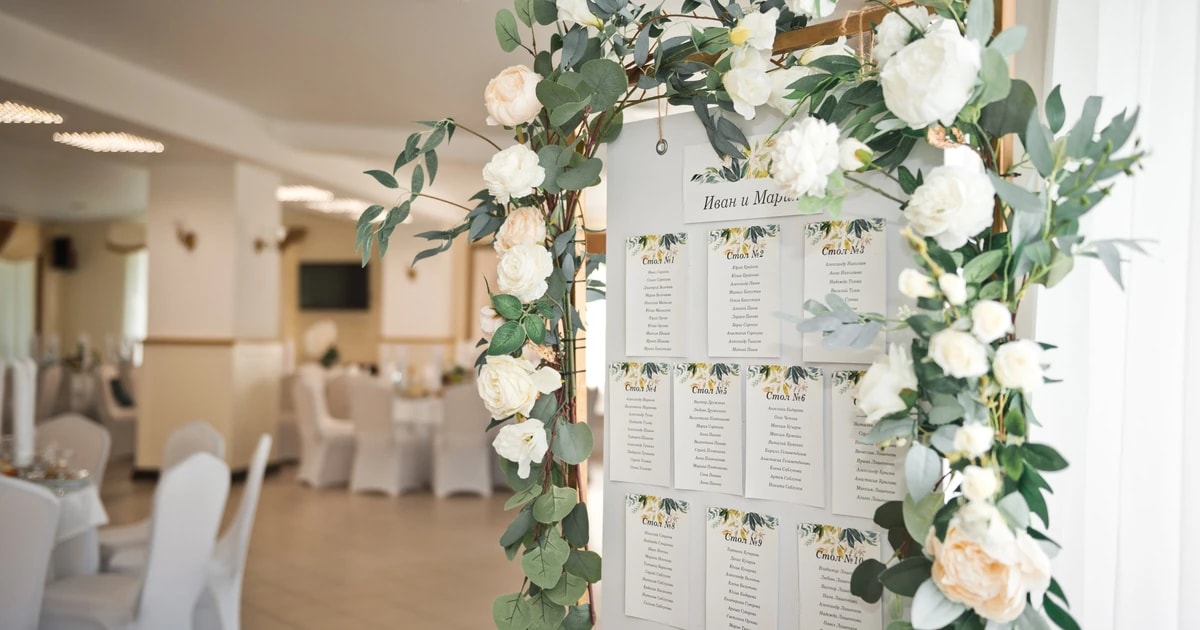
A wedding seating chart is the plan that assigns every guest to a table, shown to guests on a sign or on escort cards at the reception entrance. Knowing how to make a wedding seating chart is mostly about doing the steps in the right order. Couples get stuck because they start with the hardest decision, where to put the difficult guests, instead of the easiest one, how many tables they actually have.
This guide gives you that order. Work through it with a pen and the venue floor plan and most of a chart gets done in one evening.
When should you start your wedding seating chart?
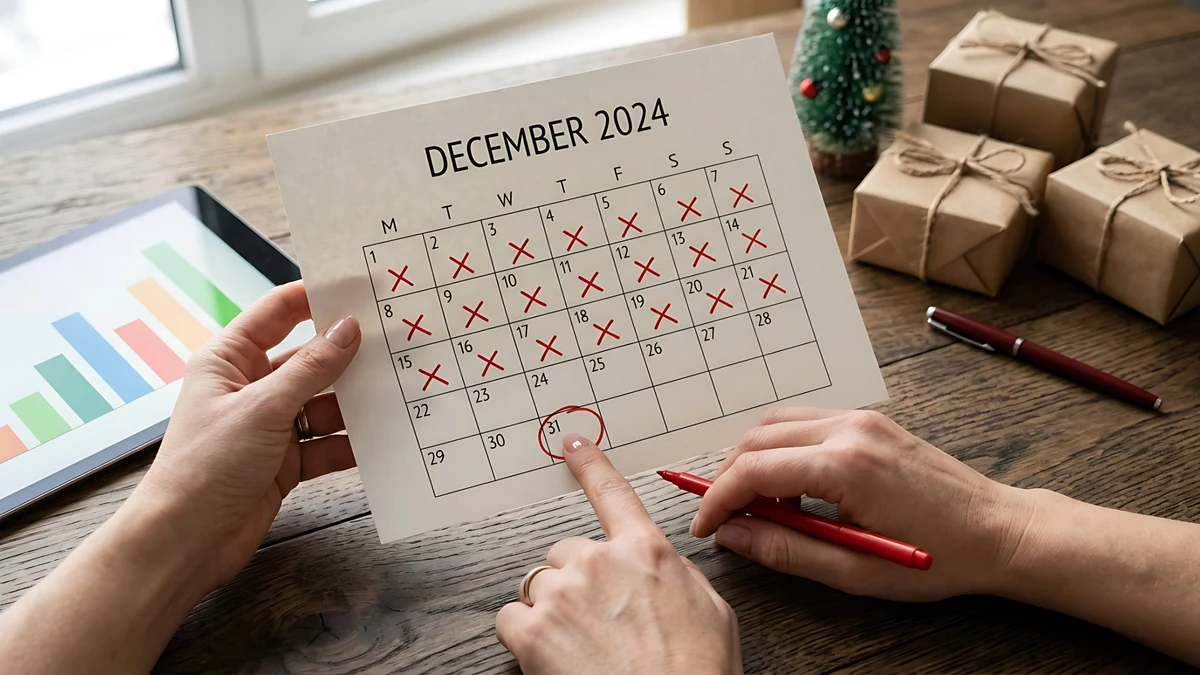
Start the day after your RSVP deadline and finish in the final week before the wedding, once your caterer has the final headcount. If your caterer needs table assignments with that count, as plated dinners with meal choices often do, their deadline becomes yours. Starting earlier feels productive but rarely is, because every late reply moves people between tables.
The three dates that control your timeline
Your catering contract fixes one of these dates, so plan around it. Our RSVP guide shows how to work backwards from your caterer's deadline.
RSVP deadline: three to four weeks before the wedding. Table assignments wait until this date.
Caterer or venue final count: usually seven to fourteen days out, though your contract is the authority. Check it today rather than assuming.
Your seating window: the final week, once the count is in, unless your caterer needs table assignments with it. Ask your caterer which applies.
Our RSVP guide works through a wedding on Saturday, June 12, 2027. Replies are due Friday, May 21, late replies get chased from May 22 to 28, the final headcount goes to the caterer on Friday, June 4, and the seating chart and place cards are done between June 5 and June 11. Emily Post's planning timeline puts finalizing the reception seating plan in the same final weeks.
The one thing to do early: you can build your table groupings before the replies land. Sketch who sits with whom while you are addressing envelopes, leave the names in pencil, and you will only be adjusting rather than starting from scratch.
On the day, the chart does its job in the few minutes between cocktail hour and dinner, so it belongs in your reception timeline.
How to make a wedding seating chart, step by step
Seven steps, in this order. The order matters more than the method, because each step removes options from the next and makes it easier.
Step 1: Lock the final guest list
Print the confirmed yes list, including plus ones by name where you have them, and mark anyone outstanding in a different color. You cannot seat a maybe, so chase non-responders by phone before you start rather than during. Our invitation etiquette guide covers who gets a plus one, a decision that feeds straight into this stage.
Step 2: Count your seats before you count your guests
Ask your venue or planner for the floor plan with table shapes, sizes and positions marked, then do the math. This is the number that governs everything else.
Standard table capacities:
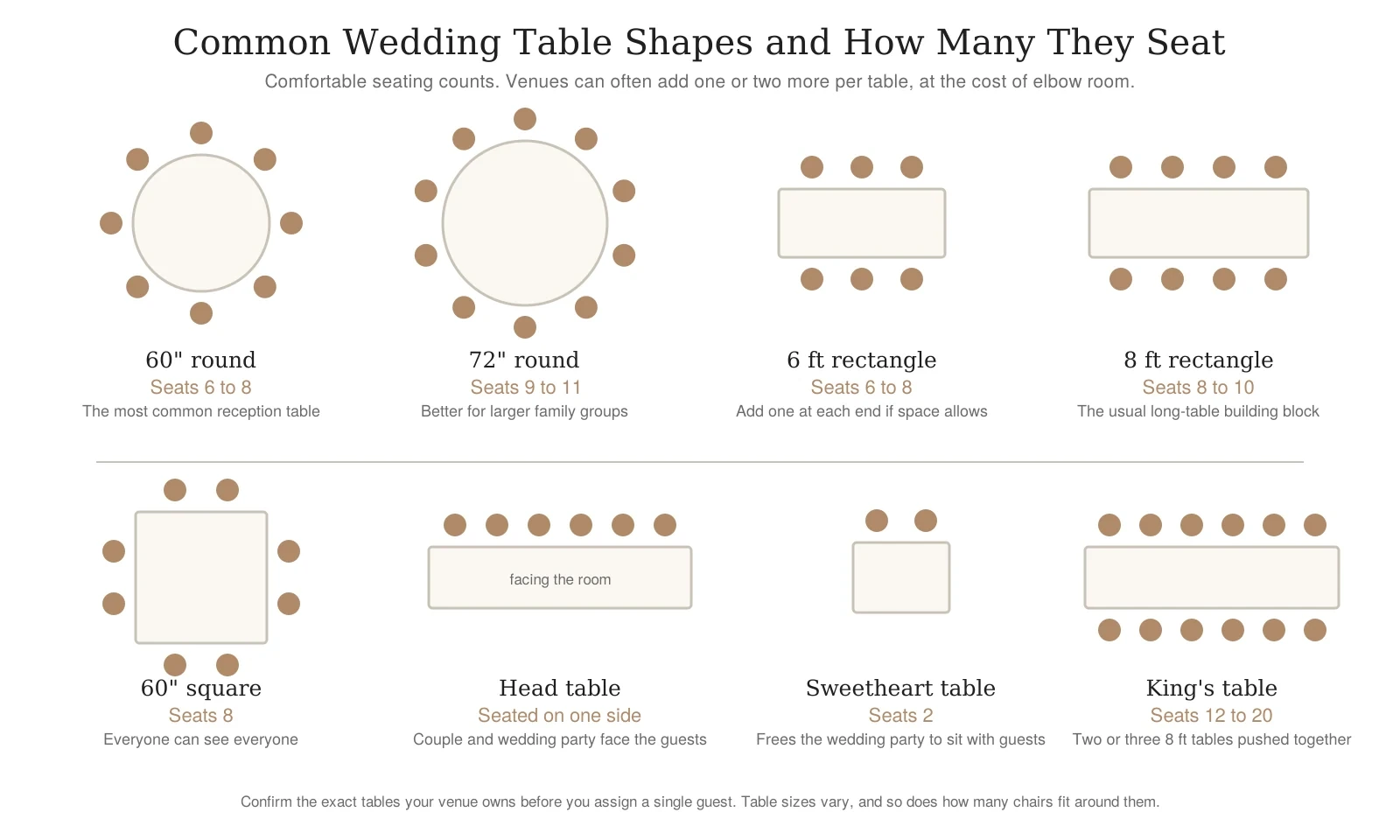
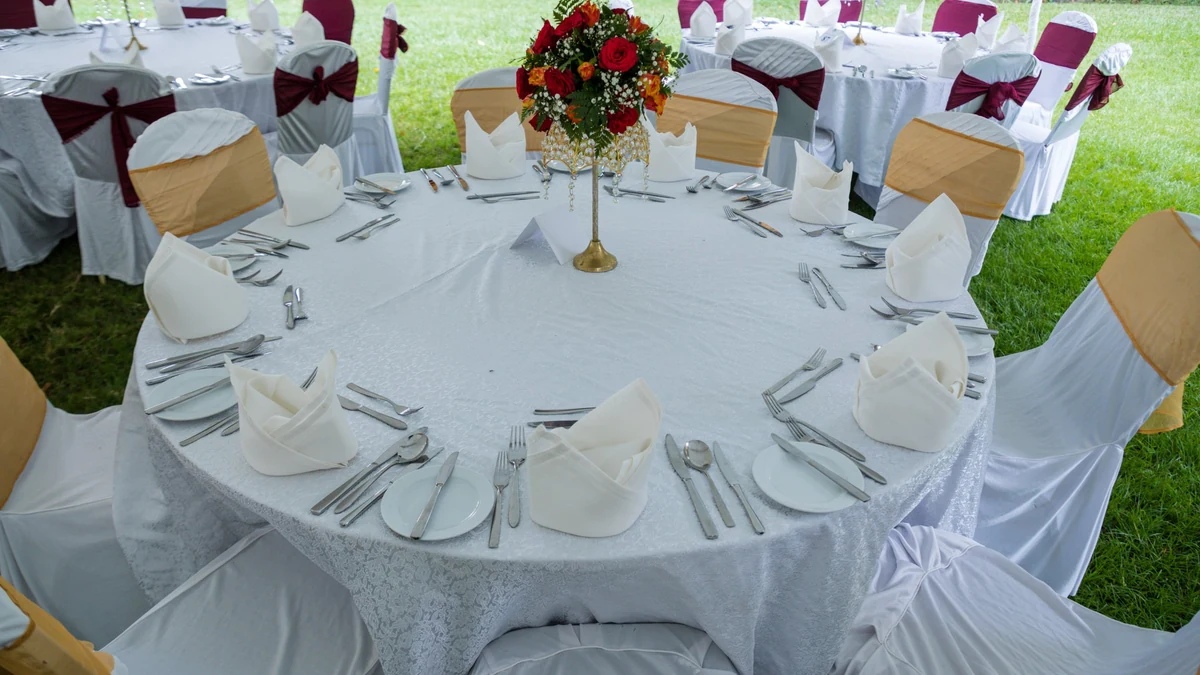
A 60-inch round seats 8 to 10, but no more than 8 with the place settings of a plated dinner, and it is the most common reception table
A 72-inch round seats 10 to 12, or 10 with plated place settings, which suits larger family groups
A 6-foot rectangular table seats 6 to 8, and an 8-foot seats 8 to 10, depending on whether you put chairs at the ends
Confirm the numbers with your venue or rental company, since chair style and place settings change them.
Divide your guest count by seats per table and round up. A 117-guest wedding at eight per table needs 15 rounds, with three seats to spare, so one table runs short and needs careful handling. Far better to know that now than at step five.
Step 3: Place the fixed tables first
Some tables are decided by convention rather than by you, so place them before anything moves:
Your own table, whether that is a head table with the wedding party or a sweetheart table for two
Parents, grandparents, and the officiant, traditionally nearest to you
Siblings and the wedding party, if they are not at the head table
Anyone with an access need, who goes near the entrance, the restrooms, or away from the speakers
That last one is hospitality rather than etiquette, and it is the step most guides leave out. A guest using a wheelchair, a grandparent who is hard of hearing, or a parent feeding a toddler each have a correct seat, and it is not the one furthest from the door.
Step 4: Build your groups
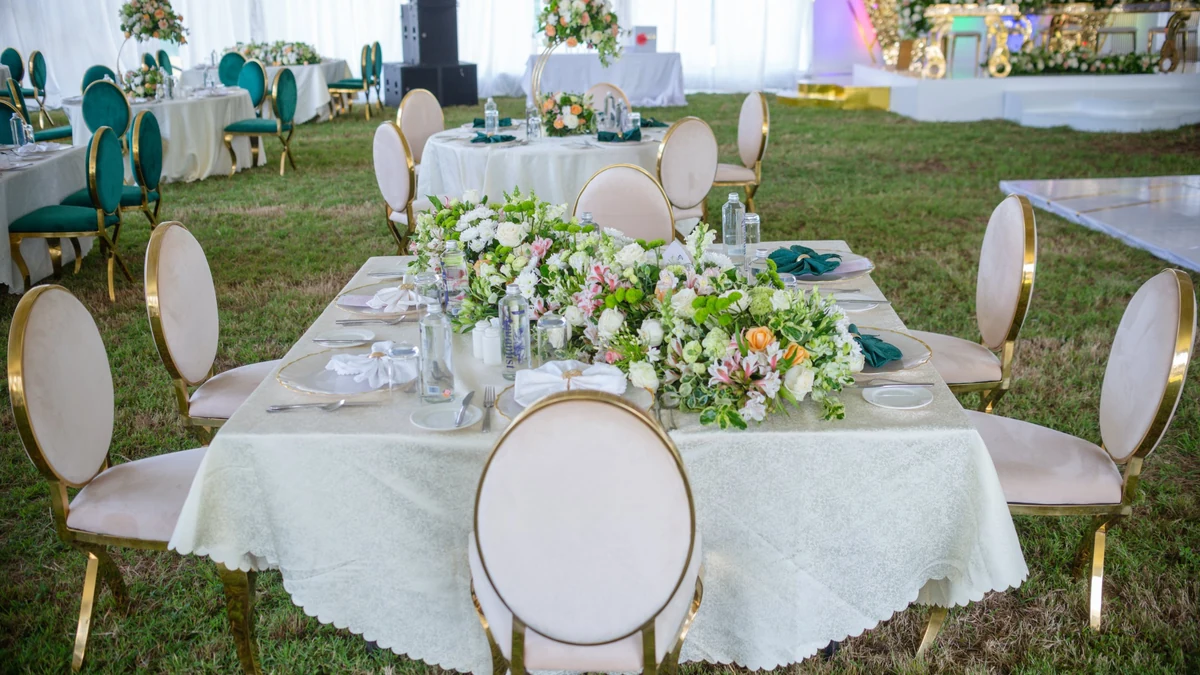
Sort the remaining guests into clusters of roughly the right size before worrying about which physical table each lands on. College friends, work colleagues, your aunt and her side, the neighbors. You are matching group sizes to table sizes, nothing more.
Step 5: Place the groups, then fill the gaps
Drop each cluster onto a table. Groups rarely divide evenly, so you will be left with a few stray guests and a couple of half-empty tables. Those are the real work of the chart.
Step 6: Walk it, then leave it overnight
Read the chart as a guest rather than as the host. Start at table one and ask who each person talks to for three hours. Then put it away until morning. The table that felt fine at midnight is usually the one you fix at breakfast.
Step 7: Number the tables and send the chart out
Number the tables once the chart is final, or name them if numbers feel too formal; our guide to table number ideas covers both. Send the final chart to your venue and caterer, with each guest's meal choice if dinner is plated, and print the sign and cards only after that.
How do you organize guests on a wedding seating chart?
Organize guests by relationship first, then adjust for personality. Group people who already know each other, seat each cluster near the people they overlap with, and keep the tables that need you most within easy reach of your own.
Group by how people know you
The reliable unit is shared context: college, work, your side of the family, their side, the neighborhood. People with something already in common need no help getting started, which is most of the job done.
Mix, but do not blend
Mixing two groups at one table works well. Mixing four does not. Four college friends and four of their partners makes a good table of eight. Eight unconnected people makes an obligation, and it empties out by dessert. Keep couples and plus ones together, and seat children with their parents or at a kids' table within sight of them.
Who sits closest to you
Traditionally, the closer a table is to yours, the closer the relationship. Parents, grandparents and the wedding party take the nearest tables, then extended family and close friends, then colleagues and more distant connections.
Treat it as a guide rather than a rule. If your parents would rather sit with their own friends, seat the room you actually have.
A practical rule worth stealing: every table needs one anchor. That is one guest who will happily start a conversation with a stranger. If you look at a table and cannot name its anchor, swap someone in before you move on.
Wedding seating chart etiquette for tricky situations
Four situations account for most of the stuck feeling. None has a perfect answer, which is why they take so long. Decide, then move on.
Divorced or remarried parents
The usual reception solution is that each parent hosts their own table, with their own family and friends around them. It avoids a forced shared table and gives both of them a role on the day.
Worth knowing: the Emily Post Institute's guidance on seating divorced parents at the ceremony is that parents who get along can share the front row. When they sit apart, the mother takes the front row with her family behind her, and the father sits in the third or fourth row with his family, even when he is hosting. For the reception, Emily Post says divorced parents are not seated at the same table, though how everyone feels matters more than the rule. Make the call early, and tell both parents before they see the chart.
Guests who will not know anyone
Seat them with the most sociable group you have, not with the other guests who know nobody. Putting all your strangers at one table looks tidy on paper and feels like a holding pen in the room. One unattached guest at a warm table of seven has a good night.
Single guests
Do not build a singles table. Everyone seated at it knows exactly what it is, and it reads as a comment on their personal lives. Seat single guests with their actual friends, the same as everyone else.
People who should not sit together
Distance helps, but sightlines matter more than feet. Two guests at opposite ends of a long room will still spend the evening aware of each other. Place them on the same side of the room facing away, or with the dance floor between them, so neither spends dinner in the other one’s eyeline.
Then accept the limit of what a chart can do. Dinner is ninety minutes. The bar, the dance floor and the hallway are unassigned, and no seating plan has ever controlled those.
Do you need a ceremony seating chart?
Usually not a full chart, just reserved rows. Parents sit in the front row, the next few rows are held for immediate family, and Emily Post's guidance is that you can skip sides altogether, as long as those front seats stay reserved for close family. If you keep sides, the bride's family traditionally sits on the left, facing the front, and the groom's family on the right. At a same-sex wedding, assign each family a side by name. Give your ushers a short list of who sits in the reserved rows, since grandparents and parents are usually the last guests seated, as part of the processional order.
What are the easiest and cheapest ways to make a seating chart?
Paper and sticky notes are the easiest way to start, and a spreadsheet is the cheapest way to finish, since both cost nothing. A free seating app suits couples who want drag and drop. All of them work, and the best one is whichever you will actually finish.
Method | Best for | Cost | The catch |
|---|---|---|---|
Paper and sticky notes | Drafting together and seeing the whole room | Free | Hard to share, and you retype it for the sign |
Spreadsheet | The final list, sorted alphabetically for the sign | Free | No picture of the room |
Free seating chart app | Drag and drop on a laptop | Free to start | Some charge to save or to download a printable file |
Our free printable planner | A guided first draft on paper | Free | You still type up the final list |
Free seating chart apps
Several tools let you drag guests onto tables and move them without starting over. Free seating chart makers run in a browser, and most wedding planning apps include a basic version. Check two things before committing an evening: whether saving is free or paid, and whether you can export a printable file.
The spreadsheet method
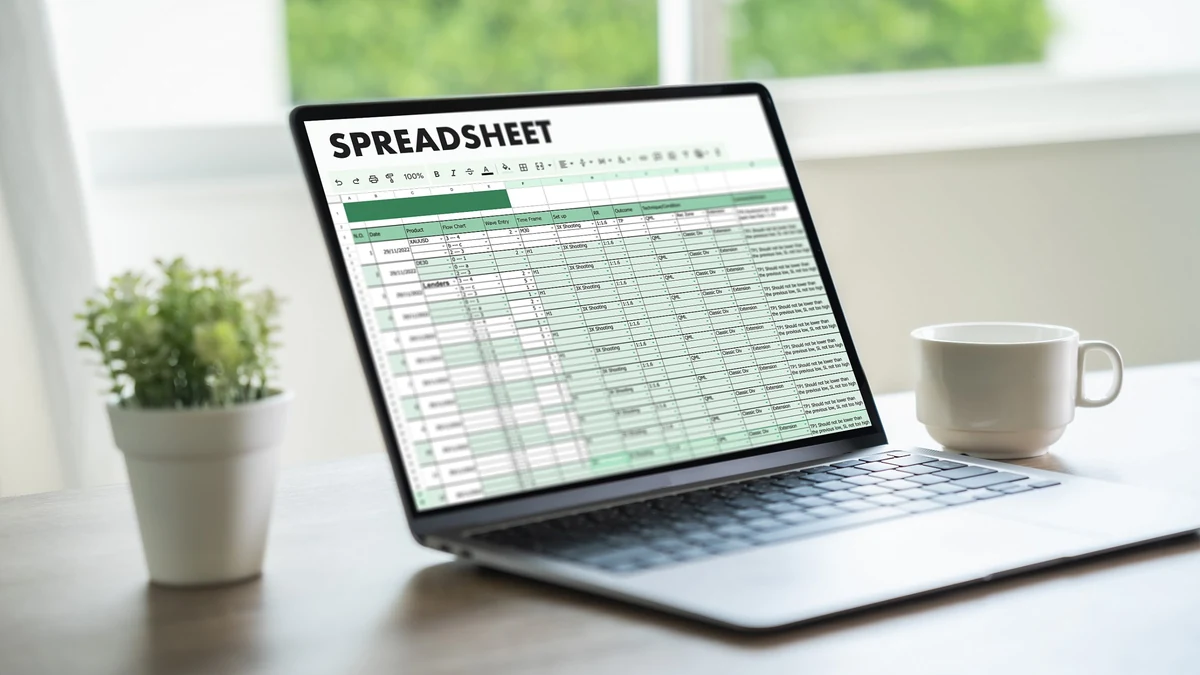
One tab for the guest list, one column for table number, then sort by table to see your groupings. Google Sheets or Excel does everything you need, costs nothing, and shares easily with your planner. The trade-off is the lost spatial view, so you cannot see that both feuding uncles are beside the bar.
The paper method
One sticky note per guest, the floor plan on a table, and an hour. It sounds basic and it is still what many planners use, because moving a name by hand is faster than clicking one and two people can work at once.
Our free seating chart planner
We have put together a free printable seating chart planner with blank table layouts in the common shapes, a guest assignment sheet and a pre-print checklist. Fill it in by hand and the chart is drafted before you open any software.
How do you display the seating chart at the reception?
Three formats, doing different jobs. A seating chart sign tells guests which table they are at. Escort cards do the same as individual cards guests carry with them. Place cards assign the seat once they reach the table. Emily Post calls cards marked with each guest's table number "a must at all but the most casual of weddings", and says assigning actual seats "is usually reserved for the most formal weddings".
A seating chart sign
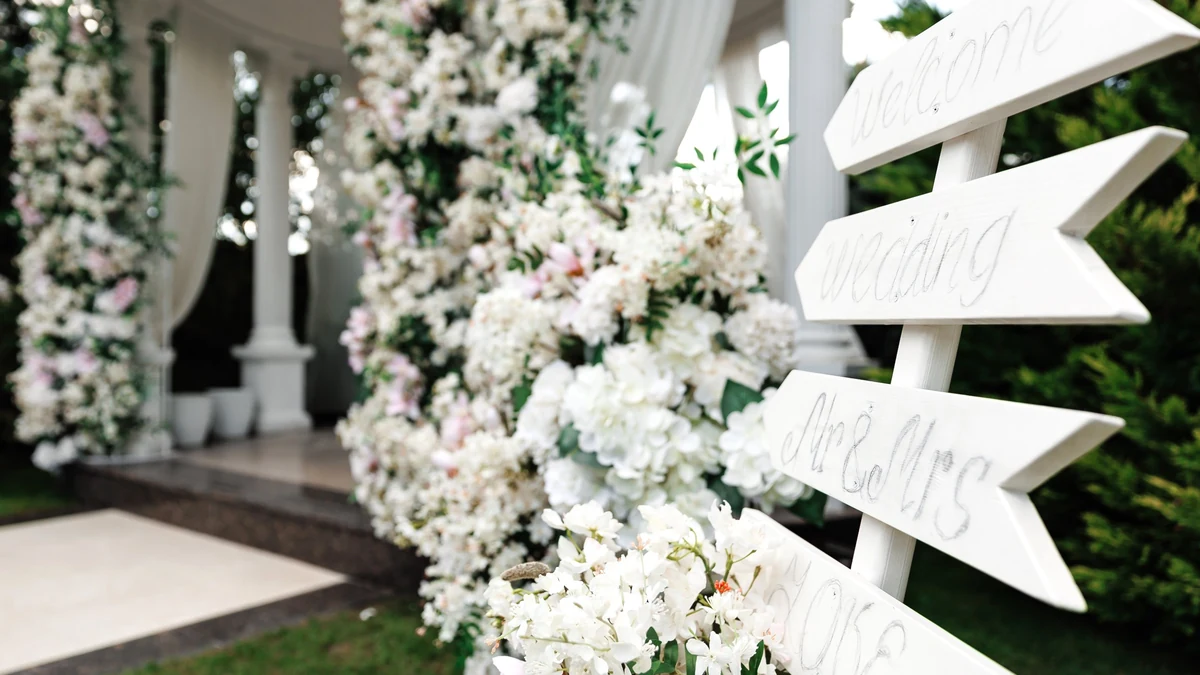
One large sign at the entrance, listing guests alphabetically by last name with a table number beside each. Alphabetical beats grouping by table, because an arriving guest knows their own name and not their table. Our wedding seating chart templates print at display size, and the entrance is also where a wedding welcome sign sits, so plan the two together.
Escort cards
Individual cards laid out at the entrance, each with a guest name and table number. Slower to set up than one sign, but far easier to correct when someone drops out in the final week. Our wedding place cards work either way, flat for escort cards or folded as tent cards at the table.
Place cards
A named card at each seat, assigning the exact chair rather than the table. You need these for a plated dinner with meal choices, because the catering team has to know who ordered the fish. For a buffet or a family-style meal, assigning tables and letting guests choose seats is usually enough. Either way, wedding table numbers have to be legible from across the room, or the whole system stalls at the door.
Which do you actually need?
Most weddings need one entrance format and nothing else, either a sign or escort cards. Add place cards on top only for a plated meal. Whichever you choose, match it to your table numbers, menus and any place cards, so the room looks designed rather than assembled.

Key Takeaways
Assign tables after your RSVP deadline, three to four weeks out, and finish in the final week, unless your caterer needs table assignments with the final count.
A 60-inch round seats 8 to 10, but no more than 8 at a plated dinner, so 117 guests need 15 tables.
Divorced parents usually each host their own table at the reception, which avoids a shared table nobody wanted.
Seat guests who know nobody with your most sociable group, never together at one table.
A sign or escort cards tell guests their table, and place cards assign seats, which most weddings need only for a plated dinner.
Emily Post calls table assignments a must at all but the most casual weddings, and keeps assigned seats for the most formal ones.
Frequently Asked Questions
What is the easiest way to make a seating chart for a wedding?
Use sticky notes on a printed floor plan. Write each guest or couple on a note, place your own table and the family tables first, then move groups onto tables until every table works. Once the plan holds, type it into a spreadsheet so you can sort it alphabetically for the sign.
What is the cheapest way to make a seating chart for a wedding?
Plan it for free on paper, in a spreadsheet or with our free printable planner, then keep the display simple: escort cards printed at home, or one poster printed at a local print shop. A mirror or chalkboard you already own works too, with the names written by hand.
Is there a free app that can create a wedding seating chart?
Yes. Several free seating chart makers let you drag guests onto tables in a browser, and most wedding planning apps include a basic seating tool. Before you spend an evening on one, check that saving and downloading a printable file are free, since some tools charge for the download. A spreadsheet needs no account at all.
How do I create my own seating plan for my wedding?
Wait for your RSVP deadline, then count your tables from the venue floor plan. Place your own table first, then parents, family and the wedding party nearby. Group everyone else by how they know you, fill the tables group by group, check access and comfort, then number the tables and send the chart to your caterer.
How far in advance should you make your wedding seating chart?
Start grouping guests as replies arrive, assign tables once your RSVP deadline passes, about three weeks before the wedding, and finish in the final week, after the caterer has your headcount. If your caterer needs table assignments with that count, as plated dinners often do, finish by their deadline instead.
Do you need a seating chart at a wedding?
For a seated meal, yes. Emily Post calls cards marked with each guest's table number "a must at all but the most casual of weddings". Assign tables rather than seats unless the wedding is formal or dinner is plated with meal choices. A cocktail-style reception with open seating can skip the chart.
Who sits at the head table at a wedding?
Traditionally the couple and the wedding party, sometimes with their partners, seated along one side facing the room. A sweetheart table for two is the common alternative, with the wedding party at the nearest tables. Parents usually host their own tables close to the couple rather than joining the head table.
How do you display a seating chart at the reception?
Three options. A large sign at the entrance listing guests alphabetically with table numbers, individual escort cards guests collect on the way in, or a mirror or acrylic display for the same information. A sign is fastest to set up, while escort cards are easier to correct late.

Ready to make yours?
Once the names are settled, the sign is the easy part. Browse our ceremony and reception templates to build a seating chart, table numbers and place cards that match, then download print-ready files for the printer of your choice. Every template is editable, so a late dropout is a a two-minute fix rather than a reprint.
Make it yours
Help everyone find their place.
Try your wording in the editor. Pay when you download.