
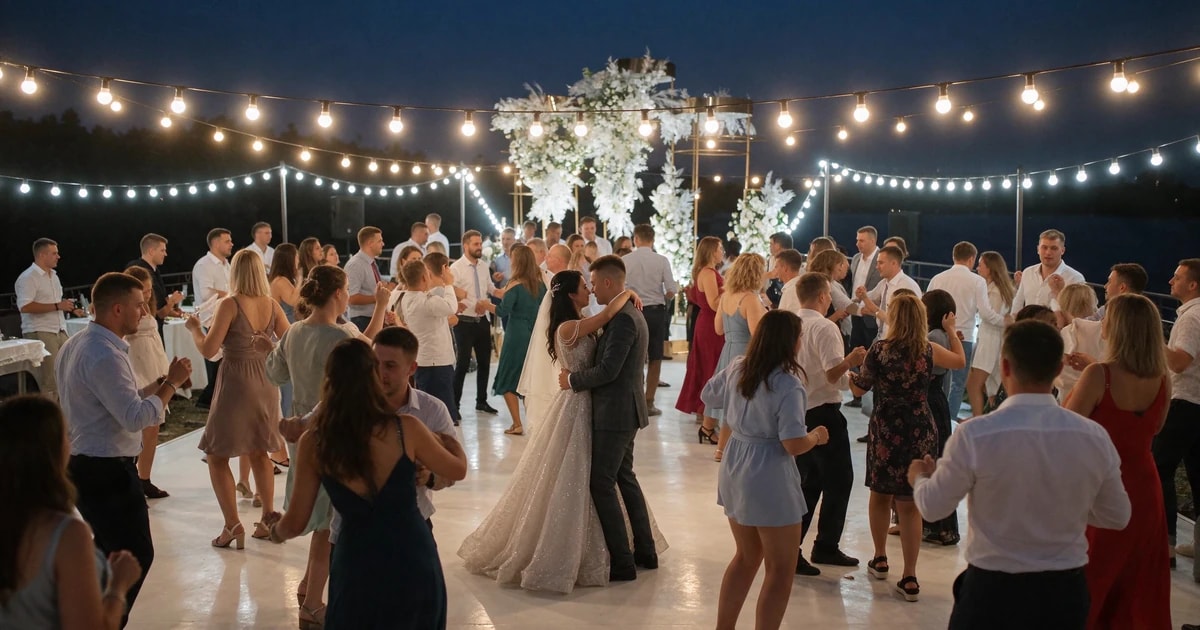
Wedding Reception Timeline: Order of Events, How Long It Lasts and Sample Schedules
A wedding reception timeline is the hour-by-hour plan from cocktail hour to the send-off. Most receptions run four to five hours, in this order: cocktail hour, entrance, first dance, dinner, toasts, parent dances, cake cutting, open dancing, last dance and send-off. Finish the formalities within about two hours of guests sitting down.
The receptions that feel effortless are rarely the ones with the best band. They are the ones where the best man knew he was speaking at 6:45 pm, the caterer knew when to pour the Champagne, and the cake was cut before the older guests started looking for their coats.
A wedding reception timeline is how you get there. This guide covers what happens at a wedding reception and in what order, how long each part really takes, and sample schedules for 3, 4, 5 and 6 hour receptions you can copy and adjust. Every length here is counted the same way: from the start of cocktail hour to the send-off.
What is a wedding reception timeline?
A wedding reception timeline is an hour-by-hour plan of the reception, from the start of cocktail hour to the send-off. It lists every event, the time it starts and the person responsible for it, so the DJ, caterer, photographer and wedding party all work from the same page. Planners also call it a reception itinerary or a run of show.
Most couples end up with two versions: a detailed one for vendors and the wedding party, and a short one for guests showing only the main moments.
Every reception schedule is built around a few fixed points you can’t move: the venue’s end time, the caterer’s service plan, your vendors’ contracted hours and, if you want golden-hour portraits, sunset. Everything else gets arranged around them.
How long is a wedding reception?
Most wedding receptions run four to five hours, counted from the start of cocktail hour to the send-off. That covers every formality plus one to two hours of dancing. Shorter receptions usually cut dancing rather than dinner or toasts, and longer ones add late-night food and more time on the floor.
Length | Best suited to | What changes |
3 hours | Lunch or brunch receptions and small guest lists | Dancing shrinks to a short set or lawn games; two or three speakers at most |
4 hours | Buffet and family-style dinners, Sunday or weeknight weddings | Every formality fits, with about an hour of open dancing |
5 hours | A plated dinner with a full set of speeches and traditions | Room for sunset portraits, the bouquet and garter toss, and about two hours of dancing |
6 hours or more | Larger guest lists, longer cultural traditions, late-night food | Extra dancing sets and a late snack; check overtime fees first |
Add the ceremony to see the whole commitment you’re asking of guests. Most ceremonies last 20 to 30 minutes, so a 30-minute ceremony followed by a five-hour reception asks guests for about five and a half hours, plus travel.
What decides how long your reception runs
Dinner service is the biggest variable. As planning ranges to confirm with your caterer, a plated three-course dinner takes 60 to 90 minutes, a buffet 45 to 60, and family style about 60. Beyond dinner, the length comes down to:
Speeches, at three to five minutes per speaker.
Guest count, since more guests means a longer buffet line and a slower move to the tables.
Traditions such as a hora or a money dance, which each need their own slot.
The venue’s rental window, because many venues charge by the hour past the contracted end time.
Vendor packages, which DJs, bands and photographers often sell in fixed blocks of hours.
Is a 4-hour wedding reception long enough?
Yes. Four hours fits every formality with about an hour of dancing left over, as the 4-hour sample below shows. You lose dancing time, not tradition. A buffet or family-style dinner helps, because it frees 15 to 30 minutes compared with a plated three-course meal.
What is the order of events at a wedding reception?
The usual wedding reception order of events, sometimes called the reception program, is cocktail hour, grand entrance, first dance, welcome, dinner, toasts, parent dances, cake cutting, open dancing, last dance and send-off. Couples often move the first dance or the toasts, but the formalities belong together near the start, so the dancing runs without interruption once it begins.
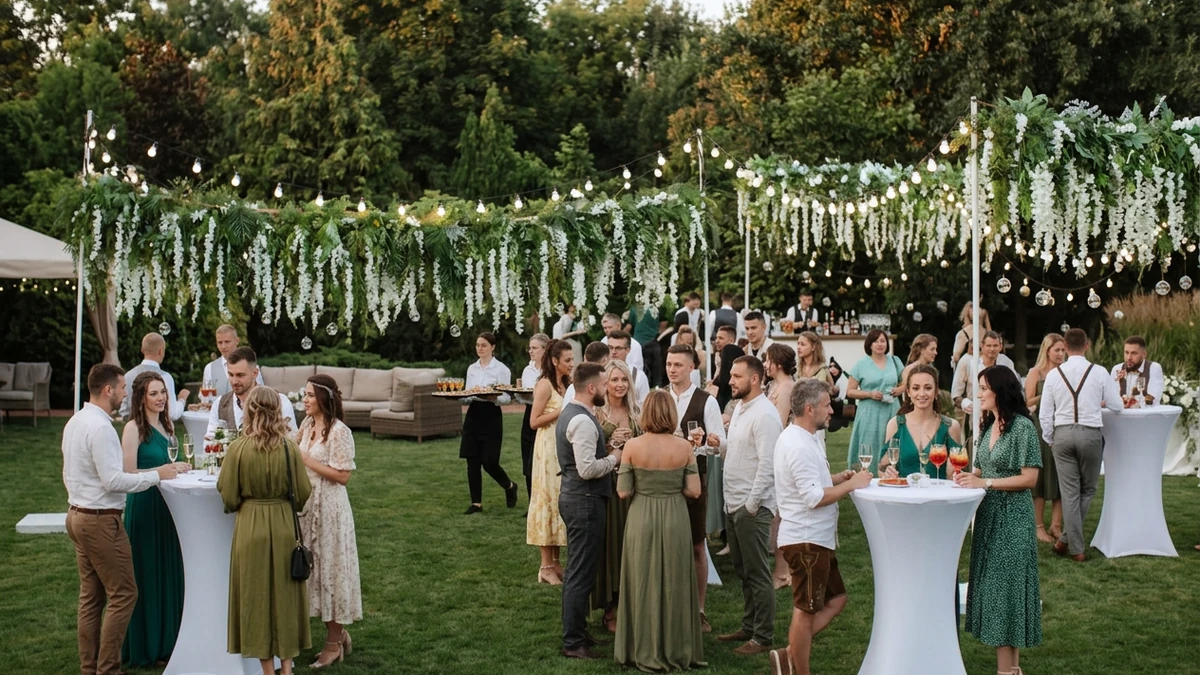
Cocktail hour: about 60 minutes. Guests have drinks and appetizers while the couple finishes portraits. It starts with the officiant’s closing announcement, and clear directional signs keep guests moving toward the bar rather than the kitchen. This is also where most couples serve their signature drinks.
Guests find their seats: 15 to 20 minutes. Guests look up their table on the seating chart or their escort card and settle in.
Grand entrance: 5 to 10 minutes. The wedding party, then the couple.
First dance: about 5 minutes, unless you save it for after dinner.
Welcome and blessing: about 5 minutes, usually from the host.
Dinner: 45 to 90 minutes, depending on service. At a buffet, the DJ releases one table at a time, so clear table numbers save a lot of confusion.
Toasts: 15 to 30 minutes in total, during dinner or just before dessert.
Parent dances: 5 to 10 minutes.
Cake cutting: about 10 minutes, announced so guests can gather.
Open dancing: one to three hours, in sets.
Bouquet and garter toss: about 10 minutes, optional.
Last call: 30 minutes before the end.
Last dance: about 5 minutes.
Send-off: 10 to 15 minutes.
Notice what isn’t on the list: a receiving line. The Emily Post Institute says a receiving line isn’t required, but the couple does need to greet and thank every guest. If you skip the line, plan to visit each table during dinner, ideally once you’ve eaten your own meal.
Sample wedding reception timelines
Each schedule below starts the moment the ceremony ends and counts length from the start of cocktail hour to the send-off. Every slot follows the one before, the formalities finish within about two hours of guests sitting down, and the last call lands 30 minutes before the end. Change the times, but keep the gaps.
3-hour lunch reception after an 11:00 am ceremony
Time | What happens |
11:30 am | Cocktail hour: drinks, appetizers and lawn games; the couple’s portraits |
12:15 pm | Guests find their seats |
12:25 pm | The couple’s entrance and welcome |
12:30 pm | Lunch, buffet or family style |
1:15 pm | Toasts: two or three speakers |
1:30 pm | First dance and one parent dance |
1:40 pm | Cake cutting and dessert |
1:50 pm | Dancing or lawn games |
2:00 pm | Last call |
2:25 pm | Last dance |
2:30 pm | Send-off |
Few guests want a packed dance floor at 2:00 pm, so lawn games or a short set of songs works better.
4-hour reception with a buffet dinner
After a 4:30 pm ceremony.
Time | What happens |
5:00 pm | Cocktail hour |
6:00 pm | Guests find their seats |
6:15 pm | Grand entrance, straight into the first dance |
6:25 pm | Welcome from the host; the buffet opens, one table at a time |
7:15 pm | Toasts: maid of honor and best man |
7:30 pm | Parent dances |
7:40 pm | Cake cutting |
7:50 pm | Dancing opens |
8:30 pm | Last call |
8:55 pm | Last dance |
9:00 pm | Send-off |
Going straight from the entrance into the first dance saves an interruption later, when there’s only an hour of dancing to protect.
5-hour reception with a plated dinner
After a 4:30 pm ceremony on Saturday, June 12, 2027 in Charleston, South Carolina, where sunset is at about 8:28 pm.
Time | What happens |
5:00 pm | Cocktail hour; family photos in the first 20 minutes, then the couple joins |
6:00 pm | Guests find their seats |
6:15 pm | Wedding party and couple’s entrance, then the first dance |
6:25 pm | Welcome and blessing |
6:30 pm | First course |
6:45 pm | Toasts: the host, maid of honor and best man |
7:05 pm | Main course |
7:30 pm | Parent dances |
7:40 pm | Cake cutting; dessert served |
7:50 pm | Dancing opens; the couple steps out for sunset portraits until 8:10 pm |
9:15 pm | Bouquet and garter toss (optional) |
9:30 pm | Last call |
9:55 pm | Last dance |
10:00 pm | Send-off |
The portrait slot comes from NOAA’s solar calculator, which gives the sunset time for any date and place. Twenty minutes ending a little before sunset catches the warm light.
6-hour reception with late-night food
After a 5:00 pm ceremony with a larger guest list.
Time | What happens |
5:30 pm | Cocktail hour |
6:30 pm | Guests find their seats |
6:45 pm | Entrances, the first dance and any traditional opening dance, such as a hora |
7:05 pm | Welcome and blessing; dinner service begins |
7:45 pm | Toasts between courses |
8:15 pm | Parent dances |
8:25 pm | Cake cutting; dessert |
8:35 pm | Dancing opens |
10:00 pm | Late-night snack (out for no more than 2 hours) |
10:30 pm | Anniversary dance, bouquet and garter toss (optional) |
11:00 pm | Last call |
11:25 pm | Last dance |
11:30 pm | Send-off |
If you’re including a cultural tradition such as the hora, confirm with your family or officiant where it belongs and how long it runs.
Download our free reception timeline template to build your own. Enter the time cocktail hour starts and how long each event runs, and the clock times fill in. It comes prefilled with the 5-hour sample above.
Dinner first or dancing first?
Some couples open with a 20-minute dance set before anyone eats. It suits a young, high-energy crowd, but hungry guests wait longer, so serve heavier appetizers at cocktail hour. Dinner first is safer for a mix of ages.
Fall and winter weddings
Sunset moves the plan more than anything else. In Charleston on Saturday, October 9, 2027, sunset comes at about 6:54 pm, while dinner is under way in the 5-hour sample, so portraits move into the last part of cocktail hour. On Saturday, December 11, 2027, it comes at about 5:14 pm, right around the end of a 4:30 pm ceremony, so portraits come before the ceremony instead.
How do you build your own reception timeline?
Build it backward from the things you can’t move. Start with the venue’s end time, vendor hours, the caterer’s plan and sunset. Then place the send-off, last dance and last call, group the formalities near the start, and add buffers between every move. Finally, write it all down with names and music cues.
Start from the fixed times. Get the venue’s end time and noise rules, each vendor’s contracted hours, the caterer’s service time for your menu, and sunset for your date and place.
Work back from the end. Put the send-off at your end time, the last dance about 5 minutes before it, and last call 30 minutes before the end.
Finish the formalities within about two hours of guests sitting down. As the Emily Post Institute points out, cutting the cake tells guests they’re free to leave, so a late cutting keeps older guests waiting for permission to go home.
Group the formalities into one or two blocks, so that once the floor opens, it stays open.
Add buffers. Allow 15 to 20 minutes to move guests to their seats, and leave slack around every move. Planners call this the 30-5 rule: anything that takes five minutes on a normal day takes about 30 on the wedding day.
Cap the speeches at three or four speakers of three to five minutes each, and tell each speaker their slot in writing.
Plan for the two of you. Ask the caterer to serve you first, visit tables if there’s no receiving line, and keep about 20 minutes free for sunset portraits.
Time the food. Decide when the buffet and any late-night snack go out, and when the caterer clears them.
Write it down, with a clock time, the person responsible and any music cue on every line, plus how to pronounce every name the DJ will say.
The USDA says food shouldn’t sit out of refrigeration for more than 2 hours, or more than 1 hour when it’s above 90°F. Time buffets and late-night food with that limit in mind, especially on a summer lawn.
If there’s a gap after the ceremony
An early afternoon church ceremony sometimes leaves a gap of several hours before the reception. Guests need to know that before they plan their day, so put the reception time on the invitation rather than leaving them to guess. A short list of nearby places to wait is a kind touch for out-of-town guests.
When do the toasts, first dance and cake cutting happen?
Toasts come during dinner or just before dessert. The first dance comes straight after the entrance or straight after dinner, and the cake is cut just before dessert is served. Parent dances follow the first dance, and the bouquet and garter toss, if you include them, come later, once the dancing is in full swing.
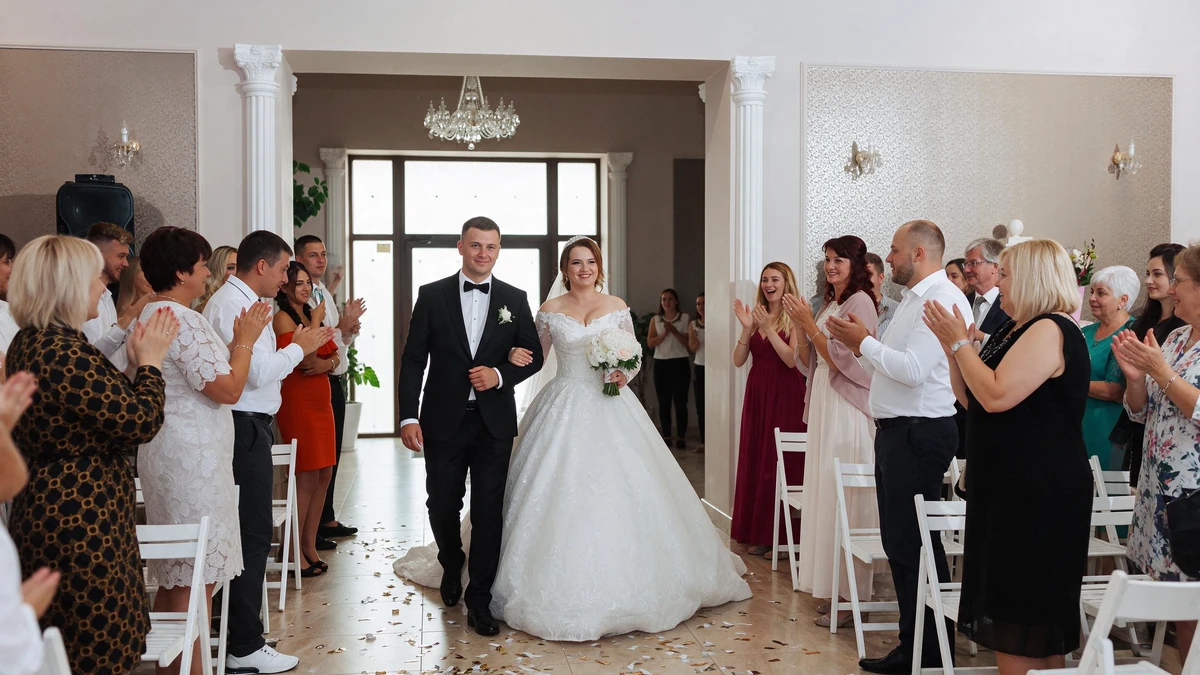
The grand entrance
Parents enter first if you include them, then the wedding party in pairs, with the maid of honor and best man last, then the two of you. Give the DJ every name spelled the way it should sound.
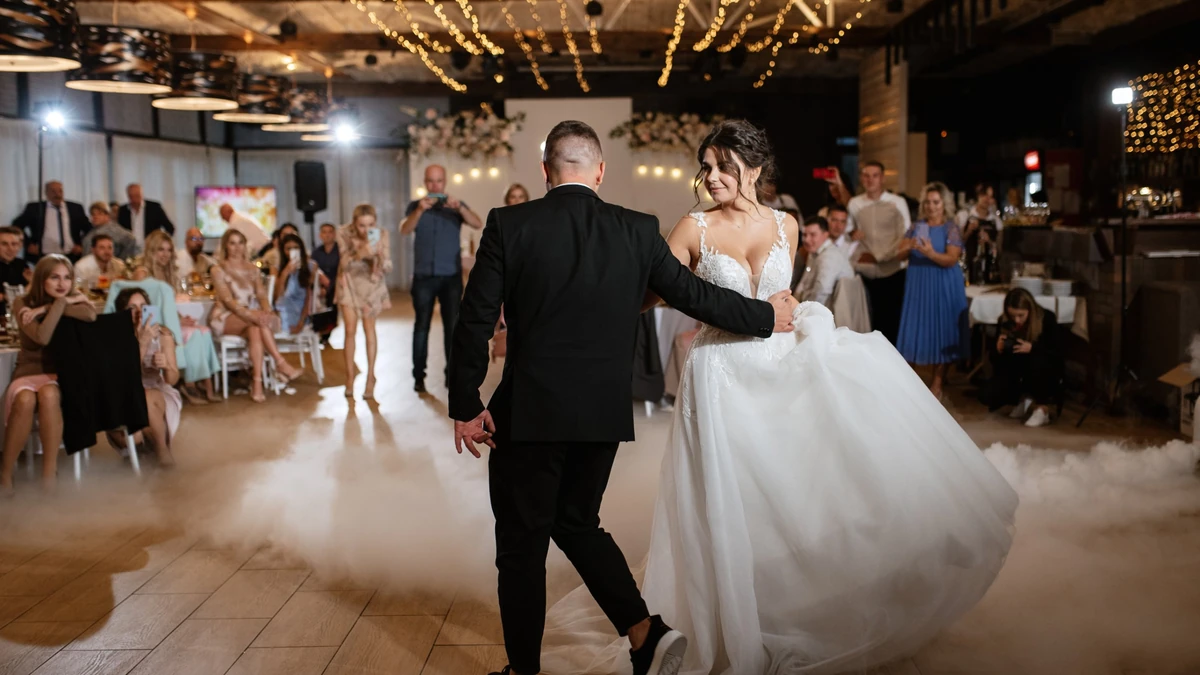
The first dance
Before dinner gets it done while you’re already on the floor; after dinner turns it into the start of the party. Keep it beside the other formalities either way.
Toasts and the order of speeches
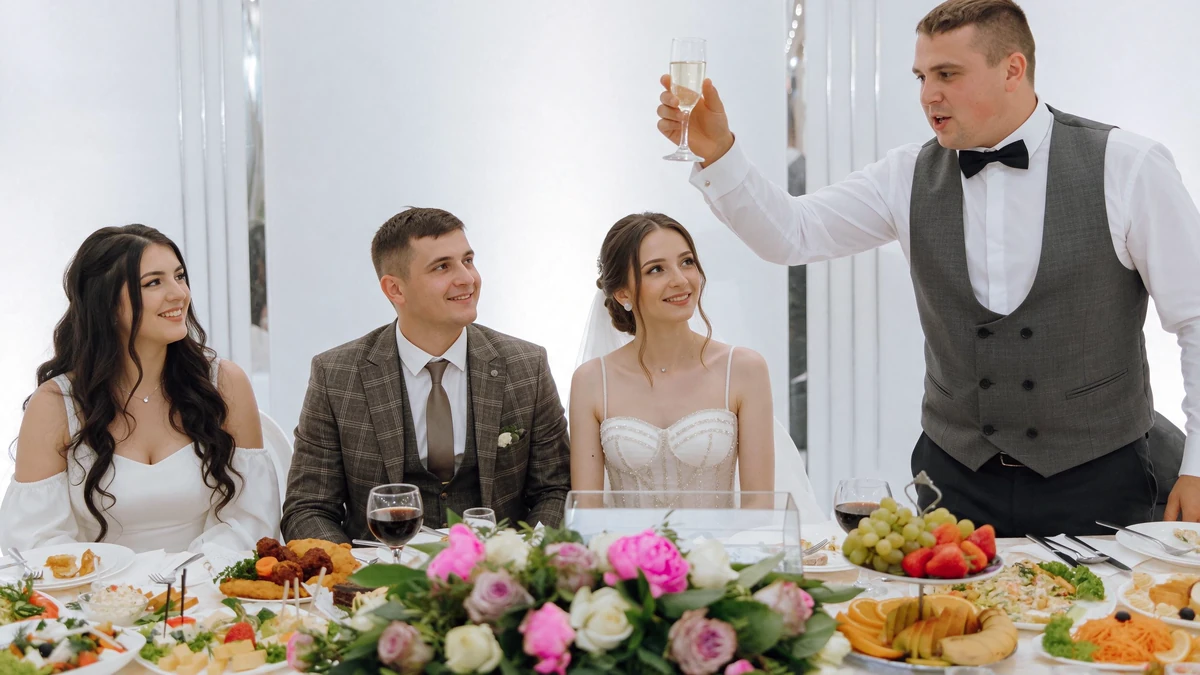
The Emily Post Institute’s guide to toasting says the host toasts first, a rule that “does still apply at wedding receptions,” and that toasts usually come early in the meal or just before dessert. Its advice on the groom’s toast has the best man leading off instead, so families do vary.
The common order is the host, then the maid of honor and best man, then the couple. Never stop dancing for a speech.
The order of dances
The first dance comes first, then the parent dances: father and daughter, mother and son, or both parents together. Run them back to back, so the DJ only has to call guests over to watch once, and then open the floor to everyone.
An anniversary dance or a money dance fits later in the night, once the floor is full, and the last dance closes the reception. If a dance is a family or cultural tradition, ask the relatives who know it best where it belongs and how long it runs.
Cake cutting
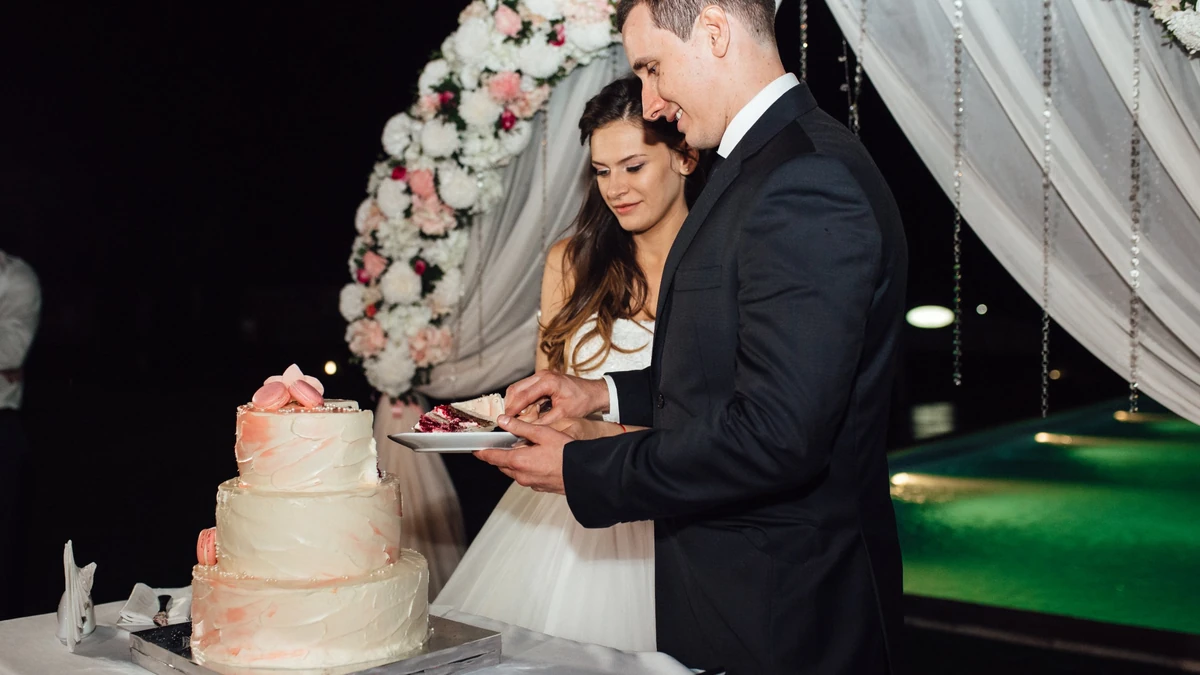
Emily Post’s guide to cutting the cake notes that cutting it “is a signal that it’s okay to leave,” so time it just before dessert and announce it so guests can gather.
Warn the caterer and photographer a few minutes before the announcement.
The bouquet and garter toss
Both are optional and take about 10 minutes once the floor is full. Plenty of couples skip one or both.
The last dance and the send-off
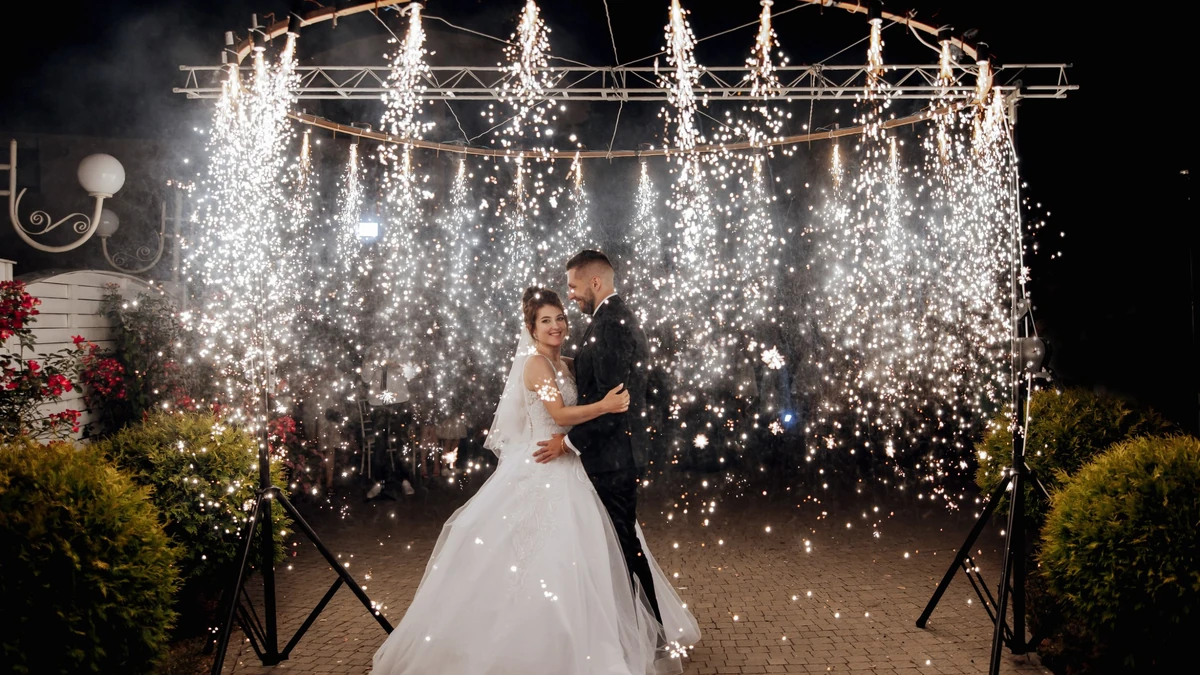
The last dance comes about 5 minutes before the send-off, and the send-off itself takes 10 to 15 minutes to line everyone up. A send-off sign near the exit tells guests where to gather and what to hold.
The CPSC says sparklers burn at about 2,000°F, hot enough to melt some metals. Check the venue’s rules before you plan a sparkler exit, and keep a bucket of water at the end of the line.
Who needs a copy of your reception timeline?
Everyone with a job on the night: the DJ or band, the venue coordinator, the caterer, the photographer and anyone giving a speech. Send the final version 7 to 14 days before the wedding, alongside the caterer’s final headcount, and choose one person other than the two of you to keep the night on time.
The vendor version
Keep it to one page: clock times, events, who is responsible, music cues, name pronunciations and a phone number for each vendor. If the couple is watching the clock, nobody else is.
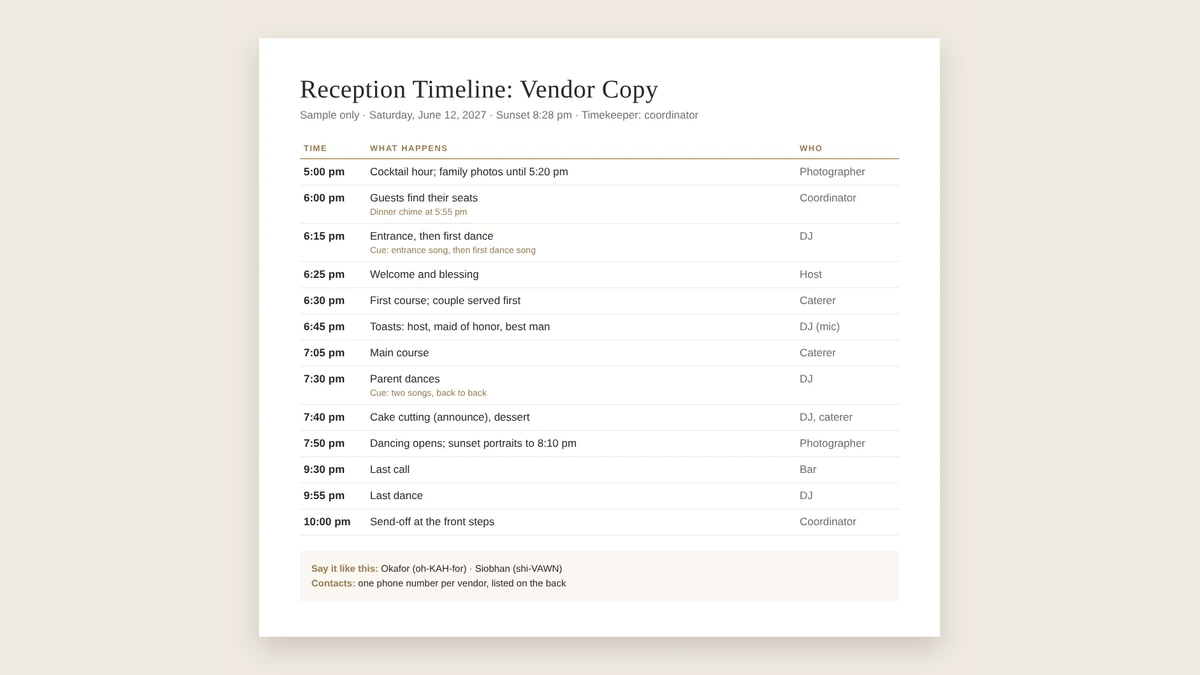
The guest version
Guests only need the main moments: dinner, the toasts, the first dance and the send-off. Put them on a welcome sign, your wedding website or a wedding program with the reception timeline on the back. Nobody needs to know when the caterer clears the plates.
Key Takeaways
The last call comes 30 minutes before the reception ends, and the last dance about 5 minutes before the send-off.
Moving guests from cocktail hour to their seats takes 15 to 20 minutes, even when everyone has an escort card.
Toasts work best capped at three or four speakers of three to five minutes each, with every slot agreed in advance.
Cutting the cake tells guests they may leave, so it belongs just before dessert rather than late in the evening.
Buffet and late-night food should sit out no longer than 2 hours, or 1 hour above 90°F, under USDA food safety guidance.
Vendors need the final timeline 7 to 14 days before the wedding, with one person other than the couple keeping time.
Frequently Asked Questions
What is the correct order for a wedding reception?
Cocktail hour, grand entrance, first dance, welcome, dinner, toasts, parent dances, cake cutting, open dancing, last dance and send-off. Couples often move the first dance after dinner or give the toasts before dessert, and that’s fine. Keeping the formalities grouped matters more than the exact order, because it lets the dancing run unbroken.
Is a 4 hour reception too short?
No. Four hours from the start of cocktail hour fits every formality, from the entrance and first dance to the toasts and cake cutting, plus about an hour of open dancing. What you give up is dancing time rather than any tradition. A buffet dinner and grouped formalities keep four hours from feeling rushed.
What is the 30-5 rule for weddings?
It’s a planner’s rule of thumb: anything that takes 5 minutes on a normal day takes about 30 on the wedding day. Some planners use it to mean 30-minute buffers around big moments and 5 minutes around small moves. Either way, the lesson is the same: build slack into every transition.
How long is cocktail hour at a wedding?
About an hour. Forty-five minutes is enough if your photos were taken before the ceremony. Allow up to 90 minutes if the ceremony space is being turned over for dinner, and make sure there’s food and seating, because older guests will be on their feet longer than you expect.
When do you cut the cake at a wedding?
After dinner, just before dessert is served. The Emily Post Institute notes that cutting the cake signals to guests that they may leave, so a late cutting keeps older guests waiting for permission to go. Announce it so everyone can gather, and warn the caterer a few minutes beforehand.
What is the order of speeches at a wedding?
The host’s welcome comes first, often from a parent, then the maid of honor and best man, then the couple’s thank-you. Families vary, and some let the best man lead off. Keep it to three or four speakers at three to five minutes each, and tell every speaker their slot in advance.
What is the order of dances at a wedding?
First dance, then parent dances, such as father and daughter, mother and son, or both parents together, and then the floor opens to everyone. An anniversary dance or money dance fits later in the night where it’s a family tradition, and the last dance closes the reception just before the send-off.
Should the first dance be before or after dinner?
Both work. Straight after the entrance, you’re already on the floor and can relax and eat afterward. After dinner, it opens the dancing with guests fed and settled. Pick whichever suits your crowd, then keep the other formalities right beside it so the night isn’t interrupted twice.
Ready to put your timeline on paper?
Once the clock times are set, the stationery follows the same order: programs for the ceremony, then place cards, menus, bar menus and table numbers for the reception. Our day-of stationery in one matching style covers all five pieces, so every step of the night looks like part of the same day.