
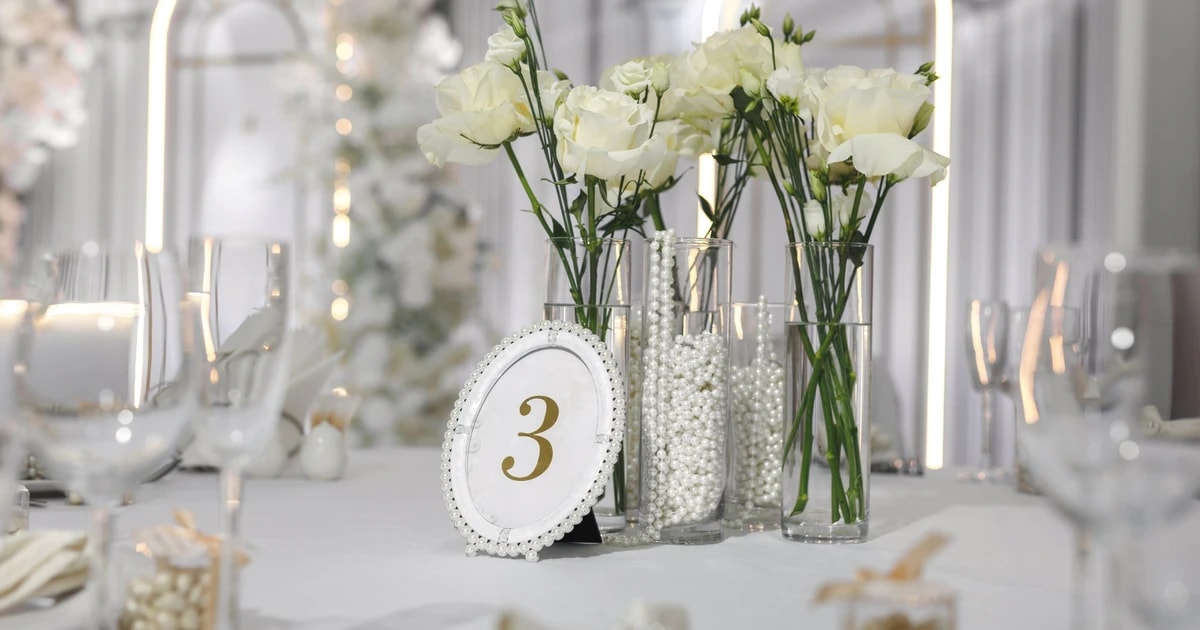
Wedding Table Number Ideas: 20 Designs, Plus How to Number and Size Them
The best wedding table number ideas are the ones guests can read from across the room: framed 5x7 cards, tent cards, acrylic, wood, wine bottles or named tables. Number the tables in an order guests can follow, make the numeral about 2 inches tall to read from 17 feet, and print one per table plus one or two spares.
Most wedding table number ideas get judged in a photo, from about a foot away. Your guests judge them from across a reception room, holding a drink and an escort card. A card that looked lovely on a screen can turn into a pale smudge behind a centerpiece.
This guide gives you 16 designs and four alternatives to numbers, each with what it suits and what to watch for. Then it covers what most idea lists skip: how to number the tables, how big the numeral needs to be, how many cards to print and when, and how to set them out.
16 wedding table number ideas
Wedding table numbers fall into four families: paper cards, acrylic and mirror, natural materials such as wood, stone and plants, and tall pieces like bottles, lanterns and freestanding numerals. Paper is the easiest to read and to change late. The others add texture and height but need more care with contrast, glare or setup.
Paper cards
Paper is the only option you can finish at a kitchen table the week before. Our wedding table number templates come in minimalist, floral, boho, classic and rustic styles, from the clean lines of Manor Etching to the botanical detail of Plumeria Peony, all editable for 5x7 frames with 4x6 options.
1. Framed card, 5x7 or 4x6
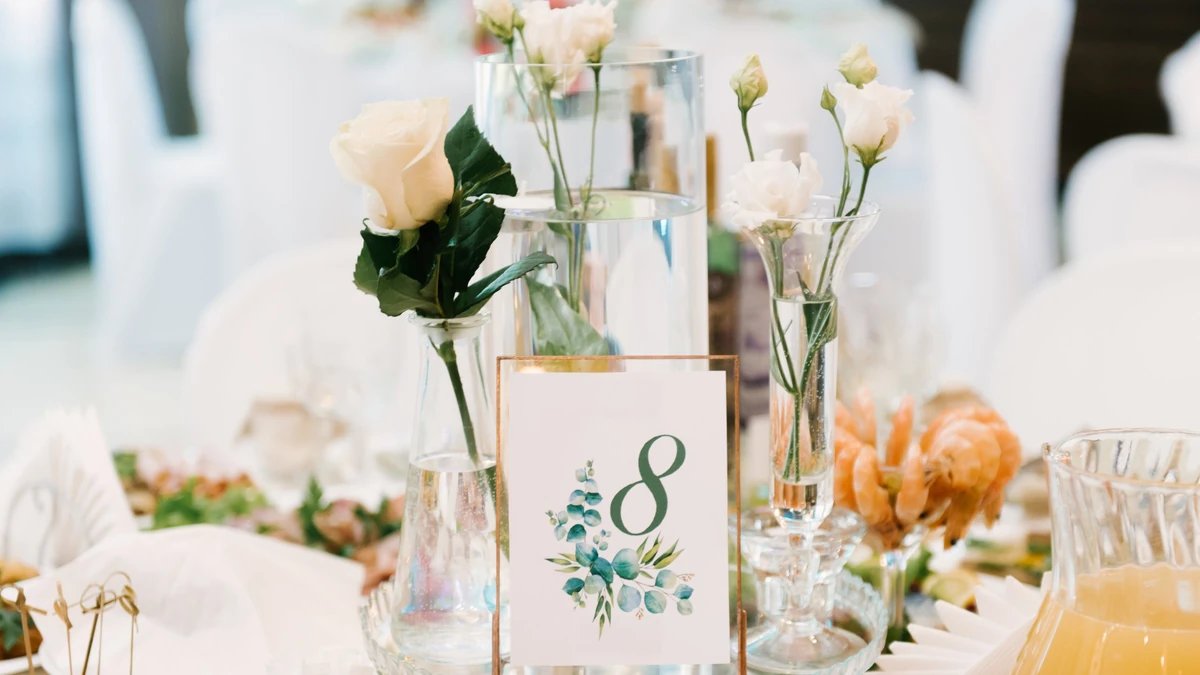
A printed card in a tabletop frame. The frame stands the card up and the card only shows the number, which makes it the most readable idea here.
Best for: Any style, and couples who want frames to reuse at home.
Watch out for: Glass fronts reflect candlelight. Tilt the frames back slightly or use frames without glass.
2. Tent card printed on both faces
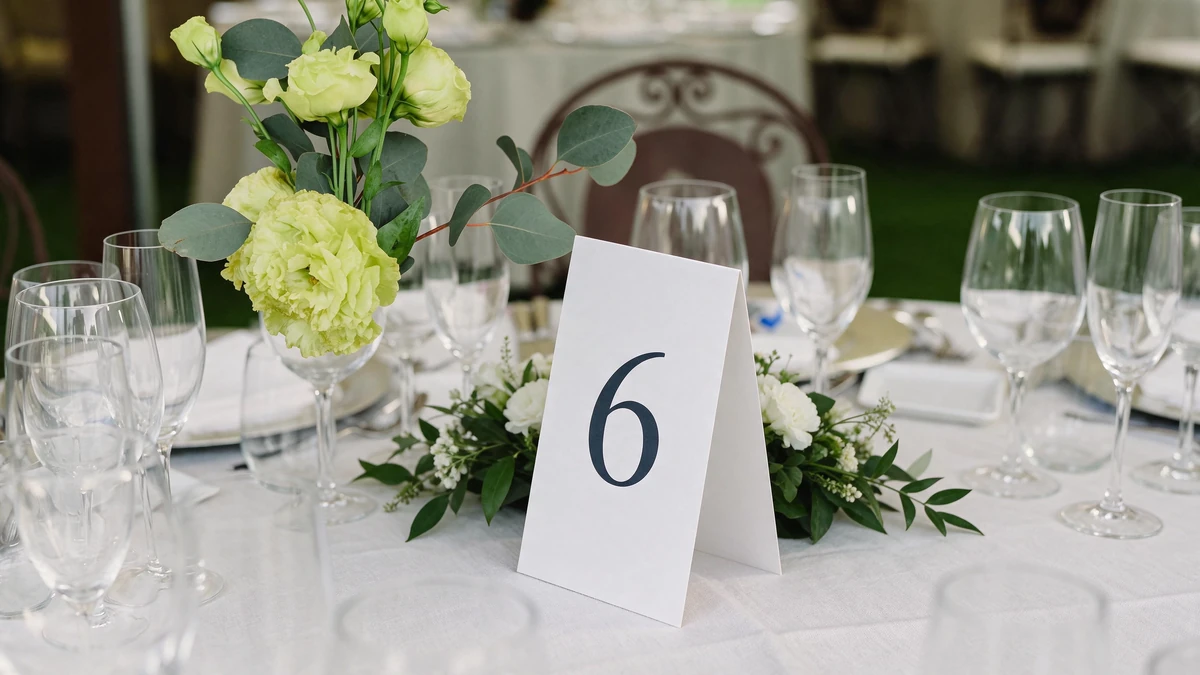
A folded card that stands without a holder, with the number on each face.
Best for: Tables in the middle of the room. No holder needed.
Watch out for: Light cardstock bows in a warm room. Use heavy stock and score the fold first.
3. Arch or scalloped card
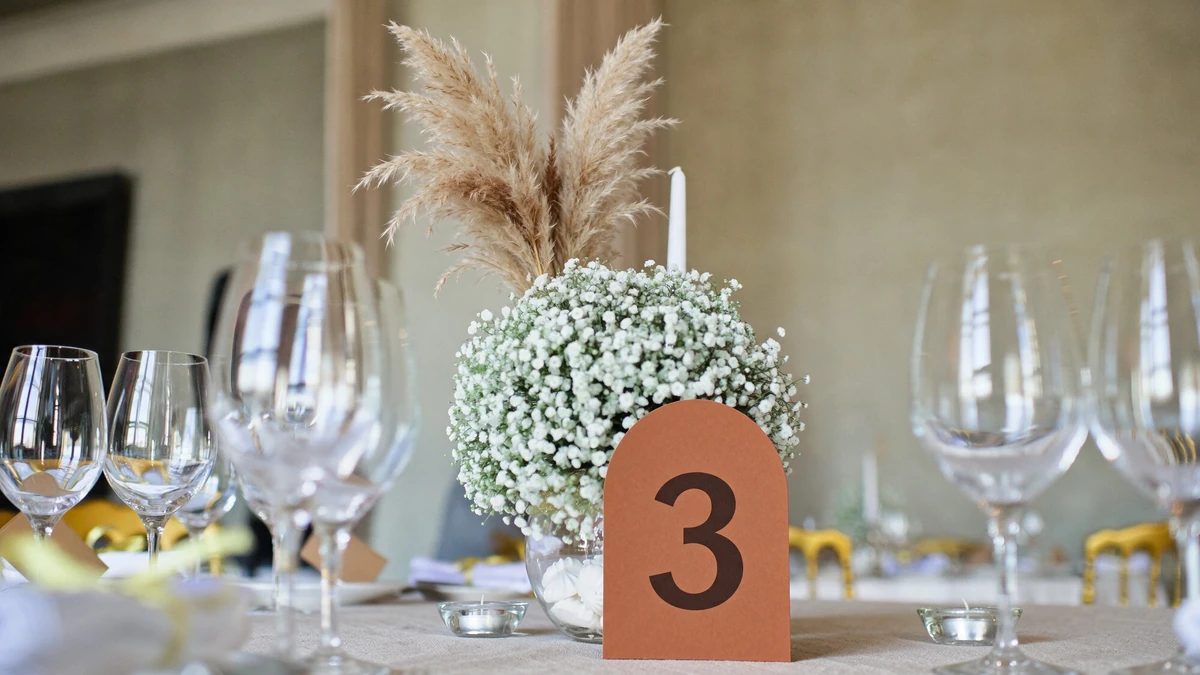
A card cut to a soft arch or scalloped edge, usually with one large numeral.
Best for: Boho and modern weddings, where the shape carries the style.
Watch out for: Shaped edges are trimmed by hand. Print a cut line on the file and set aside an evening.
4. Watercolor floral card matched to the centerpieces
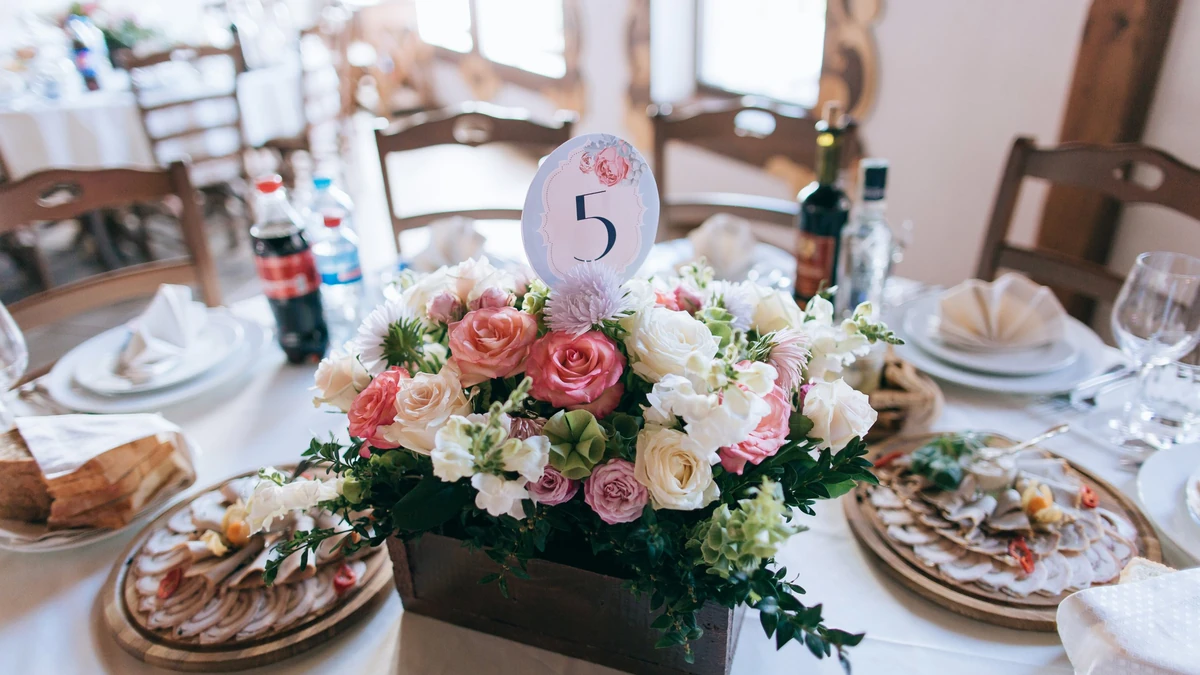
Painted flowers that echo the arrangements, so the number looks like part of the table.
Best for: Garden and spring weddings.
Watch out for: Pale numerals on pale florals disappear. Keep the number dark and the flowers at the edges.
5. Photo table numbers ("When we were 7")
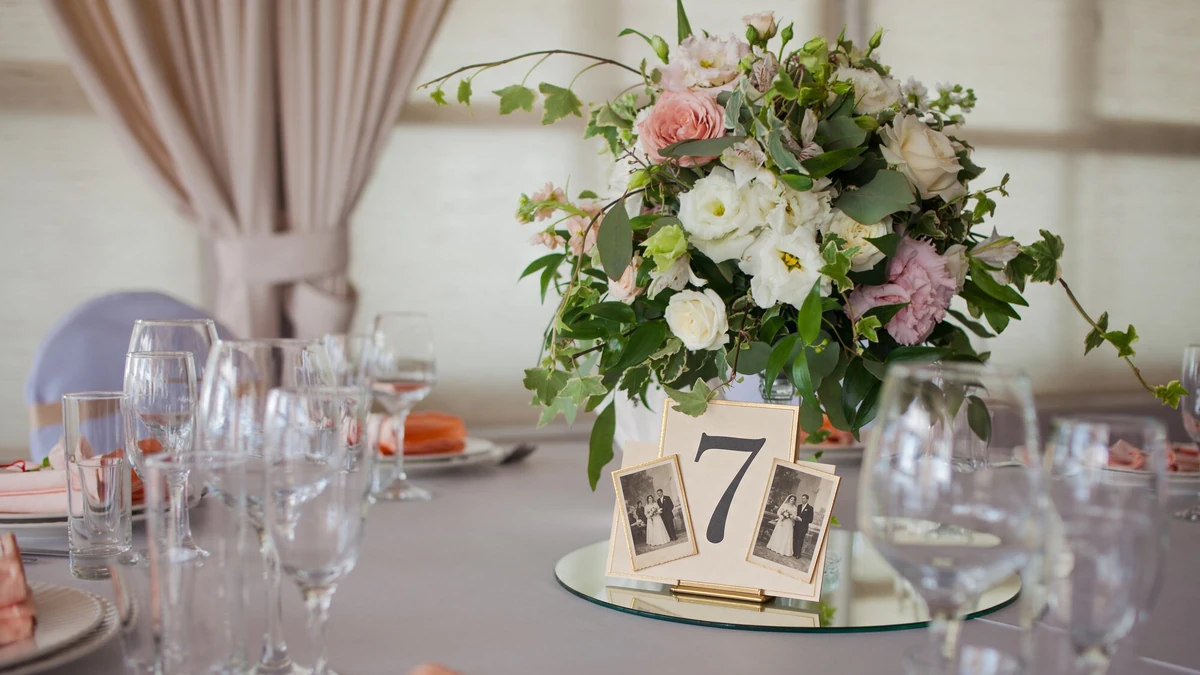
The number paired with a photo of each of you at that age, so table 7 shows you both at seven.
Best for: A personal touch that gets guests talking.
Watch out for: You need a photo of each of you at every age up to your table count: 30 photos for 15 tables. Start early, and keep the numeral large.
6. Fun-fact card
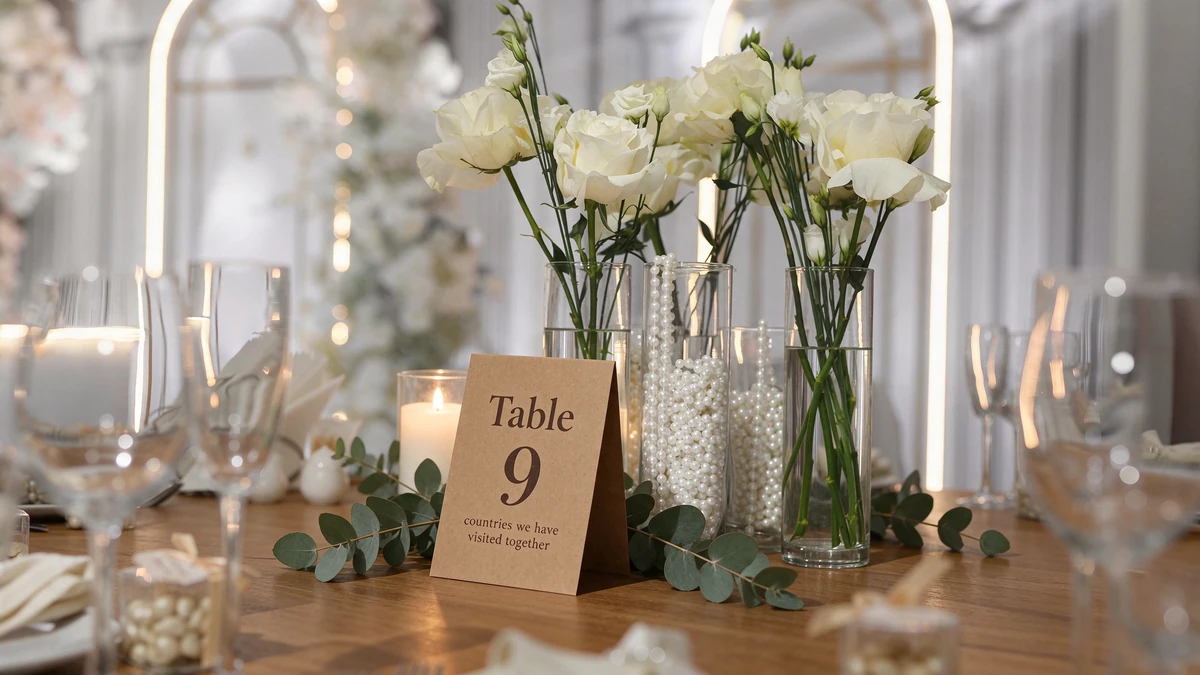
The number plus one short line about you, such as "Table 9: countries we have visited together."
Best for: Giving guests something to talk about between courses.
Watch out for: Keep the fact clearly smaller than the number, or guests hunting for table 9 will read past it.
Acrylic and mirror
7. Clear acrylic with white or black print
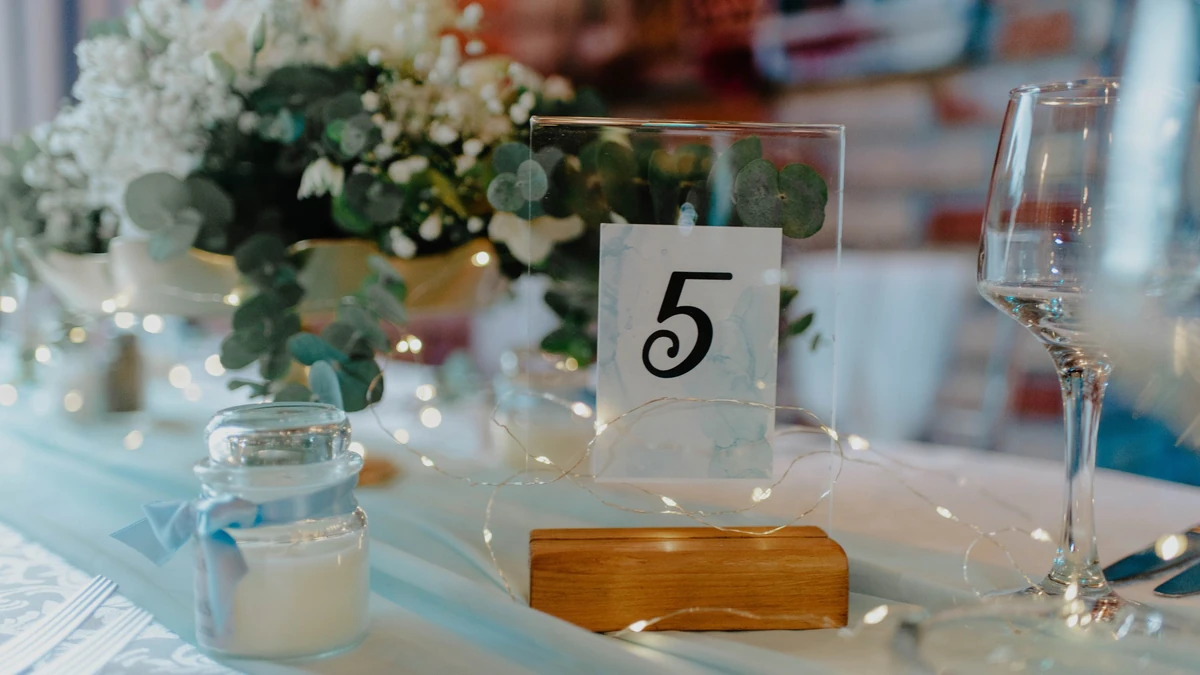
A clear panel on a small base, so the centerpiece shows through.
Best for: Modern weddings, and tables where you would rather not hide the flowers.
Watch out for: Whatever stands behind clear acrylic becomes its background. White print over white roses vanishes, so check contrast from across the room.
8. Mirror acrylic
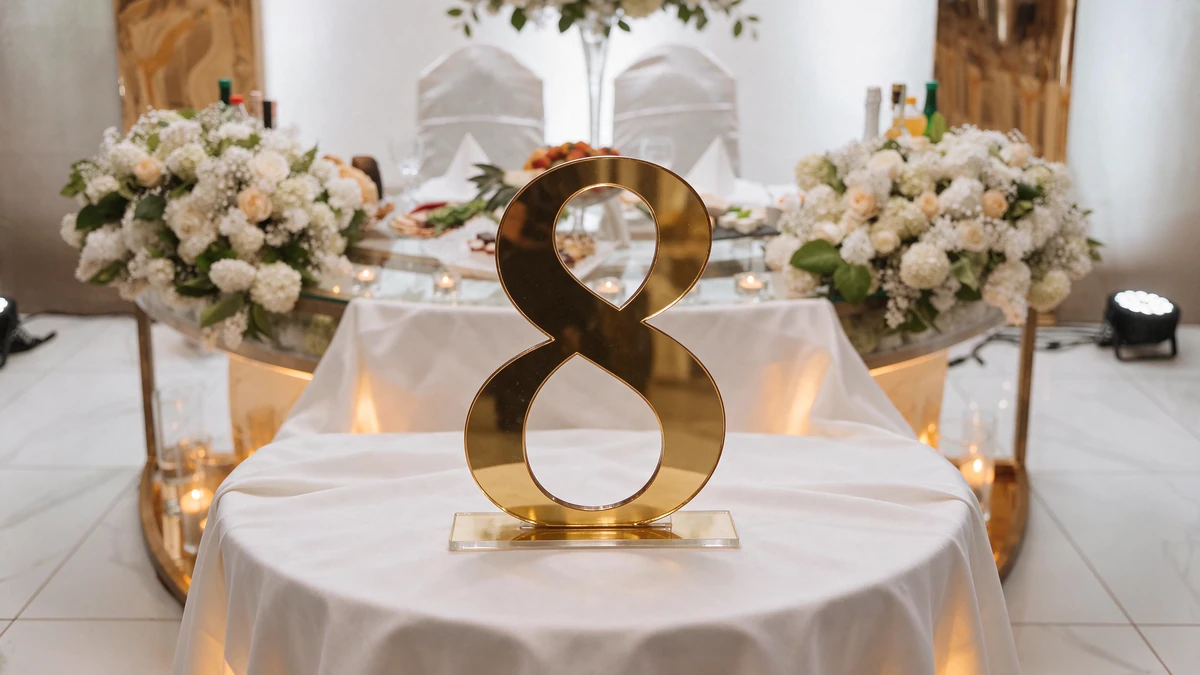
A reflective gold, silver or rose gold panel with the number cut or printed on it.
Best for: Glam and ballroom receptions.
Watch out for: Under uplighting and candles a mirror number can flash rather than read. Test one in the room’s real lighting first.
9. Frosted acrylic
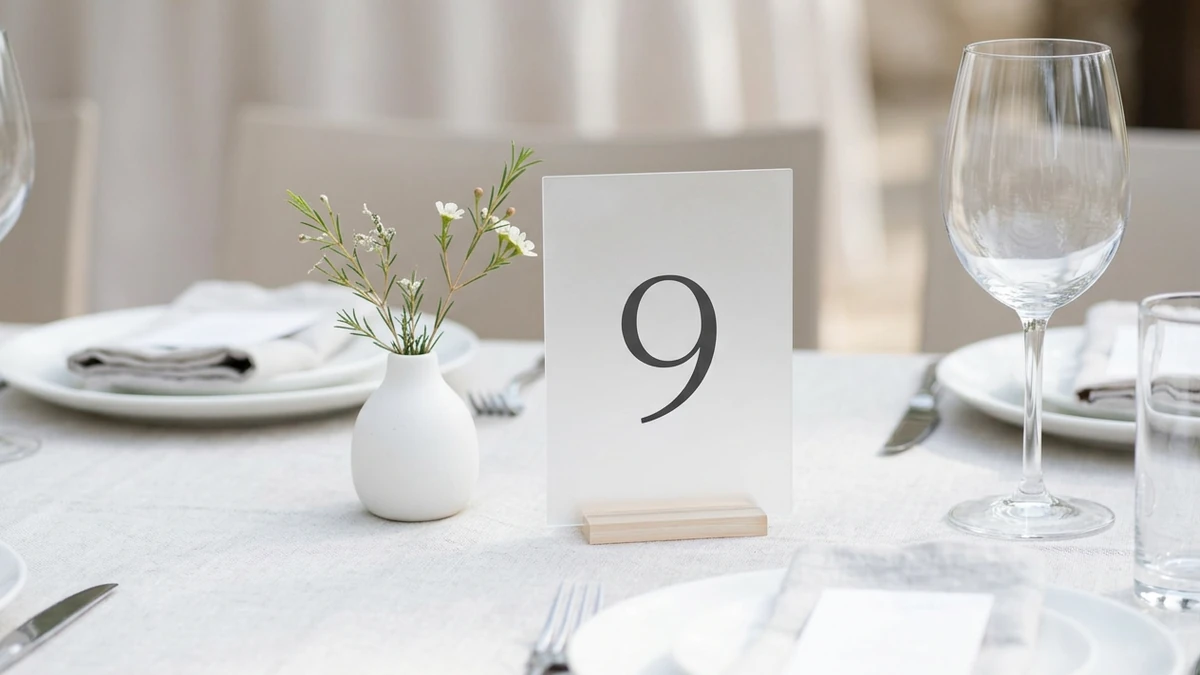
A cloudy, semi-opaque panel that softens whatever sits behind it.
Best for: Minimalist weddings.
Watch out for: White print washes out against frost. Dark print reads far better.
The U.S. Access Board, which sets accessibility rules for building signs, requires characters that contrast with their background and a non-glare finish, and notes that "variated or textured backgrounds can reduce contrast." Table numbers are not building signs, but the logic carries over: glossy, busy or see-through backgrounds are the ones guests struggle with.
Wood, stone and plants
10. Wood slice or block, painted or engraved
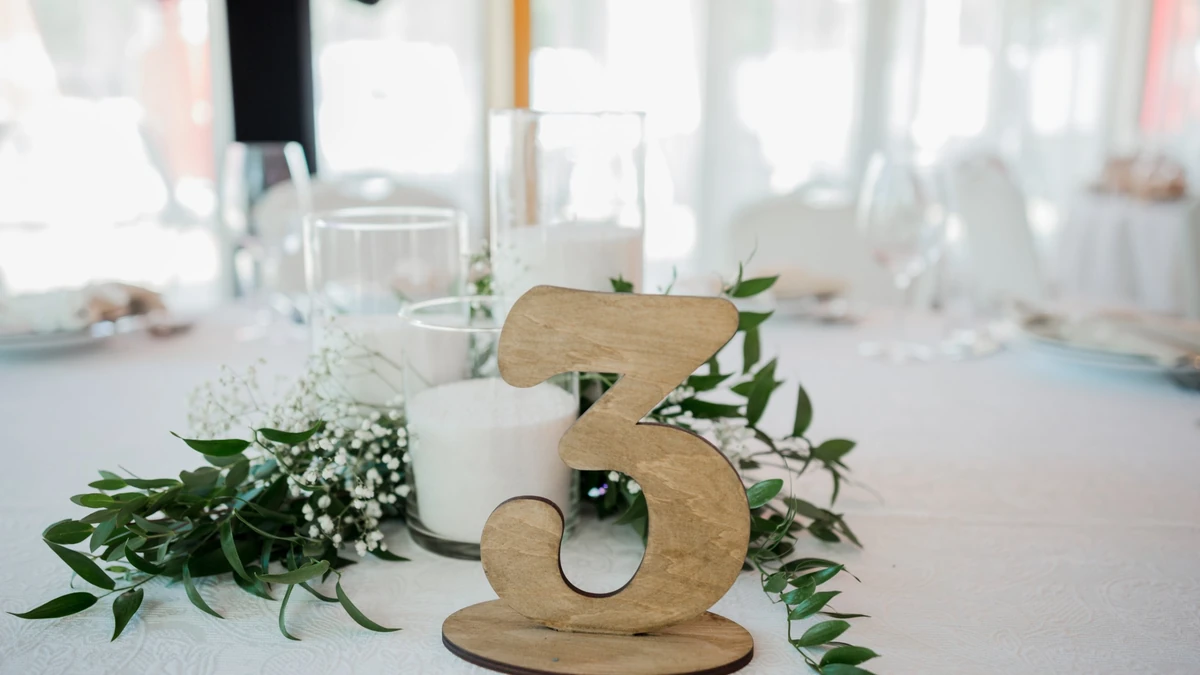
A log slice or cut block with the number painted, burned or engraved.
Best for: Rustic, barn and outdoor weddings. A block stays put in a breeze.
Watch out for: Plain engraving is brown on brown. Fill the numeral with paint.
11. Painted stones or agate slices
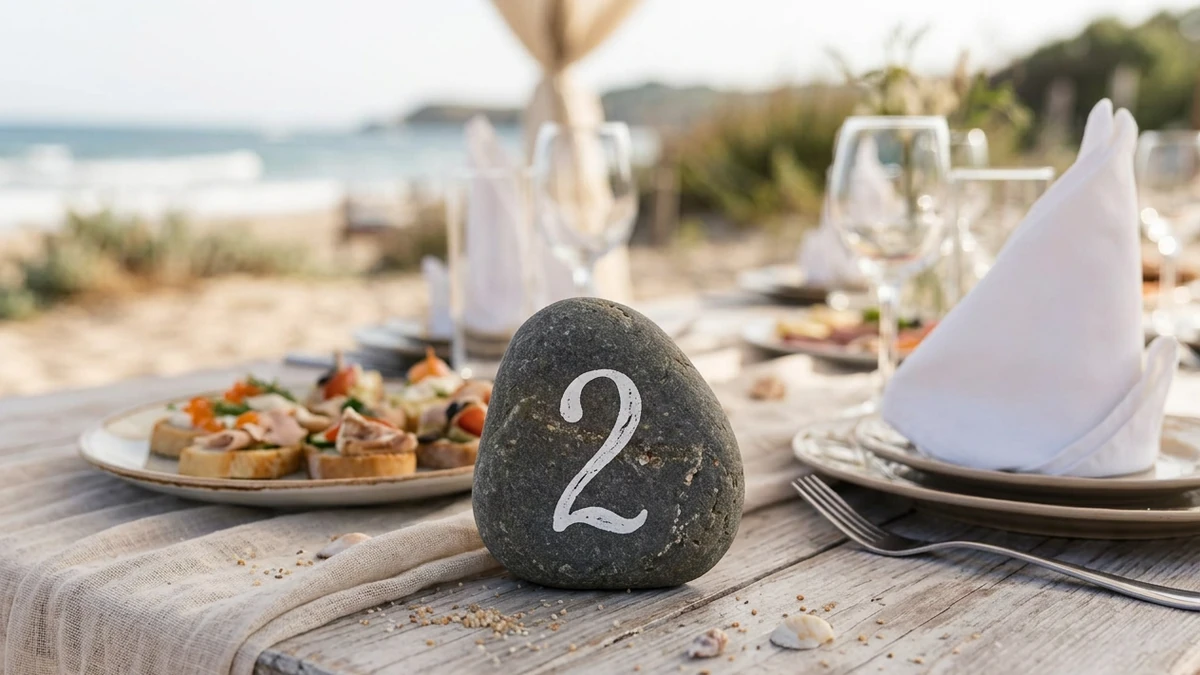
Smooth stones or polished agate slices with a painted or gold numeral.
Best for: Beach and garden weddings.
Watch out for: Stones sit low and hide behind glassware. Pair them with a tall card or a small stand.
12. Potted plant or succulent with a stake card
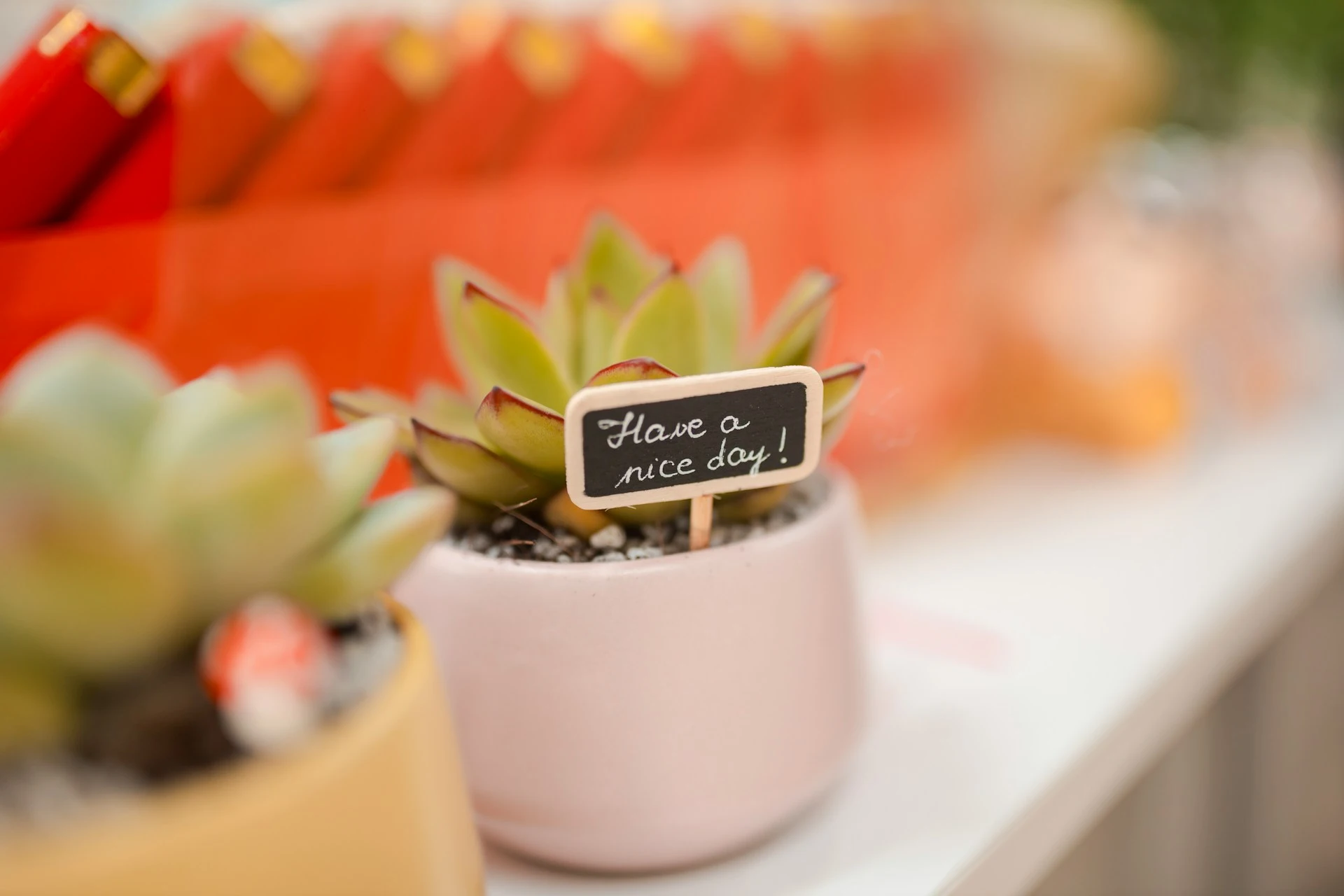
A small plant with the number on a card pushed into the soil, taken home by a guest at the end of the night.
Best for: Garden weddings, and couples who want the number to double as a favor.
Watch out for: Succulents are short. The stake has to lift the number clear of the centerpiece.
Tall pieces
13. Wine bottle with a custom label
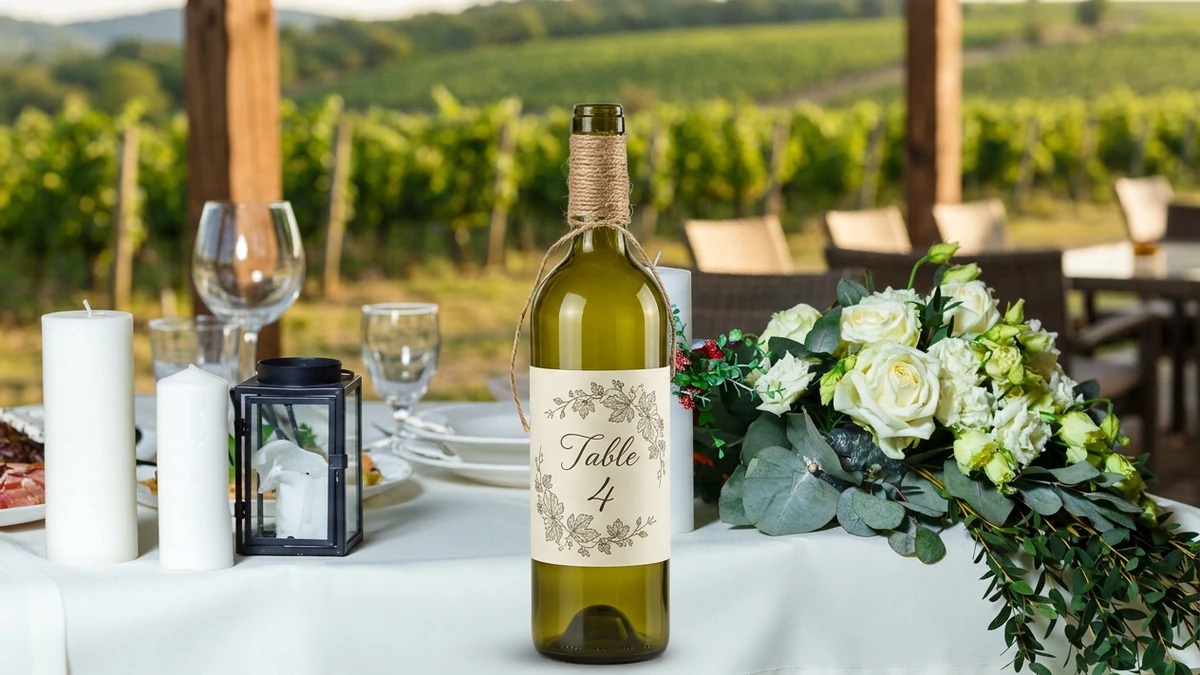
An empty bottle with a printed number label, often with a single stem in the neck.
Best for: Vineyard receptions and wine lovers. A bottle clears most centerpieces.
Watch out for: Only the middle of a curved label reads from a distance, so make the numeral big. Use empty, rinsed bottles so nobody tries to open table 6.
14. Freestanding 3D numbers
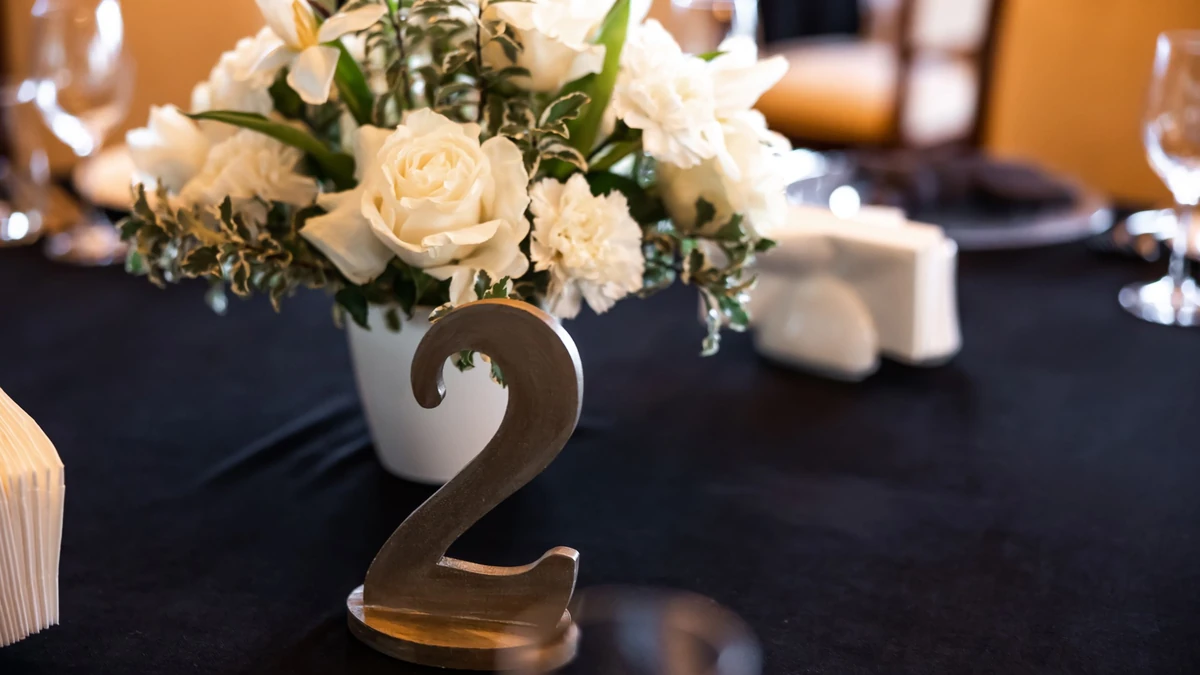
Numerals in gold, wood or acrylic that stand on their own, with no card.
Best for: Ballrooms and large rooms, where guests read from a long way off.
Watch out for: They cost more than paper. Renting them, or reselling afterward, softens that.
15. Stacked vintage books with the number on top
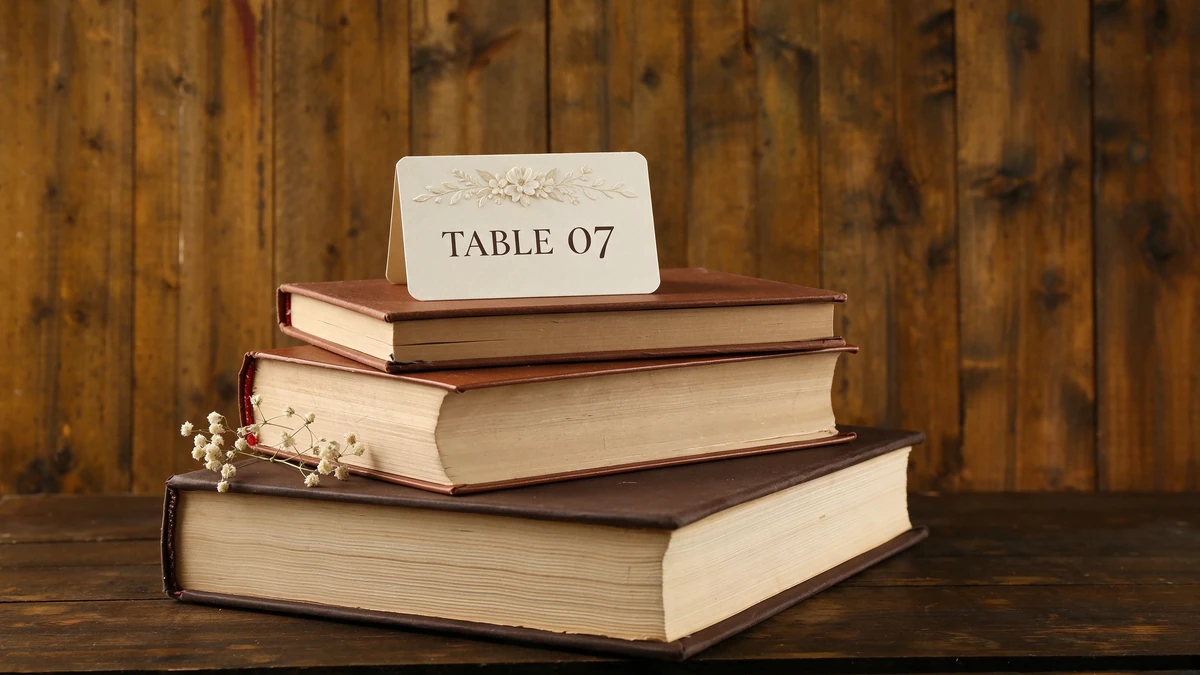
Two or three old hardcovers stacked mid-table, with the number on top.
Best for: Literary couples, and library or bookstore venues.
Watch out for: A book stack is still low. A card on the top book does the real work.
16. Lantern or candle with the number
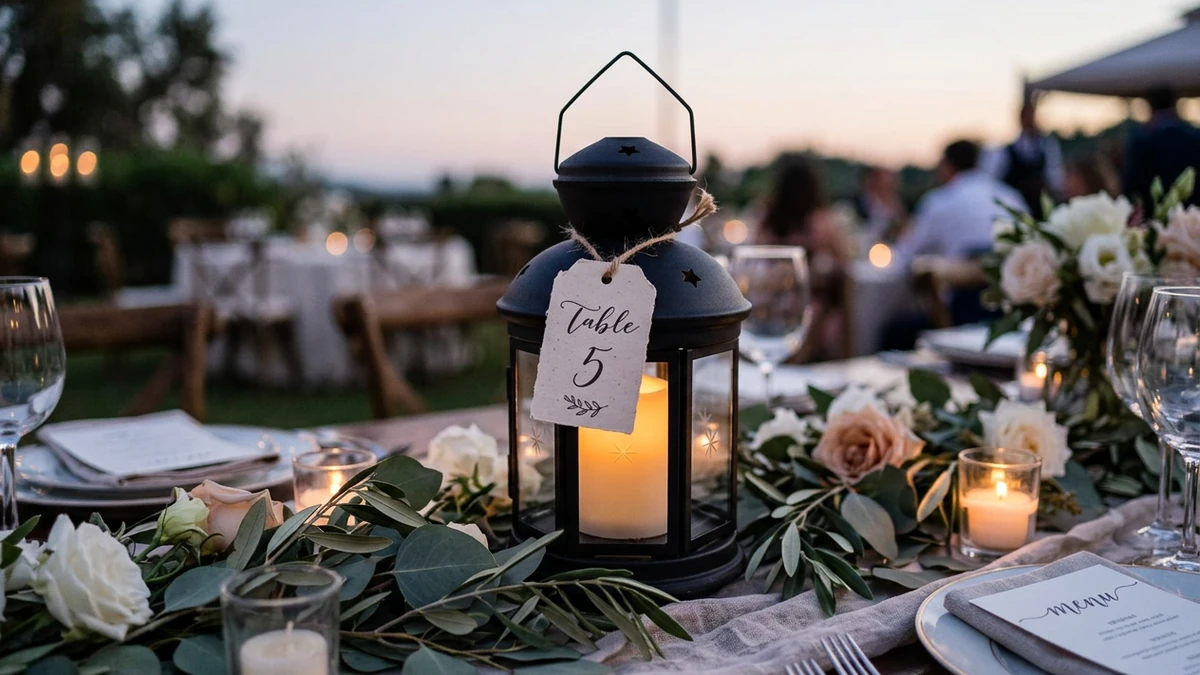
A lantern or large candle holder with the number on a tag or decal.
Best for: Evening receptions.
Watch out for: The NFPA advises keeping candles at least 12 inches from anything that can burn, so never tuck a paper number against an open flame. Many venues have their own flame rules, and LED candles avoid both problems.
What can I use instead of table numbers at a wedding?
You can name your tables instead of numbering them. The four themes that work best are places that matter to you, songs or albums, drinks, and flowers or colors. Emily Post notes that the most popular personalized table cards "name tables with favorite locations of the couple." Keep a small number on each card for the servers.
17. Places that matter to you
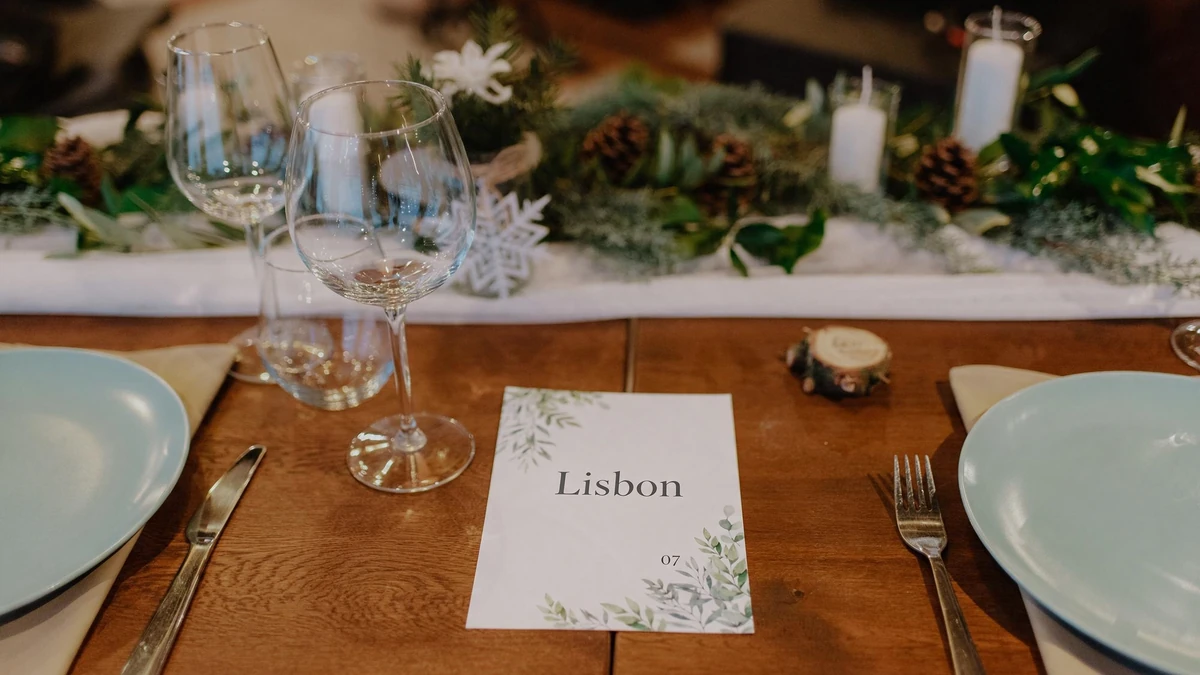
Where you met, got engaged or traveled: "Lisbon," "Lake Tahoe," "Savannah."
Best for: Couples with a travel story. Guests get this theme fastest.
Watch out for: Private jokes such as "Room 214" need a line explaining them, or half the room feels left out.
18. Songs or albums
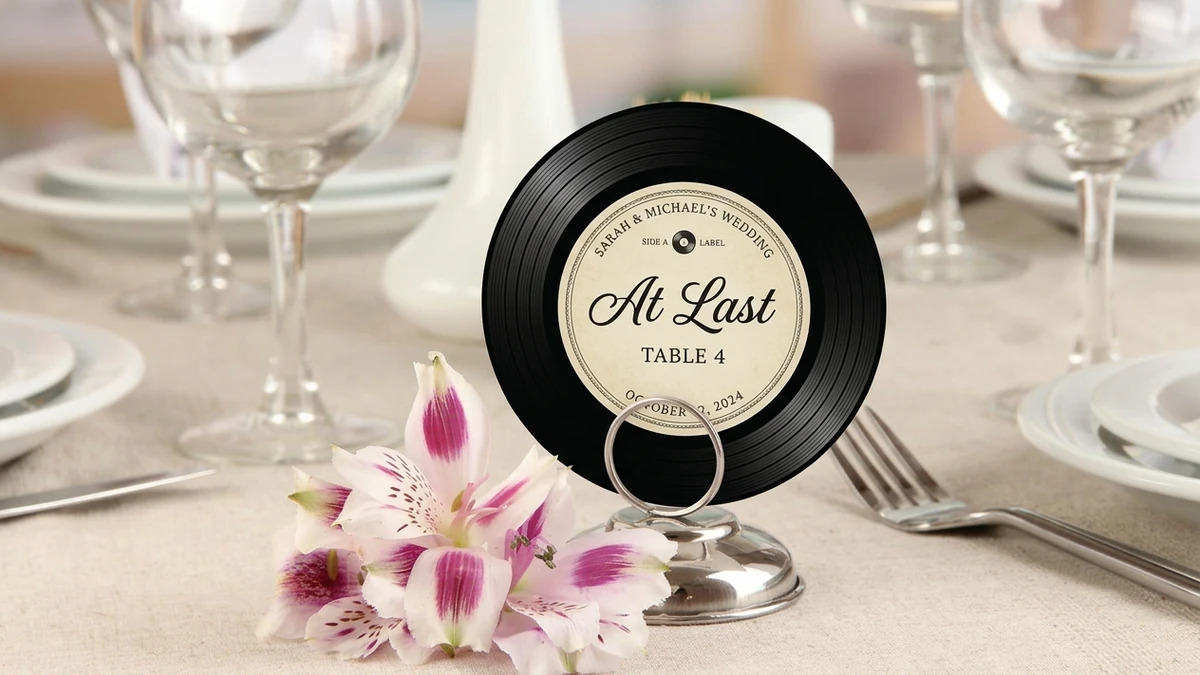
Your first dance, the album from your first road trip, the song playing when one of you proposed.
Best for: Music-loving couples and receptions with a live band.
Watch out for: Long song titles read badly across a room. Use short titles or one key word.
19. Drinks
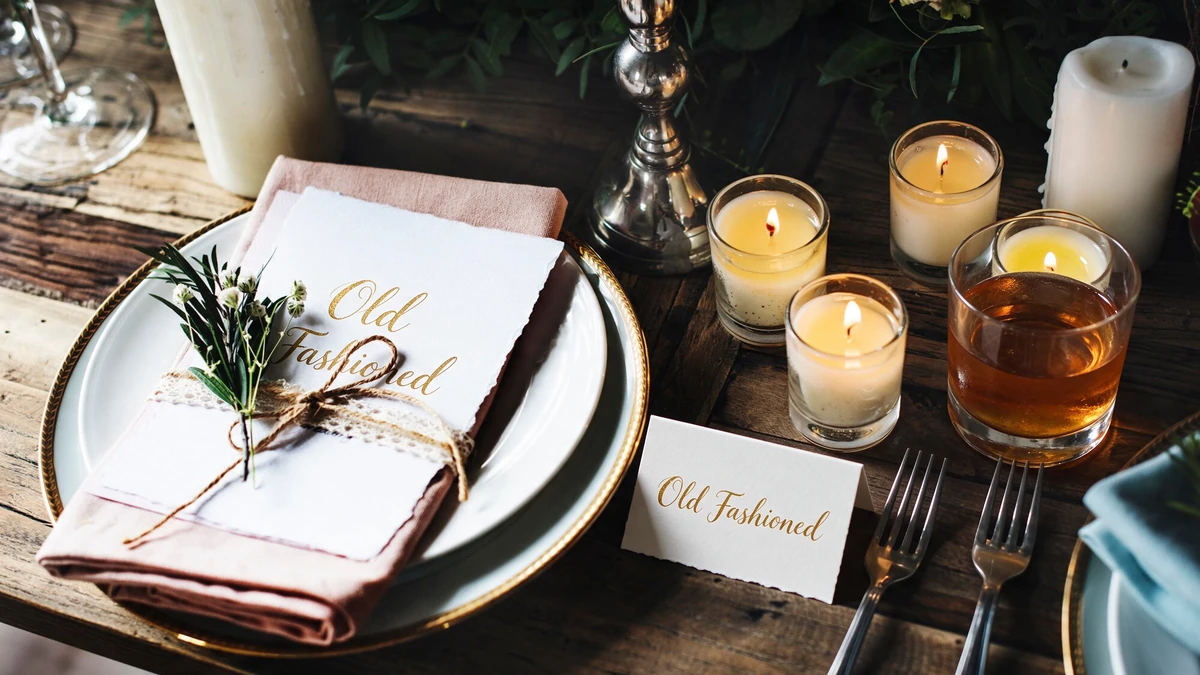
Classic cocktails or wines you love: "Old Fashioned," "Margarita," "Pinot Noir."
Best for: Couples who want the tables to tie into the bar, especially if each table is named after one of your signature drinks.
Watch out for: Think about who sits where. "Tequila" can land oddly on a table of relatives who do not drink.
20. Flowers or colors
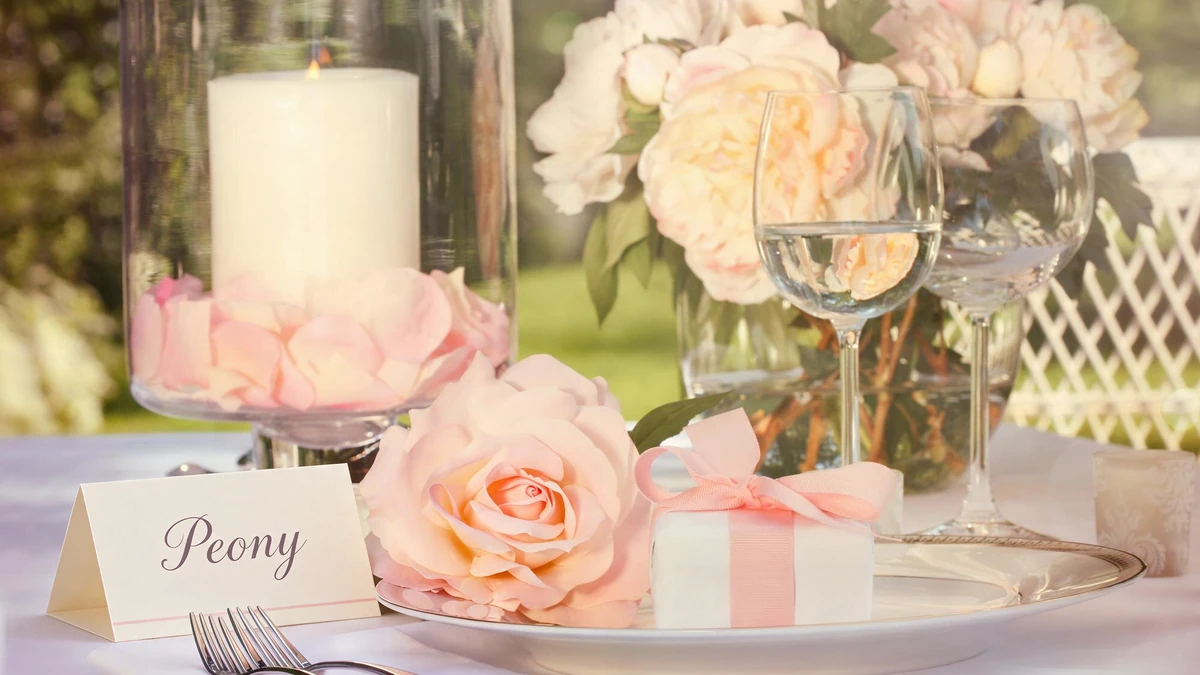
A flower from the arrangements or a color from your palette: "Peony," "Ranunculus," "Sage."
Best for: Garden weddings, where each card can match its own centerpiece.
Watch out for: Pick names guests can say. Asking staff for "Ranunculus" slows everyone down.
Three rules for named tables. Print a small number on each card or its back, because caterers and servers still work by number. Use exactly the same names on the seating chart, escort cards and tables. Keep every name short enough to read from across the room.
What is the best way to number wedding tables?
Number your tables in an order guests can follow without a map. Start at the table nearest the entrance, or nearest your own table, and run in rows so table 7 sits beside table 8. Do it once the seating chart is drafted, working from the venue’s floor plan, so the numbers match where people actually sit.
Numbering is the final step of making your seating chart, just before the chart goes to your venue and caterer. A few decisions come first.
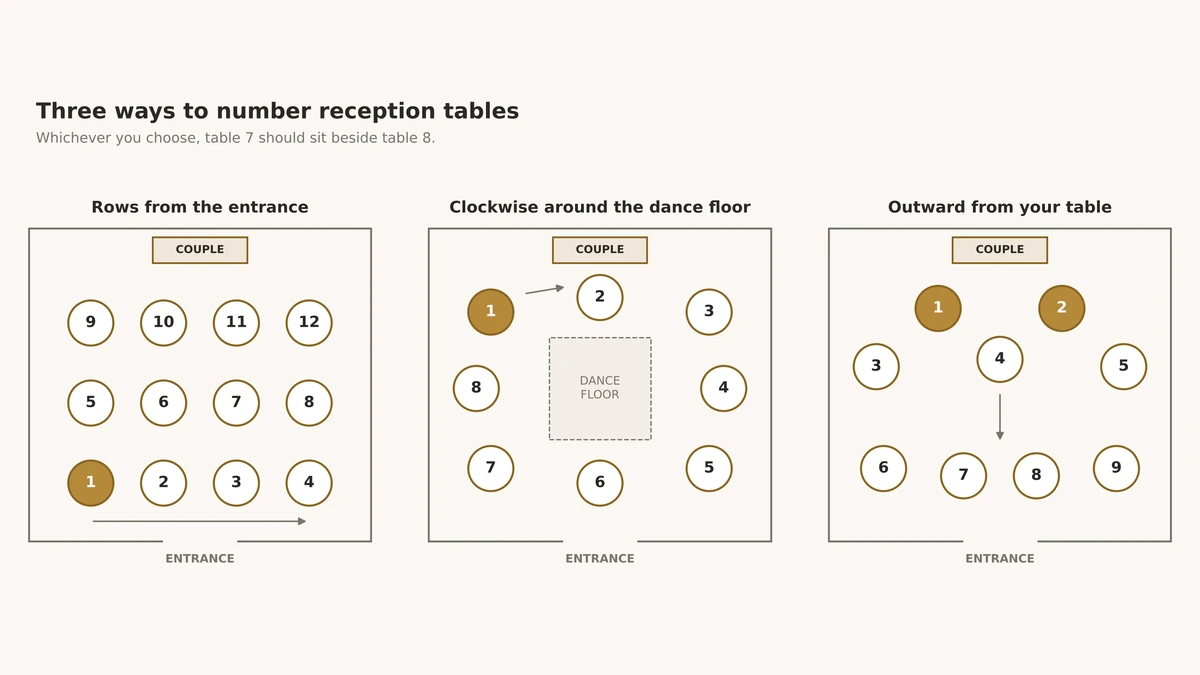
Decide on your own table. A sweetheart table needs no number. If the wedding party sits at a regular round, call it table 1.
Seat close family near you, whatever their numbers. Some guests read a low number as a sign of closeness, so let distance from your table do the honoring, not the numbers.
Add a small map for big or split rooms. If tables run across two rooms or around pillars, print a simple floor plan on the seating chart sign.
Give the numbered floor plan to the venue and caterer. Servers work by table number, and a buffet is often released one table at a time, which your reception timeline should allow for.
Should you skip table 13?
Some guests and families would rather not sit at table 13. Britannica traces the superstition to stories of a 13th guest at a meal: Loki at a dinner in Norse myth, and Judas at the Last Supper. In a 2007 USA Today/Gallup poll, 13% of Americans said a 13th-floor hotel room would bother them.
Four carries similar weight for some families, because in Chinese the word for four sounds like the word for death. These are beliefs some guests hold, not rules, so ask your families. If you skip a number, label that table 12A or jump to 14, and tell your caterer and planner.
Before printing, check that four things match: the venue’s floor plan, the seating chart, the escort cards and the table numbers. Emily Post calls place or escort cards with the table number marked "a must at all but the most casual of weddings," and they only work if every number points to the same table.
What size should table numbers be for a wedding?
Print table numbers at 5x7 for most receptions, 4x6 for small tables and intimate rooms, and 8x10 for ballrooms and long banquet rows. Those match the standard sizes for every stationery piece in a wedding suite. The numeral matters more than the card, though: about 2 inches tall reads from roughly 17 feet.
A 5x7 with a small numeral buried in florals reads worse than a 4x6 where the numeral fills the card. Etiquette sets no numeral height, but there is a useful benchmark.
The U.S. Access Board’s guide to sign standards sets a minimum character height of 5/8 inch for viewing distances under 6 feet, plus 1/8 inch for every foot beyond that, for characters 40 to 70 inches above the floor. The ADA does not cover table numbers, so treat these figures as a guide, not a requirement.
Viewing distance | Minimum numeral height | Card that fits it comfortably |
10 feet | 1 1/8 inches | Any size |
15 feet | 1 3/4 inches | Any size |
20 feet | 2 3/8 inches | 4x6 with a large numeral, or 5x7 |
25 feet | 3 inches | 5x7 |
30 feet | 3 5/8 inches | 5x7 at its limit; 8x10 or freestanding numbers are safer |
The card column is our own estimate, allowing room around the numeral for a border and design.
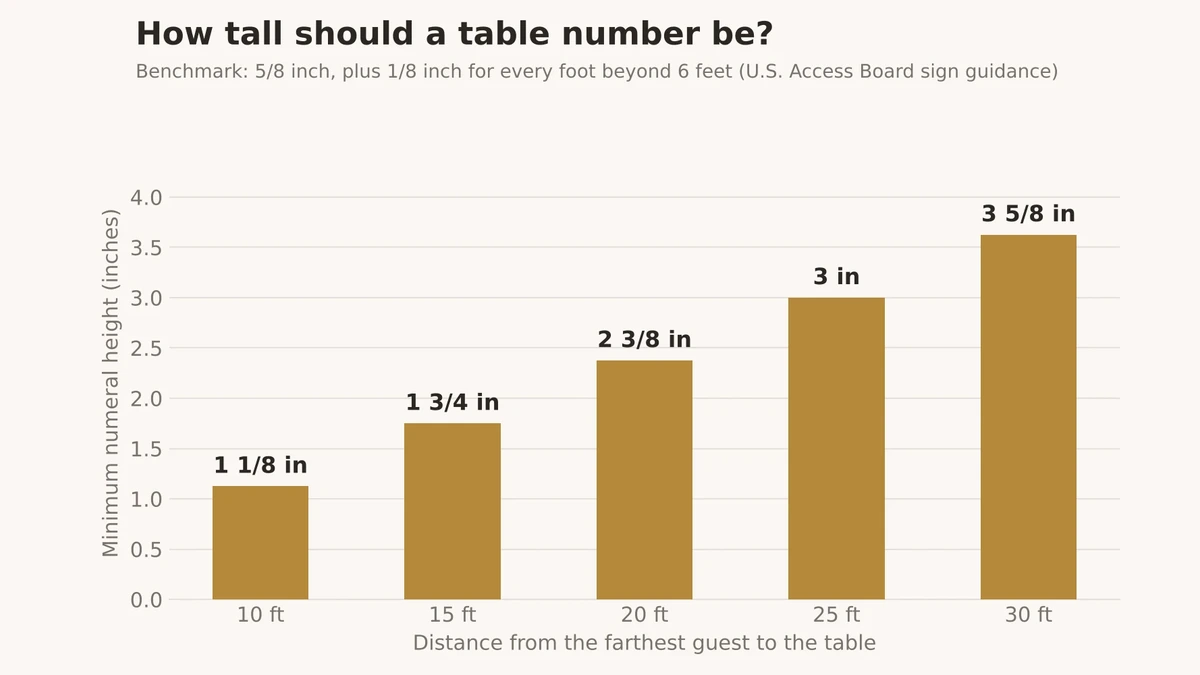
To size your own numbers, measure from the reception entrance to the farthest table on your floor plan, then read the numeral height for that distance off the table above.
Contrast matters as much as height: dark on light or light on dark, a matte finish, and nothing busy behind the numeral. The same guide lists script and highly decorative lettering among the forms to avoid on signs, so a calligraphy "seven" works up close or beside a large plain numeral, not on its own across a ballroom.
Print double-sided cards for any table guests approach from two sides. For 8x10, an easel or a freestanding number does better than stretching a tabletop frame.
How many table numbers do you need, and when should you print them?
Make one table number per table, plus one or two spares. Print them two to four weeks before the wedding, ideally once most RSVPs are back, on 80 to 100 lb matte cardstock. A reception for 120 guests at 8 per 60-inch round needs 15 tables, so you would print 17 cards.
That table count uses Reventals’ seating guide, which allows no more than 8 guests at a 60-inch round with formal place settings, and 10 at a 72-inch round. Confirm with your venue or rental company, since chairs and settings change the numbers.
Most caterers set a final count 7 to 14 days before the wedding, so check your caterer’s final headcount date before you print. If late replies add a table, a spare card covers it.
Printing DIY table numbers at home
Use 80 to 100 lb matte cardstock, or up to 110 lb for tent cards that stand on their own. Most home printers struggle with anything heavier.
Build the file with bleed: a 5x7 card is set up at 5.25 x 7.25 inches, with text at least an eighth of an inch inside the trim.
Print one test card and read it from across a room before printing the set.
If your printer cannot take the stock, send the PDF to a local print shop.
How do you display table numbers?
Match the holder to the card: tabletop frames for 4x6 and 5x7, acrylic or wood bases, metal card holders, a pick set into the centerpiece, or an easel for 8x10. Put the number above a low centerpiece or in front of a tall one, facing the direction most guests arrive from.
Outdoors, use heavy bases or wood, since a light frame tips in the first breeze. Keep paper well clear of any flame, or use LED candles, and check your venue’s rules.
Finally, ask the venue or planner who sets the numbers out, and hand over the numbered floor plan with the cards boxed in order: table 1 on top, spares at the bottom.
Key Takeaways
A 3-inch numeral reads from about 25 feet, which is why 5x7 suits most reception rooms.
Clear acrylic takes on the color of whatever stands behind it, so check contrast from across the room before ordering a set.
Named tables still need a small number on each card, because caterers and servers work by table number.
Couples who skip table 13 can label it 12A or jump to 14, as long as the caterer and planner know.
Open flames belong at least 12 inches from paper table numbers, or LED candles can replace them entirely.
Frequently Asked Questions
Do table numbers mean anything at a wedding?
No, table numbers have no set meaning. They exist so guests and servers can find each table quickly. Some guests may still read a low number as a sign of closeness to the couple, so number tables in a simple order around the room and seat close family near you, whatever their numbers turn out to be.
Should table numbers be 4x6 or 5x7?
Choose 5x7 for most receptions and 4x6 for small tables, low centerpieces or intimate rooms. The numeral matters more than the card. A 5x7 card comfortably holds a 3-inch numeral, which reads from about 25 feet using the U.S. Access Board’s sign formula as a benchmark.
How many tables will I need for 100 guests?
You will need about 13 tables at 8 guests per 60-inch round, or 10 tables at 10 per 72-inch round, based on Reventals’ seating figures for formal place settings. Confirm with your venue, since chairs and settings vary, then print one number per table plus one or two spares.
How to DIY table numbers for a wedding?
Pick a template, set your numbers, and print on heavy matte cardstock at home or at a local print shop. Trim the cards, then set them in frames or stands. Before printing the full set, print one test card and read it from the far side of a room.
What are some unique ideas for wedding table numbers?
Photo table numbers, which show each of you at the age of the table, are the ones that get guests talking. Wine bottles add height on a vineyard table, painted stones suit a beach wedding, and freestanding gold numbers carry across a ballroom. Each works best with a large, high-contrast numeral.
What are some good number stands for tables?
The best stand is the one that fits your card. Tabletop frames suit 4x6 and 5x7 cards, while acrylic blocks, wood bases and metal card holders work for single cards. Picks can be set into a centerpiece. Outdoors, choose heavy bases so a breeze cannot tip the number over.
What to name your table at a wedding?
Name tables after places that matter to you, which Emily Post notes is the most popular theme, or after songs, drinks or flowers. Keep each name short enough to read across the room, add a small number for the servers, and use the same names on the seating chart and escort cards.
Do table numbers need to be double sided?
Yes, for any table guests approach from more than one side, such as tables in the middle of the room and long banquet rows. A tent card or a card printed on both sides solves it. A table set against a wall only needs one printed face.
Ready to choose your table numbers?
Once you know how tall your numerals need to be, the design is the enjoyable part. Browse our printable table numbers in five styles, set your numbers in the free editor, and print at home or at a local shop. If you want the whole reception to match, our day-of set carries the same design as your menus and place cards.