



Windsor Crown — Menu
$1

The template collection
Search by style, occasion or template type.
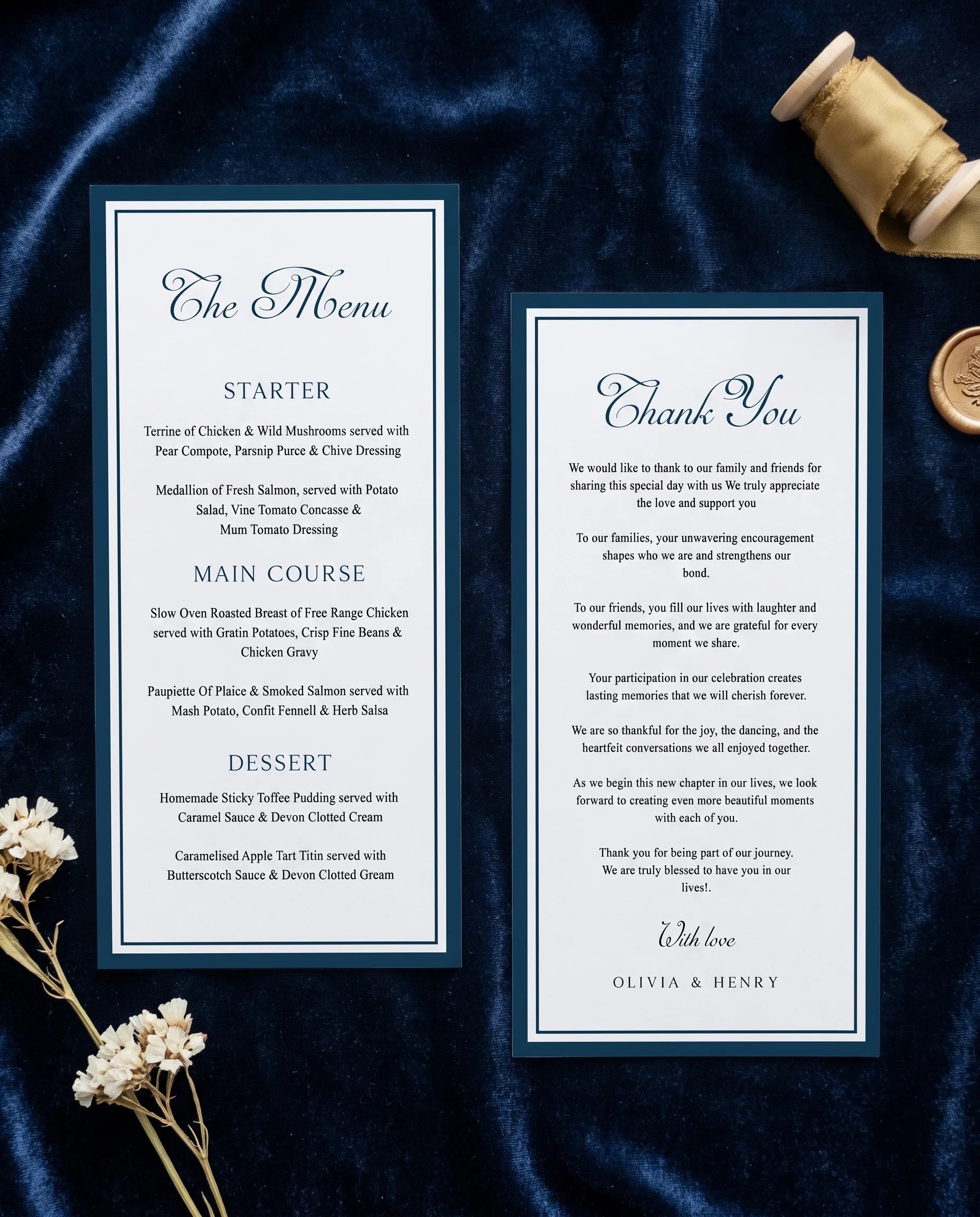
Formal serif typography, calligraphy scripts, monograms, and timeless palettes define our classic wedding menu templates. Choose from elegant wedding menus with classical type and ivory cardstock, formal wedding menus with navy and gold accents and wine pairings listed beside each course, traditional wedding menus in black and white with Roman numeral course numbering, sophisticated black-tie menus in deep burgundy or evergreen, or monogram wedding menus with the wedding initials at the top of each card. Designed to coordinate with classic place cards, seating charts, and welcome signs as a unified day-of stationery suite, every template is fully editable in our free browser-based editor and downloads as print-ready PDF, JPEG, and PNG files. Print at home as flat cards or fold them in half for bi-fold menus.
21 templates
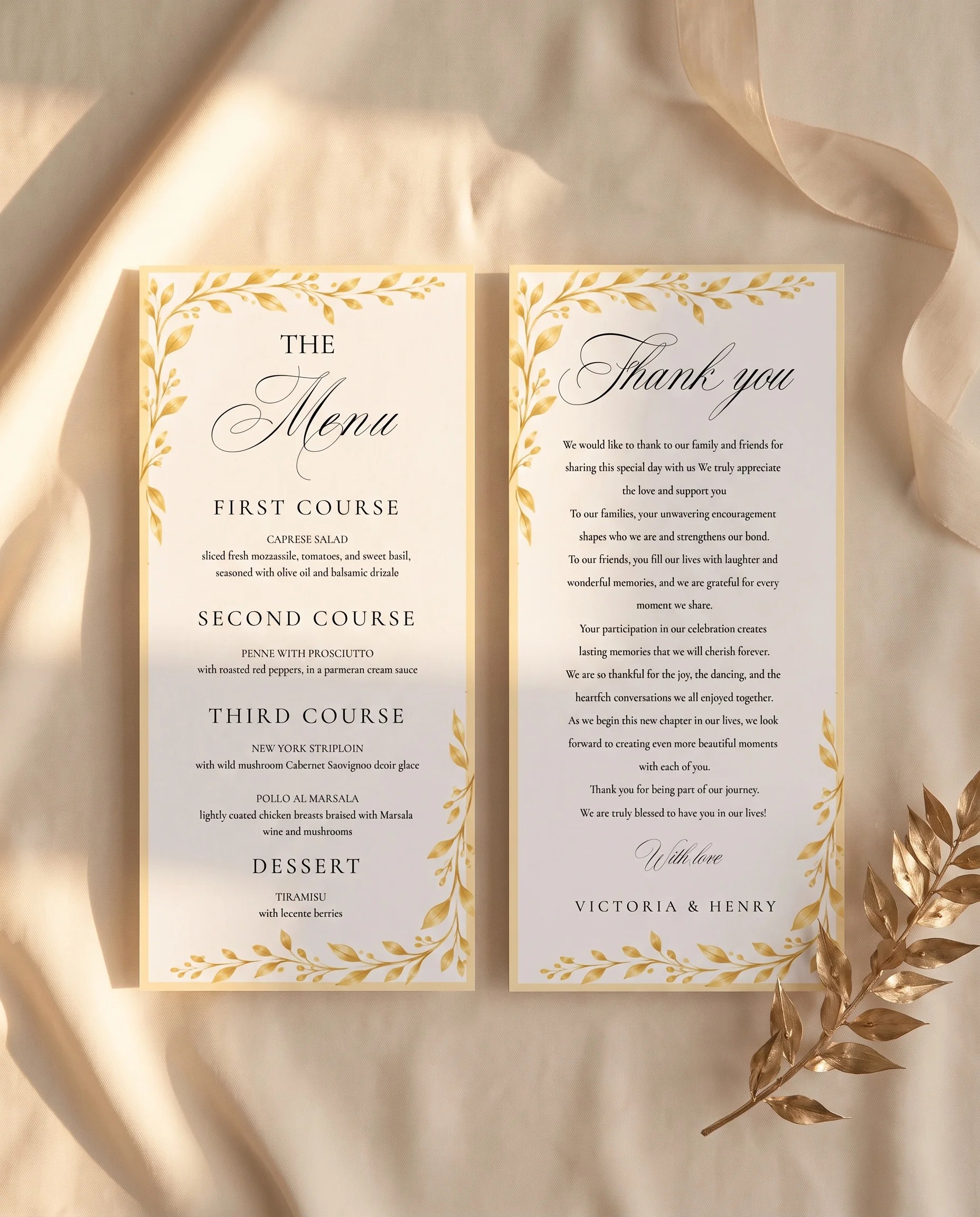
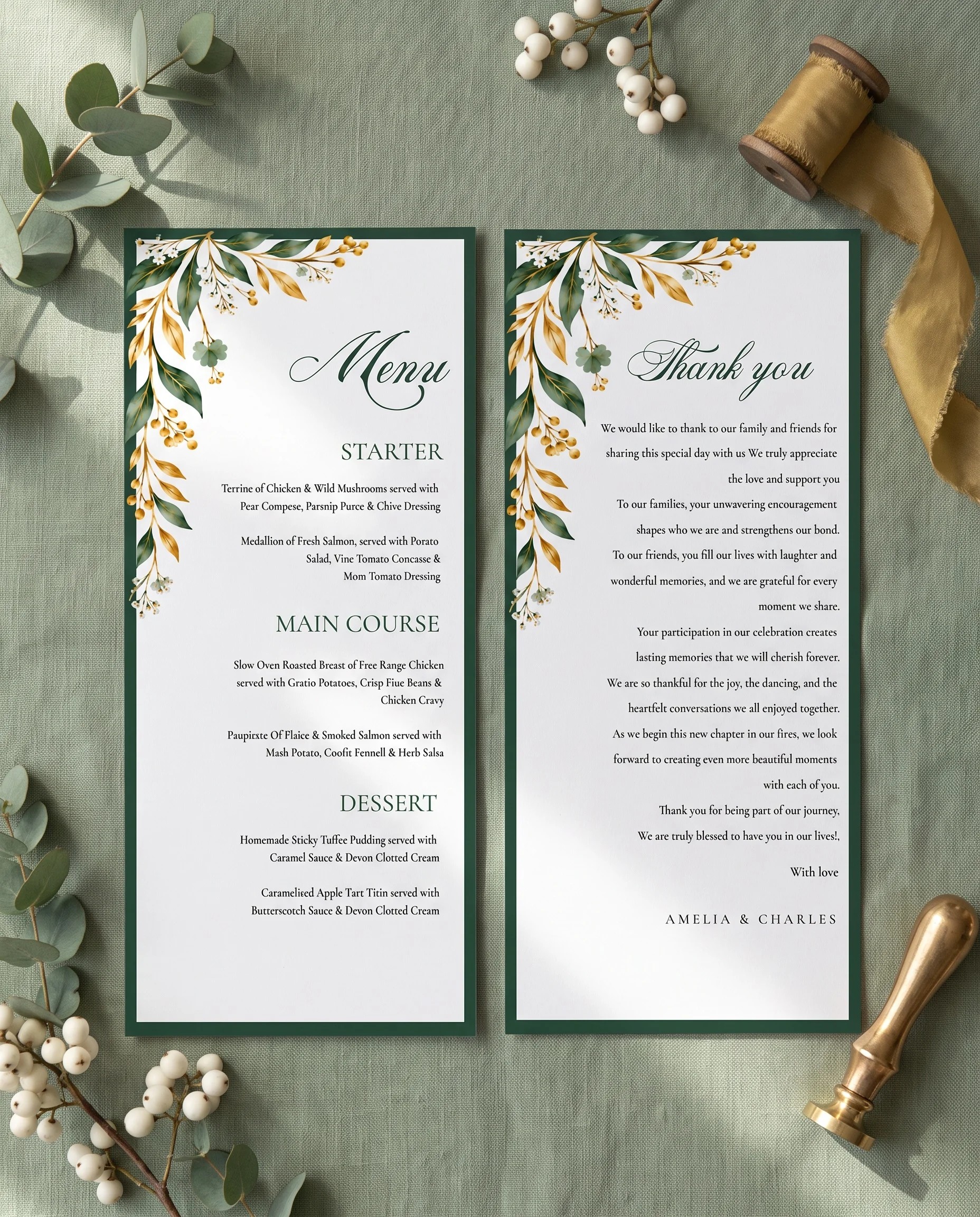
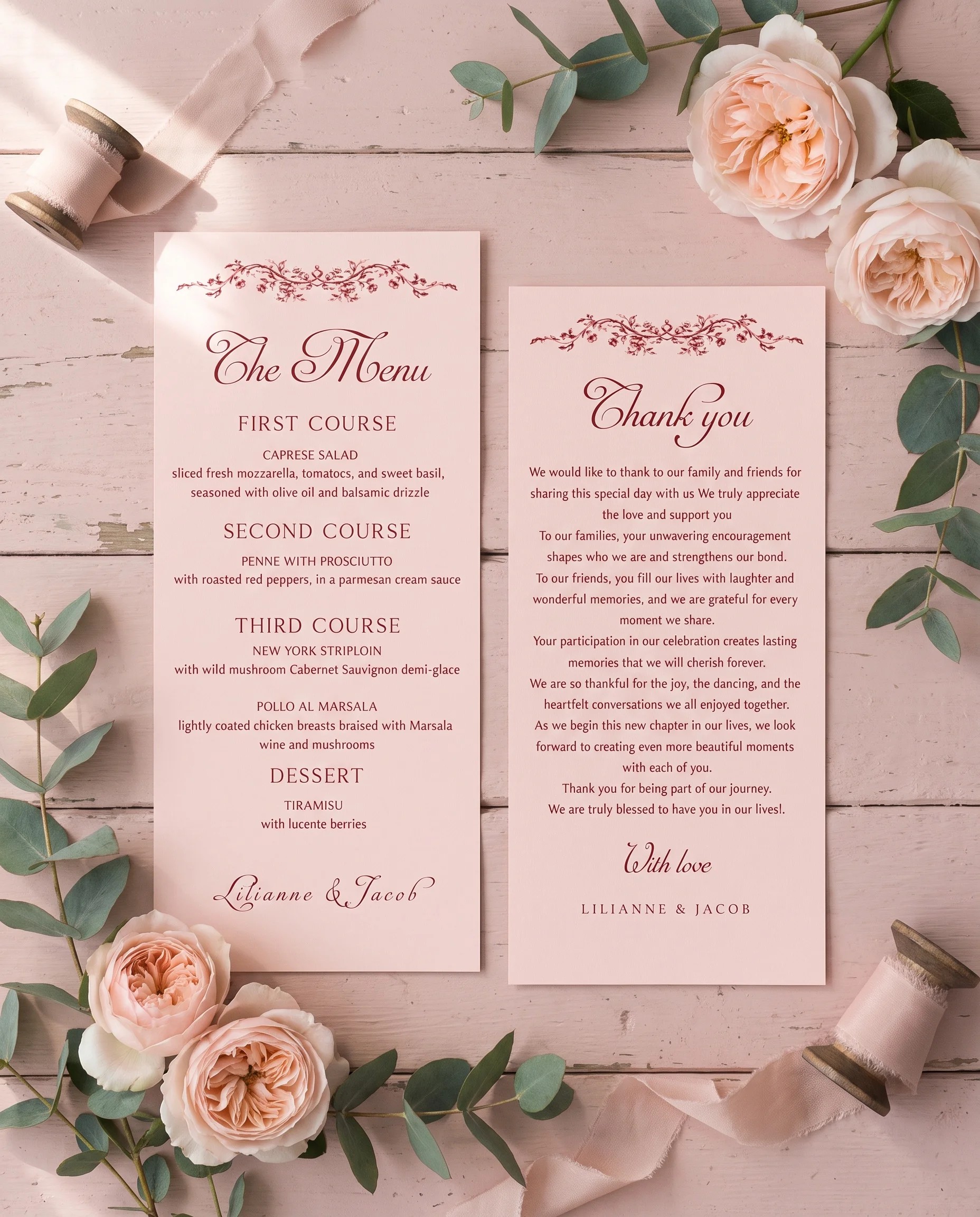
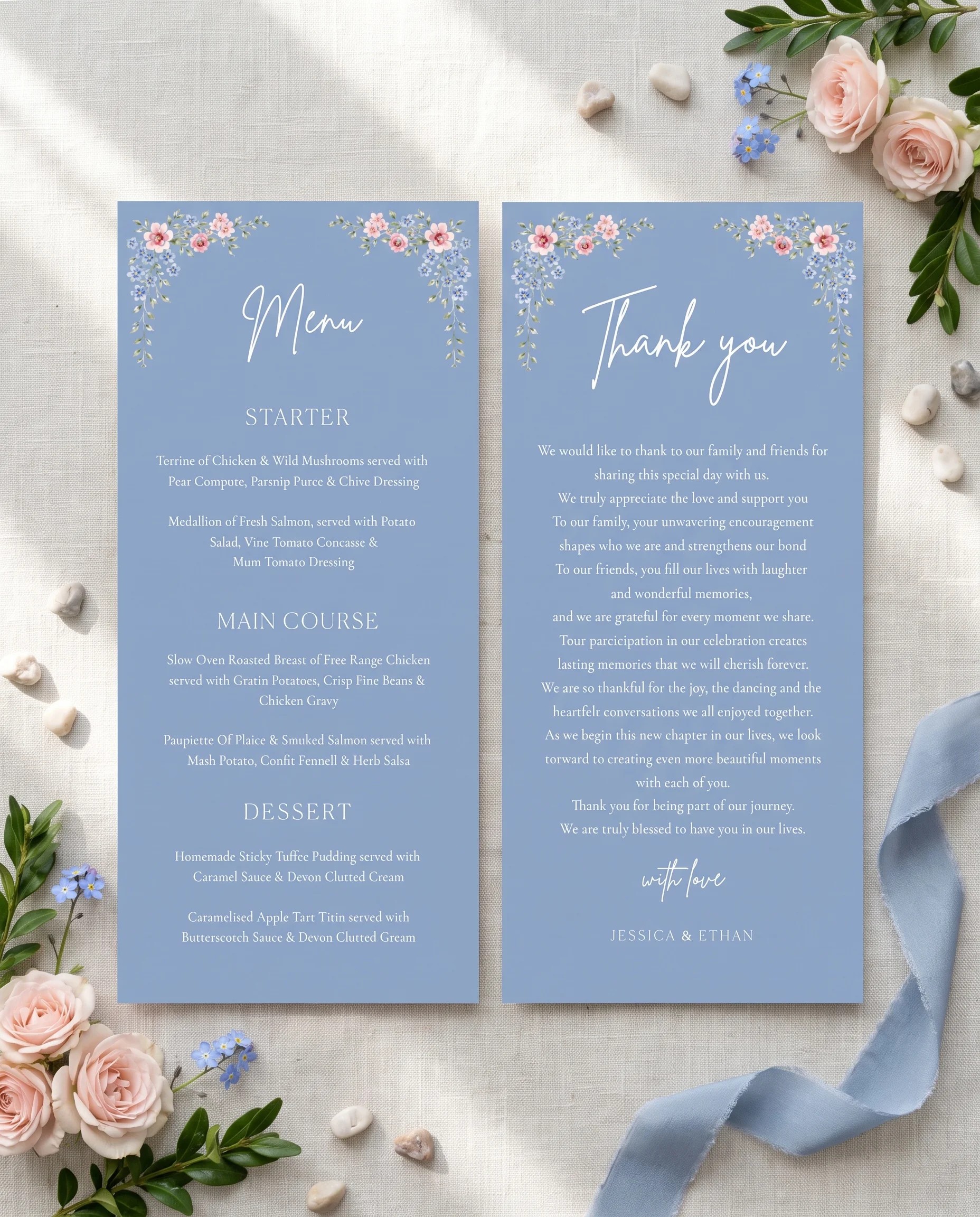
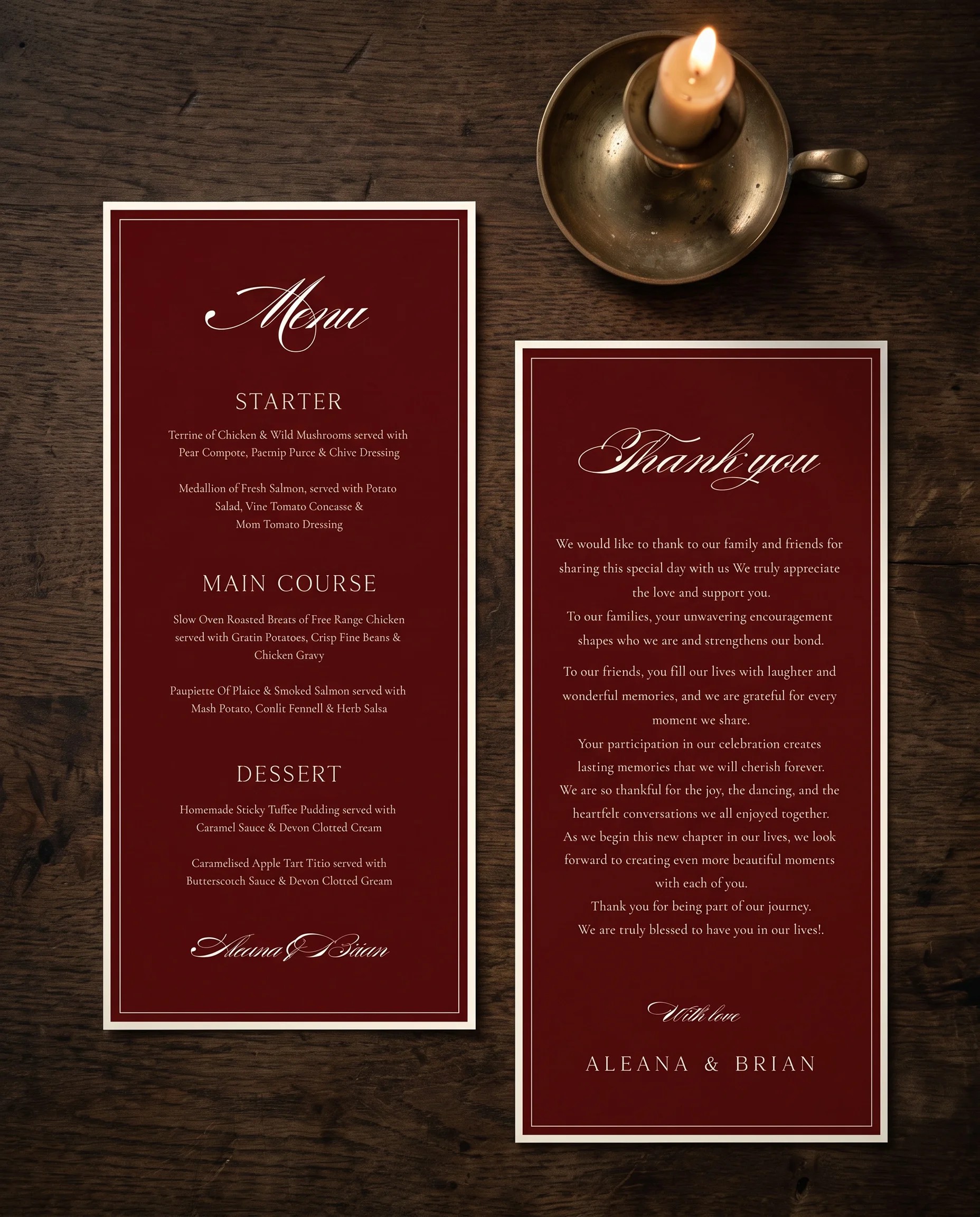
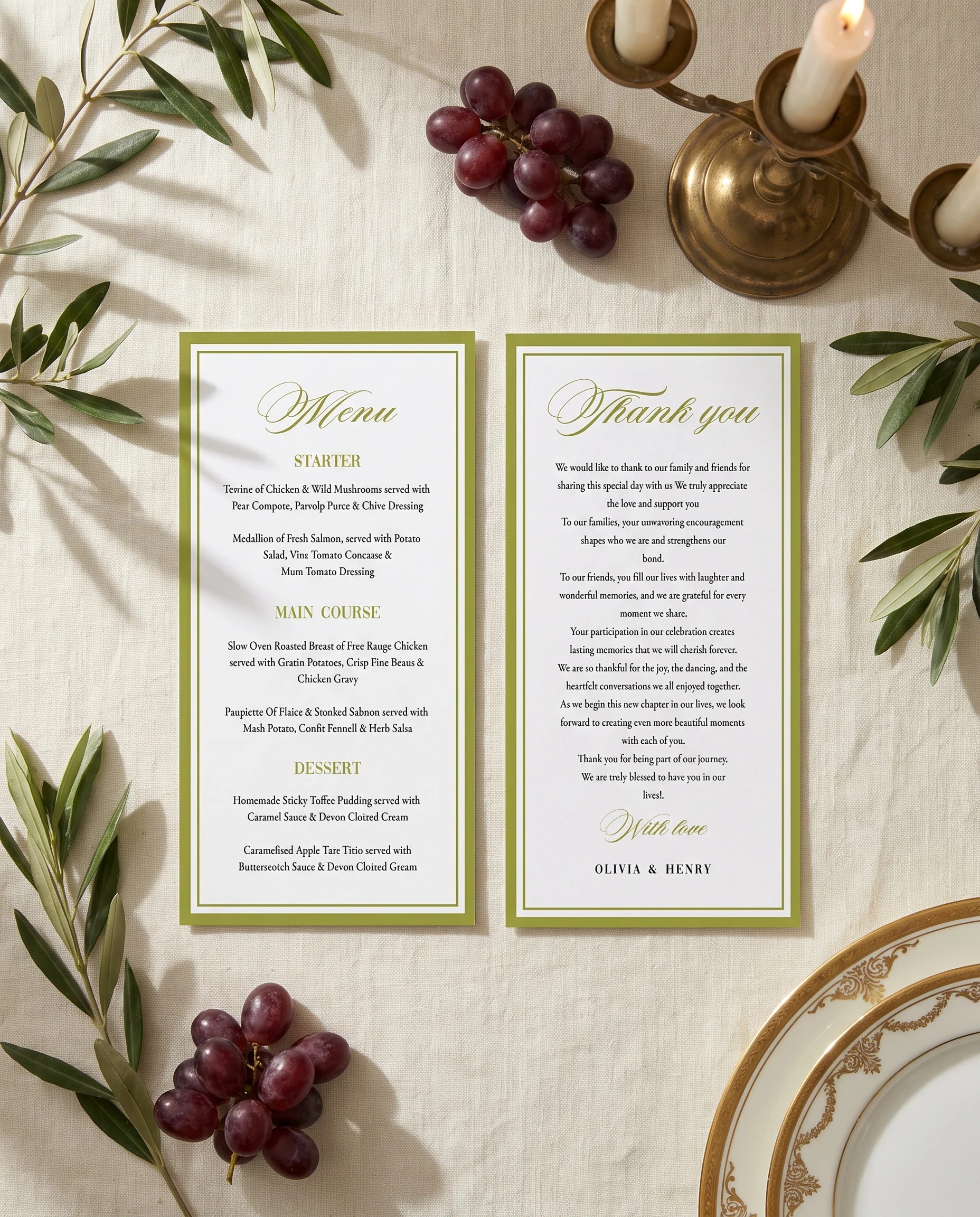
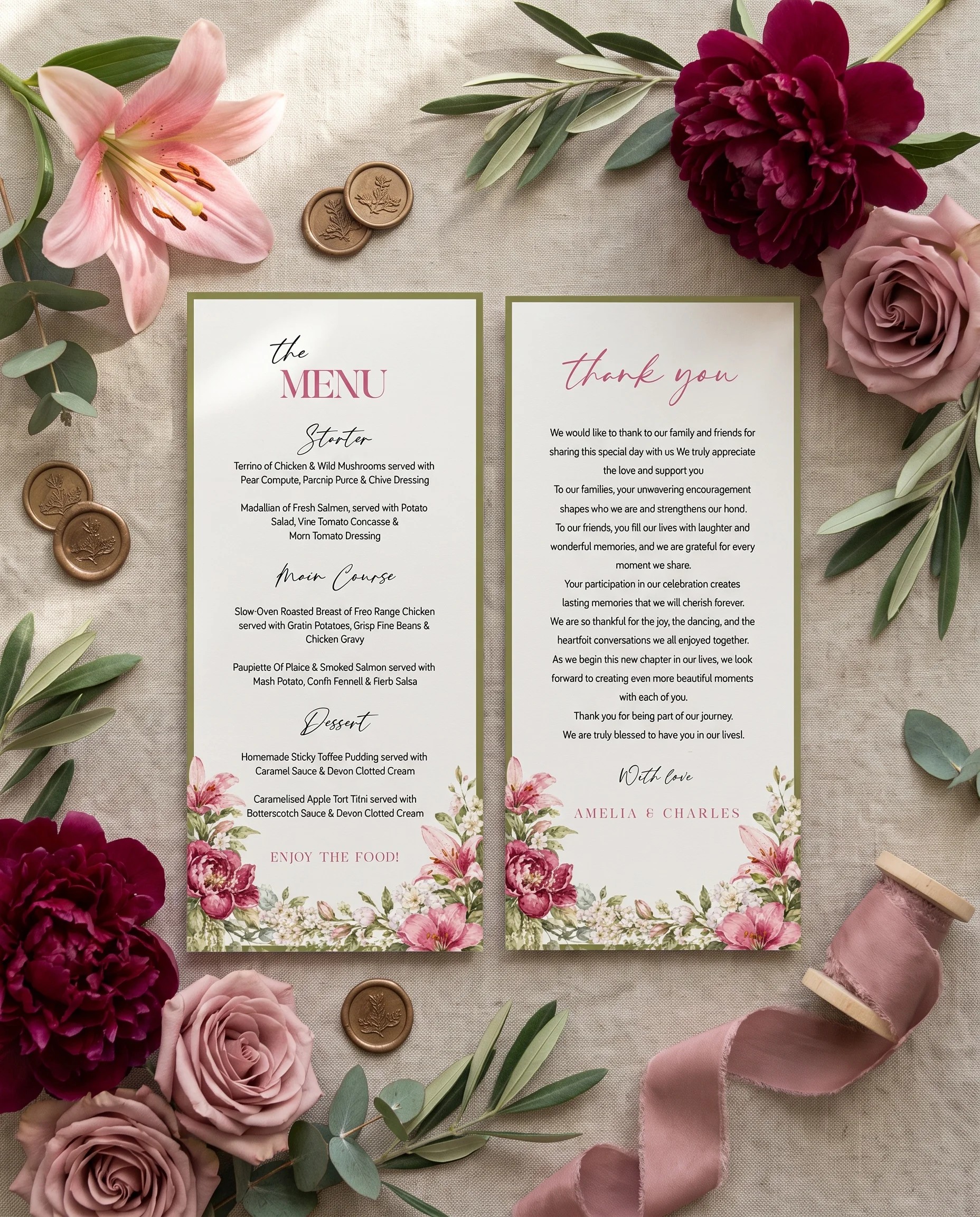
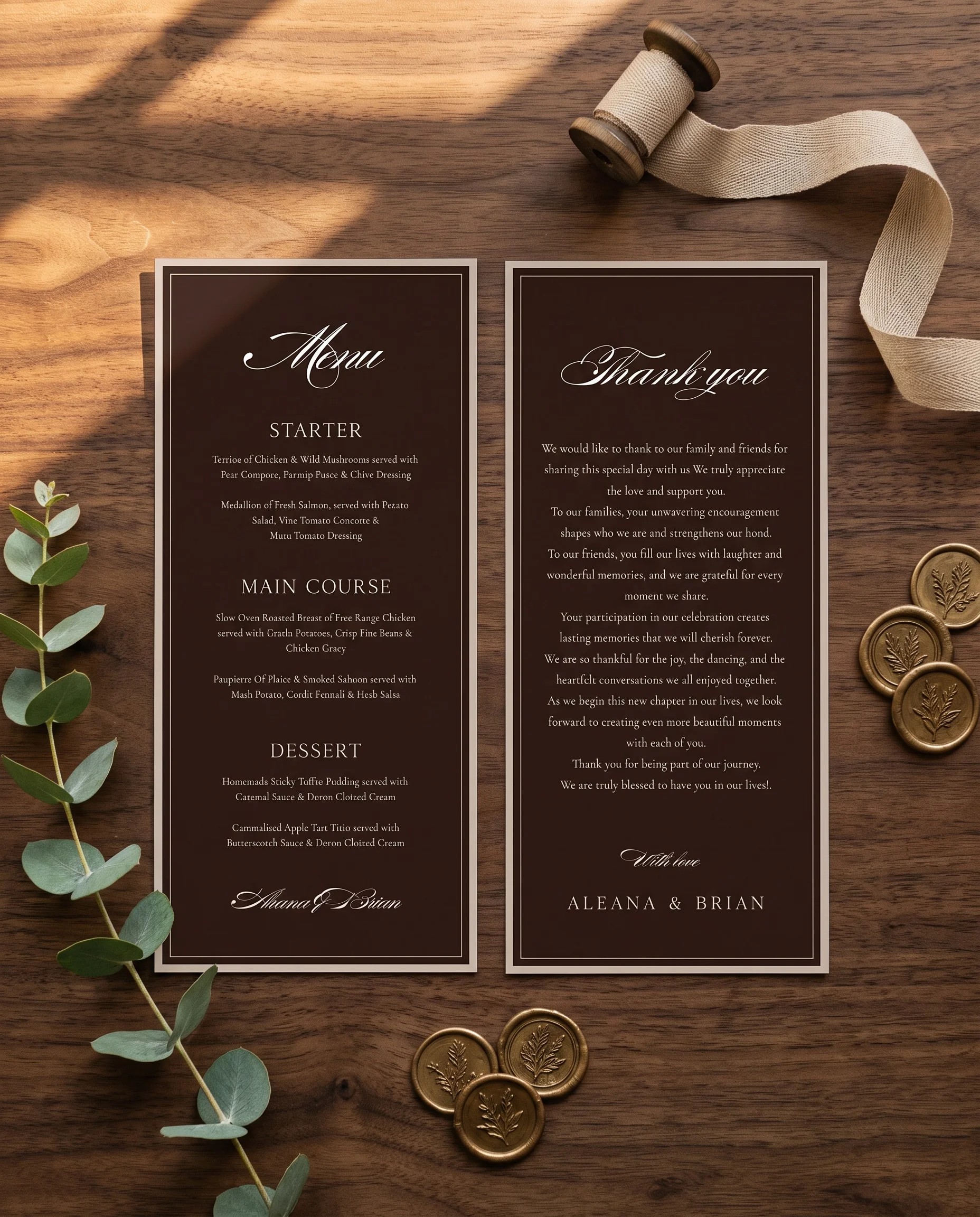
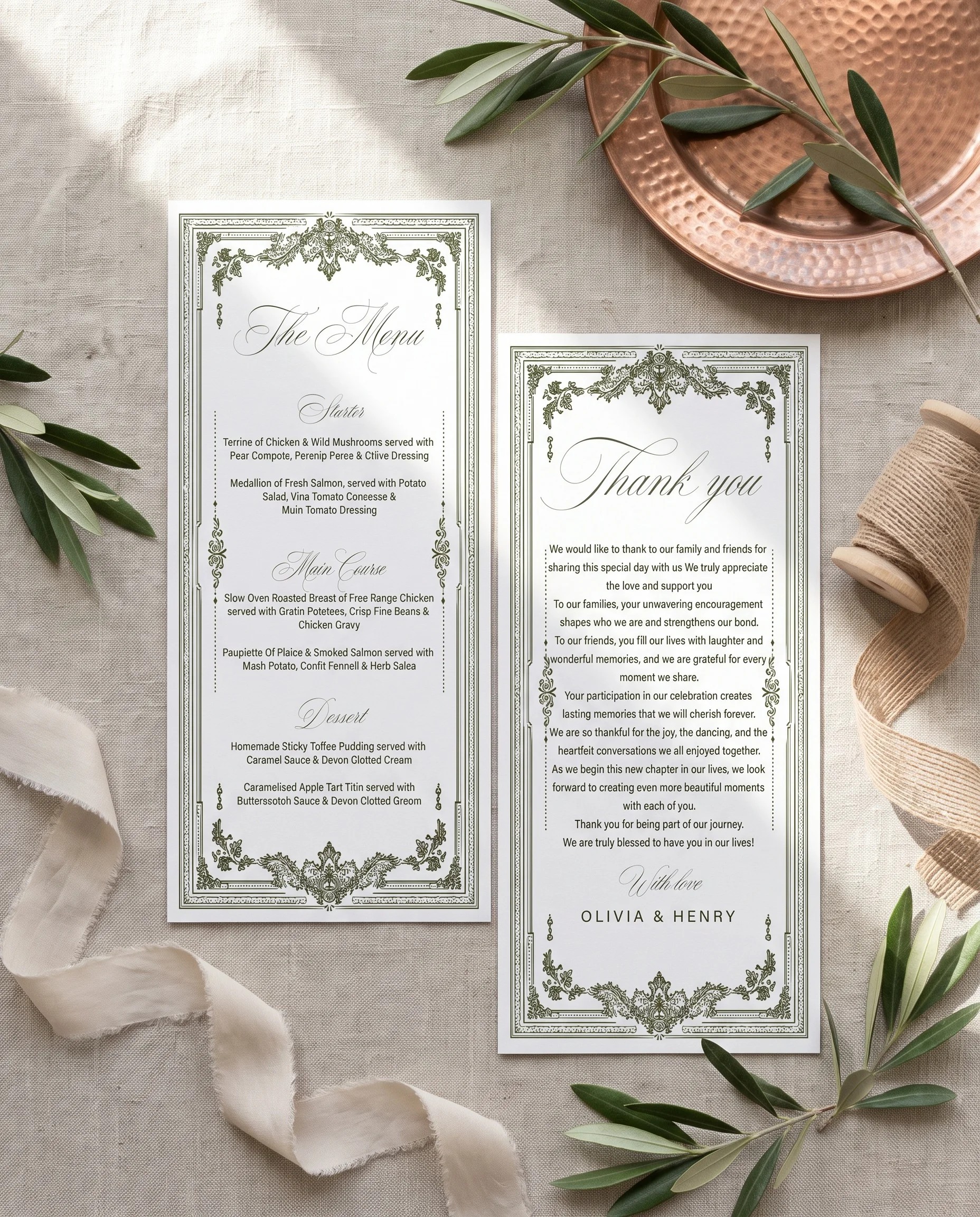
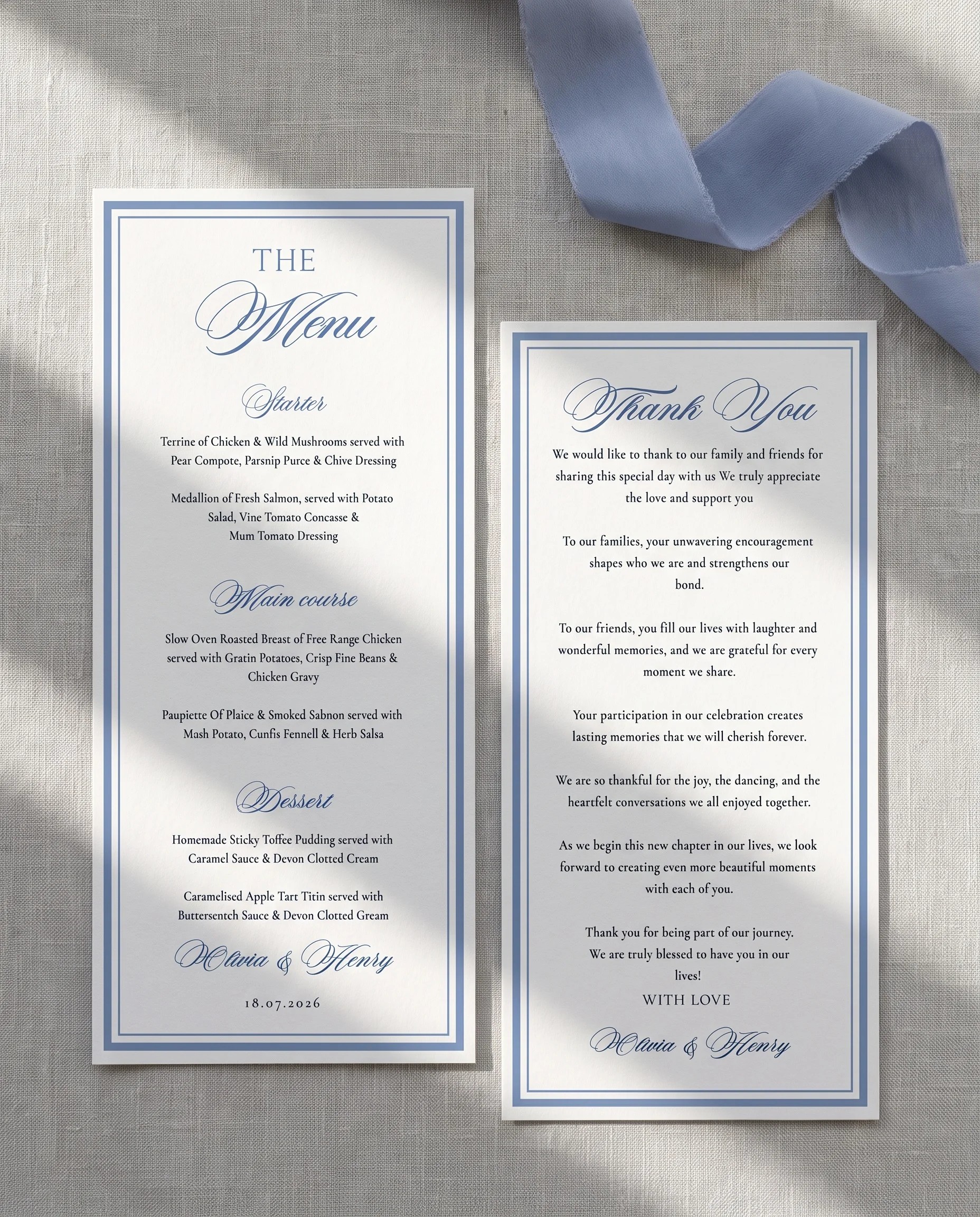
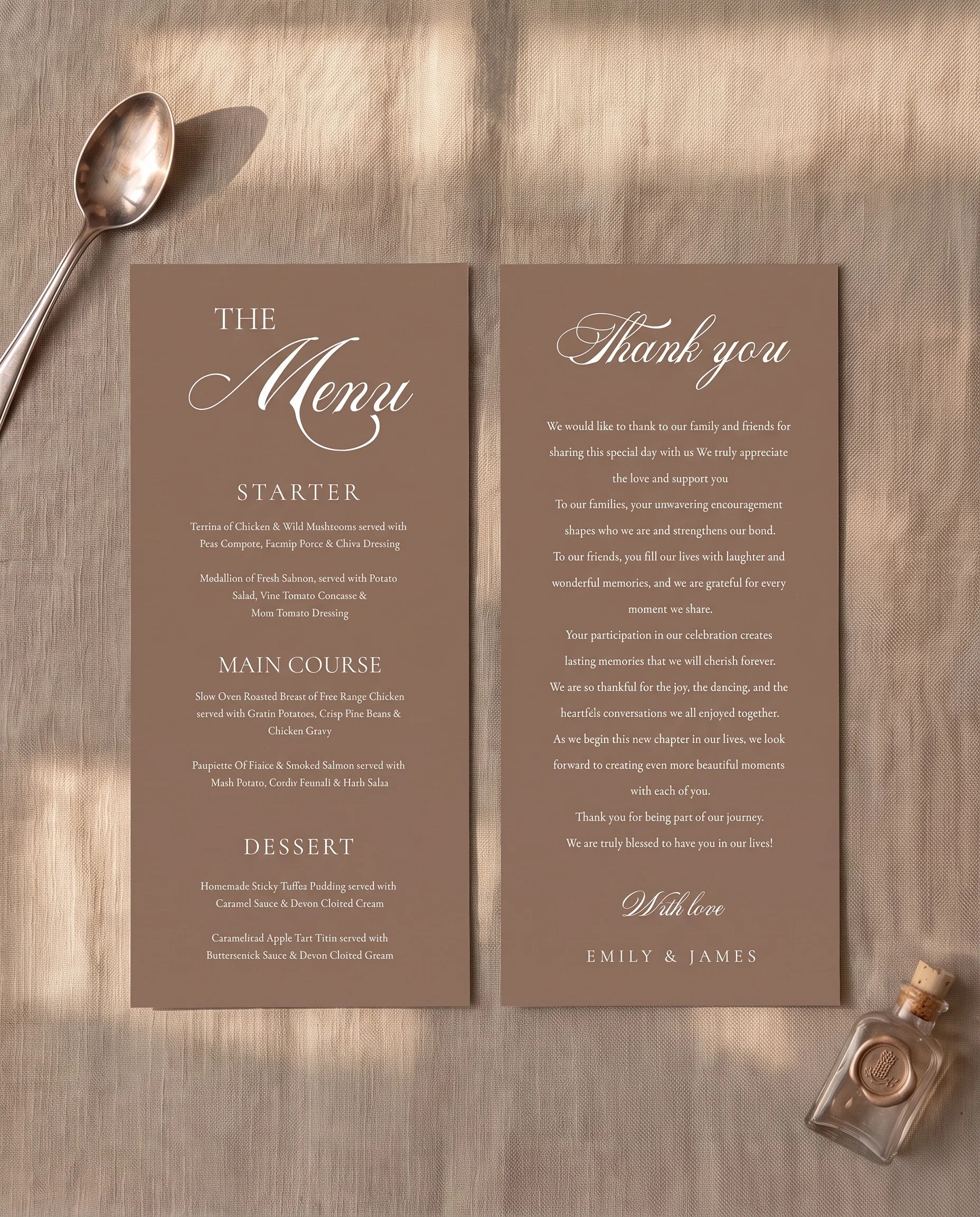
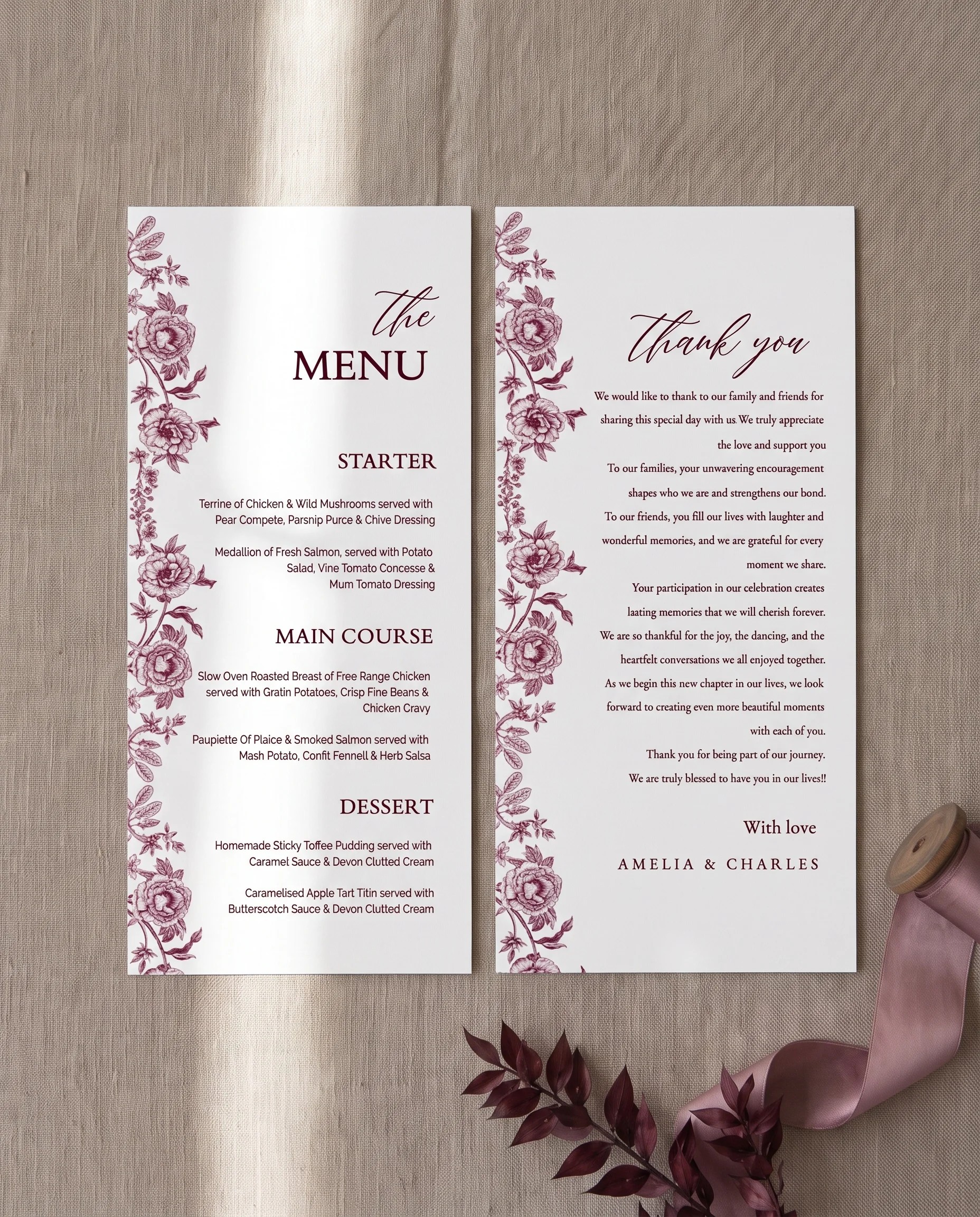
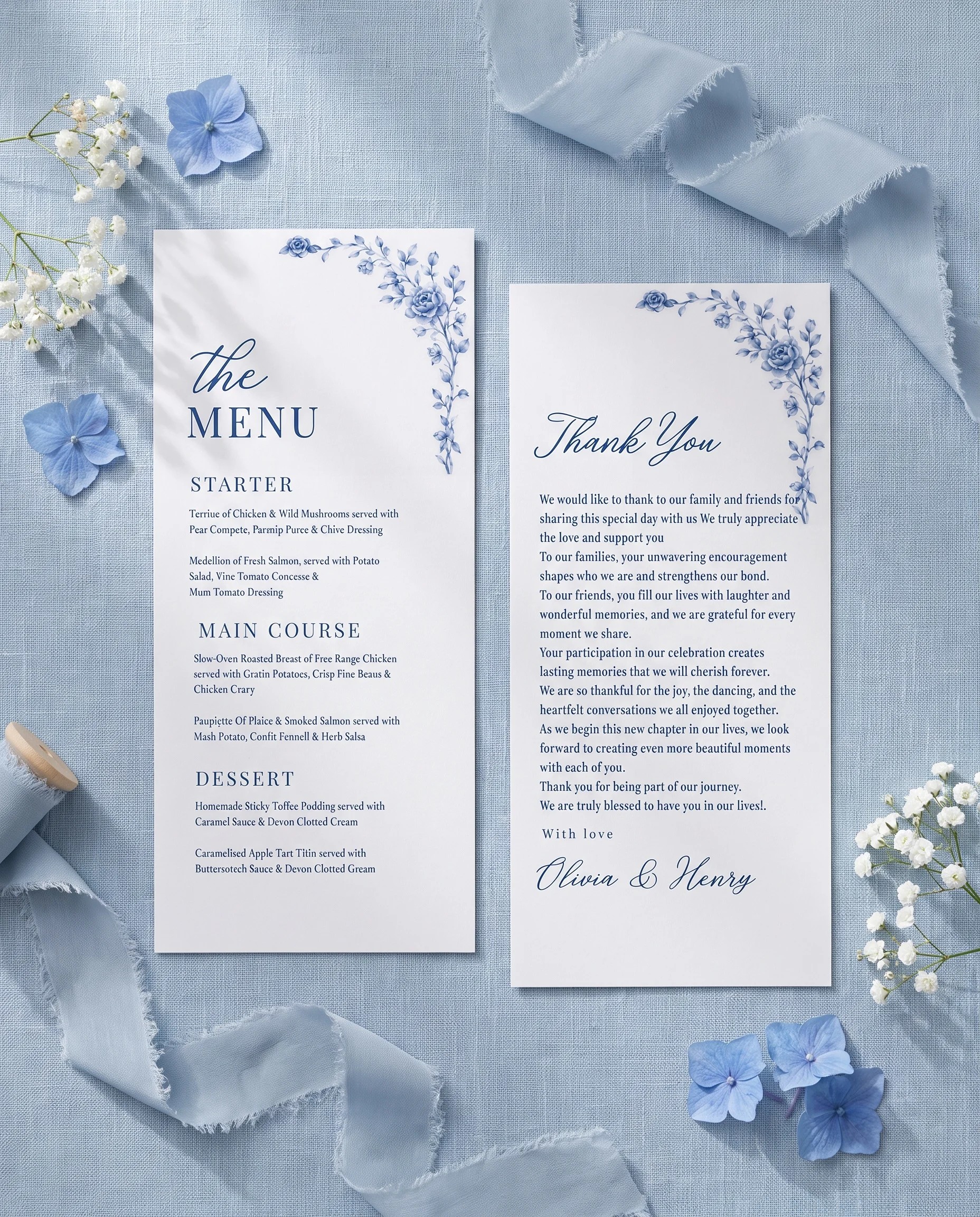
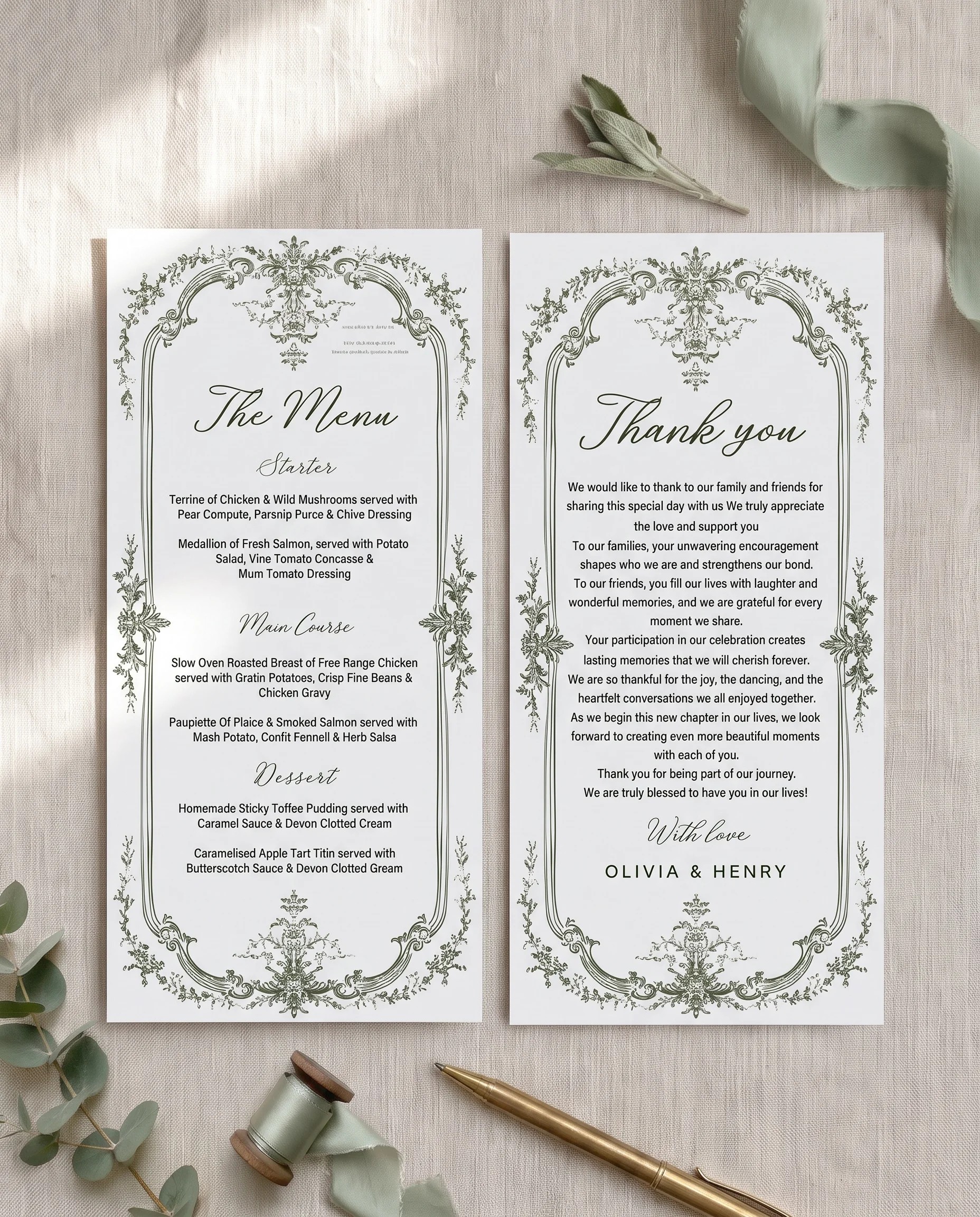
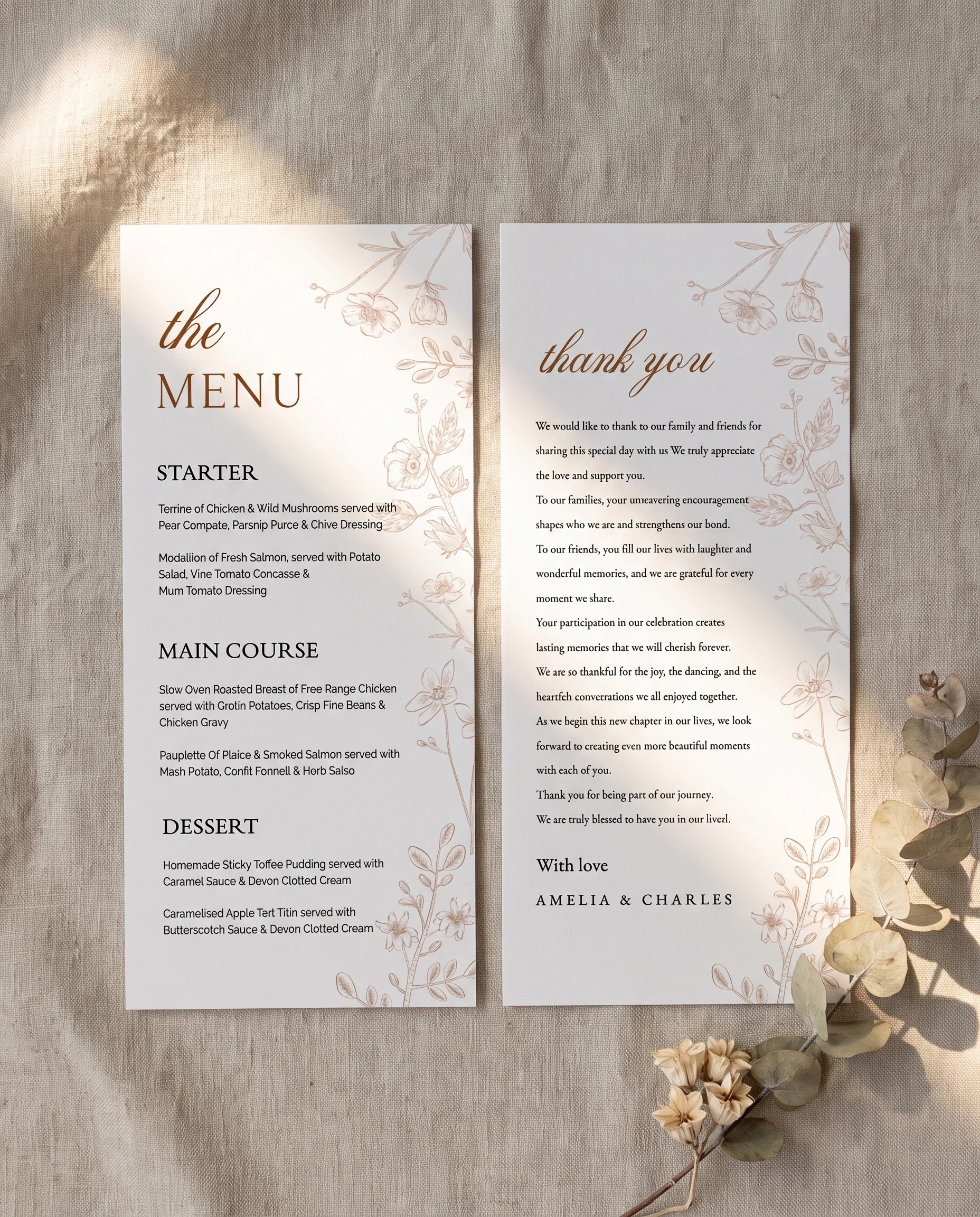
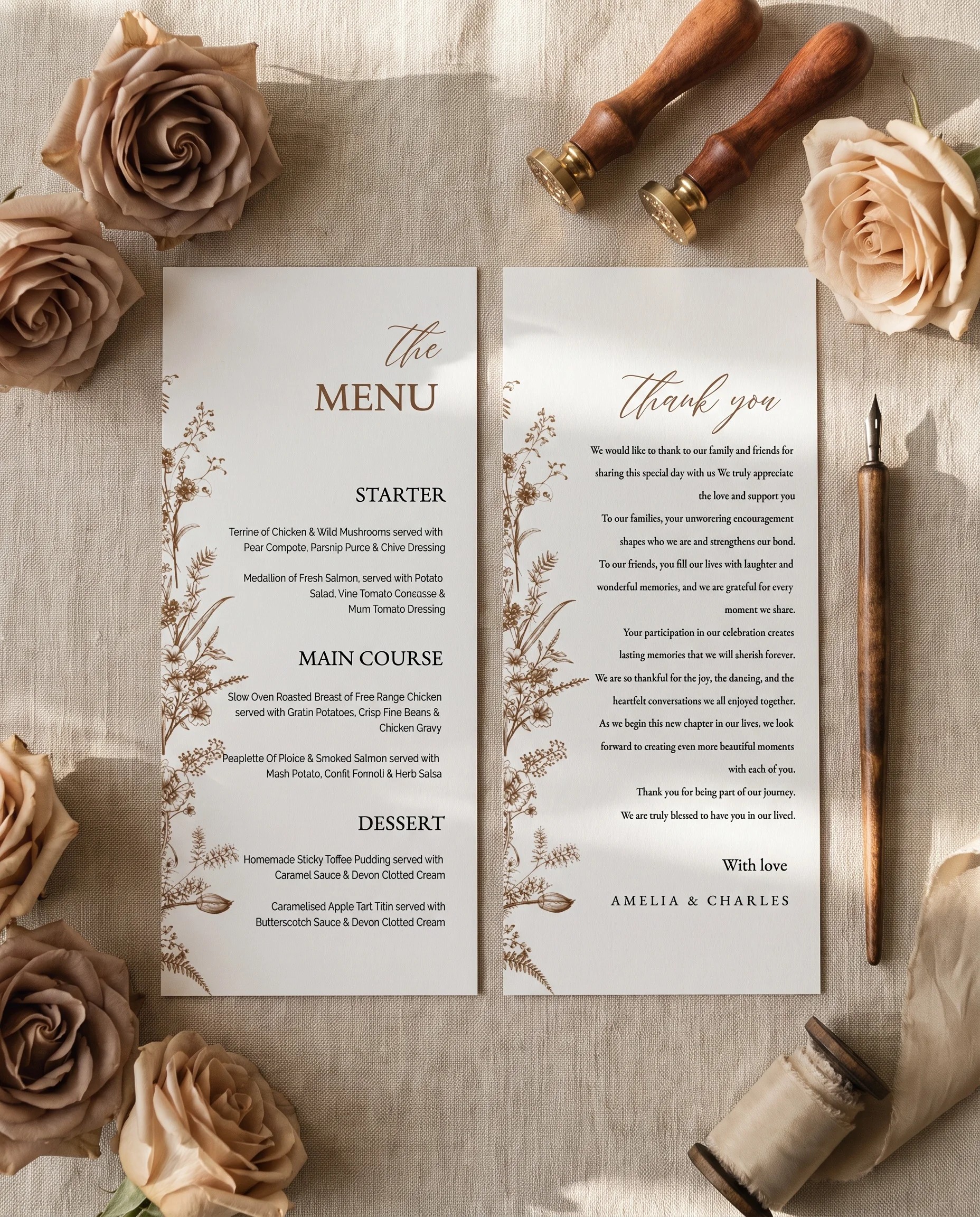
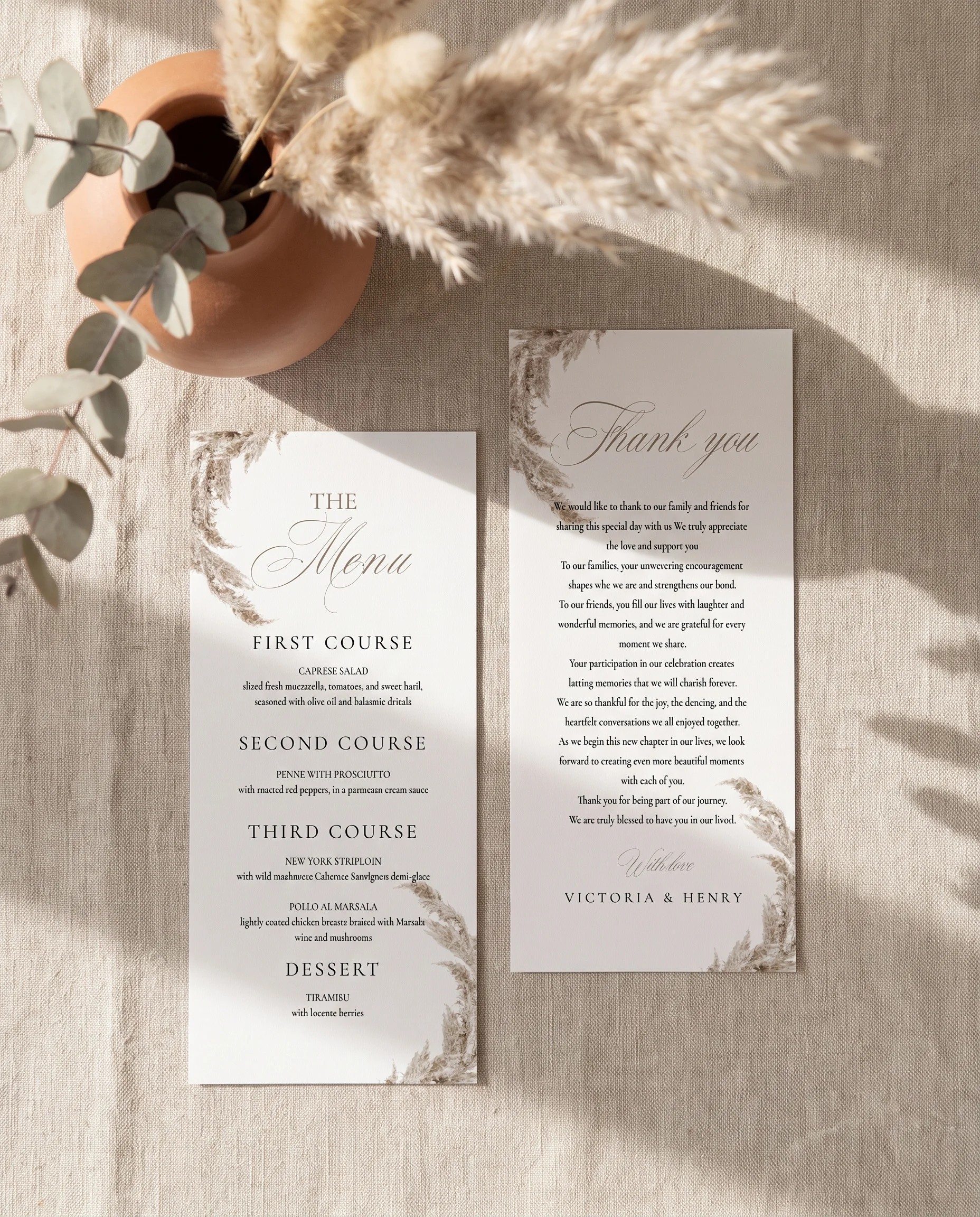
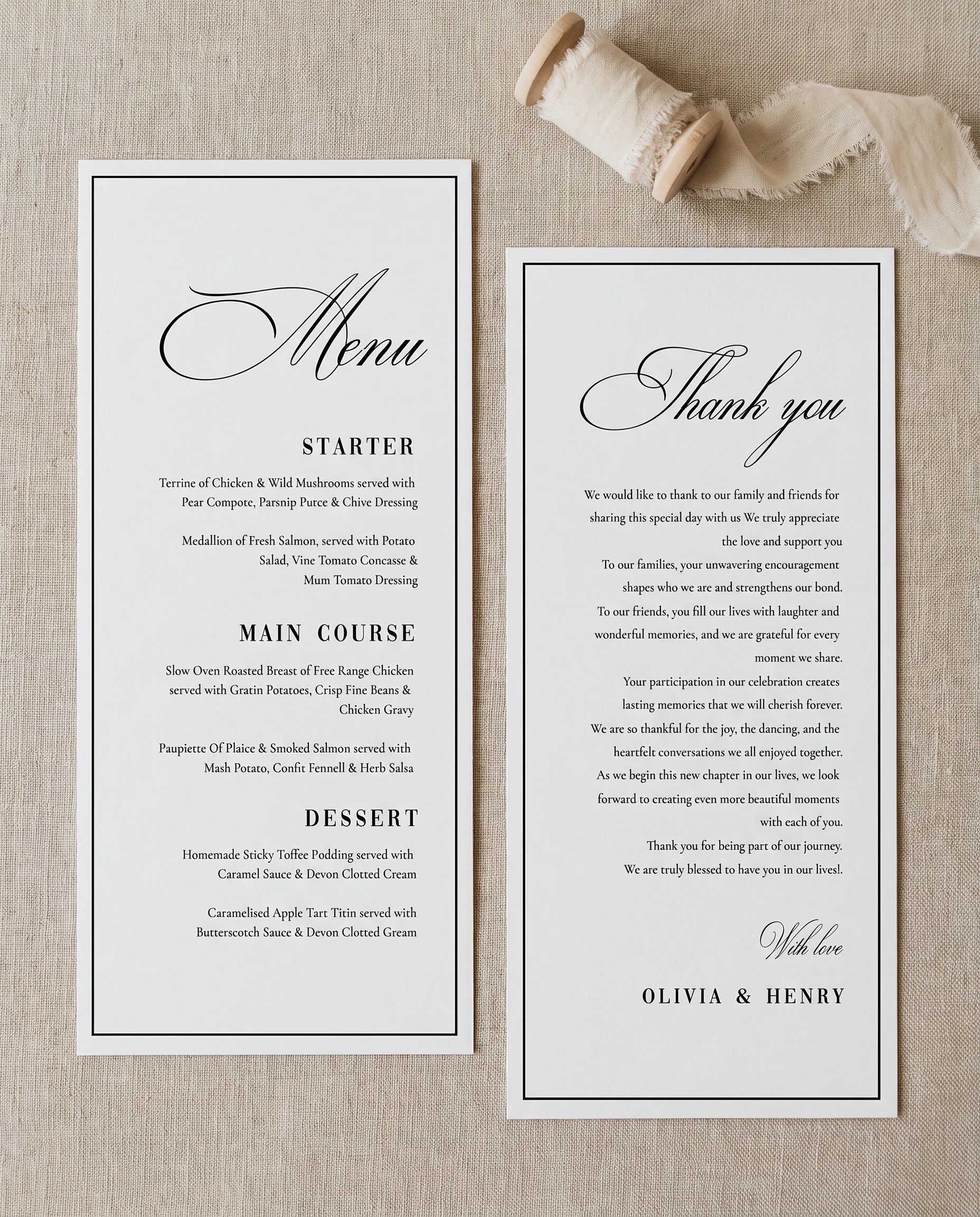
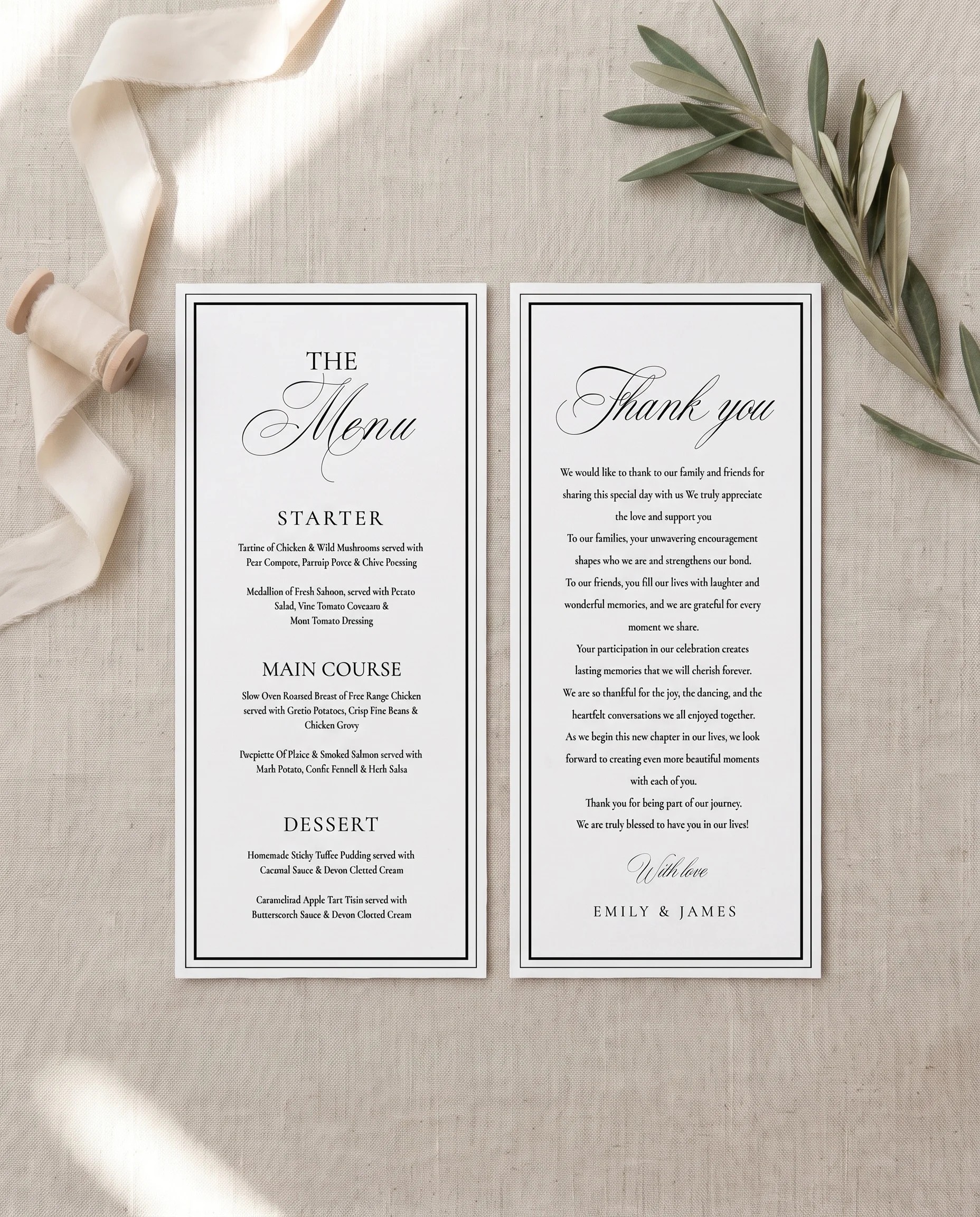
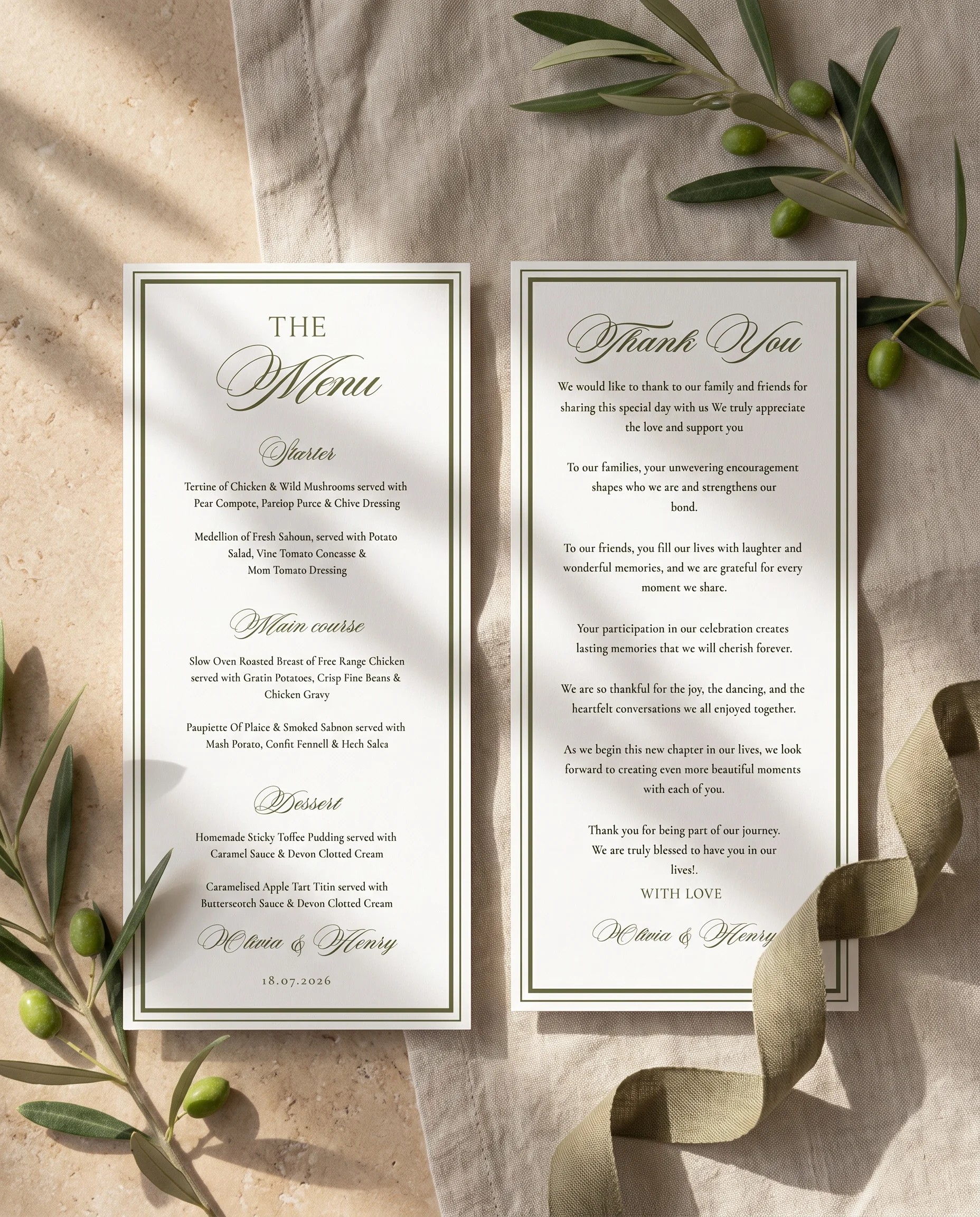
Our classic wedding menu templates are built around formal serif typography, calligraphy scripts, monograms, and timeless color palettes. Choose from elegant wedding menus with classical type and ivory cardstock, formal wedding menus with navy and gold accents, traditional wedding menus in black and white with Roman numeral course numbering, sophisticated black-tie menus in deep burgundy or evergreen, classy menus with formal type and centered symmetrical layouts, or monogram wedding menus with the wedding initials prominently placed at the top of each card. Whether you are looking for navy wedding menus, gold wedding menus, ivory wedding menus, or modern classic menus with refined contemporary type, every template is fully editable in our free browser-based editor and downloads as print-ready PDF, JPEG, and PNG files. Print at home as flat cards on cardstock, or fold them in half for bi-fold menus that hold elaborate multi-course meals with wine pairings.
Classic wedding menus carry four distinctive conventions that signal the formal aesthetic to guests, each rooted in long-standing fine dining tradition. The four conventions:
Calligraphy or formal serif typography. Course headers and dish names in traditional serif fonts (Garamond, Didot, Bodoni, Caslon) for printed menus, or hand-lettered calligraphy for the most formal weddings.
Monogram at the top of each menu card. The wedding monogram appears at the top center, ideally matching the monogram from the wedding invitation, place cards, and seating chart. The repeating monogram creates one of the strongest visual signals at a classic wedding.
Wine pairings listed beside each course. Formal classic dinners commonly serve wine pairings selected by the caterer or sommelier - listing them beside each course on the menu signals the formal multi-course experience and helps guests appreciate the pairings as part of the dinner.
Roman numeral course numbering. Traditional classic menus number courses with Roman numerals (I., II., III., IV., V.) rather than Arabic numbers (1., 2., 3.) or no numbering. The convention reads as deliberately formal and historically rooted.
Together, these four conventions distinguish a classic wedding menu from menus in other aesthetics. A menu that uses formal serif typography but lacks the monogram, wine pairings, or Roman numerals reads as classic-leaning rather than fully classic. Including all four creates a menu that signals the formal aesthetic completely.
The classic aesthetic for wedding menus follows the same conventions as classic wedding stationery, scaled to the menu format:
Formal serif typography or calligraphy. Traditional serif fonts for printed menus, hand-lettered calligraphy for the most formal weddings.
Centered, symmetrical layouts. Course list centered with deliberate symmetry, monogram at top center as a focal mark.
Restrained classic palette. Black on white or ivory most traditional. Navy and gold, charcoal and cream, or deep burgundy and ivory for fall and winter weddings.
Roman numeral course numbering. I., II., III., IV., V. for the formal classical convention.
Wine pairings beside each course. Particularly important for black-tie and multi-course classic weddings.
Browse all wedding menus by aesthetic. For matching classic day-of wedding stationery, see our classic wedding place cards, classic wedding seating charts, and classic wedding programs.
Yes - wine pairings are one of the strongest signals of a formal classic wedding dinner and are particularly appropriate for black-tie weddings, formal multi-course meals, and weddings at venues with dedicated sommeliers (country clubs, fine dining restaurants, hotel ballrooms with wine programs). The standard format is to list each course with the dish name on one line and the paired wine name on a second line in slightly smaller italic. For four-course meals: appetizer with white wine pairing, fish course with white burgundy or champagne, main with red wine, dessert with port or sweet wine. Coordinate the pairings with the caterer or sommelier 4 to 6 weeks before the wedding so the menu can list specific producers and vintages. Some couples include a brief tasting note (e.g., "crisp, citrus-forward") beside each pairing - this is a refined touch but optional.
Roman numerals (I., II., III., IV., V.) are the most traditional convention for classic wedding menus and signal the formal aesthetic clearly. Arabic numbers (1., 2., 3.) read as more casual and fit boho or modern weddings better. Some classic couples skip numbering entirely and use only course headers (Appetizer / Fish Course / Main / Cheese / Dessert) - this works well when the course headers are descriptive enough that numbering is redundant. For black-tie weddings and very formal classic weddings, Roman numerals are the strongest convention. For elegant-but-relaxed classic weddings (informal classic country club receptions), course headers without numbering may feel more appropriate. The choice depends on how formal the rest of the wedding is - the menu numbering should match the overall formality level of the day.
Classic weddings benefit from heavier substrates than other styles - heavy cream cardstock (110-130 lb), letterpress cotton paper, or even small printed and bound menu cards in linen or silk covers for very formal weddings. The weight and texture of the menu in guests' hands signals the formal aesthetic. Standard 100 lb cardstock works for elegant-but-not-formal classic weddings; 130 lb cream cardstock with a slight tooth is the most common choice for true classic formal weddings; letterpress menus on 220 lb cotton are reserved for black-tie weddings with maximum formality. The trade-off is cost - heavy cardstock costs $0.10-$0.30 per menu, letterpress menus run $3-$8 per menu, and bound menus in cloth covers run $10-$25 per menu. Choose substrate based on the overall formality level of the wedding.
Yes - classic weddings benefit MOST from coordinated stationery suites. Multi-generational classic weddings include grandmothers, mothers, future mothers-in-law, and traditional guests who notice and appreciate stationery cohesion. If your wedding invitation features formal serif typography, a custom monogram, and a navy and gold palette, your wedding menus should use the same monogram, the same typography family, the same palette, and the same Roman numeral or course-numbering convention. The menu sits at every place setting and most guests pick it up and read it (especially when it lists wine pairings) - cohesion with the rest of the suite is essential. The menu often becomes a small keepsake guests take home from the wedding, particularly for couples who include the date and venue at the bottom of the menu. For formal classic weddings, this stationery coordination is part of the overall wedding presentation that traditional guests recognize as well-designed and intentional.
21 templates
Our classic wedding menu templates are built around formal serif typography, calligraphy scripts, monograms, and timeless color palettes. Choose from elegant wedding menus with classical type and ivory cardstock, formal wedding menus with navy and gold accents, traditional wedding menus in black and white with Roman numeral course numbering, sophisticated black-tie menus in deep burgundy or evergreen, classy menus with formal type and centered symmetrical layouts, or monogram wedding menus with the wedding initials prominently placed at the top of each card. Whether you are looking for navy wedding menus, gold wedding menus, ivory wedding menus, or modern classic menus with refined contemporary type, every template is fully editable in our free browser-based editor and downloads as print-ready PDF, JPEG, and PNG files. Print at home as flat cards on cardstock, or fold them in half for bi-fold menus that hold elaborate multi-course meals with wine pairings.
Classic wedding menus carry four distinctive conventions that signal the formal aesthetic to guests, each rooted in long-standing fine dining tradition. The four conventions:
Calligraphy or formal serif typography. Course headers and dish names in traditional serif fonts (Garamond, Didot, Bodoni, Caslon) for printed menus, or hand-lettered calligraphy for the most formal weddings.
Monogram at the top of each menu card. The wedding monogram appears at the top center, ideally matching the monogram from the wedding invitation, place cards, and seating chart. The repeating monogram creates one of the strongest visual signals at a classic wedding.
Wine pairings listed beside each course. Formal classic dinners commonly serve wine pairings selected by the caterer or sommelier - listing them beside each course on the menu signals the formal multi-course experience and helps guests appreciate the pairings as part of the dinner.
Roman numeral course numbering. Traditional classic menus number courses with Roman numerals (I., II., III., IV., V.) rather than Arabic numbers (1., 2., 3.) or no numbering. The convention reads as deliberately formal and historically rooted.
Together, these four conventions distinguish a classic wedding menu from menus in other aesthetics. A menu that uses formal serif typography but lacks the monogram, wine pairings, or Roman numerals reads as classic-leaning rather than fully classic. Including all four creates a menu that signals the formal aesthetic completely.
The classic aesthetic for wedding menus follows the same conventions as classic wedding stationery, scaled to the menu format:
Formal serif typography or calligraphy. Traditional serif fonts for printed menus, hand-lettered calligraphy for the most formal weddings.
Centered, symmetrical layouts. Course list centered with deliberate symmetry, monogram at top center as a focal mark.
Restrained classic palette. Black on white or ivory most traditional. Navy and gold, charcoal and cream, or deep burgundy and ivory for fall and winter weddings.
Roman numeral course numbering. I., II., III., IV., V. for the formal classical convention.
Wine pairings beside each course. Particularly important for black-tie and multi-course classic weddings.
Browse all wedding menus by aesthetic. For matching classic day-of wedding stationery, see our classic wedding place cards, classic wedding seating charts, and classic wedding programs.
Yes - wine pairings are one of the strongest signals of a formal classic wedding dinner and are particularly appropriate for black-tie weddings, formal multi-course meals, and weddings at venues with dedicated sommeliers (country clubs, fine dining restaurants, hotel ballrooms with wine programs). The standard format is to list each course with the dish name on one line and the paired wine name on a second line in slightly smaller italic. For four-course meals: appetizer with white wine pairing, fish course with white burgundy or champagne, main with red wine, dessert with port or sweet wine. Coordinate the pairings with the caterer or sommelier 4 to 6 weeks before the wedding so the menu can list specific producers and vintages. Some couples include a brief tasting note (e.g., "crisp, citrus-forward") beside each pairing - this is a refined touch but optional.
Roman numerals (I., II., III., IV., V.) are the most traditional convention for classic wedding menus and signal the formal aesthetic clearly. Arabic numbers (1., 2., 3.) read as more casual and fit boho or modern weddings better. Some classic couples skip numbering entirely and use only course headers (Appetizer / Fish Course / Main / Cheese / Dessert) - this works well when the course headers are descriptive enough that numbering is redundant. For black-tie weddings and very formal classic weddings, Roman numerals are the strongest convention. For elegant-but-relaxed classic weddings (informal classic country club receptions), course headers without numbering may feel more appropriate. The choice depends on how formal the rest of the wedding is - the menu numbering should match the overall formality level of the day.
Classic weddings benefit from heavier substrates than other styles - heavy cream cardstock (110-130 lb), letterpress cotton paper, or even small printed and bound menu cards in linen or silk covers for very formal weddings. The weight and texture of the menu in guests' hands signals the formal aesthetic. Standard 100 lb cardstock works for elegant-but-not-formal classic weddings; 130 lb cream cardstock with a slight tooth is the most common choice for true classic formal weddings; letterpress menus on 220 lb cotton are reserved for black-tie weddings with maximum formality. The trade-off is cost - heavy cardstock costs $0.10-$0.30 per menu, letterpress menus run $3-$8 per menu, and bound menus in cloth covers run $10-$25 per menu. Choose substrate based on the overall formality level of the wedding.
Yes - classic weddings benefit MOST from coordinated stationery suites. Multi-generational classic weddings include grandmothers, mothers, future mothers-in-law, and traditional guests who notice and appreciate stationery cohesion. If your wedding invitation features formal serif typography, a custom monogram, and a navy and gold palette, your wedding menus should use the same monogram, the same typography family, the same palette, and the same Roman numeral or course-numbering convention. The menu sits at every place setting and most guests pick it up and read it (especially when it lists wine pairings) - cohesion with the rest of the suite is essential. The menu often becomes a small keepsake guests take home from the wedding, particularly for couples who include the date and venue at the bottom of the menu. For formal classic weddings, this stationery coordination is part of the overall wedding presentation that traditional guests recognize as well-designed and intentional.