
Classic Wedding Programs
Formal serif typography, calligraphy scripts, monograms, and timeless palettes define our classic wedding program templates. Choose from elegant wedding programs with classical type and ivory cardstock, formal wedding programs with navy and gold accents, traditional wedding programs in black and white, sophisticated programs with deep burgundy or evergreen palettes, or monogram wedding programs with the bride's wedding initials marking each piece. Available in folded bi-fold, folded tri-fold, single-page flat, and booklet formats - the booklet format suits long traditional ceremonies. Every template is fully editable in our free browser-based editor and downloads as print-ready PDF, JPEG, and PNG files.

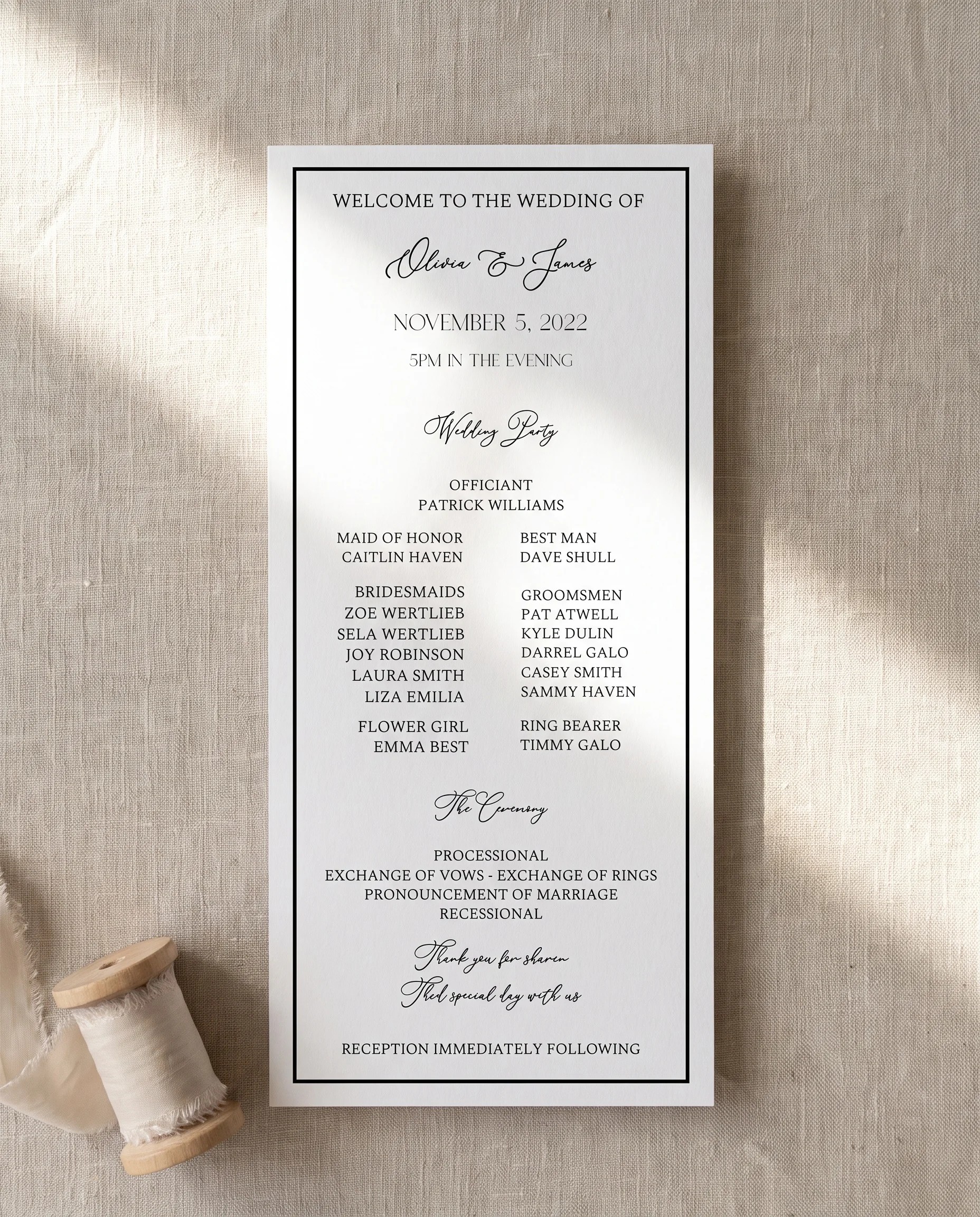
About Our Classic Wedding Programs
Our classic wedding program templates are built around formal serif typography, calligraphy scripts, monograms, and timeless color palettes. Choose from elegant wedding programs with classical type and ivory cardstock, formal wedding programs with navy and gold accents, traditional wedding programs in black and white, sophisticated programs with deep burgundy or evergreen palettes, or monogram wedding programs with the bride's wedding initials marking each piece. Whether you are looking for navy wedding programs, gold wedding programs, ivory wedding programs, or modern classic programs with refined contemporary type, every template is fully editable in our free browser-based editor and downloads as print-ready PDF, JPEG, and PNG files. Available in folded bi-fold, folded tri-fold, single-page flat, and booklet formats.
Formal Etiquette Phrasing for Classic Wedding Programs
The wedding program is the most etiquette-laden piece in the wedding stationery suite. Where invitations follow strict phrasing conventions and place cards are simply names, programs document the entire ceremony with full formal names, relationships, and titles. Classic wedding etiquette includes a few specific phrasing conventions worth knowing. The program cover typically reads "The Marriage of [Bride's Full Name] and [Groom's Full Name]" with the wedding date and venue underneath. The processional section names each parent with full title ("Father of the Bride: Mr. James William Smith," "Mother of the Groom: Mrs. Catherine Anne Williams"), each grandparent if living and attending, and each member of the wedding party with their relationship to the couple ("Maid of Honor: Sarah Elizabeth Smith, sister of the bride"). The officiant is named with full credentials ("The Reverend Doctor Sarah Mitchell, Officiating" or "The Honorable Judge Robert Anderson, Officiating"). Music selections include both the title and composer ("Canon in D, Johann Pachelbel"). This level of formal detail is what distinguishes a classic program from a casual one and is genuinely appreciated by traditional and multi-generational guests.
What Makes a Wedding Program Classic
The classic aesthetic for wedding programs follows the same conventions as classic wedding stationery, scaled to the program format:
Formal serif typography. Traditional serif fonts (Garamond, Didot, Bodoni, Caslon) for body text, occasionally paired with refined script for the cover or section headers.
Centered, symmetrical layouts. Content is centered with deliberate hierarchy - cover composition, processional order, and music selections all align symmetrically.
Restrained classic palette. Black on white or ivory is most traditional. Navy and gold, charcoal and cream, or deep burgundy and ivory all work for fall and winter weddings.
Optional custom monogram. The bride's wedding monogram appears on the cover, ideally matching the monogram from the wedding invitation.
Full formal phrasing. Names, titles, parental and family roles, and officiant credentials all rendered formally.
Pairs With
Browse all wedding programs by aesthetic. For matching classic day-of wedding stationery, see our classic wedding place cards, classic wedding menus, and classic wedding seating charts.
Frequently Asked Questions
What should I include in a classic wedding program?
A classic wedding program includes more formal detail than other styles. The cover names the marriage formally ("The Marriage of [Bride's Full Name] and [Groom's Full Name]") with the wedding date written in long form. The processional section names each parent with full title, each grandparent if attending, and each wedding party member with their relationship to the couple. The order of ceremony lists each element with formal phrasing ("Welcome and Invocation," "First Reading," "Exchange of Vows," "Exchange of Rings," "Pronouncement," "Recessional"). Music selections include title and composer. The officiant is named with full credentials. Optional additions include a thank-you note from the couple to their parents and guests, a memorial dedication for absent loved ones ("In loving memory of [name]," "Lovingly remembering [name]"), and the reception venue and time written in formal long-form. The bride's wedding monogram typically appears on the cover, matching the wedding invitation.
Should classic wedding programs use the bride's monogram?
Yes, classic wedding programs typically include the bride's wedding monogram on the cover. The monogram displays the bride's initials in a stylized arrangement, ideally matching the monogram used on the wedding invitation. Place the monogram at the top center of the program cover, sized to be a clear focal mark without overwhelming the names underneath. Important note: use the bride's MARRIED initials on the wedding program (since the program is presented at the wedding ceremony, where she takes the new last name), not her current initials. This differs from pre-wedding stationery (save the date, bridal shower, bachelorette) which use her current initials. The wedding program, ceremony elements, and post-wedding pieces (thank you cards) all use the new married initials if she will be taking her partner's name.
Folded vs flat vs booklet programs - which format suits a classic wedding?
Choose folded bi-fold for traditional ceremonies of 25 to 45 minutes - this is the standard format and works for most classic weddings. Choose folded tri-fold for longer ceremonies with fuller wedding parties (10+ on each side), multiple readings, and music selections that need their own panel. Choose booklets (multiple stitched pages) for long traditional religious ceremonies - Catholic mass, Episcopal services, Orthodox liturgy, formal Jewish ceremonies, and Hindu ceremonies all typically have content that exceeds what fits on a tri-fold. Booklets are the most formal program format and pair particularly well with classic monogram and serif typography. Single-page flat programs are less common for classic weddings since classic ceremonies tend to include more content (full processional, full music selections, formal officiant credentials) than fits comfortably on a single page.
Should my classic wedding programs match my wedding invitation?
Yes - classic weddings benefit MOST from coordinated stationery suites, more so than other styles. Multi-generational classic weddings include grandmothers, mothers, future mothers-in-law, and traditional guests who notice and appreciate stationery cohesion. If your wedding invitation features formal serif typography, a custom monogram, and a navy and gold palette, your wedding programs should use the same monogram, the same typography family, and the same palette. The result is a unified design language from save the date through ceremony - and programs are particularly visible because every guest receives one as they arrive. For formal classic weddings specifically, this stationery coordination is part of the overall wedding presentation that traditional guests recognize as well-designed. Many couples buy matching invitation suites + day-of stationery suites together specifically to ensure this cohesion.