




Timberline Reverie — Menu
$1

The template collection
Search by style, occasion or template type.
Warm wood tones, kraft paper textures, hand-lettered scripts, and country florals like sunflowers and wildflowers define our rustic wedding menu templates. Choose from country wedding menus with relaxed casual layouts, barn wedding menus with wood-grain backgrounds, sunflower menus with country flower borders, vineyard and winery menus with grape motifs, farm-to-table menus that list local sources beside each course, or rustic elegant menus with refined typography. Designed to coordinate with rustic place cards, seating charts, and welcome signs as a unified day-of stationery suite, every template is fully editable in our free browser-based editor and downloads as print-ready PDF, JPEG, and PNG files. Print at home as flat cards on kraft cardstock or wood-grain printed stock for the most rustic finish.
23 templates
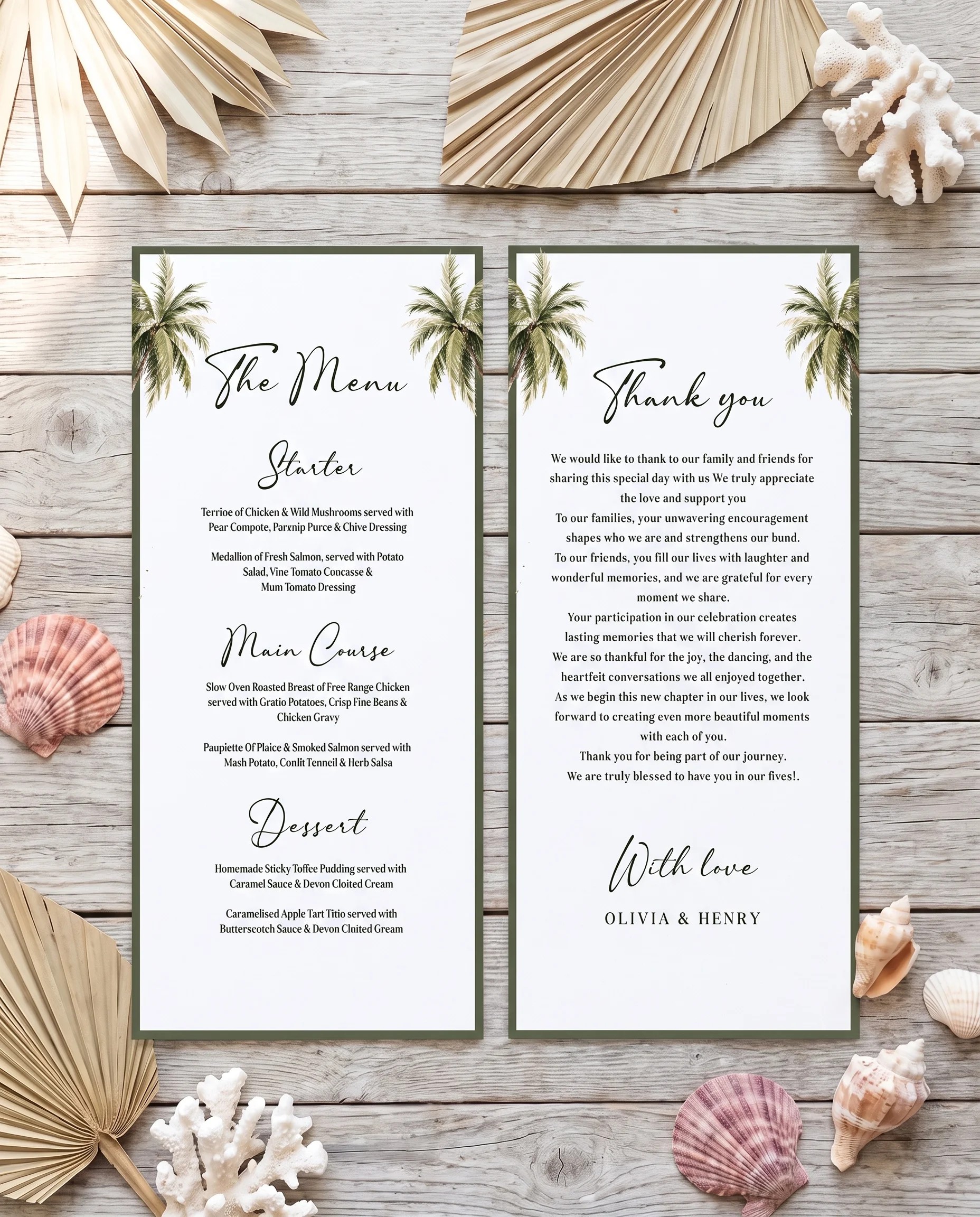
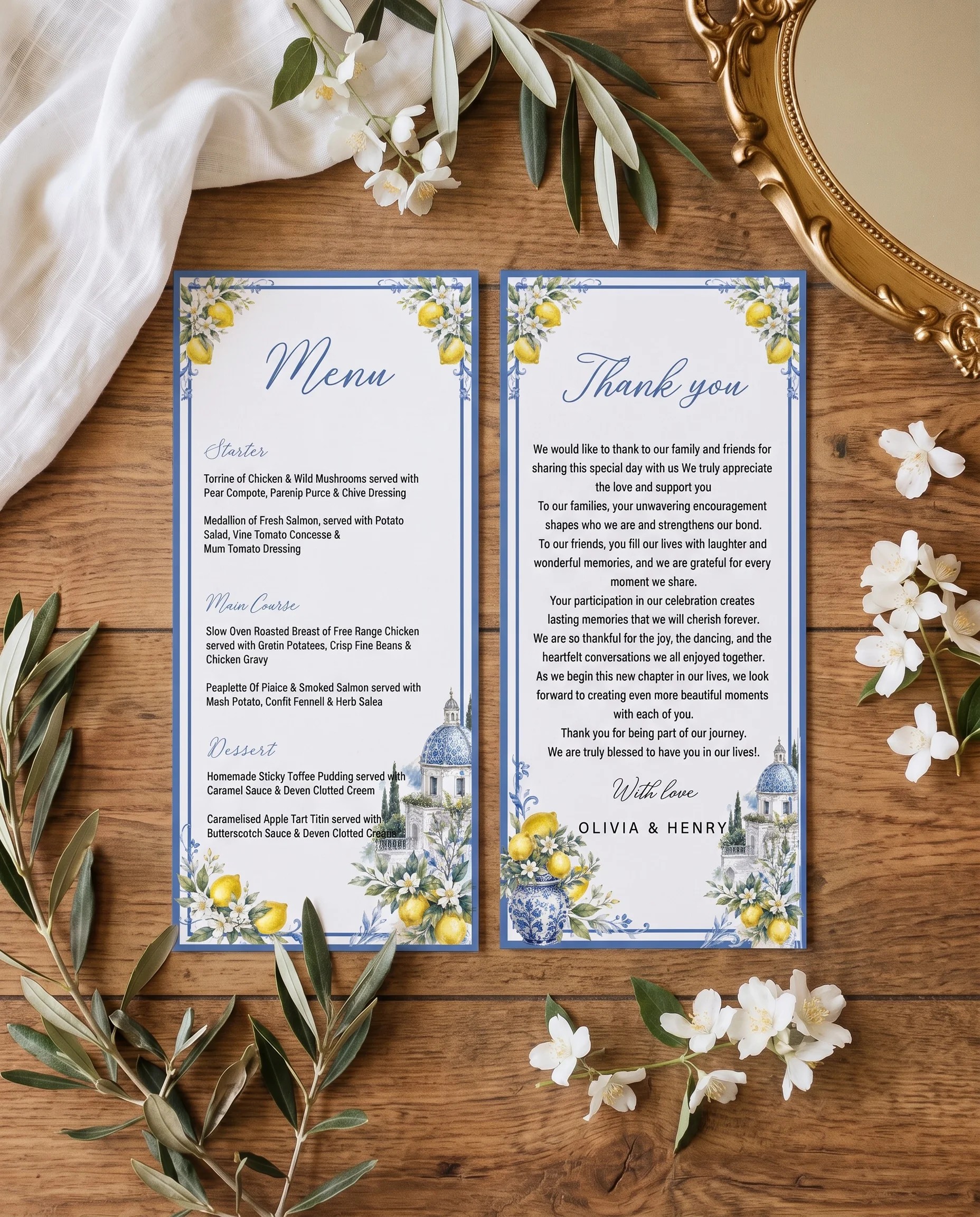
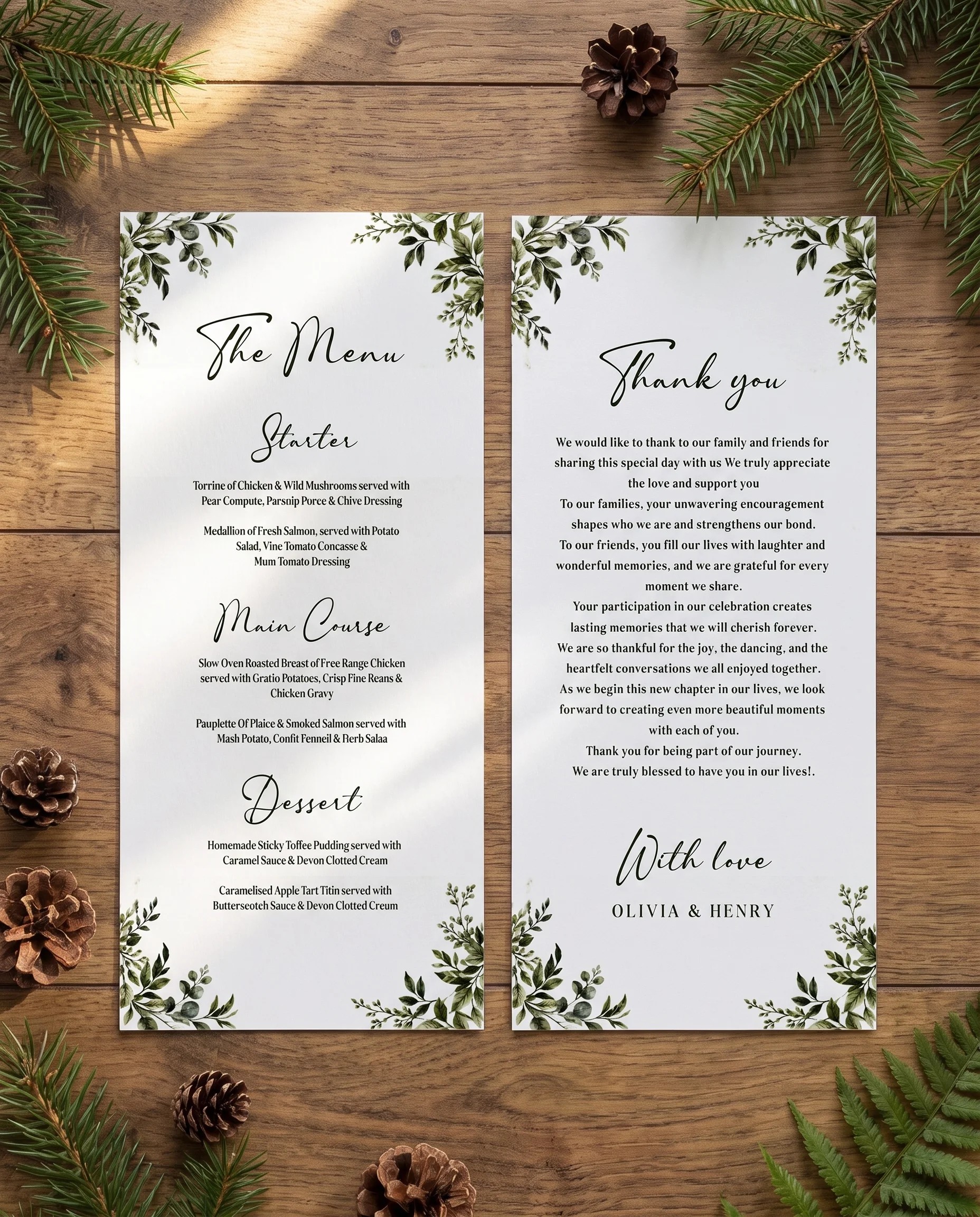
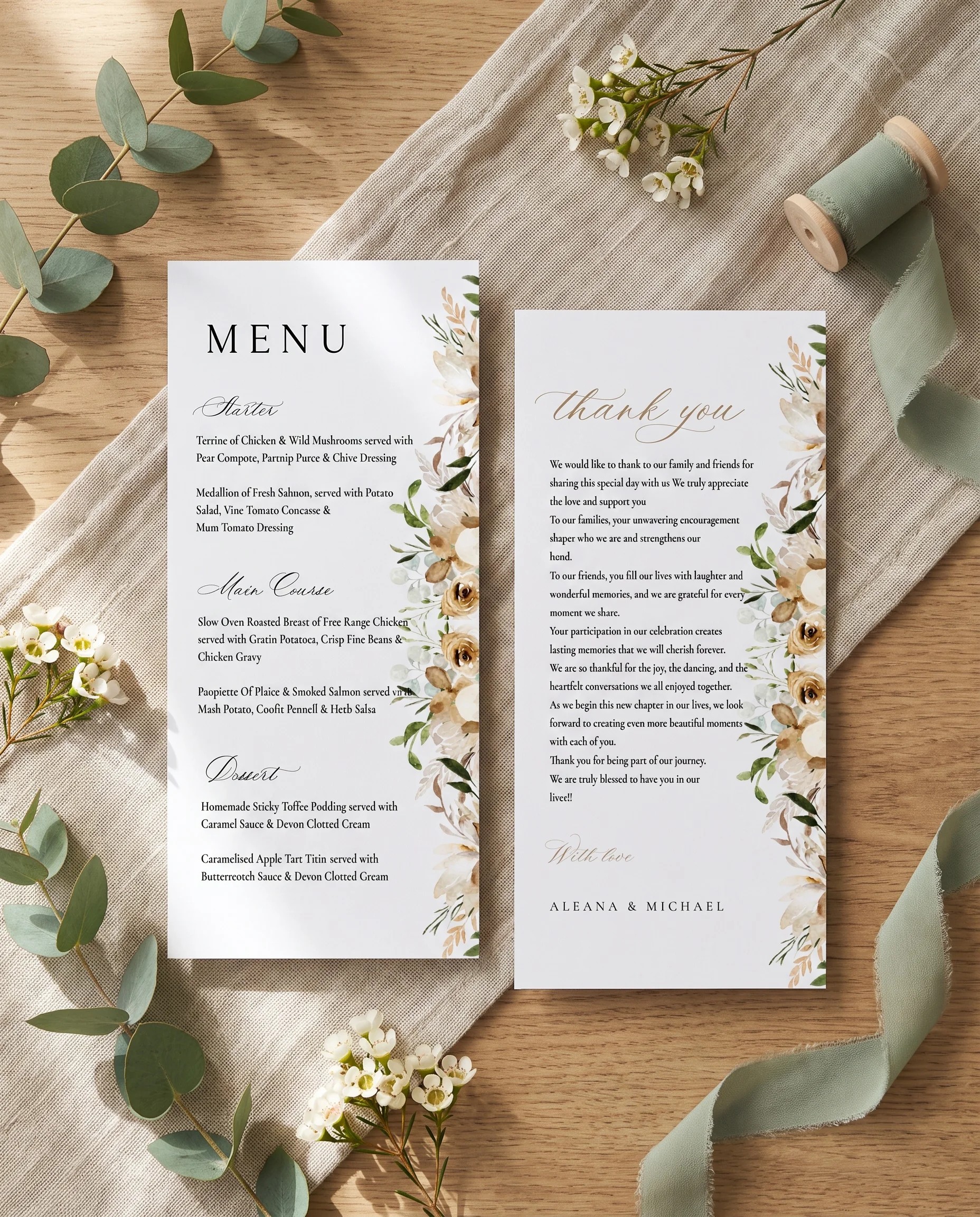
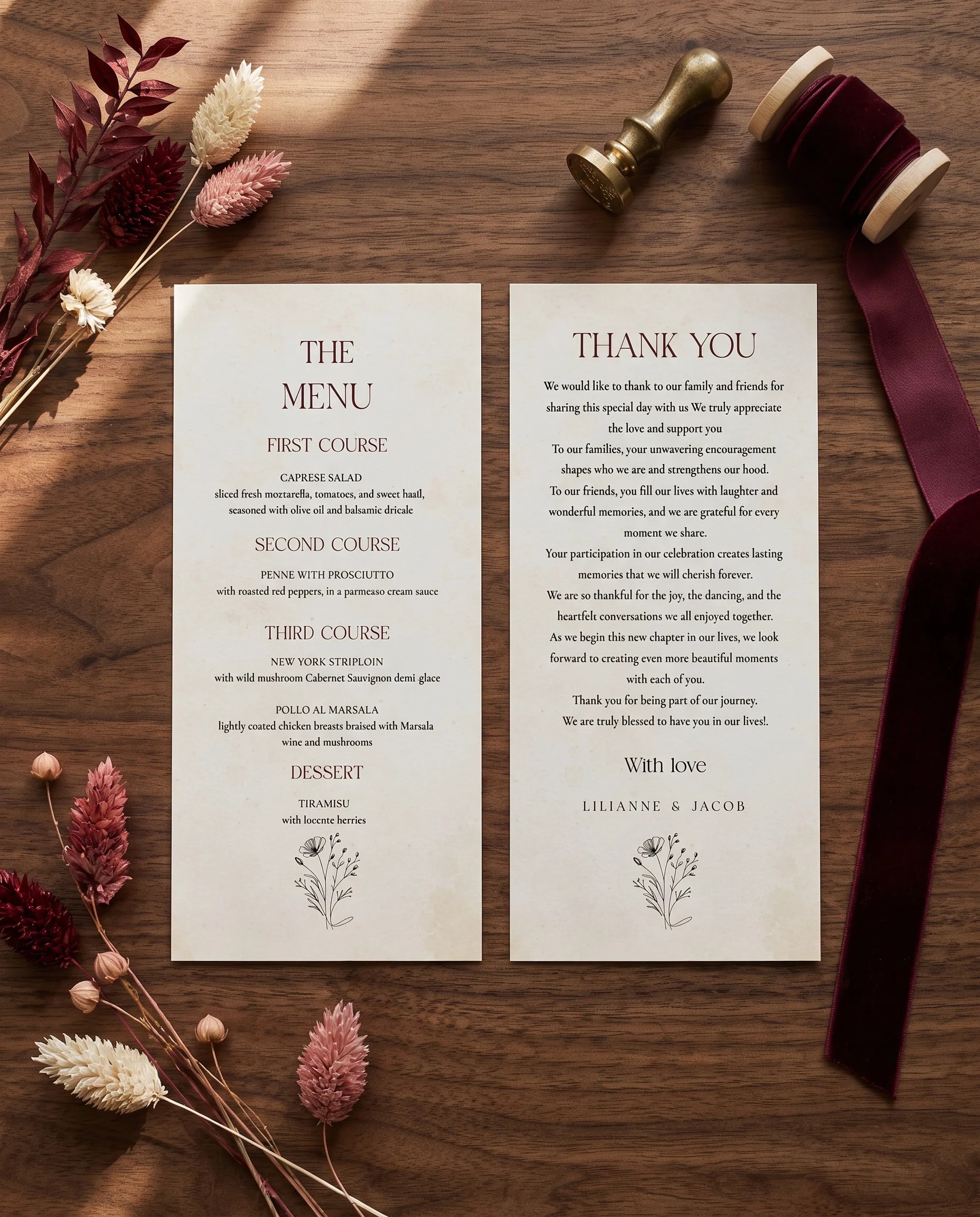
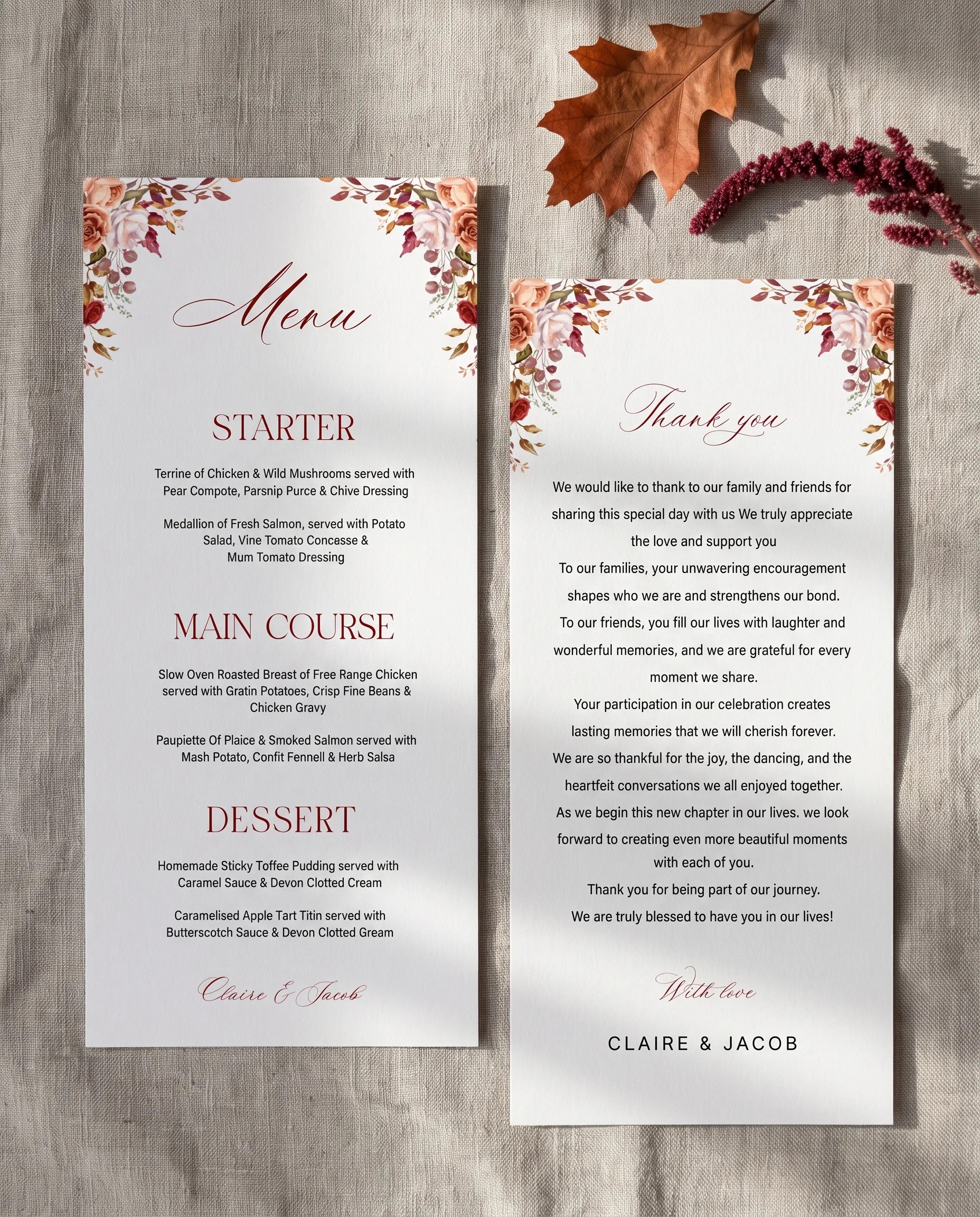
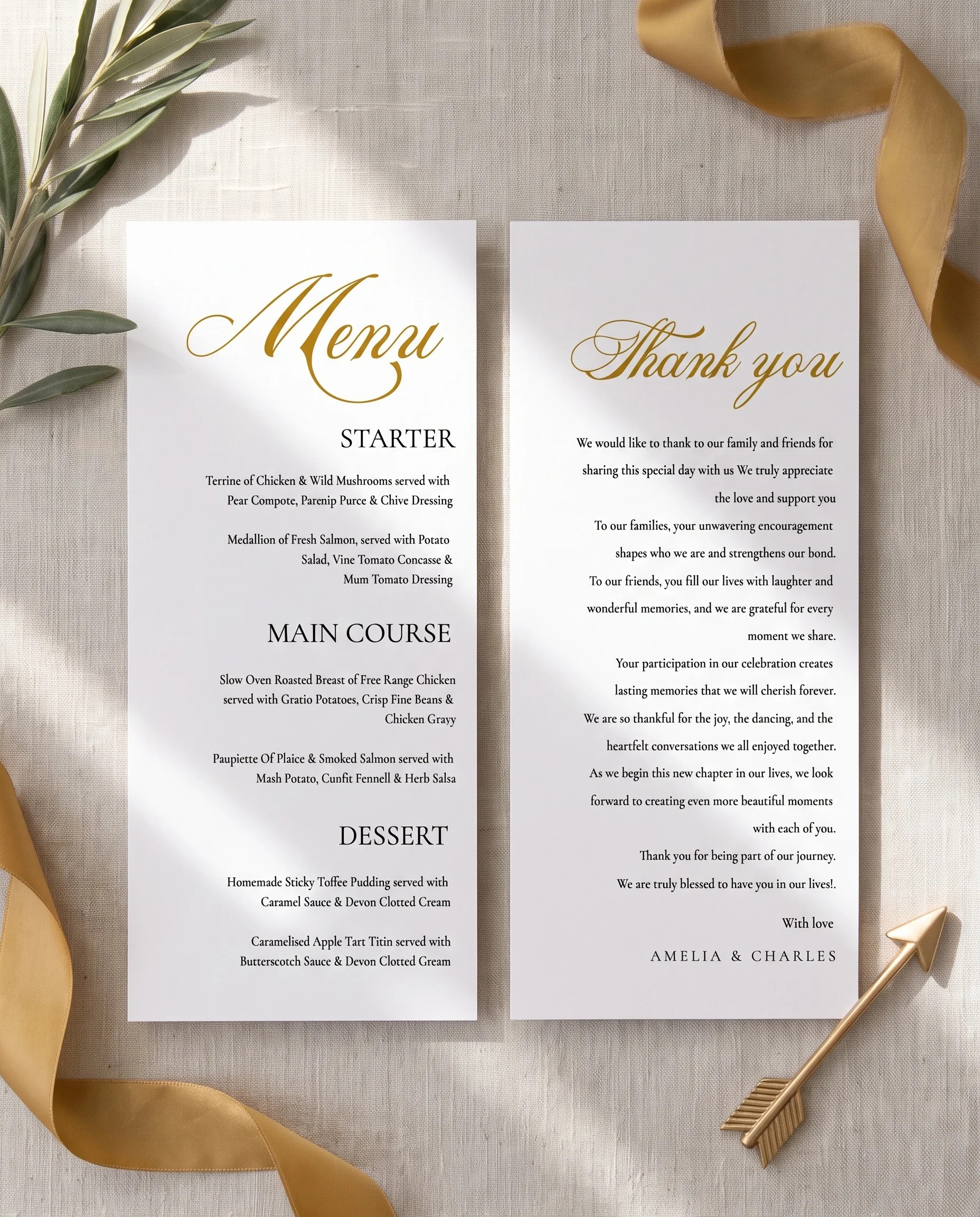
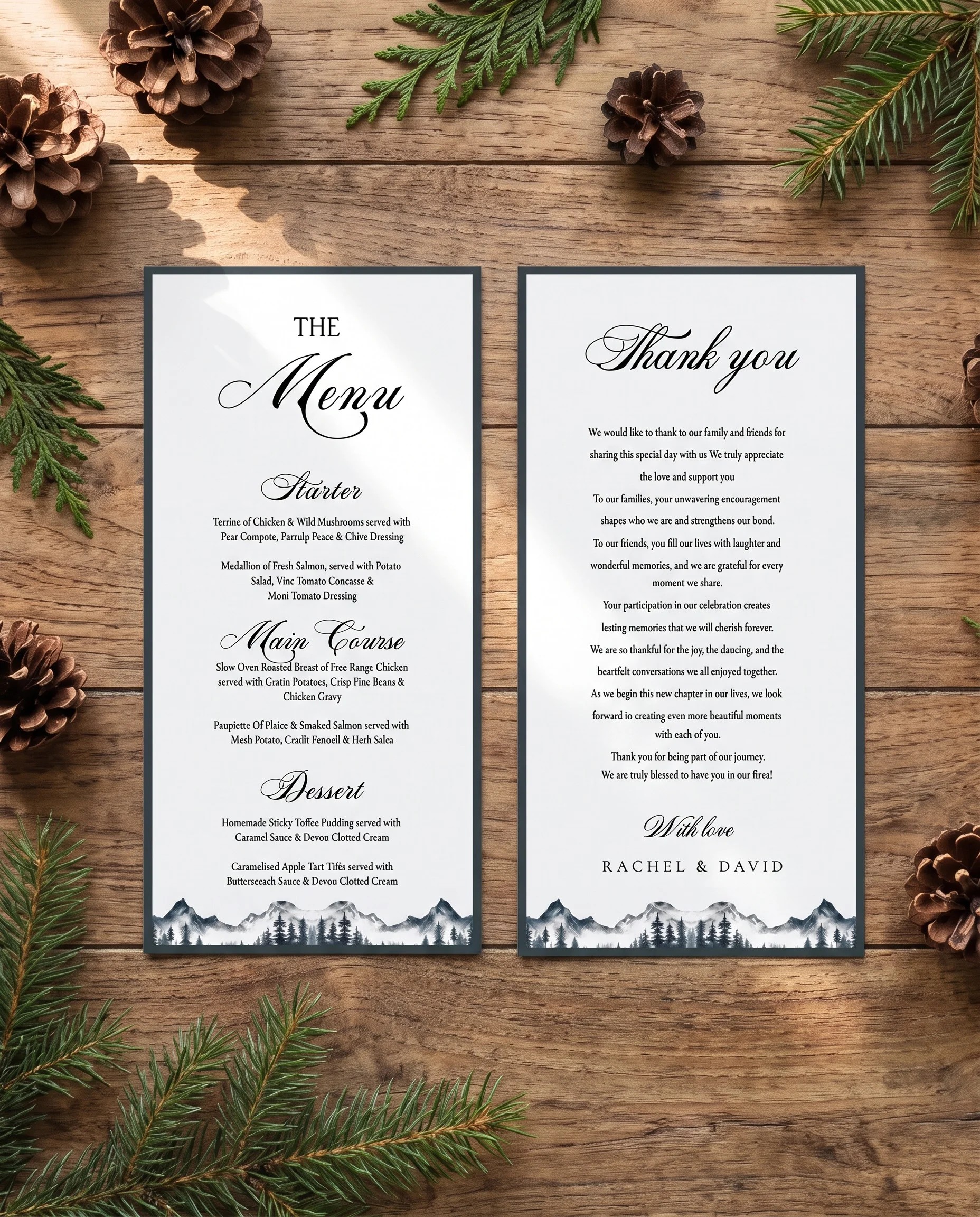
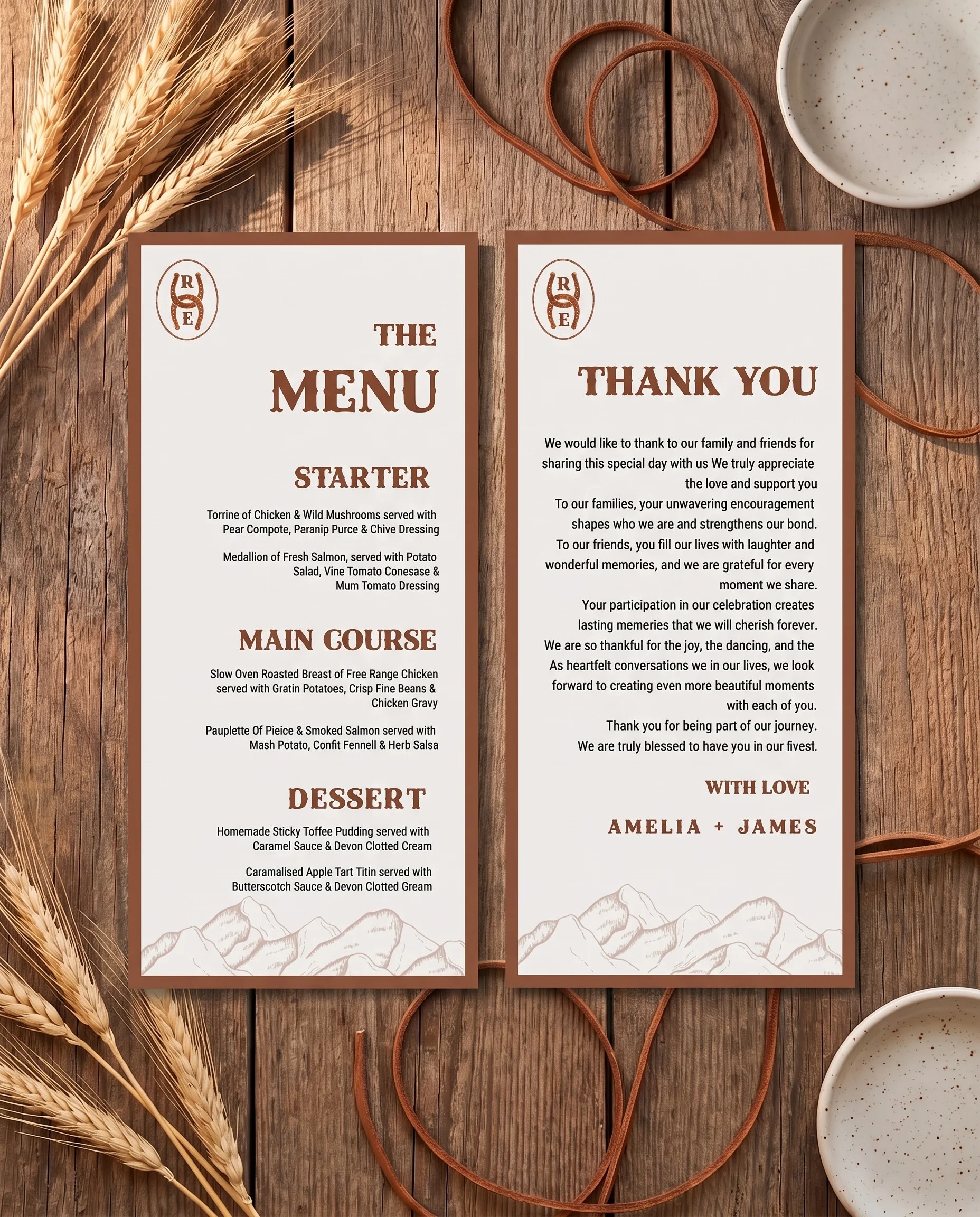
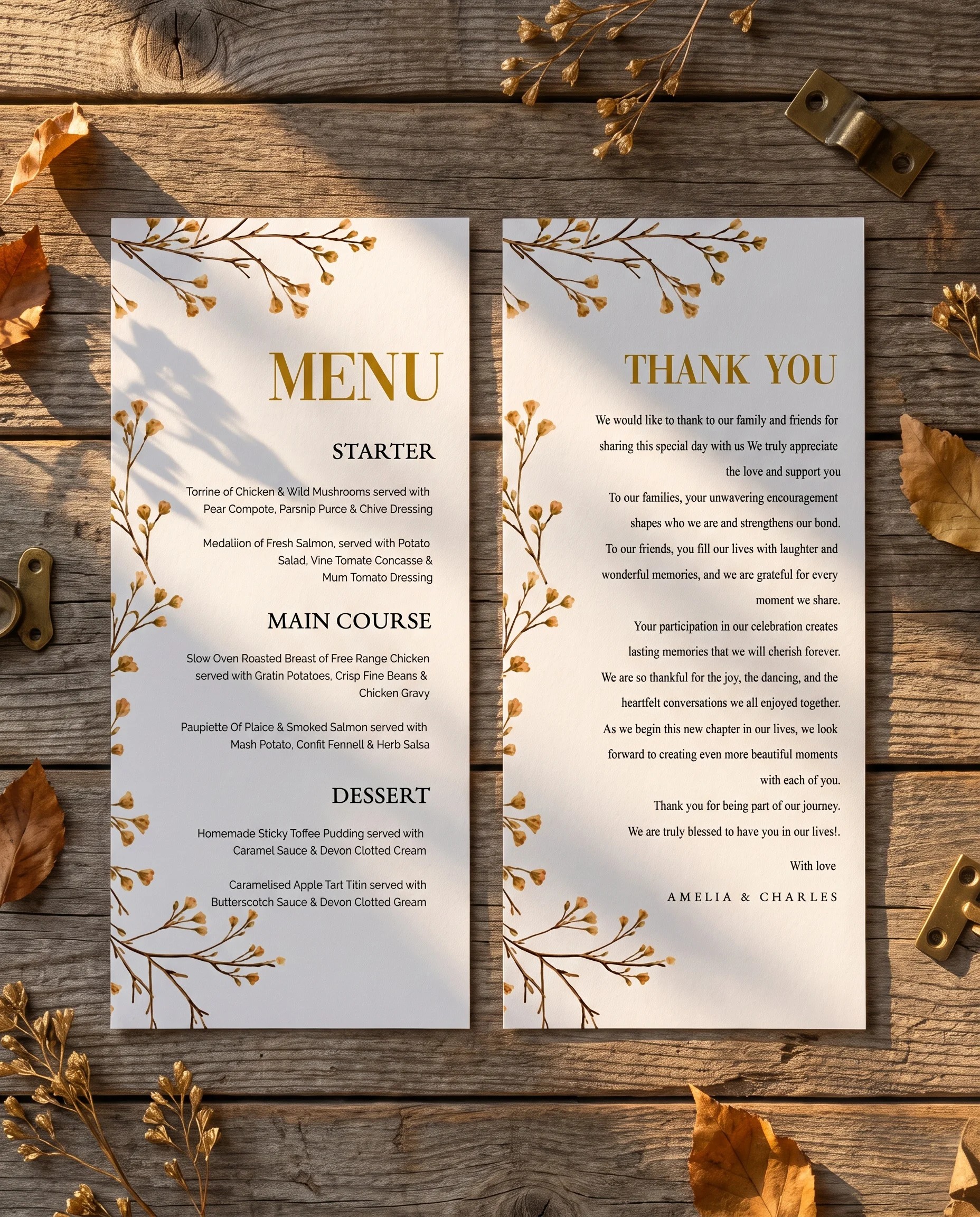
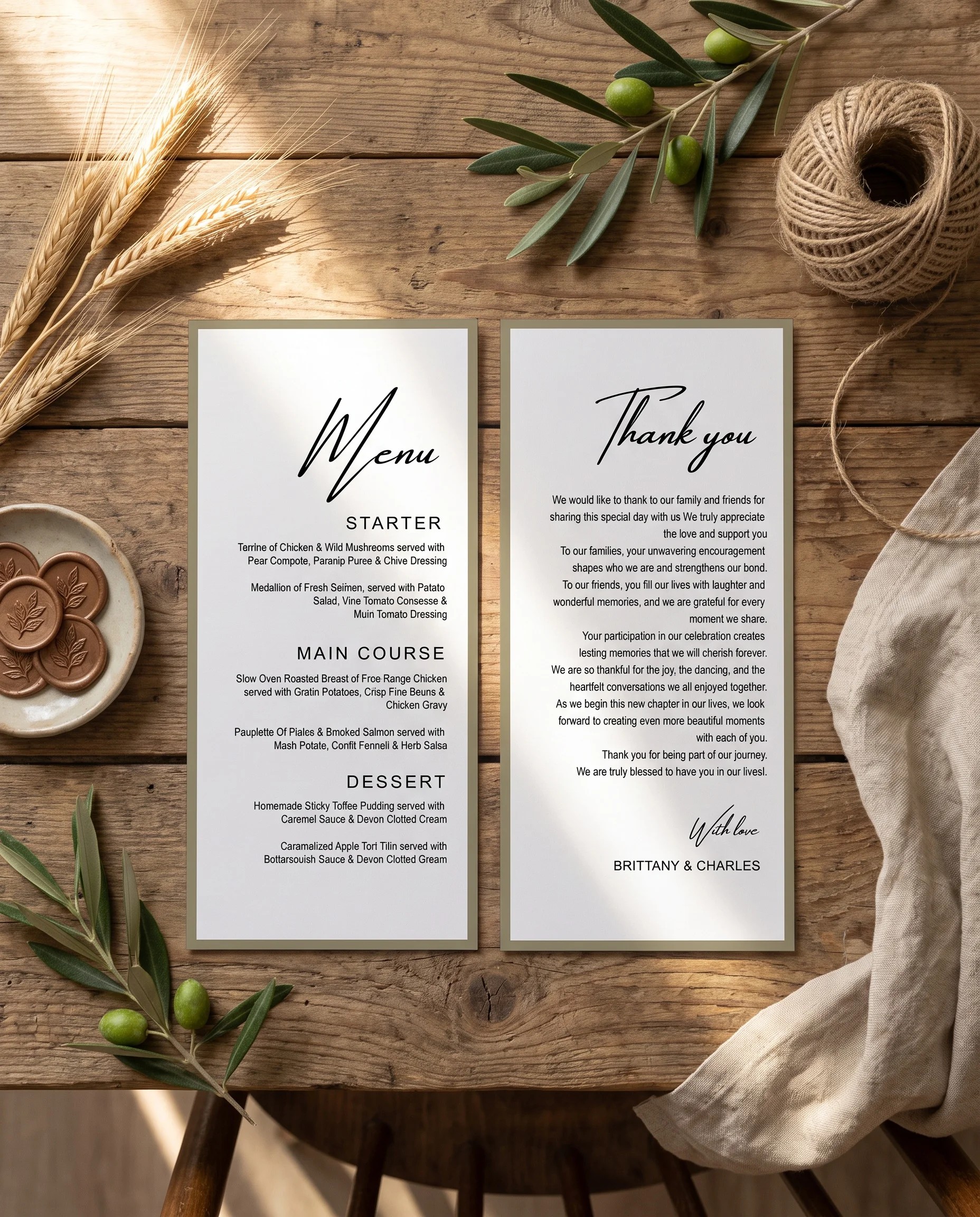
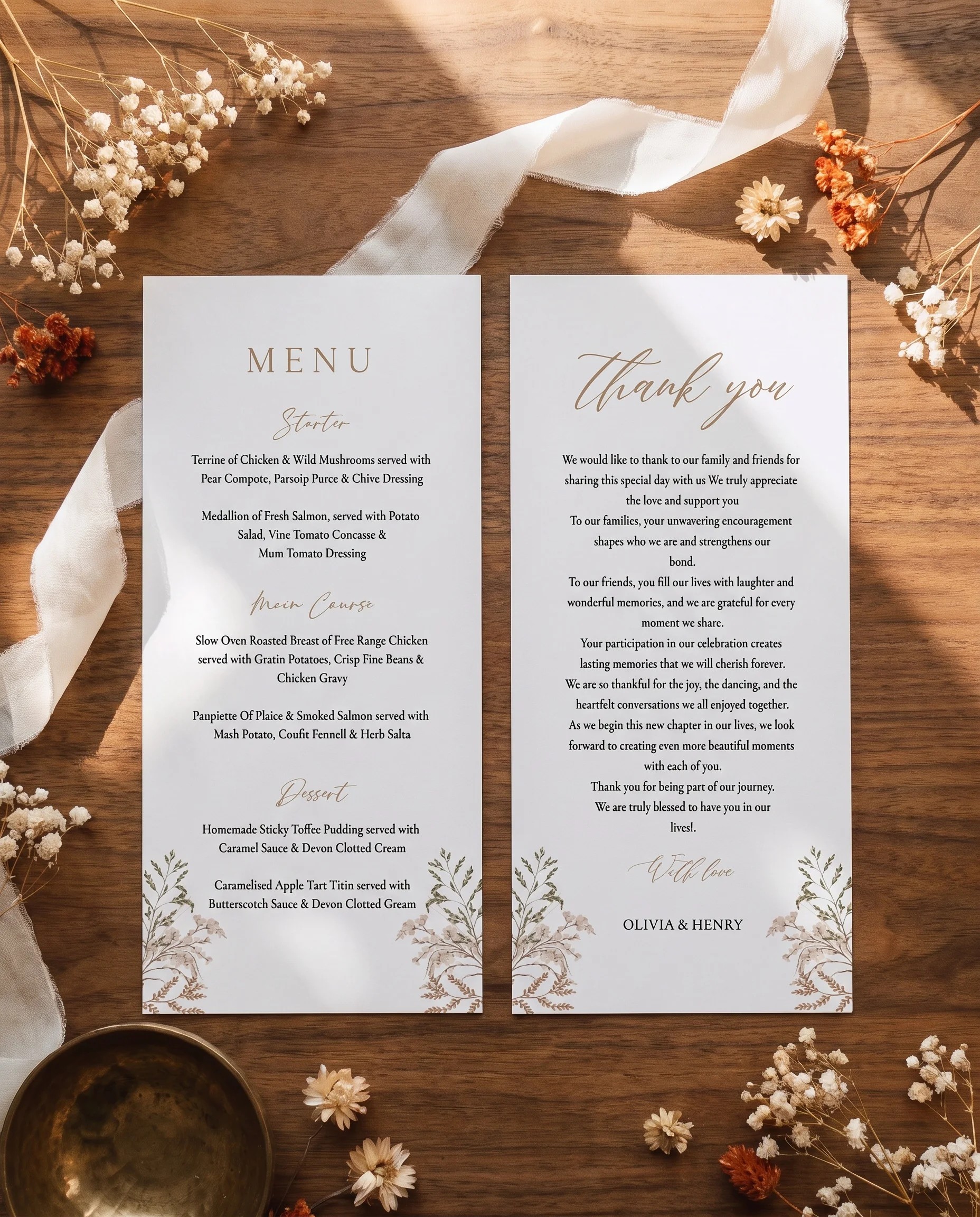
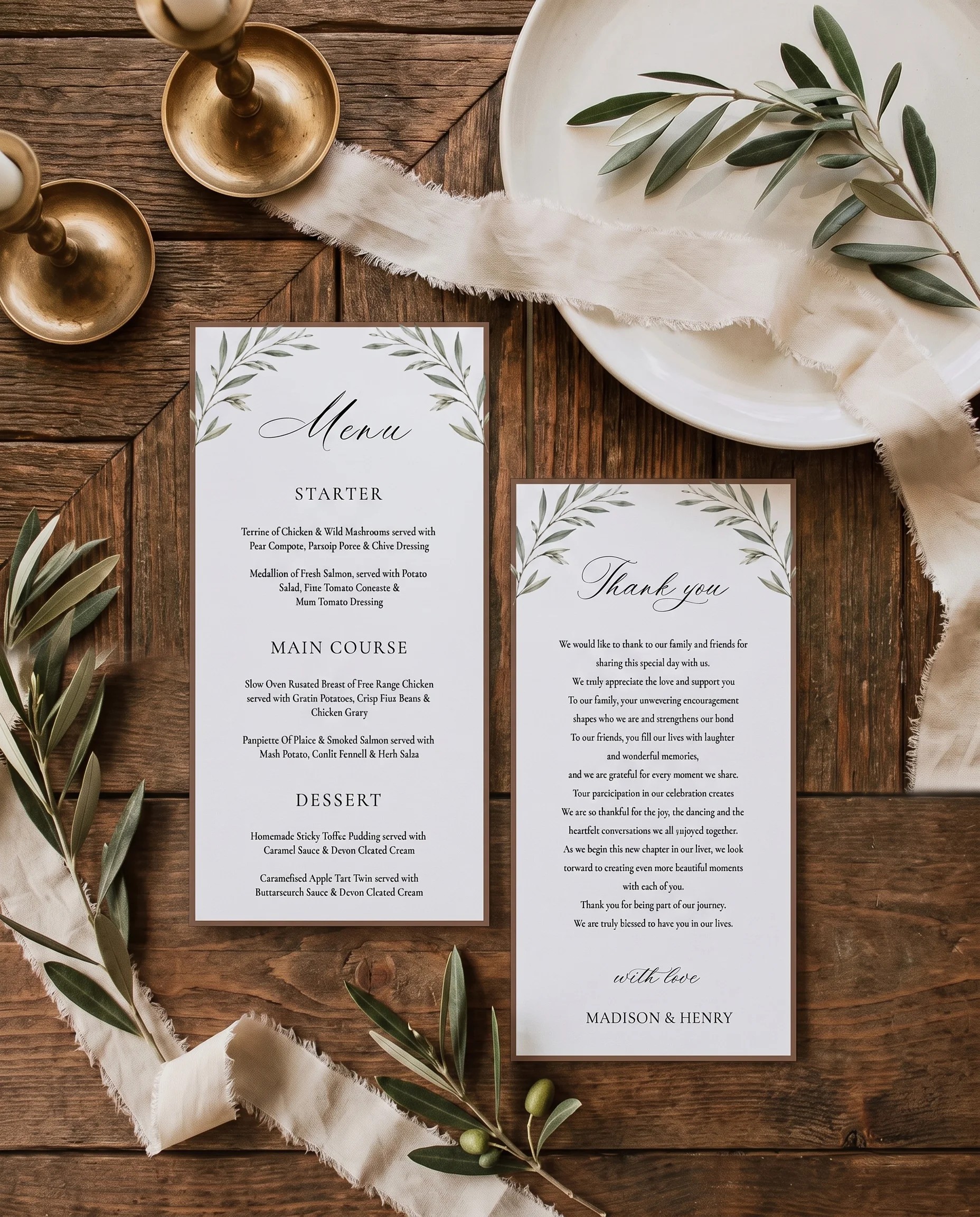
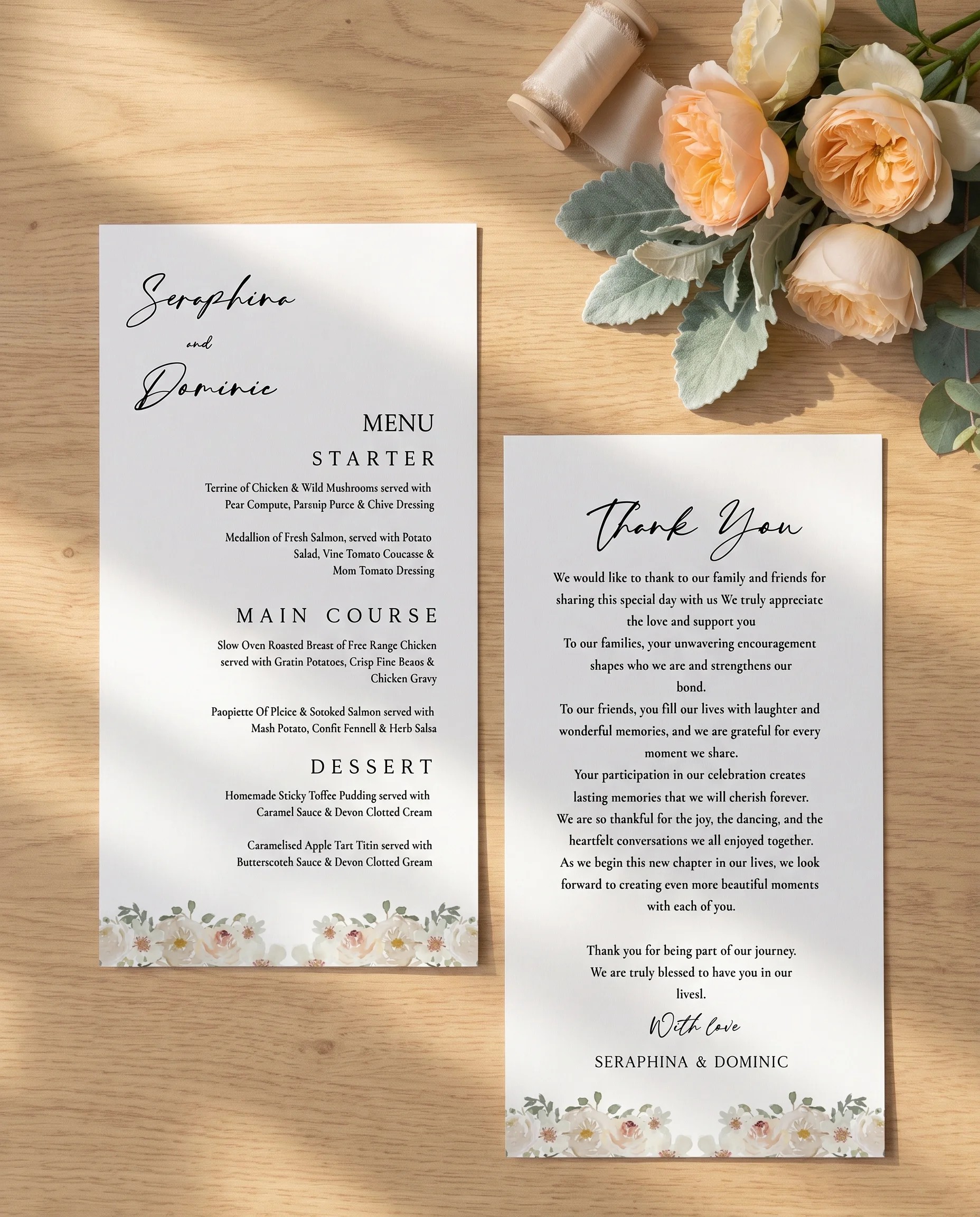
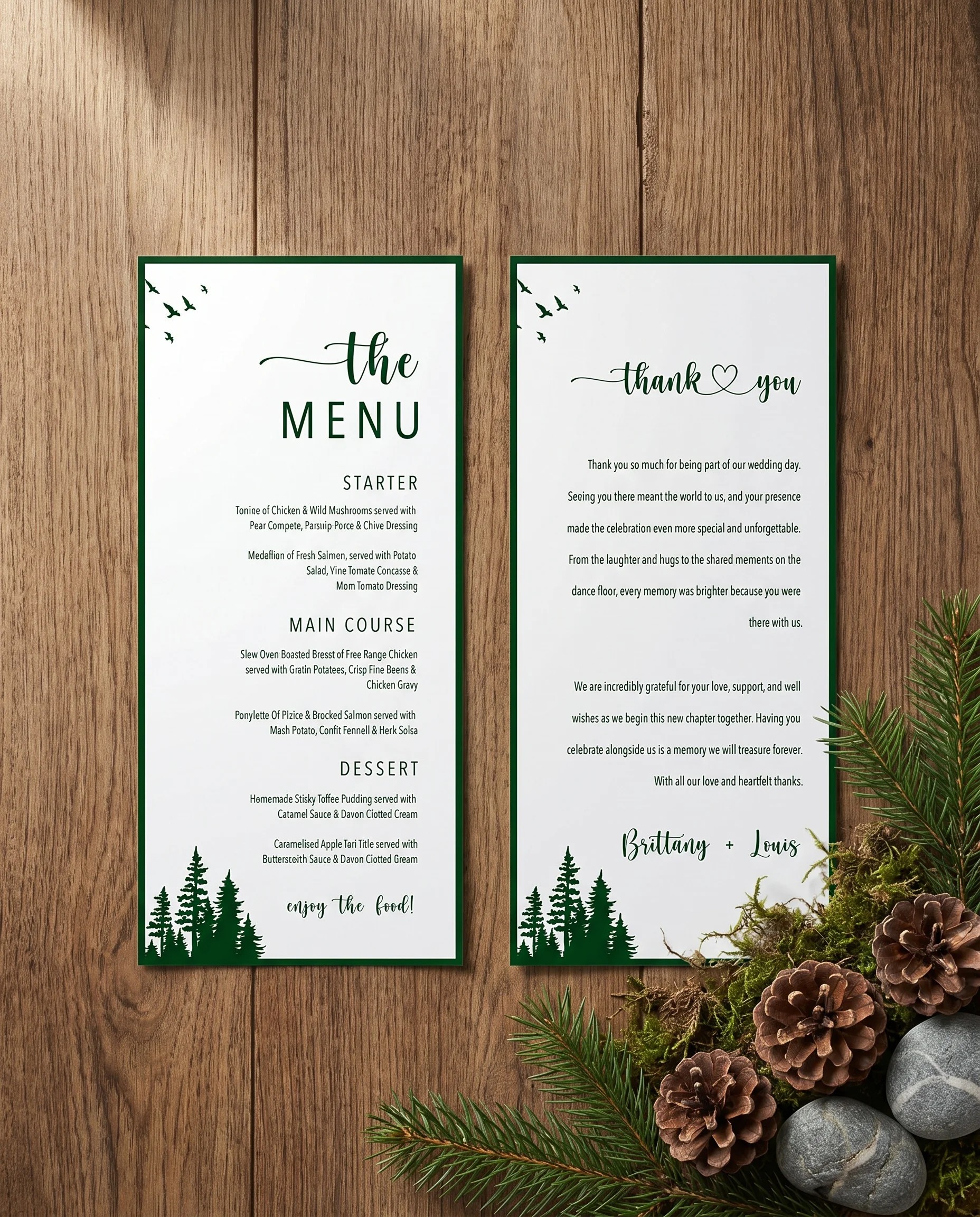
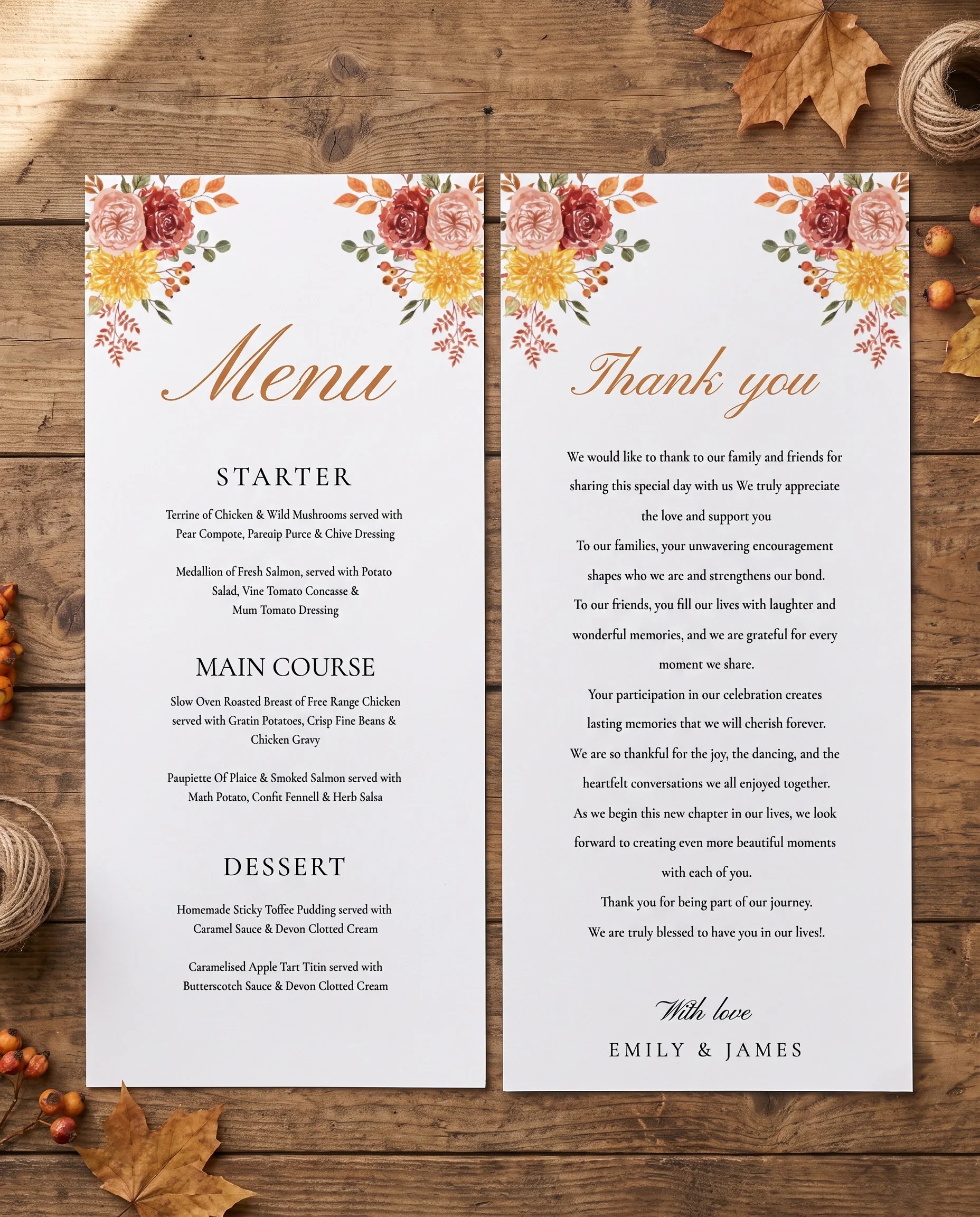
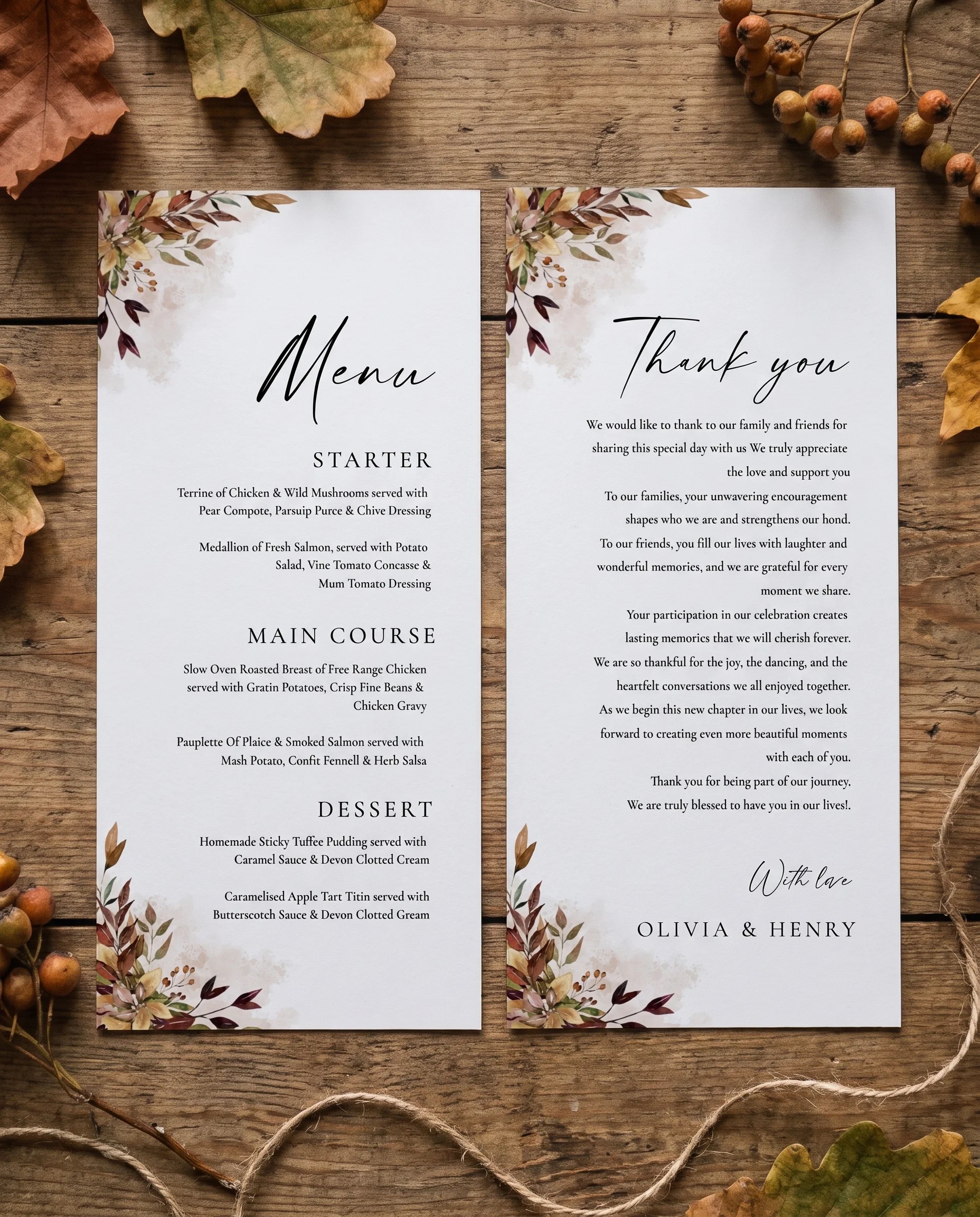
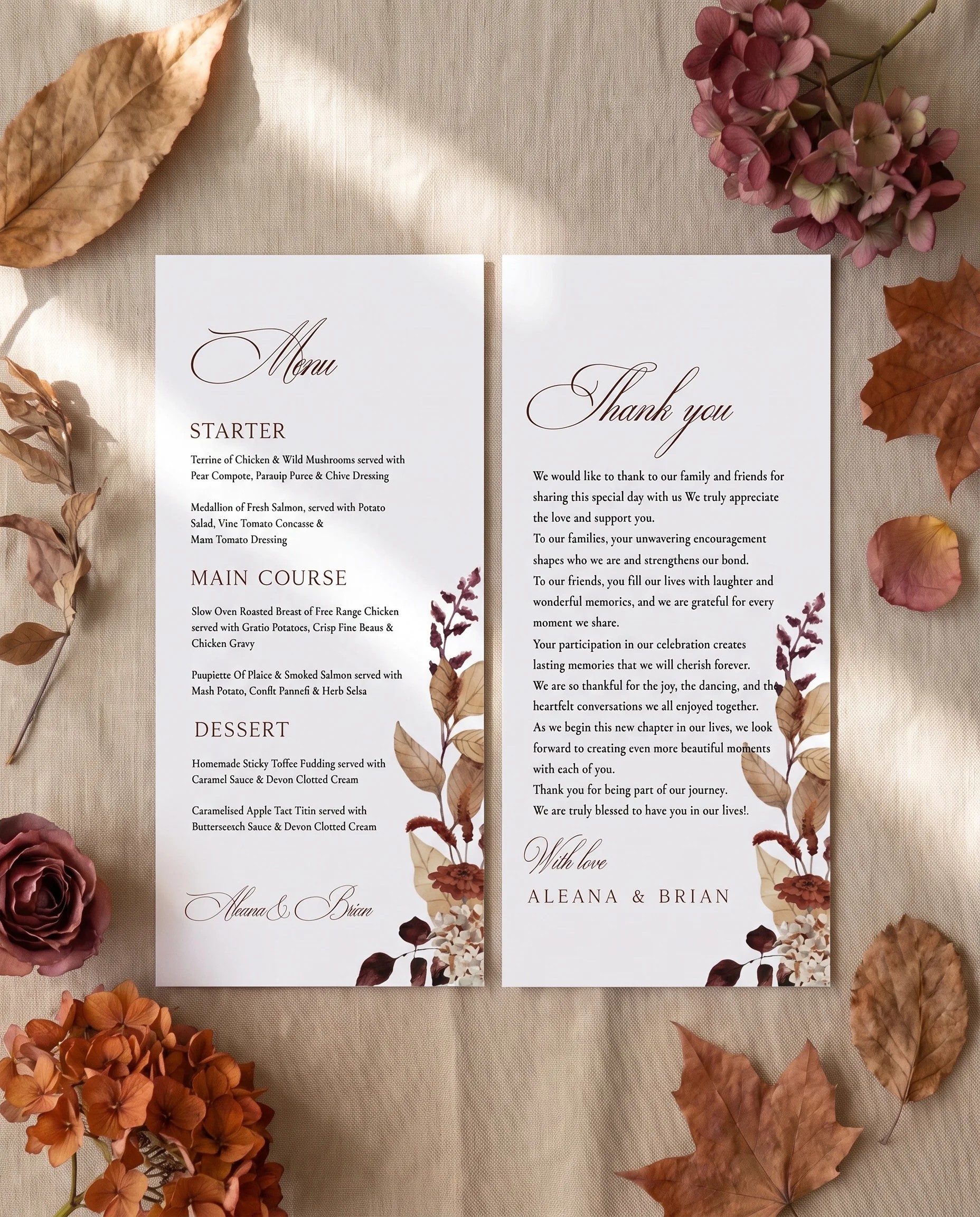
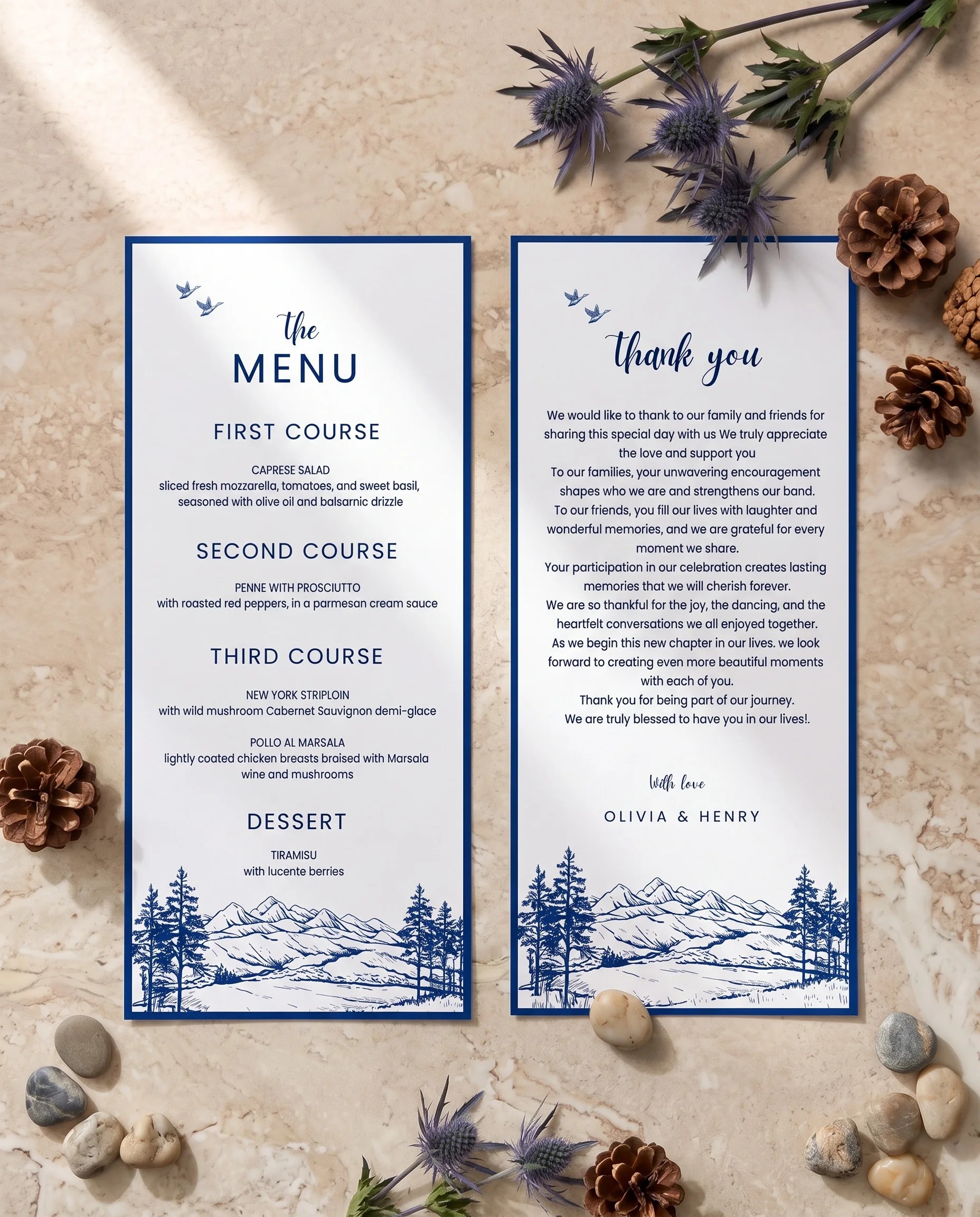
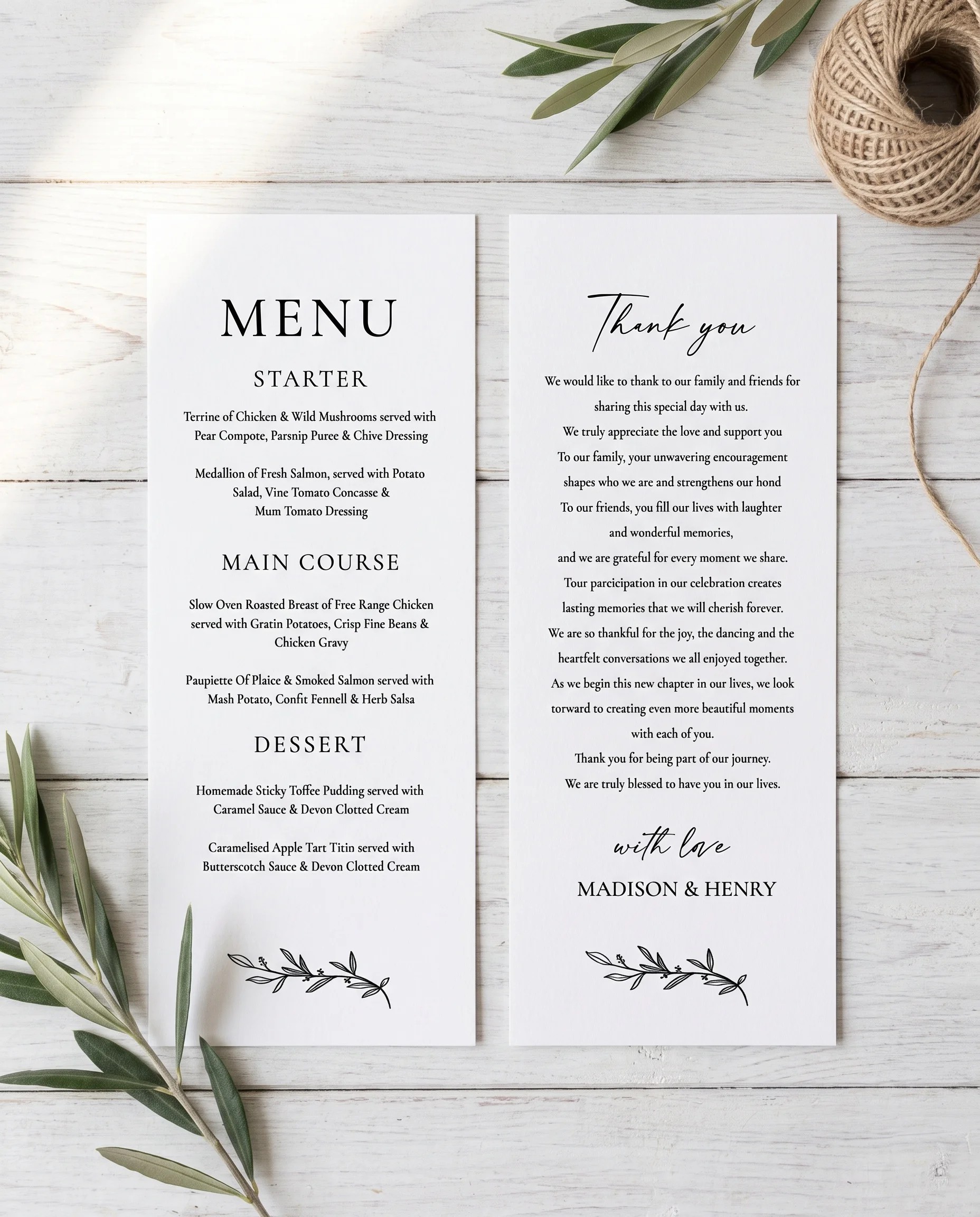
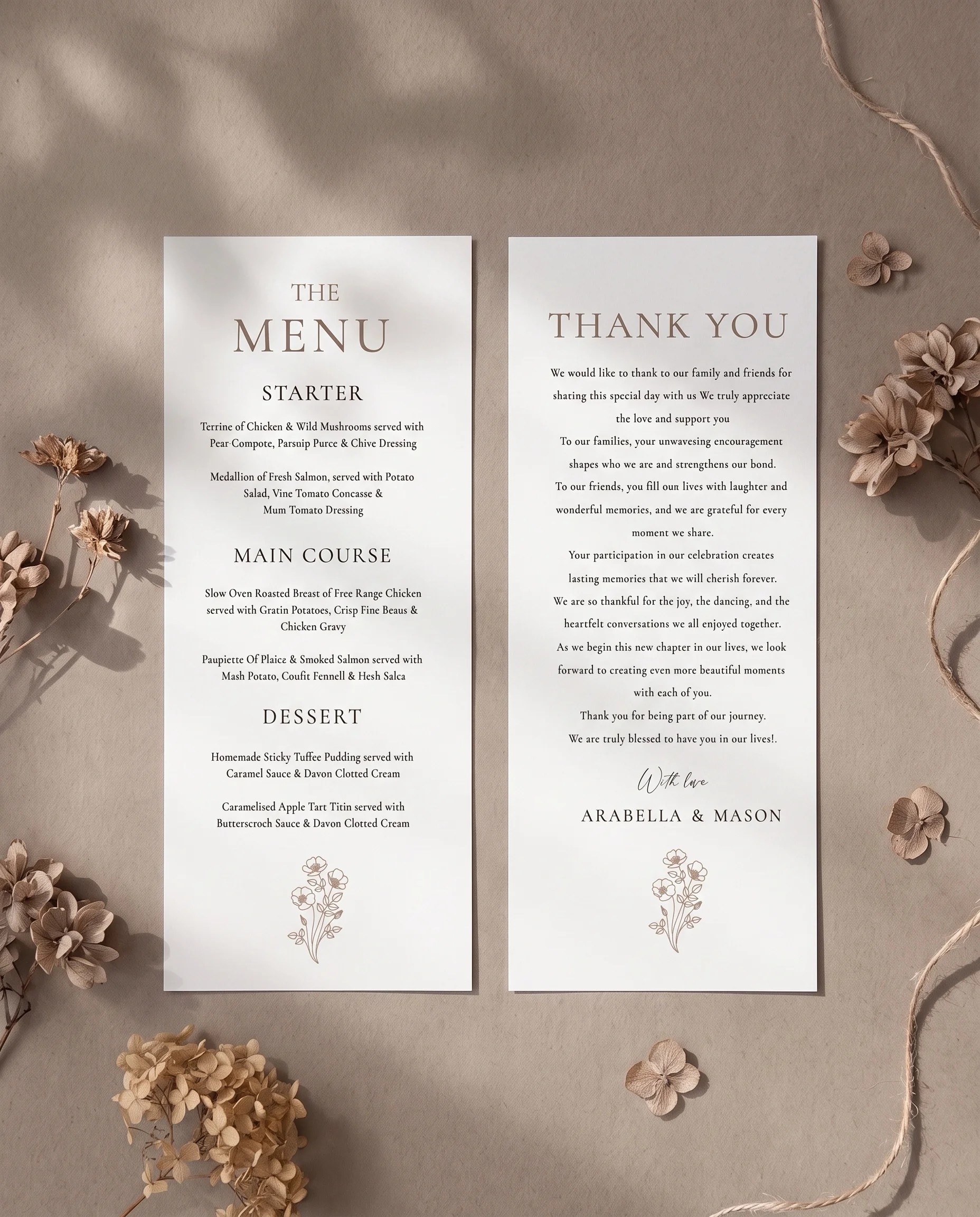
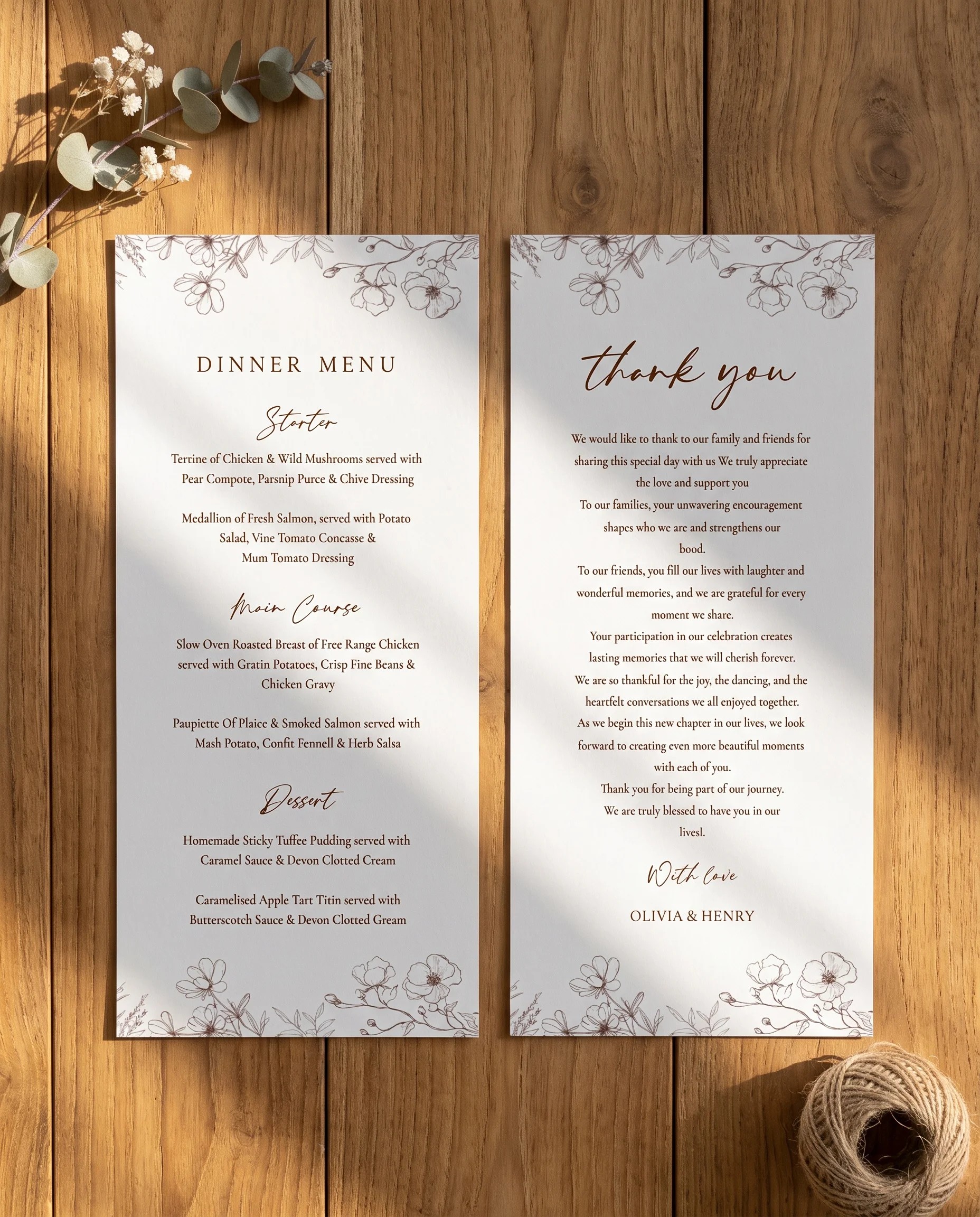
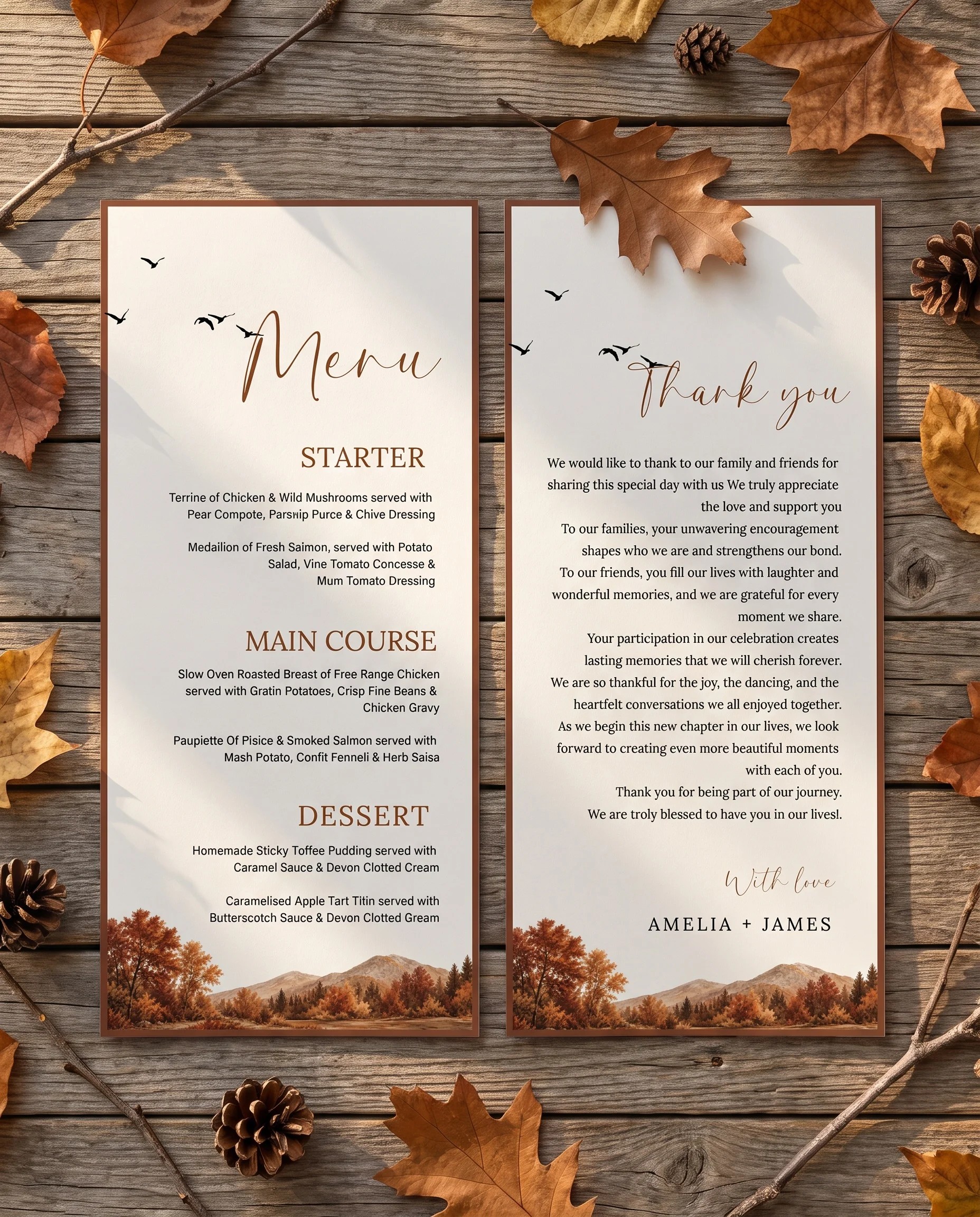
Our rustic wedding menu templates feature warm wood tones, kraft paper textures, hand-lettered scripts, and country-inspired botanicals. Choose from country wedding menus with relaxed casual layouts, barn wedding menus with wood-grain backgrounds, sunflower menus with country flower borders, vineyard and winery menus with grape and wine bottle motifs, farmhouse menus in cream and sage palettes, farm-to-table menus that list local sources beside each course, or rustic elegant menus with refined typography. Whether your reception is at a Napa or Sonoma vineyard, a Texas Hill Country ranch, a barn in the countryside, a Willamette Valley winery, or any country-aesthetic venue, every template is fully editable in our free browser-based editor and downloads as print-ready PDF, JPEG, and PNG files. Print at home as flat cards on kraft cardstock, or on wood-grain printed stock for the most rustic finish, or fold them in half for bi-fold menus.
Rustic weddings - particularly at vineyards, farms, and country estates - often feature locally sourced food, with the caterer or in-house chef working with nearby farms, ranches, dairies, and orchards. Listing the source beside each dish on the menu signals this local sourcing pride and adds genuine warmth that distinguishes rustic menus from menus in other aesthetics. The format is straightforward: dish name on one line, source on a second line in smaller italic type, with the distance from the venue if relevant. Examples: "Heirloom Tomato Salad - Sunny Acres Farm, 12 miles" or "Roasted Chicken - Hudson Valley Hen Co., 8 miles" or "Aged Cheddar - Little Creek Dairy, 20 miles" or "Apple Crisp - orchards on the property." The convention works particularly well at vineyard receptions where the wine pairings come from the vineyard itself - listing the specific vintage and the year provides authenticity. Coordinate the sourcing notes with the caterer 4 to 6 weeks before the wedding so each dish has a verified source. For weddings where the food sources change closer to the wedding date based on seasonal availability, the menu can be finalized 1 to 2 weeks before. This convention is genuinely rustic-distinctive - no other wedding aesthetic invites the farm-to-table sourcing notes naturally into the menu format.
Rustic weddings often use casual country phrasing on the menu instead of formal course headers. Where formal classic weddings use "Appetizer / Main Course / Dessert" with Roman numeral course numbering, rustic weddings often use down-home phrases like "Supper" or "The Spread" instead of "Main Course," "Sweets" or "After Supper" instead of "Dessert," and "To Start" or "Nibbles" instead of "Appetizer." The casual phrasing matches the rustic aesthetic's preference for warmth and personal touches over formality. This convention also reflects how rustic weddings often serve dinner - family-style at long farmhouse tables, where the experience is communal and the meal feels more like a gathering than a sequence of formal courses. The casual phrasing signals to guests that the dinner is meant to be enjoyed together. Pair the casual phrasing with hand-lettered or script typography (rather than formal serif) to reinforce the relaxed feeling, and use kraft cardstock or wood-grain printed paper to complete the rustic visual presentation.
Browse all wedding menus by aesthetic. For matching rustic day-of wedding stationery, see our rustic wedding place cards, rustic wedding seating charts, and rustic wedding programs.
Yes - if the caterer or chef is working with local farms, listing the sources beside each dish is one of the most distinctive content elements you can include on a rustic wedding menu. The format is straightforward: dish name on one line, source on a second line in smaller italic type, with the distance from the venue if relevant. Coordinate with the caterer 4 to 6 weeks before the wedding to confirm specific sources for each dish - some sources may change based on seasonal availability, so finalize the menu 1 to 2 weeks before. The convention works particularly well at vineyard, farm, and country estate weddings where the local sourcing is part of why the venue was chosen. This level of detail reads as warm and intentional rather than pretentious - guests appreciate knowing where the food came from. For weddings where the food is not locally sourced (catering shipped in, traditional banquet menu), skip the sourcing notes - inventing them would feel inauthentic.
Both work and the choice depends on the level of rustic visual presentation you want. Kraft cardstock (natural unbleached brown paper, 80-110 lb weight) is the most affordable and widely available option - typical 5x7 menus on kraft cardstock cost $0.10 to $0.30 per menu. The kraft texture and warm brown color give an immediate rustic feel and pair well with hand-lettered typography. Wood-grain printed paper (cardstock printed with a wood-grain pattern as the background) is more visually distinctive and reads as more deliberately rustic - typical 5x7 menus on wood-grain stock cost $0.30 to $0.60 per menu. For very rustic farm and barn weddings, some couples produce a single shared wood plank menu per table (one larger menu cut from actual wood plank, displayed in a stand at each table) - this is genuinely rustic but reduces the per-guest keepsake dimension. For most rustic weddings, kraft cardstock or wood-grain printed paper at each place setting strikes the right balance between aesthetic and practicality.
Casual country phrasing matches the rustic aesthetic better than formal course headers. Common rustic alternatives to formal course headers: "Supper" or "The Spread" instead of "Main Course," "Sweets" or "After Supper" instead of "Dessert," "To Start" or "Nibbles" instead of "Appetizer," "Sides" instead of "Accompaniments," "From the Bar" instead of "Beverage Selection." Some rustic couples skip course headers entirely and just list the dishes in order with no labels - this works for very casual rustic weddings where the courses are obvious from the dish descriptions. The casual phrasing reinforces the down-home country feeling and signals to guests that the dinner is meant to be enjoyed communally rather than served in formal sequence. Pair with hand-lettered or script typography rather than formal serif.
Yes - matching is essential for visual cohesion across the full wedding stationery suite, and rustic weddings particularly depend on consistency to maintain the personal handmade feeling. If your wedding invitations featured kraft paper textures, sunflowers, and hand-lettered typography, your wedding menus should use the same kraft tones, the same flower motifs, and the same typography family. The menu sits at every place setting and most guests pick it up to read it - especially at rustic weddings with farm-to-table sourcing notes that guests find interesting - so cohesion with the rest of the suite is essential. The menu often becomes a small keepsake guests take home, particularly for rustic weddings where guests may have traveled to the destination property for an extended celebration. Many couples buy matching invitation suites + day-of stationery suites together specifically to ensure this cohesion across the entire wedding journey.
23 templates
Our rustic wedding menu templates feature warm wood tones, kraft paper textures, hand-lettered scripts, and country-inspired botanicals. Choose from country wedding menus with relaxed casual layouts, barn wedding menus with wood-grain backgrounds, sunflower menus with country flower borders, vineyard and winery menus with grape and wine bottle motifs, farmhouse menus in cream and sage palettes, farm-to-table menus that list local sources beside each course, or rustic elegant menus with refined typography. Whether your reception is at a Napa or Sonoma vineyard, a Texas Hill Country ranch, a barn in the countryside, a Willamette Valley winery, or any country-aesthetic venue, every template is fully editable in our free browser-based editor and downloads as print-ready PDF, JPEG, and PNG files. Print at home as flat cards on kraft cardstock, or on wood-grain printed stock for the most rustic finish, or fold them in half for bi-fold menus.
Rustic weddings - particularly at vineyards, farms, and country estates - often feature locally sourced food, with the caterer or in-house chef working with nearby farms, ranches, dairies, and orchards. Listing the source beside each dish on the menu signals this local sourcing pride and adds genuine warmth that distinguishes rustic menus from menus in other aesthetics. The format is straightforward: dish name on one line, source on a second line in smaller italic type, with the distance from the venue if relevant. Examples: "Heirloom Tomato Salad - Sunny Acres Farm, 12 miles" or "Roasted Chicken - Hudson Valley Hen Co., 8 miles" or "Aged Cheddar - Little Creek Dairy, 20 miles" or "Apple Crisp - orchards on the property." The convention works particularly well at vineyard receptions where the wine pairings come from the vineyard itself - listing the specific vintage and the year provides authenticity. Coordinate the sourcing notes with the caterer 4 to 6 weeks before the wedding so each dish has a verified source. For weddings where the food sources change closer to the wedding date based on seasonal availability, the menu can be finalized 1 to 2 weeks before. This convention is genuinely rustic-distinctive - no other wedding aesthetic invites the farm-to-table sourcing notes naturally into the menu format.
Rustic weddings often use casual country phrasing on the menu instead of formal course headers. Where formal classic weddings use "Appetizer / Main Course / Dessert" with Roman numeral course numbering, rustic weddings often use down-home phrases like "Supper" or "The Spread" instead of "Main Course," "Sweets" or "After Supper" instead of "Dessert," and "To Start" or "Nibbles" instead of "Appetizer." The casual phrasing matches the rustic aesthetic's preference for warmth and personal touches over formality. This convention also reflects how rustic weddings often serve dinner - family-style at long farmhouse tables, where the experience is communal and the meal feels more like a gathering than a sequence of formal courses. The casual phrasing signals to guests that the dinner is meant to be enjoyed together. Pair the casual phrasing with hand-lettered or script typography (rather than formal serif) to reinforce the relaxed feeling, and use kraft cardstock or wood-grain printed paper to complete the rustic visual presentation.
Browse all wedding menus by aesthetic. For matching rustic day-of wedding stationery, see our rustic wedding place cards, rustic wedding seating charts, and rustic wedding programs.
Yes - if the caterer or chef is working with local farms, listing the sources beside each dish is one of the most distinctive content elements you can include on a rustic wedding menu. The format is straightforward: dish name on one line, source on a second line in smaller italic type, with the distance from the venue if relevant. Coordinate with the caterer 4 to 6 weeks before the wedding to confirm specific sources for each dish - some sources may change based on seasonal availability, so finalize the menu 1 to 2 weeks before. The convention works particularly well at vineyard, farm, and country estate weddings where the local sourcing is part of why the venue was chosen. This level of detail reads as warm and intentional rather than pretentious - guests appreciate knowing where the food came from. For weddings where the food is not locally sourced (catering shipped in, traditional banquet menu), skip the sourcing notes - inventing them would feel inauthentic.
Both work and the choice depends on the level of rustic visual presentation you want. Kraft cardstock (natural unbleached brown paper, 80-110 lb weight) is the most affordable and widely available option - typical 5x7 menus on kraft cardstock cost $0.10 to $0.30 per menu. The kraft texture and warm brown color give an immediate rustic feel and pair well with hand-lettered typography. Wood-grain printed paper (cardstock printed with a wood-grain pattern as the background) is more visually distinctive and reads as more deliberately rustic - typical 5x7 menus on wood-grain stock cost $0.30 to $0.60 per menu. For very rustic farm and barn weddings, some couples produce a single shared wood plank menu per table (one larger menu cut from actual wood plank, displayed in a stand at each table) - this is genuinely rustic but reduces the per-guest keepsake dimension. For most rustic weddings, kraft cardstock or wood-grain printed paper at each place setting strikes the right balance between aesthetic and practicality.
Casual country phrasing matches the rustic aesthetic better than formal course headers. Common rustic alternatives to formal course headers: "Supper" or "The Spread" instead of "Main Course," "Sweets" or "After Supper" instead of "Dessert," "To Start" or "Nibbles" instead of "Appetizer," "Sides" instead of "Accompaniments," "From the Bar" instead of "Beverage Selection." Some rustic couples skip course headers entirely and just list the dishes in order with no labels - this works for very casual rustic weddings where the courses are obvious from the dish descriptions. The casual phrasing reinforces the down-home country feeling and signals to guests that the dinner is meant to be enjoyed communally rather than served in formal sequence. Pair with hand-lettered or script typography rather than formal serif.
Yes - matching is essential for visual cohesion across the full wedding stationery suite, and rustic weddings particularly depend on consistency to maintain the personal handmade feeling. If your wedding invitations featured kraft paper textures, sunflowers, and hand-lettered typography, your wedding menus should use the same kraft tones, the same flower motifs, and the same typography family. The menu sits at every place setting and most guests pick it up to read it - especially at rustic weddings with farm-to-table sourcing notes that guests find interesting - so cohesion with the rest of the suite is essential. The menu often becomes a small keepsake guests take home, particularly for rustic weddings where guests may have traveled to the destination property for an extended celebration. Many couples buy matching invitation suites + day-of stationery suites together specifically to ensure this cohesion across the entire wedding journey.