
Minimalist Wedding Menus
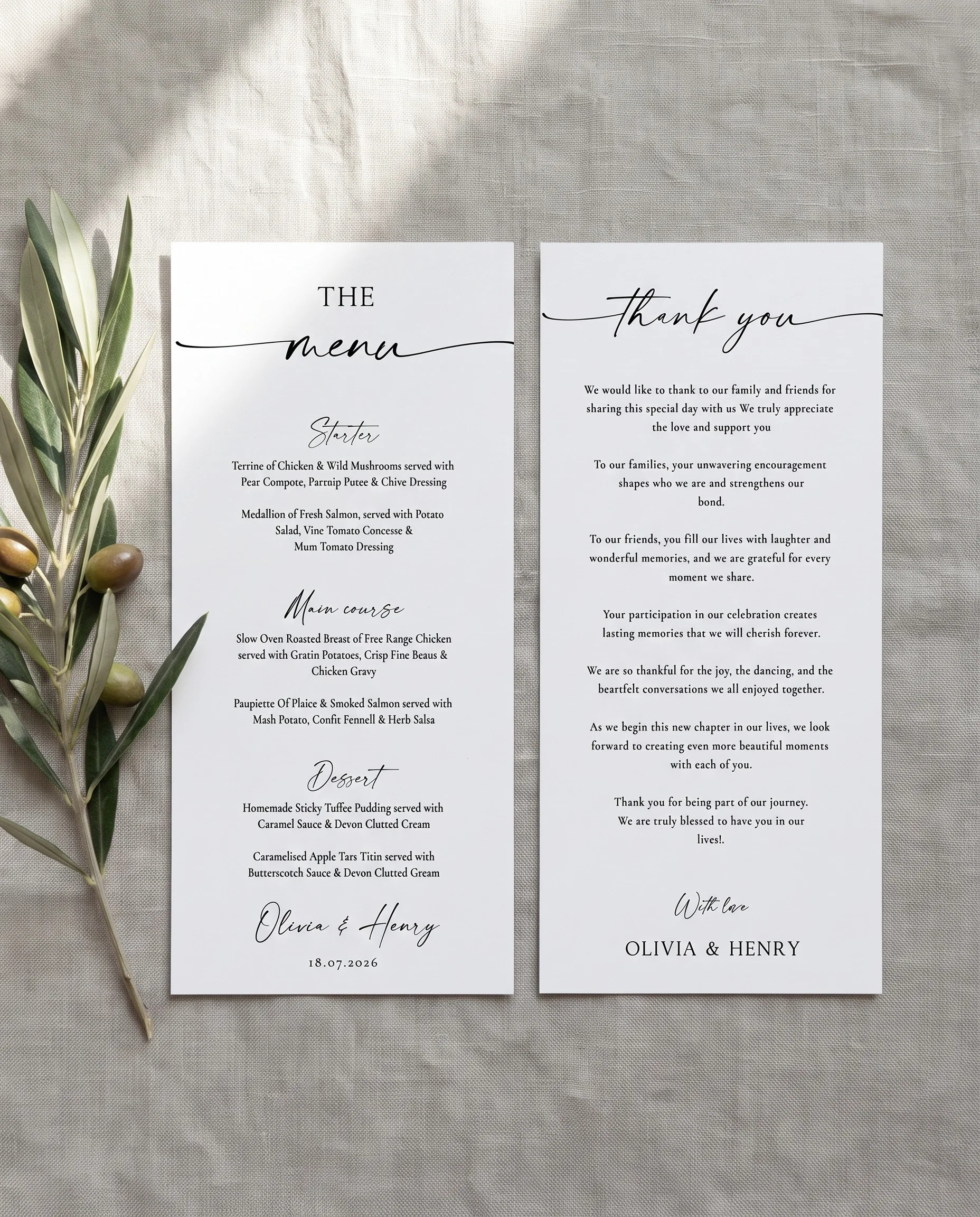
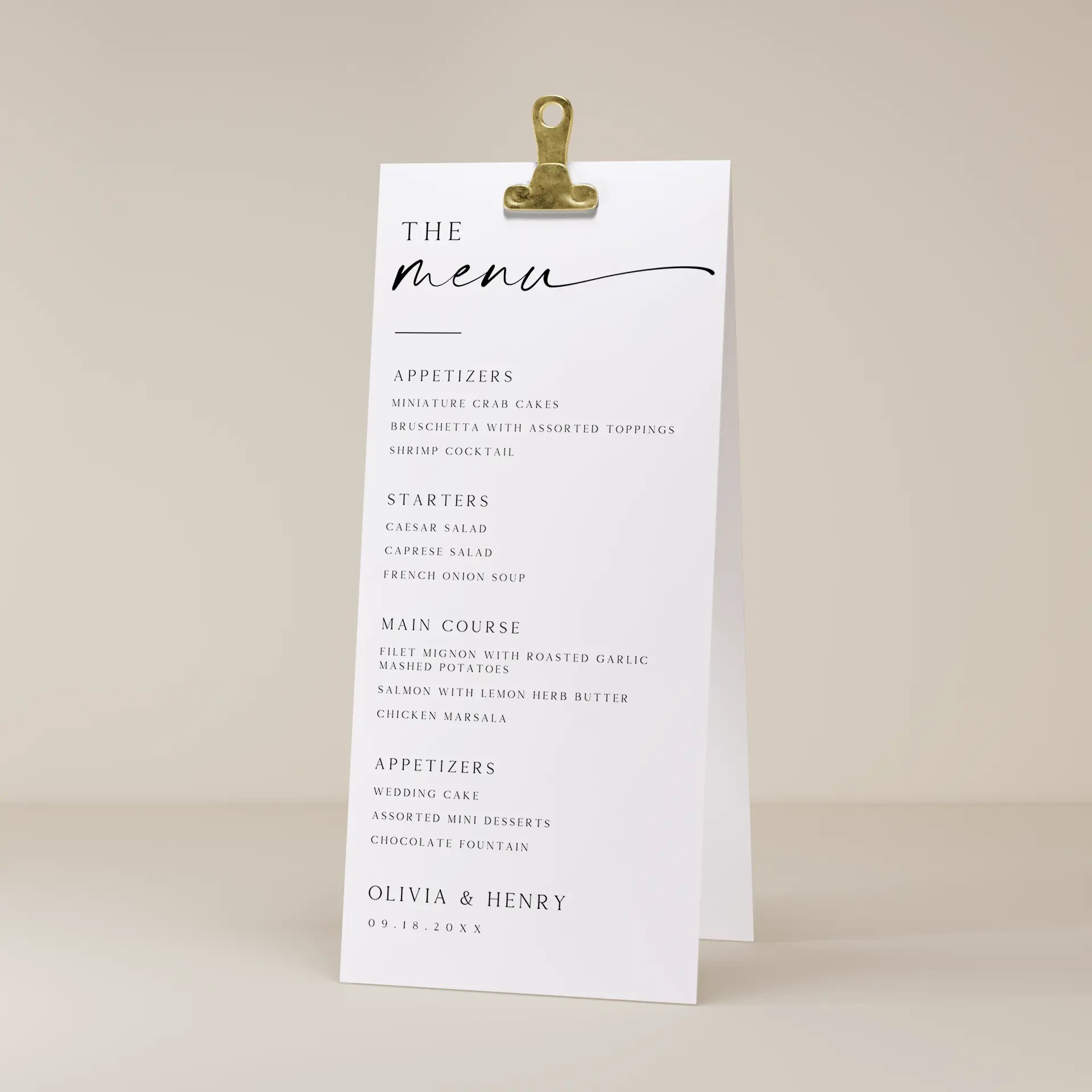
Clean typography, restrained palettes, and deliberate course hierarchy define our minimalist wedding menu templates. Choose from simple wedding menus organized as single flat cards, modern wedding menus in folded bi-fold formats with appetizer and main on facing pages, contemporary chic menus in black and white palettes, modern minimalist menus with sleek serif typography, or clean wedding menus with sage or charcoal accents. Designed for couples whose wedding aesthetic is clean and intentional, every template is fully editable in our free browser-based editor and downloads as print-ready PDF, JPEG, and PNG files. Print at home as flat cards or fold them in half for bi-fold menus.




About Our Minimalist Wedding Menus
Our minimalist wedding menu templates are built around clean typography, restrained palettes, and deliberate course hierarchy. Choose from simple wedding menus organized as single flat cards (one menu per place setting), modern wedding menus in folded bi-fold formats with appetizer and main on facing pages, contemporary chic menus in black and white palettes, modern minimalist menus with sleek serif typography, or clean wedding menus with sage or charcoal accents. Whether you are looking for a menu guests can scan in seconds, a black and white wedding menu that pairs with minimalist invitations, or a modern minimalist menu for a contemporary wedding aesthetic, every template is fully editable in our free browser-based editor and downloads as print-ready PDF, JPEG, and PNG files. Print at home as flat cards on cardstock, or fold them in half for bi-fold menus, or roll them as scrolls tied with simple twine for an elevated table-setting effect.
Why Course Hierarchy Matters for Minimalist Menus
A 4-course wedding menu can have 15 to 25 lines of content - course headers, dish names, descriptions, dietary callouts, wine pairings - which creates real design tension with the minimalist aesthetic. The solution is not less content (guests need the information) but deliberate hierarchy. The strongest minimalist menus use three to four levels of typographic distinction: course headers in all caps or bold serif (Appetizer / Main / Dessert), dish names in clean serif at slightly larger size, descriptions in smaller italic in a muted gray or charcoal, and dietary callouts (V for vegetarian, GF for gluten-free, DF for dairy-free) in tiny capitals or as small icons aligned to the right. Generous spacing between courses (extra blank lines, thin horizontal rules) creates visual breathing room. The result reads as designed rather than cluttered, even at 25 lines of content. This is what separates a minimalist menu from a basic text-heavy menu - the design choices make the density feel intentional.
Menu Format Options - Single Card, Bi-Fold, or Scroll
Wedding menus come in several format options, each with different constraints and aesthetic effects:
Single flat card. The most common format - one menu per place setting, typically 5x7 or 4x9 inches, prints two-up on letter-size cardstock. Works best for menus under 15 lines of content. Most affordable, easiest to print at home.
Folded bi-fold. Letter-size cardstock folded in half, opens to two facing pages. Appetizer and starter on one page, mains and sides on the other, dessert on the back panel. Works best for menus with 15 to 25 lines of content. Harder to print at home (requires cardstock weight that scores cleanly).
Tri-fold. Letter-size cardstock folded in thirds. Three panels of content. Works for elaborate multi-course menus over 25 lines. Less common at minimalist weddings - the format reads more formal.
Rolled scroll. Single flat card rolled tightly and tied with twine, ribbon, or a wax seal. Visual statement at the table setting. Works best at intimate seated dinners under 80 guests where the unrolling moment becomes part of the experience.
Shared table menu. One large menu (8x10 or 11x14) per table rather than per guest, displayed in a stand or laid flat. Reduces print cost but reduces the keepsake dimension.
Pairs With
Browse all wedding menus by aesthetic. For matching minimalist day-of wedding stationery, see our minimalist wedding place cards, minimalist wedding seating charts, and minimalist wedding programs.
Frequently Asked Questions
When should I order and print my wedding menus?
Print your wedding menus 1 to 2 weeks before the wedding. The menu depends on the final caterer's confirmed dishes, which typically lock in 3 to 4 weeks before the wedding (the caterer needs to source ingredients and finalize prep). Allow extra time if you are using a specialty format - rolled scroll menus tied with ribbon or wax seals require additional production and assembly time. With our free editor, you can update last-minute menu changes (a swapped dish, a clarified dietary note) without re-ordering. Plan to set the menus at each place setting 1 to 2 hours before guests arrive at the reception, ideally during the cocktail hour.
Should I include dietary callouts on my wedding menu?
Yes - dietary callouts (V for vegetarian, VG for vegan, GF for gluten-free, DF for dairy-free, N for contains nuts) are now standard on wedding menus and serve a real functional purpose. Guests with dietary restrictions or food allergies need to know which dishes they can eat, and asking the caterer table-by-table during service slows the meal. The minimalist approach is to use small capital letters or simple icons aligned to the right of each dish name - visible to guests who need them, unobtrusive to guests who don't. Some couples include a small legend at the bottom of the menu defining the abbreviations. For weddings where multiple guests have severe allergies, consider customized menus per place setting (with the guest's specific dish highlighted) or a shared allergen note at the start of the menu.
Should I use a single card or bi-fold menu format for my wedding?
Choose based on course count and content density. Single flat cards work best for menus under 15 lines of content - typical 3-course meals (appetizer, main, dessert) with brief descriptions. Bi-fold menus work best for menus with 15 to 25 lines - typical 4-course meals with detailed descriptions, dietary callouts, and wine pairings. Tri-fold menus are for elaborate multi-course menus over 25 lines (5+ courses with extensive descriptions) - less common at minimalist weddings since the tri-fold format reads more formal. For minimalist weddings specifically, single flat cards typically win on aesthetic grounds even for 4-course meals - the deliberate hierarchy and spacing handle the density without requiring a fold. Bi-fold menus are best when the content genuinely needs the additional space, not as a default upgrade.
Should my minimalist wedding menu match my wedding invitation?
Yes - matching is essential for visual cohesion across the full wedding stationery suite. If your wedding invitations were minimalist with black-on-white typography and a charcoal accent, your wedding menus should use the same typography family, the same charcoal accent, and the same restrained palette. Menus are particularly visible at the reception - they sit at every place setting and most guests pick them up to read - so cohesion with the rest of the suite is especially important. The menu is often a small keepsake guests take home from the wedding, particularly for couples who include hand-written or special elements (the bride and groom's signatures, a small love quote, a personalized line). Many couples buy matching invitation suites + day-of stationery suites together specifically to ensure this cohesion across the entire wedding journey.