
Unity Ceremony Ideas: 12 Rituals With Scripts, Supplies and Timing
A unity ceremony is a short symbolic ritual, usually three to five minutes, that comes after the ring exchange and before the pronouncement. Sand, handfasting, a cord of three strands and a unity candle are the most common choices. The right one depends on your venue, your faith and who you want to include.
When unity ceremony ideas go wrong, it is usually for one of three reasons: the wind blows out the candle, the church doesn’t allow the ritual, or nobody brings the sand. All three are avoidable if you know what a ritual needs before you choose it.
Below are twelve rituals, each with its supplies, timing, place in the ceremony and sample words your officiant can read as written. After them come unity candle alternatives, options for children, the faith rules worth checking, and a plan for the day.
What is a unity ceremony?
A unity ceremony is a short ritual that shows two lives joining through something guests can see: two flames lighting one candle, two colors of sand filling one vase, two hands bound by one cord. It usually takes three to five minutes and sits after the ring exchange and before the pronouncement, which is where unity rituals fit in the ceremony in most traditions. Four rituals break that pattern:
Handfasting is usually performed while you exchange your vows.
Ring warming starts before the ceremony or at the welcome.
Jumping the broom comes last, just before the recessional.
In a Catholic Mass, the arras follows the rings, while the lazo comes after the Lord’s Prayer and before the Nuptial Blessing.
How do you choose a unity ceremony?
Choose by four practical filters before you choose by symbolism: your venue, your faith, who takes part, and whether you want a keepsake. A ritual that fails any one of them will cause trouble on the day, however lovely the idea.
The venue. Open flame belongs indoors, and many venues restrict candles, so ask before you buy anything. The National Fire Protection Association advises keeping candles at least 12 inches from anything that can burn, which at a ceremony means flowers, linens and veils.
Your faith and officiant. Some churches limit what can be added to the rite. The Catholic rules are covered in the faith section below.
Who takes part? Some rituals are for two. Others make room for children, parents, sponsors or every guest.
A keepsake. Sand, glass, a braided cord and a painted canvas all go home with you. A wine blending lives on mostly in the photos.
Ritual | Time | Works outdoors | Children can join | Keepsake |
Unity candle | 3 to 4 min | Only in a hurricane glass | Yes, a taper each | Yes |
Sand ceremony | 3 to 5 min | Yes, out of strong wind | Yes | Yes |
Handfasting | 4 to 6 min | Yes | Yes, a ribbon each | Yes |
Cord of three strands | 4 to 5 min | Yes | Not easily | Yes |
Ring warming | Up to 10 min | Yes | Yes | No |
Wine box | 3 to 5 min | Yes | No | Yes |
Tree planting | 3 to 5 min | Yes | Yes | Yes |
Unity glass | 2 to 3 min | Yes | Yes | Yes |
Wine or whiskey blending | 2 to 4 min | Yes | No | No |
Paint pour | 3 to 5 min | Yes, out of strong wind | Yes | Yes |
Lasso and arras | 2 to 3 min each | Yes | Sponsors take part | Yes |
Jumping the broom | Under 1 min | Yes | Yes | Yes |
Times include the officiant’s words. Ring warming takes no ceremony time if the rings travel during the prelude.
12 unity ceremony ideas, with scripts
Each ritual follows the same order, and each short script is written for your officiant to read as it stands. Swap in your own names, and treat lines in brackets as actions, not words to read aloud. For the rest of the ceremony around the ritual, see our complete ceremony scripts.
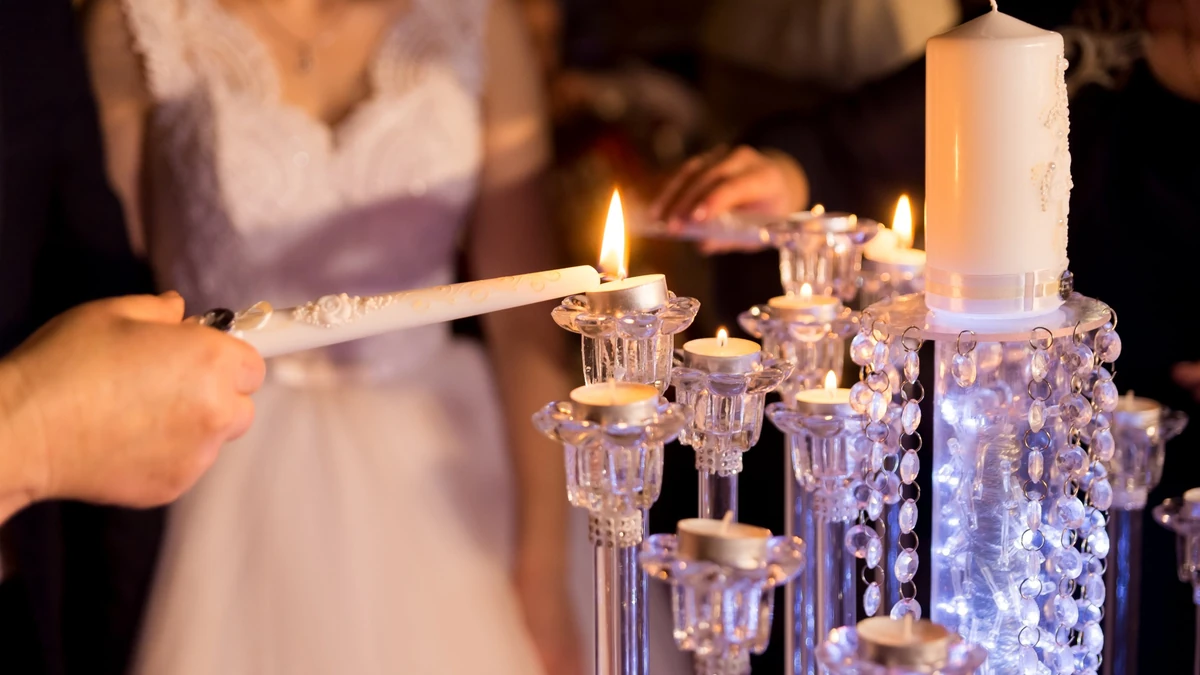
Unity candle ceremony
Two small flames, one for each of you, light one larger candle together.
Supplies: Two tapers, one pillar candle, holders, and a lighter tested that morning.
Time: 3 to 4 minutes.
Who takes part: The two of you. Mothers often light the tapers at the start of the ceremony.
Where it goes: After the rings.
Officiant: Maya and Daniel each came here carrying a light of their own, from their own families and their own histories.
(Maya and Daniel light the center candle together.)
Officiant: This flame is something neither of you could make alone. Your own lights still burn, because marriage doesn’t ask either of you to disappear. May this light stay with you both.
Tip: Leave the tapers burning if you keep the line “Your own lights still burn,” and set them back in their holders rather than blowing them out.
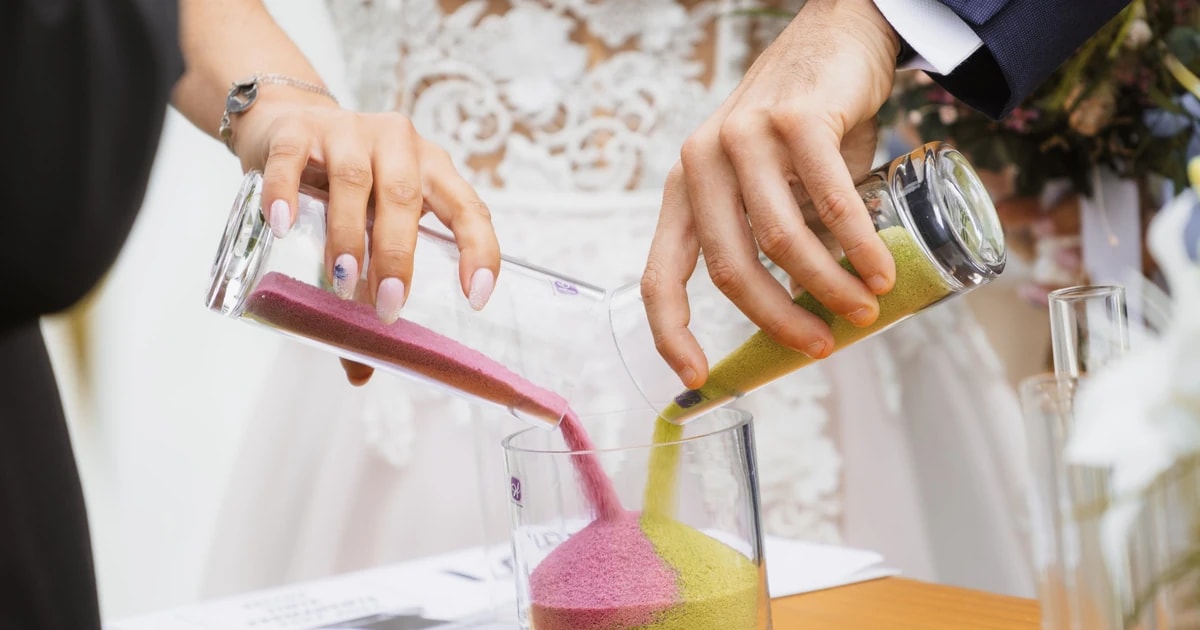
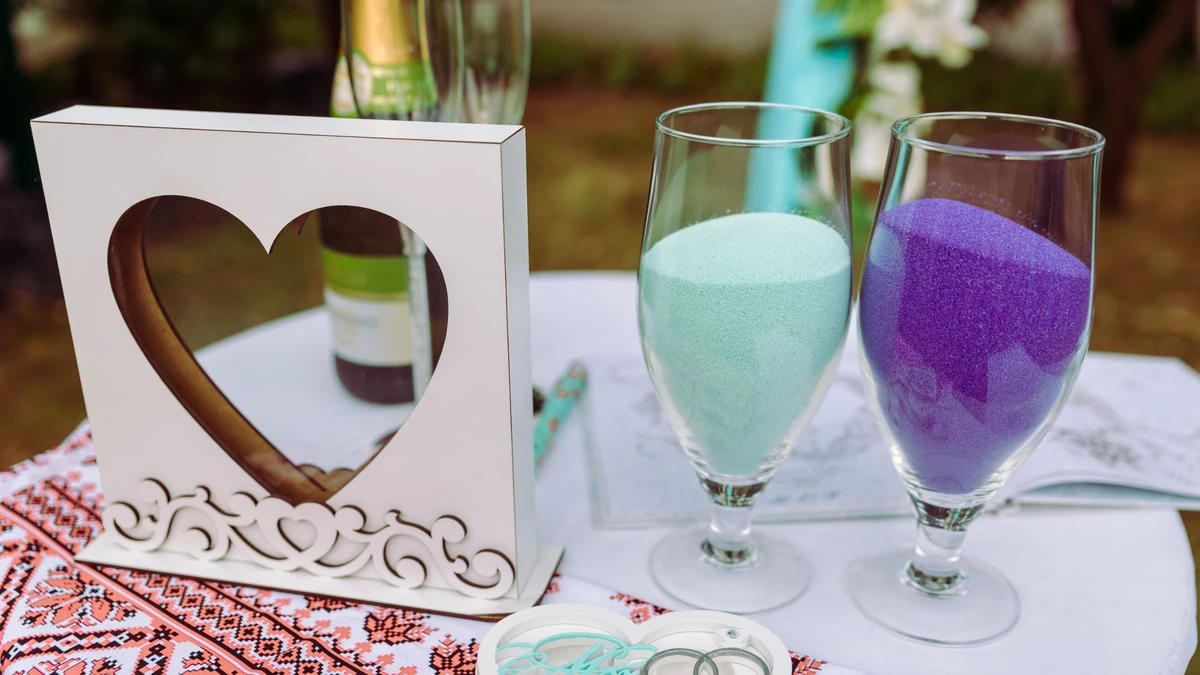
Sand ceremony
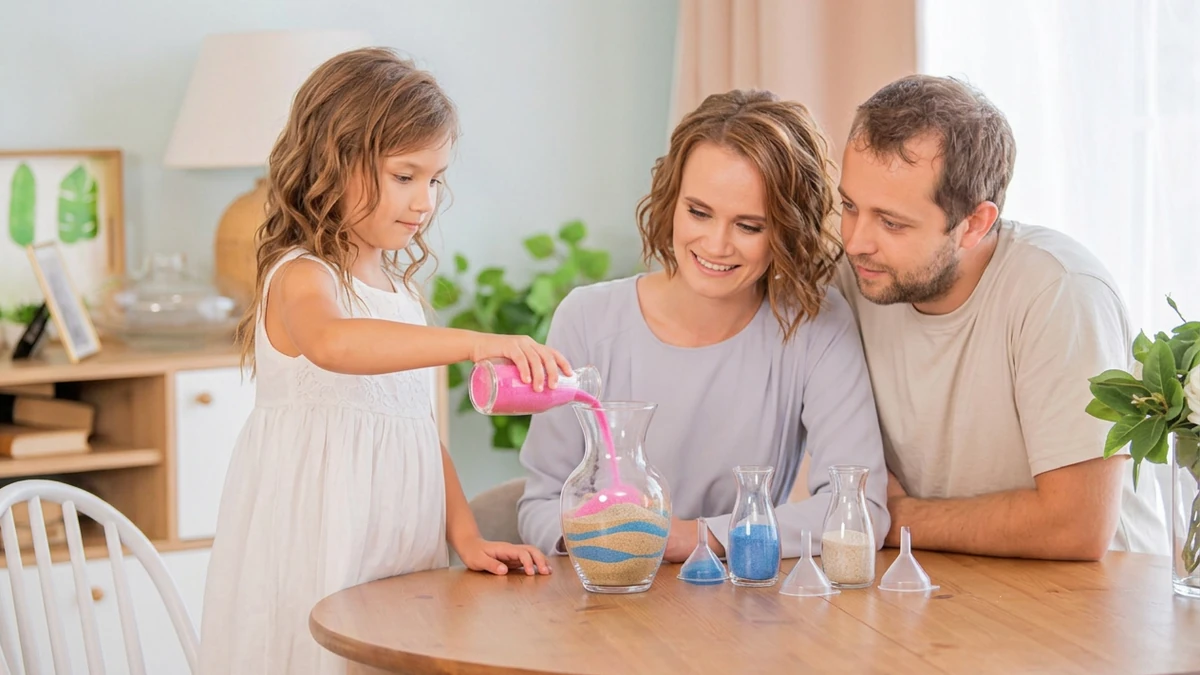
Two colors of sand poured into one vessel, impossible to sort apart again.
Supplies: Two or more colors of sand in small vases, a lidded keepsake vessel, and a funnel.
Time: 3 to 5 minutes.
Who takes part: The two of you, plus any children or parents with a color of their own.
Where it goes: After the rings.
Officiant: Priya and Sam, the sand in your hands stands for everything you each bring: your stories, your families and your ways of seeing the world.
(Priya and Sam pour their sand together.)
Officiant: No one could sort those grains back into two piles now. From today, your stories are poured together.
Tip: Pre-measure so each vase empties fully, and glue the lid that evening so the layers survive the drive home.
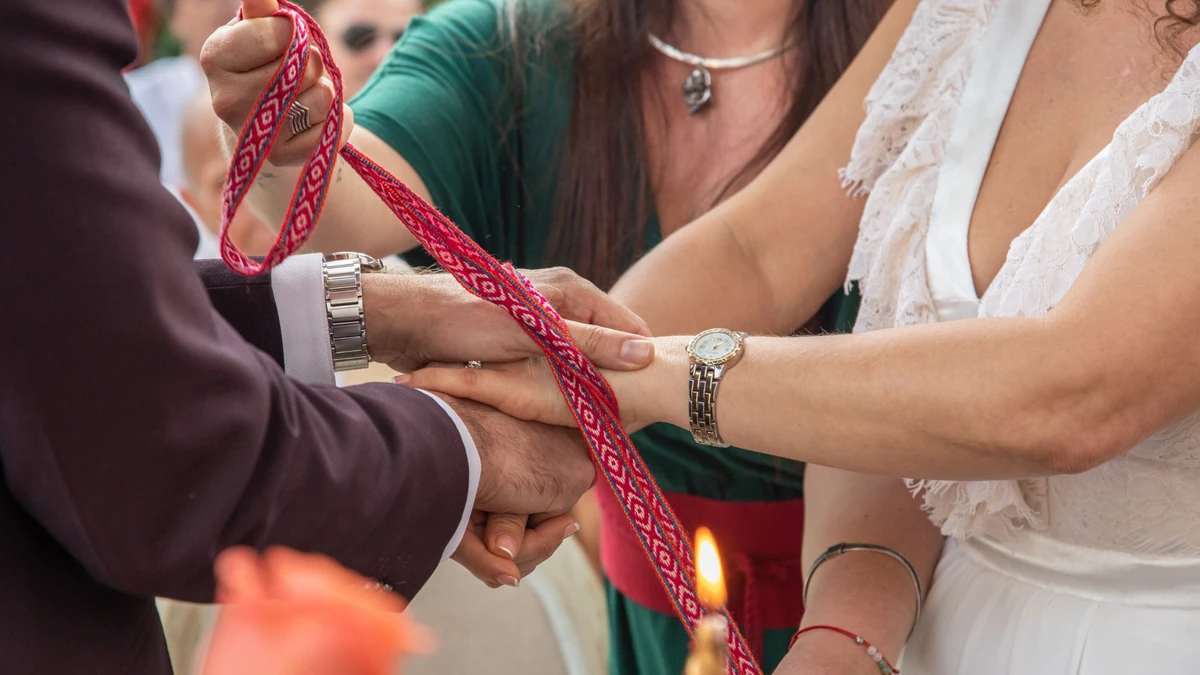
Handfasting
Your joined hands are wrapped in cord, ribbon or cloth while you make your promises. The ritual is often said to be the origin of “tying the knot”.
Supplies: A cord or several ribbons, long enough to wrap both hands several times.
Time: 4 to 6 minutes, including the vows.
Who takes part: The two of you and the officiant. Children or family can each add a ribbon.
Where it goes: During the vows.
If you’re writing personal vows, you say them here, with your hands already bound.
Officiant: Elena and Marcus, please join hands.
(The officiant wraps the cord around their hands.)
Officiant: This cord doesn’t hold you together. You do that by choice, every day. It is a picture of the promise you’re about to make. Say your vows to each other now.
(Elena and Marcus say their vows. The officiant knots the cord and slips it off.)
Officiant: The knot is tied.
Tip: Practice slipping the knot off whole, so the cord comes home in one piece.
Cord of three strands
Three cords braided into one: the two of you, with God at the center of your marriage.
Supplies: Three cords knotted together at the top, plus a hook, stand or helper to anchor them.
Time: 4 to 5 minutes.
Who takes part: The two of you. One braids while the other holds the strands.
Where it goes: After the rings.
Officiant: Scripture says that “a cord of three strands is not quickly broken.” Grace and Tomas now braid three cords into one: one for Grace, one for Tomas, and the gold strand for God at the center of their marriage.
(Grace and Tomas braid the cords.)
Officiant: One strand alone gives way. Woven together, they hold.
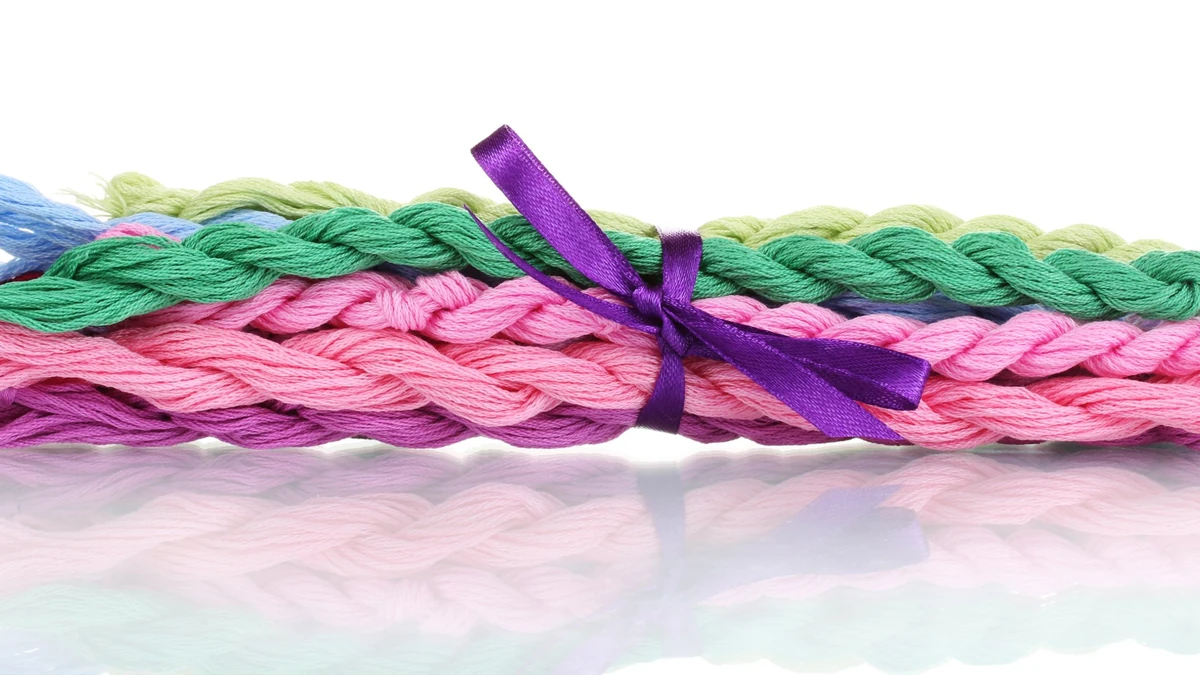
Tip: The braid takes longer than you expect. Rehearse it twice, and tie off the end so it can’t unravel.
Ring warming ceremony
Your rings pass through your guests’ hands, and each person holds them for a moment with a silent wish.
Supplies: Your rings, tied securely to a ribbon or closed in a small pouch.
Time: None if passed during the prelude; 5 to 10 minutes if passed during the ceremony.
Who takes part: Every guest, plus one trusted person to start the rings and follow them back.
Where it goes: Before the ceremony or from the welcome, ending before the ring exchange.
Officiant: Before you took your seats, these rings passed through your hands, and each of you gave them a wish for Hannah and Leo.
(The best man returns the rings.)
Officiant: So these rings carry more than gold. They carry the hopes of everyone here. Hannah and Leo, these are the rings your people warmed for you.
Start it during the prelude. For anything beyond a small guest list, passing the rings mid-ceremony turns a five-minute ritual into a long wait.
Wine box or love letter box
You each write a letter, seal it in a box with a bottle of wine, and open it on a set anniversary or on a hard day.
Supplies: A wooden box, a bottle of wine, two letters written beforehand, and nails or a padlock.
Time: 3 to 5 minutes.
Who takes part: The two of you.
Where it goes: After the rings.
Officiant: Ava and Jordan have each written a letter about why they chose this marriage. Neither has read the other’s. Today those letters go into this box with a bottle of wine.
(Ava and Jordan place the letters and wine in the box and seal it.)
Officiant: It stays closed until your fifth anniversary, or until a hard day when you need to remember this one.

Tip: Hammering nails in front of guests is loud and slow. A padlock, with the key given to someone you trust, is quieter.
Tree planting ceremony
You plant a young tree together, often in soil brought from each family’s home.
Supplies: A potted sapling, a little soil from each family, and a watering can.
Time: 3 to 5 minutes.
Who takes part: The two of you, plus children or parents.
Where it goes: After the rings.
Officiant: Noah and Clara, this soil comes from the gardens your families have tended for years. Today both go into the same pot.
(Noah and Clara pour the soil together, then water the tree.)
Officiant: Your roots are shared now. A marriage grows the way a tree does, slowly and with steady care. Let this one grow with you.
Tip: Choose a tree that suits the yard it will end up in, and decide in advance who takes it there.
Unity glass ceremony
Two colors of glass granules poured into one vessel, which a glass studio later fuses into a single solid piece.
Supplies: Colored glass granules in two vessels, plus a third to pour into.
Time: 2 to 3 minutes.
Who takes part: The two of you, plus children with a color of their own.
Where it goes: After the rings.
Officiant: Sofia and Ben have chosen blue for Sofia and amber for Ben.
(Sofia and Ben pour their glass together.)
Officiant: Right now you could still tell the grains apart. Once this glass is fired, the colors melt into one piece that can’t be pulled apart. That is the promise you make today.
Tip: Book the studio before the wedding, ask how long fusing takes, and name the person who delivers the glass afterward.
Wine or whiskey blending ceremony
Two bottles poured into one carafe, then shared.
Supplies: Two bottles, a carafe, and two glasses.
Time: 2 to 4 minutes.
Who takes part: The two of you.
Where it goes: After the rings.
Officiant: Olivia and James each chose a wine they love: different grapes, different years, different places. Like the two of them, each was good on its own.
(Olivia and James pour both bottles into the carafe and share a glass.)
Officiant: Blended, they make something new that can’t be separated again. To a marriage that gets better with time.
Tip: Taste the blend a week before, since some pairings clash. If the ceremony is in a church, check that alcohol is allowed.
Paint pour ceremony
Two colors of paint poured onto one canvas that later hangs in your home.
Supplies: A canvas on an easel, two or more paint colors in cups, and a drop cloth.
Time: 3 to 5 minutes.
Who takes part: The two of you, plus children with a color each.
Where it goes: After the rings.
Officiant: Zoe and Ethan, each of you holds a color you chose for yourself.
(Zoe and Ethan pour their paint at the same time.)
Officiant: No one can say where one color ends and the other begins, and no one planned every swirl. Marriage is a lot like that. Tonight this canvas dries, and soon it hangs in your home.
Tip: Thin the paint the day before and set the easel well back from the front row. Wet acrylic is hard to get out of a dress.
Lasso and arras
Two linked rites from Catholic weddings in Hispanic and Filipino families. Sponsors, often called padrinos, present 13 coins, the arras, as a sign of shared provision, then place a lasso, or lazo, of rope, rosary or flowers over the couple’s shoulders. The US bishops’ marriage site lists both as optional rites, “a tradition important in Hispanic and Filipino families”.
Supplies: A lasso and 13 coins in a small box or tray, usually brought by sponsors.
Time: 2 to 3 minutes each.
Who takes part: The two of you and your sponsors.
Where it goes: In a Catholic Mass, the arras follows the rings and the lasso comes after the Lord’s Prayer. In other ceremonies, both follow the rings.
In a Catholic Mass, the priest uses the rite’s own blessings. The wording below is for civil or non-Catholic ceremonies. Check it with your families, since practice differs between families and countries.
Officiant: Carmen and Luis, your sponsors now give you the arras.
(Luis places the coins in Carmen’s hands.)
Officiant: These thirteen coins are your promise to share all you have.
(The sponsors place the lazo over their shoulders.)
Officiant: This lazo joins you as one, held by the family around you today. Whatever comes, you face it together.
Tip: Agree in advance which sponsor removes the lazo before the recessional, and who keeps it.
Jumping the broom
At the very end of the ceremony, the two of you jump over a broom laid on the ground, together.
Supplies: A decorated broom.
Time: Under 1 minute.
Who takes part: The two of you. A family elder often lays the broom.
Where it goes: Just before the recessional.
Officiant: Before they walk out as a married couple, Imani and Andre will jump the broom. For many enslaved couples in America, whose marriages the law refused to recognize, this one step was their wedding. Andre’s grandmother will now lay the broom.
Officiant: On three, step into your life together. One, two, three.
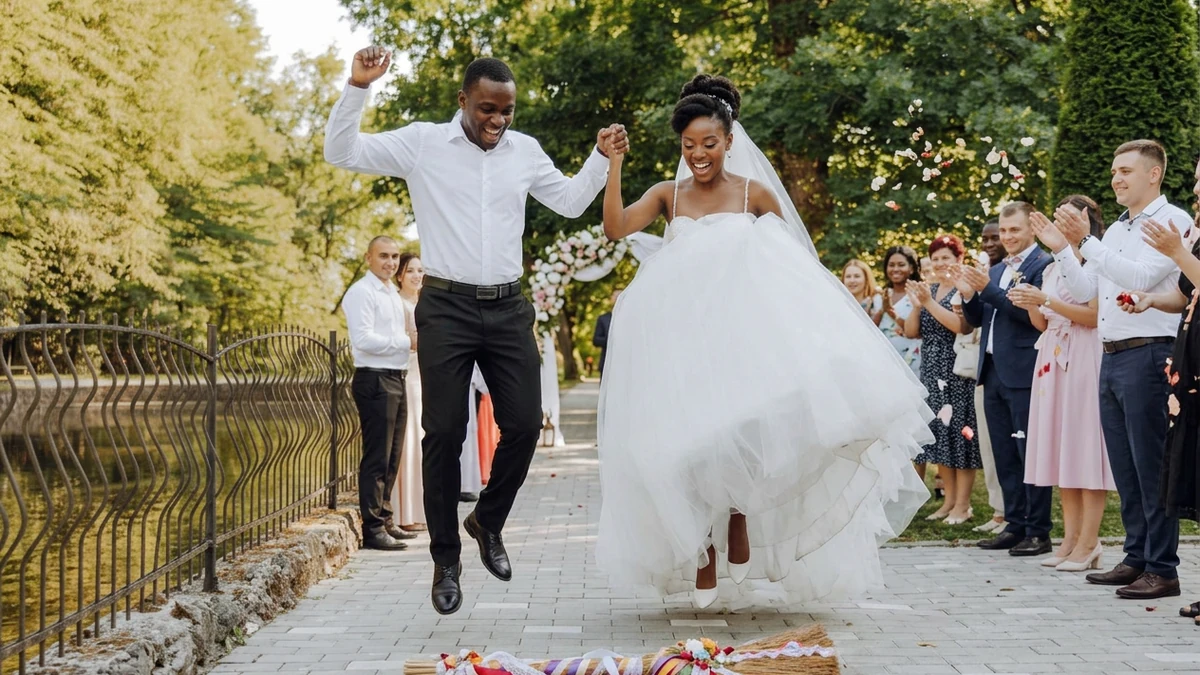
Tip: Clear the train and veil, and practice the jump once in your wedding shoes. Many families hang the broom at home afterward.
What can you do instead of a unity candle?
Sand, unity glass, a cord of three strands and tree planting all replace a unity candle without needing a flame, which makes them reliable choices outdoors. If your reason is faith or time rather than weather, the shortlist shifts slightly.
Outdoors: sand, unity glass, a cord of three strands or tree planting. Anything that pours needs shelter from gusts.
Non-religious: sand, a paint pour, a wine box or a wine blending.
Quick: unity glass, a wine blending or jumping the broom.
Rustic or garden weddings: tree planting or a wine box.
Still want a candle outside? Use a tall hurricane glass and a long-reach lighter, and confirm the venue’s flame rules first. The glass handles a breeze, not real wind, so keep a second ritual ready.
Unity rituals that include children
Sand, a family candle, tree planting and handfasting ribbons all give children a real part without asking much of them. Keep each child’s role to one simple action, rehearse it at least once, and plan for it going differently on the day.
Sand: a color for each child, poured after the two of you or all at once.
Unity candle: a taper for each older child, with an adult beside anyone holding a flame.
Tree planting: each child adds a scoop of soil or carries the watering can.
Handfasting: each child adds a ribbon to the binding.
For a blended family, one extra line from the officiant makes the point:
Officiant: Lily and Owen, your mom and Sam are making a family today, and you are part of it. Add your colors now.
(Lily and Owen pour their sand.)
Officiant: Every grain in this vase belongs to all four of you.
A child under about four may refuse to take part at all, which is why our advice on giving children a role in the ceremony is to have a plan that doesn’t depend on them.
Religious and cultural unity traditions
Faith shapes which rituals are allowed and what they mean. The Catholic rite doesn’t include the unity candle, the cord of three strands comes from Ecclesiastes, and jumping the broom carries a specific history in African American families. Ask your officiant and your families how they practice each one.
Catholic weddings
The US bishops’ marriage site is direct about it: “In many Catholic churches, the Unity Candle is discouraged or prohibited. It isn’t part of our wedding ritual.” Ask your parish before you buy anything.
The rite does include two optional unity rites, the arras and the lazo or veil, covered in the lasso and arras section above. Your priest will confirm whether your parish uses them.
Christian weddings
The cord of three strands takes its image from Ecclesiastes 4:12: “a cord of three strands is not quickly broken” (Berean Standard Bible). If you want a reading to pair with it, Ecclesiastes 4:9-12 sets up the braid in four verses.
The sand ceremony isn’t a biblical rite, but many Christian couples use it, and so do couples of no faith.
Jumping the broom
Jumping the broom is popularly associated with African American weddings. In Jumping the Broom (University of North Carolina Press, 2020), historian Tyler D. Parry traces the ritual through enslaved communities in the United States, who could not legally marry, and through marginalized groups in the British Isles. Families practice it differently, so ask the elders in yours how they want it done.
How do you plan the unity ceremony on the day?
Give one person the whole job of the unity ritual, from packing the supplies to clearing the table afterward. Then rehearse it once at full speed, test anything that lights or pours, and tell guests what they’re watching through the program or a small sign.
Name one person, usually a coordinator or trusted friend, to bring, set up and clear the supplies.
Put a small table near the officiant, at a height where you can pour without bending.
Pre-measure sand or glass, and test the lighter that morning.
Stand where the ritual will happen, at the same time of day, and check for wind.
When you choose music for the ceremony, pick a short instrumental about as long as the ritual, or one that can fade out.
Walk through it at the rehearsal, including who hands what to whom.
List the ritual in your program with one line of explanation:
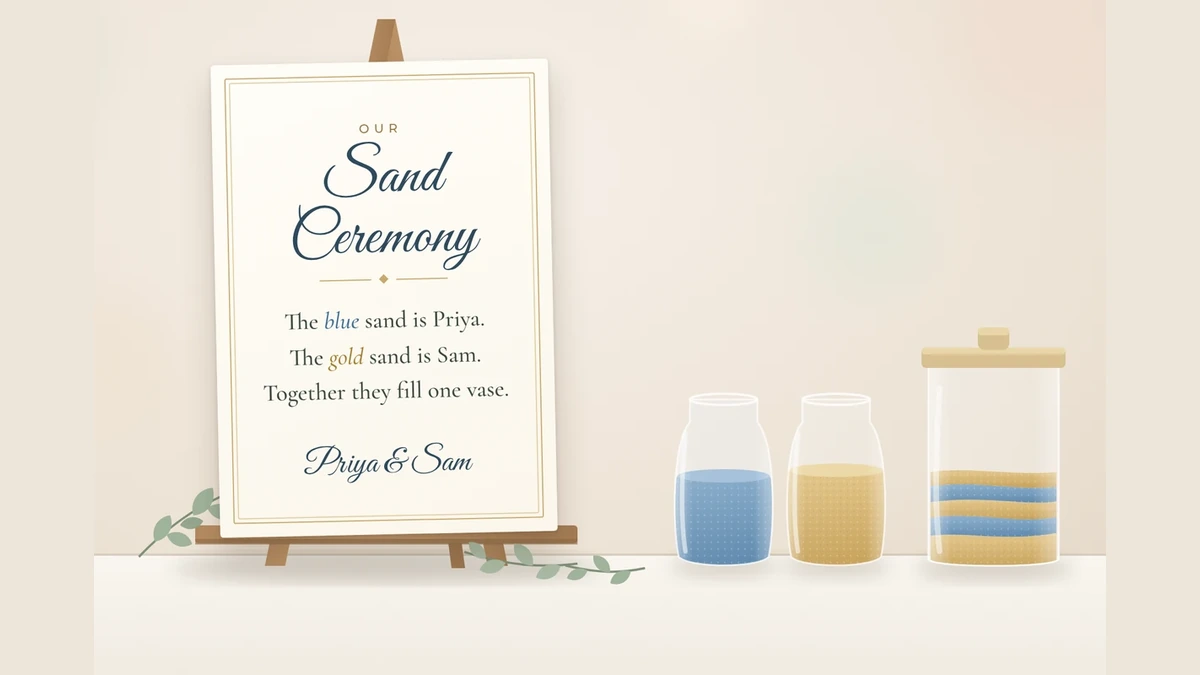
Sand Ceremony: Priya and Sam pour two colors of sand into one vessel, a sign that their lives are now joined.
There are more examples of how to list it in your program in our program guide, and our wedding program designs leave room for a line like this under each part of the ceremony.
A small sign on the unity table tells guests the same thing in a line or two: “The blue sand is Priya. The gold sand is Sam. Together they fill one vase.”
Key Takeaways
Keep any unity candle at least 12 inches from anything that can burn, including flowers, table linens and veils.
Sand, unity glass, a cord of three strands and tree planting all work outdoors, where a unity candle fails in any real wind.
Many Catholic churches discourage or prohibit the unity candle, which is not part of the Catholic wedding rite.
Handfasting happens during the vows, with the couple’s hands bound while they speak, rather than after the ring exchange.
Ring warming takes no ceremony time when the rings travel through the guests during the prelude.
One named person should bring, set up and clear the unity supplies, so the couple has nothing to carry in the morning.
Frequently asked questions
What can you do instead of a unity candle?
A sand ceremony, unity glass, a cord of three strands, tree planting or a wine box all replace a unity candle, and all of them work outdoors because none needs a flame. For a quick or non-religious option, try a wine blending or paint pour. The alternatives section above sorts them by need.
How long does a unity ceremony take?
Most unity ceremonies take three to five minutes, including the officiant’s words. Ring warming takes longer if the rings pass through every guest during the ceremony, so start it during the prelude instead. Choose music about as long as the ritual so it doesn’t end in silence.
What should be the appropriate wording for a unity glass ceremony?
Name the two colors, let the couple pour, then close on the glass becoming one piece:
Officiant: Ana and Will have chosen green for Ana and gold for Will. (They pour.) Today the grains still sit side by side. Once fired, this glass becomes one piece that can never be separated, just as your lives, Ana and Will, are joined today.
Do vows come before a unity ceremony?
Yes, usually. The unity ritual follows the vows and the ring exchange and comes just before the pronouncement. Handfasting is the main exception: the couple’s hands are bound while the vows are spoken, so the ritual and the vows happen at the same time.
Do you play a song during a unity ceremony?
Often, yes. A short instrumental piece fills the quiet while the couple pours sand or lights a candle, which can otherwise feel long to guests. Pick a piece about as long as the ritual, or ask the musicians for one that can fade out cleanly when you finish.
Is unity candle religious?
It is common at Christian weddings but isn’t tied to any one faith, and many non-religious couples use it. It isn’t part of the Catholic wedding rite, and the US bishops’ marriage site says many Catholic churches discourage or prohibit it, so check with your officiant first.
What are some non-religious ideas for a unity ceremony?
Sand, a paint pour, a wine box and a wine or whiskey blending carry no religious meaning, so they suit a civil or humanist ceremony. Tree planting, handfasting and even the unity candle work too. Skip the cord of three strands, whose third strand stands for God.
Where did the unity candle originate?
No one knows for certain. The US bishops’ marriage site notes the popular claim that a 1981 wedding on the soap opera General Hospital made the unity candle widespread, but adds that there is evidence of couples using it by the mid-1970s.
What Bible verse is appropriate for a unity candle ceremony?
Verses about two becoming one match what the candle shows: Genesis 2:24, or Mark 10:8-9, “So they are no longer two, but one flesh” (Berean Standard Bible). Matthew 5:14-16, “You are the light of the world,” suits its flame. Some churches set the readings, so confirm the verse with your officiant.
Is it okay to not do a unity ceremony?
Yes. A unity ritual is optional, and plenty of ceremonies move straight from the rings to the pronouncement. If no ritual means anything to you, skip it. A short reading or a moment of quiet can fill the same spot if you still want a pause there.
Ready to explain your ritual to guests?
Once you’ve chosen your ritual, the last step is telling guests what it means. Browse our ceremony sign designs for a table sign that says it in a line or two, then put the same line in your program so the ritual makes sense from every seat.