
Floral Wedding Welcome Signs
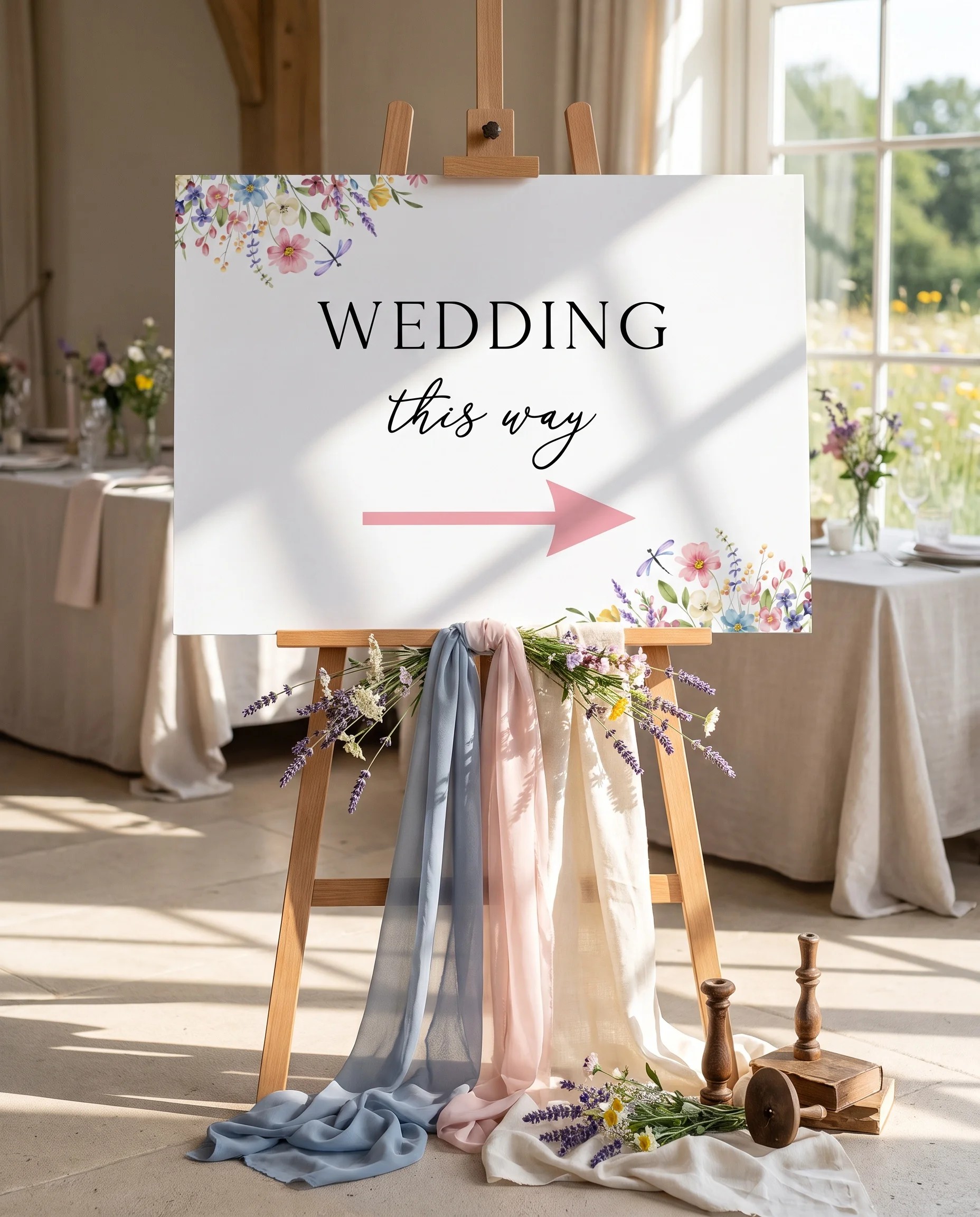
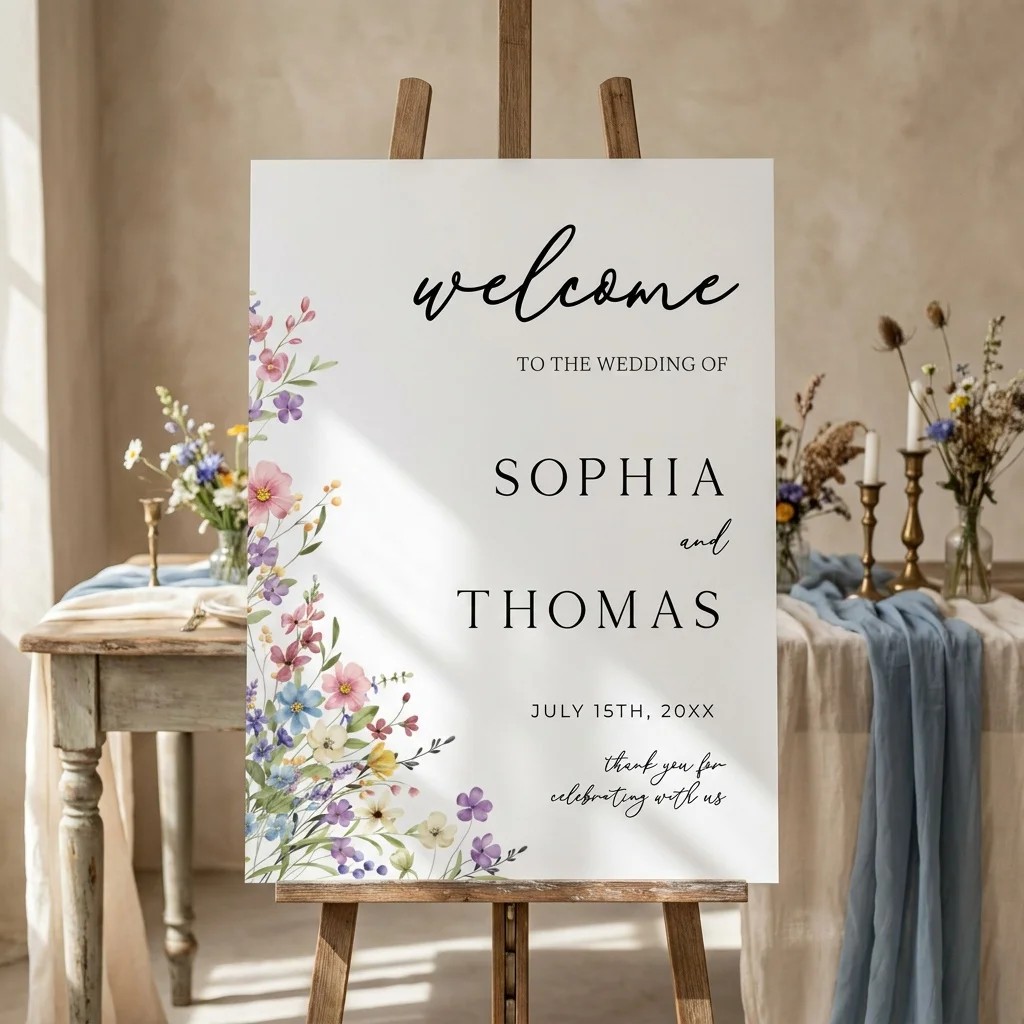
Lush watercolor florals, hand-painted botanicals, and natural greenery define our floral wedding welcome signs - the first piece guests see when they arrive and one of the most-photographed stationery moments at floral weddings. Choose from peony-led romantic signs with full floral wreaths, watercolor signs with eucalyptus and sage greenery garlands, garden signs with mixed wildflower cascades down one side, romantic asymmetric compositions with a single large bloom anchor, or modern botanical signs with refined typography and corner sprigs. Available in 18x24 inches for intimate venues, 24x36 for medium weddings, and 36x48 for grand outdoor events - the floral compositions need room to breathe at this scale. Designed to coordinate with your floral ceremony arch and centerpieces, every template is fully editable in our free browser-based editor and downloads as print-ready PDF, JPEG, and PNG files. Print at home for the smaller sizes or send the digital files to a print shop for production on heavy cardstock or acrylic.


best seller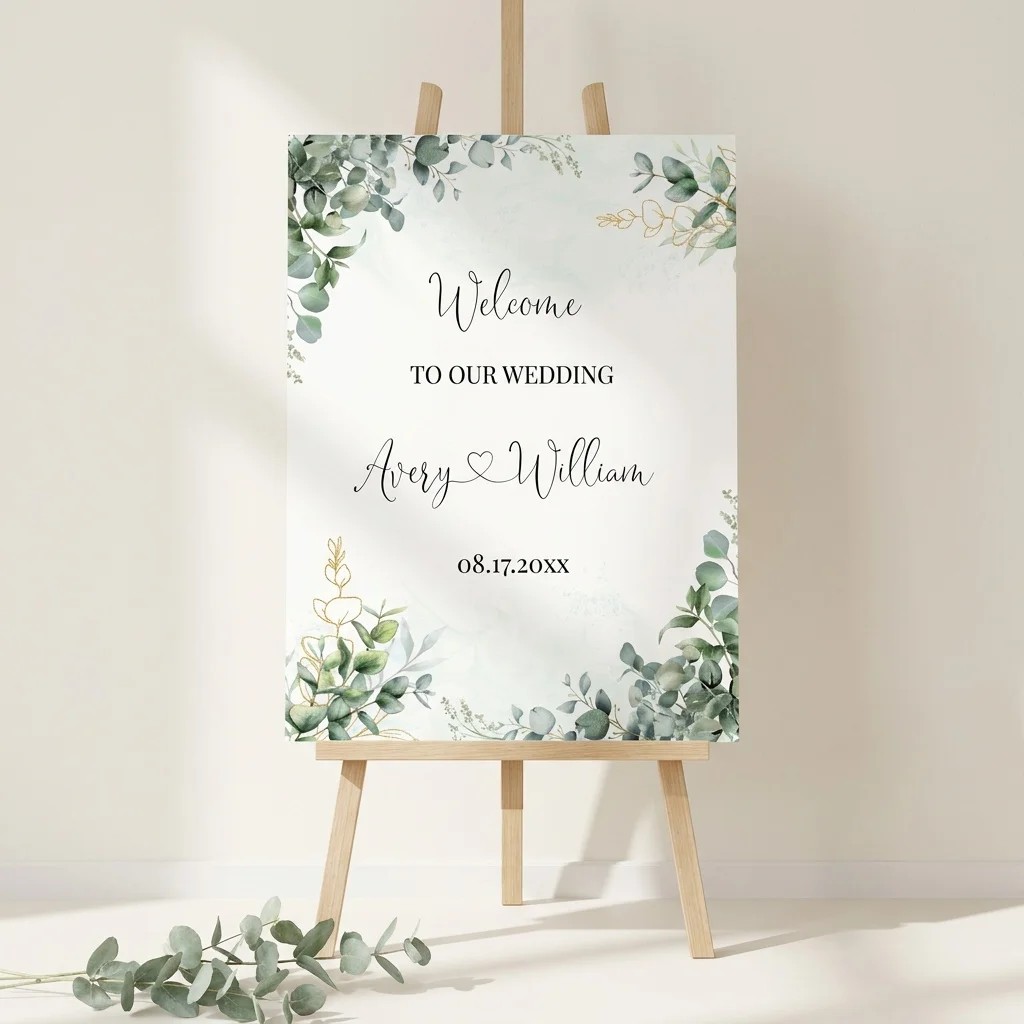
About Our Floral Wedding Welcome Signs
Our floral wedding welcome signs feature lush watercolor florals, hand-painted botanicals, and natural greenery in romantic palettes. Choose from peony-led romantic signs with full floral wreaths framing the typography, watercolor signs with loose eucalyptus and sage greenery garlands, garden signs with mixed wildflower cascades down one side, asymmetric compositions with a single large bloom as the visual anchor, modern botanical signs with refined typography and corner sprigs, or romantic dusty-rose-and-blush signs for soft palette weddings. Whether you are looking for a 18x24 inch sign for an intimate garden venue, a 24x36 inch sign for a medium reception, or a 36x48 inch sign for a grand outdoor wedding, every template is fully editable in our free browser-based editor and downloads as print-ready PDF, JPEG, and PNG files. Print at home for the smaller sizes on heavy cardstock or send the digital files to a print shop for production on weather-resistant acrylic.
Large-Format Floral Welcome Signs Are Expressive Design Moments
Wedding welcome signs are the largest format in the day-of stationery suite (typically 18x24 to 36x48 inches), which means floral imagery has dramatically more room to breathe than at smaller formats. Where floral place cards constrain florals to a single stem accent, floral menus require floral framing of the course list, and floral table numbers limit florals to corner sprigs to preserve numeral readability, floral welcome signs allow expressive design moments - full floral wreaths, lush watercolor garlands, asymmetric cascades, or large bloom anchors that fill significant portions of the sign. Three large-format floral composition approaches that work well: full floral wreath framing the typography (the most romantic approach - peonies, garden roses, or mixed seasonal florals form a complete circle around the welcome message), garland or cascade running down one side or across the top of the sign (more modern approach - eucalyptus and greenery work especially well in this composition), or a single large bloom anchor in one corner with delicate trailing florals extending across the sign (asymmetric approach - peonies, hydrangeas, or magnolias work as anchor flowers). The welcome sign is one of the most-photographed pieces at floral weddings - guests photograph their arrival, the welcome message becomes Instagram content, and the sign often appears in ceremony entrance shots. The floral composition needs to look striking in photos taken from various angles.
Coordinate Your Welcome Sign with Your Floral Ceremony Arch
Floral weddings often have a floral ceremony arch or floral altar as the centerpiece of the ceremony space - and the welcome sign provides the first visual hint of that floral installation as guests arrive. Coordinating the welcome sign with the ceremony arch creates a strong visual through-line: guests see the welcome sign's florals first, then the ceremony arch as they enter the ceremony space, and the visual repetition reads as deliberate design intention. Coordinate four elements: the specific flowers (if your ceremony arch features peonies and eucalyptus, your welcome sign should feature the same peonies and eucalyptus), the palette (dusty rose and ivory, blush and cream, or sage and white - whatever anchors the arch should anchor the sign), the composition style (full asymmetric drape on the arch should pair with asymmetric composition on the sign; symmetric balanced arch should pair with symmetric balanced sign), and the typography placement (centered typography reads as more formal; off-center reads as more contemporary). Coordinate with your florist 6 to 8 weeks before the wedding to confirm the ceremony arch's flower selection and design approach, then design the welcome sign to mirror or complement that installation. The welcome sign also needs to coordinate with the centerpiece flowers since both are visible during the cocktail and reception phases of the day.
Pairs With
Browse all wedding welcome signs by aesthetic. For matching floral day-of wedding stationery, see our floral wedding seating charts, floral wedding table numbers, and floral wedding menus.
Frequently Asked Questions
What size and substrate work best for floral wedding welcome signs?
Choose 18x24 inches for intimate indoor venues with under 60 guests, 24x36 inches for medium-sized weddings (60 to 130 guests) and most standard venues, and 36x48 inches for larger weddings or grand outdoor venues. The floral compositions need room to breathe at this scale - smaller sizes can feel cramped if the floral imagery is too elaborate. Substrate options for floral welcome signs: heavy cream cardstock displayed in a clean wood frame is the standard floral choice ($25-$60 depending on size, the cream cardstock with watercolor florals reads as deliberately romantic), printed acrylic with watercolor florals printed directly on the surface ($60-$300, the acrylic creates a luminous quality that elevates watercolor florals beyond what cardstock can achieve), foam board with cardstock face mounted in a wood or rattan frame ($30-$80, lightweight for transport but does not survive rain), or mounted canvas with watercolor florals printed on canvas texture ($80-$200, vintage-romantic feel particularly fitting for garden weddings). For outdoor venues, choose acrylic or laminated cardstock - foam board does not survive even brief rain and standard cardstock warps in humidity. Most welcome signs are displayed on a wood or wrought-iron easel at the venue entrance.
How should I coordinate my floral welcome sign with my floral ceremony arch?
Coordinate four elements between your welcome sign and ceremony arch: the specific flowers (if your arch features peonies and eucalyptus, your welcome sign should feature the same peonies and eucalyptus - bring the florist your existing welcome sign design or work backward from the arch's flower selection), the palette (dusty rose and ivory, blush and cream, sage and white - whatever anchors the arch should anchor the sign), the composition style (full asymmetric drape on the arch should pair with asymmetric composition on the sign; symmetric arch should pair with symmetric sign), and the typography placement (centered for formal, off-center for contemporary). Coordinate with your florist 6 to 8 weeks before the wedding to confirm the ceremony arch flower selection and design approach. For most floral weddings, the ceremony arch is locked in 6-8 weeks out and the welcome sign can be designed to mirror that installation - this creates the strongest visual through-line as guests move from arrival (welcome sign) to ceremony (arch). Some florists also design a small companion floral installation around the welcome sign easel itself - extending the floral aesthetic from the printed sign to the actual flowers around it.
Should my floral welcome sign include just my names and date, or more information?
For floral weddings specifically, the just-essentials approach often works best because the floral composition does the visual work and additional content competes with the imagery. The strongest floral welcome signs include: "Welcome to the wedding of [Sarah & Michael], [date]" - clean, romantic, lets the florals breathe. Some couples add a small location detail (city or venue name) which works without overloading. For very elaborate floral compositions (full wreath framing, lush asymmetric cascade), keep the typography minimal - the florals are the focus. For more restrained floral compositions (corner sprigs, simple greenery accent), you can add a brief schedule of the day if your venue has multiple spaces and guests need wayfinding. The decision depends on the relative weight of florals vs typography in the composition: the more elaborate the florals, the simpler the typography should be.
Should my floral wedding welcome sign match my invitation suite?
Yes - matching is essential for visual cohesion. The welcome sign is the first piece guests see at the venue and one of the most-photographed pieces at floral weddings (it features in arrival photos, ceremony entrance shots, and Instagram content). If your wedding invitations featured watercolor peonies and dusty rose, your welcome sign should use the same peonies and the same dusty rose. Beyond the invitation match, the welcome sign must ALSO coordinate with the ceremony arch and centerpieces - which usually means all four pieces (invitation, welcome sign, ceremony arch, centerpieces) feature the same flowers. The strongest floral wedding suites use 1 to 3 specific flower types consistently across every piece - one anchor flower (peonies, garden roses, or anemones) plus 1 to 2 supporting elements (eucalyptus, wildflowers, baby's breath). This through-line from invitation through welcome sign through ceremony arch through table numbers to place cards creates one of the strongest visual signatures in floral weddings. Many couples buy matching invitation suites + day-of stationery suites together specifically to ensure this cohesion.