
Classic Wedding Welcome Signs
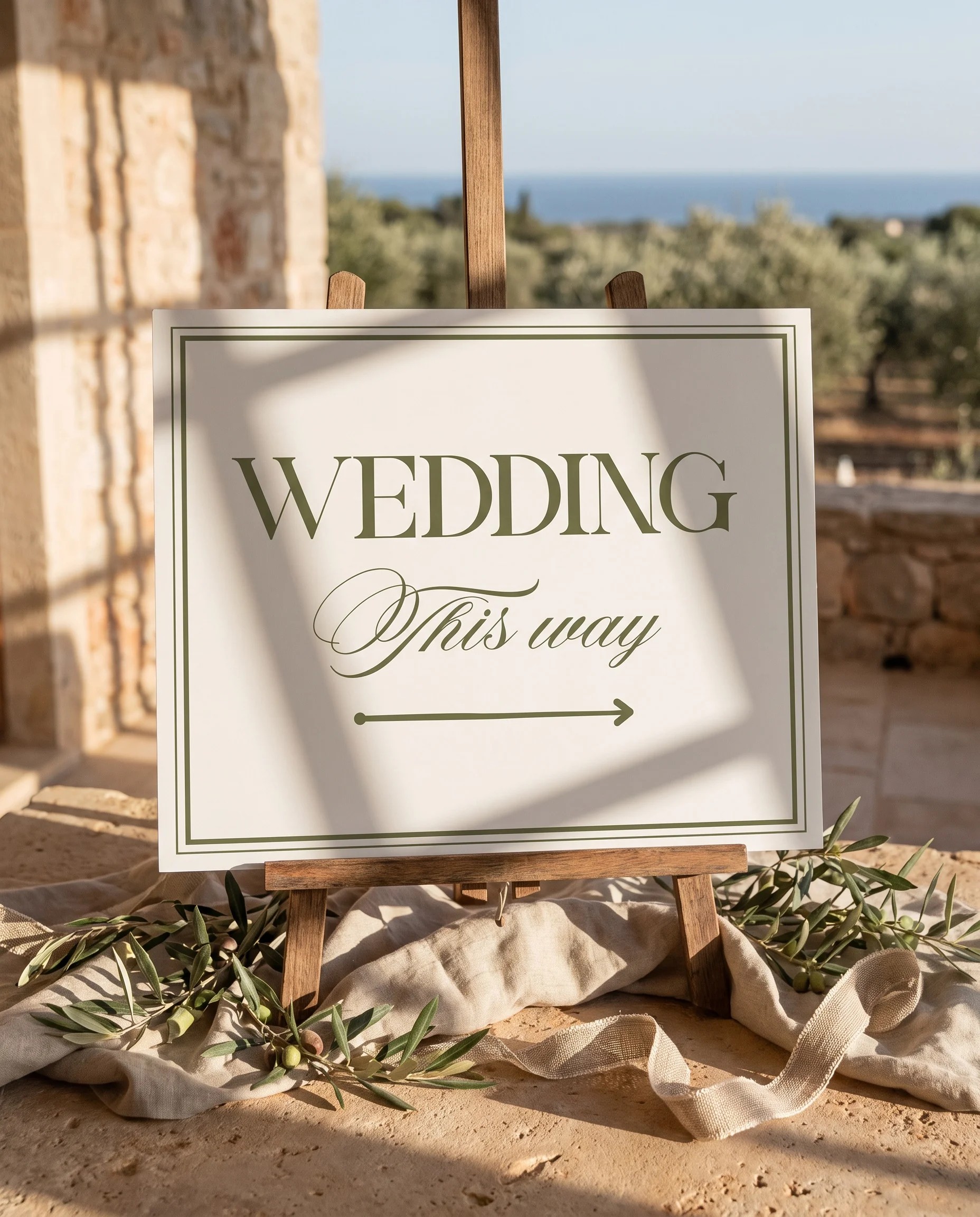
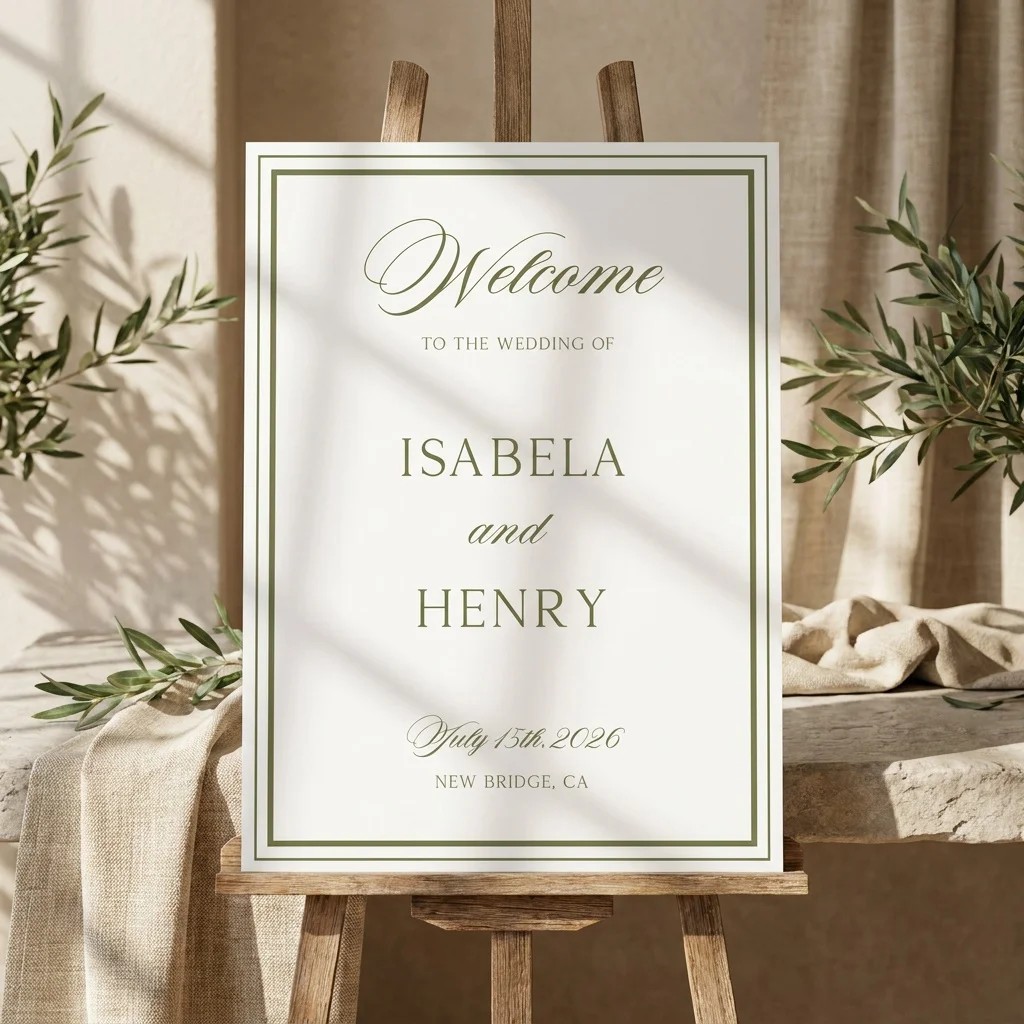
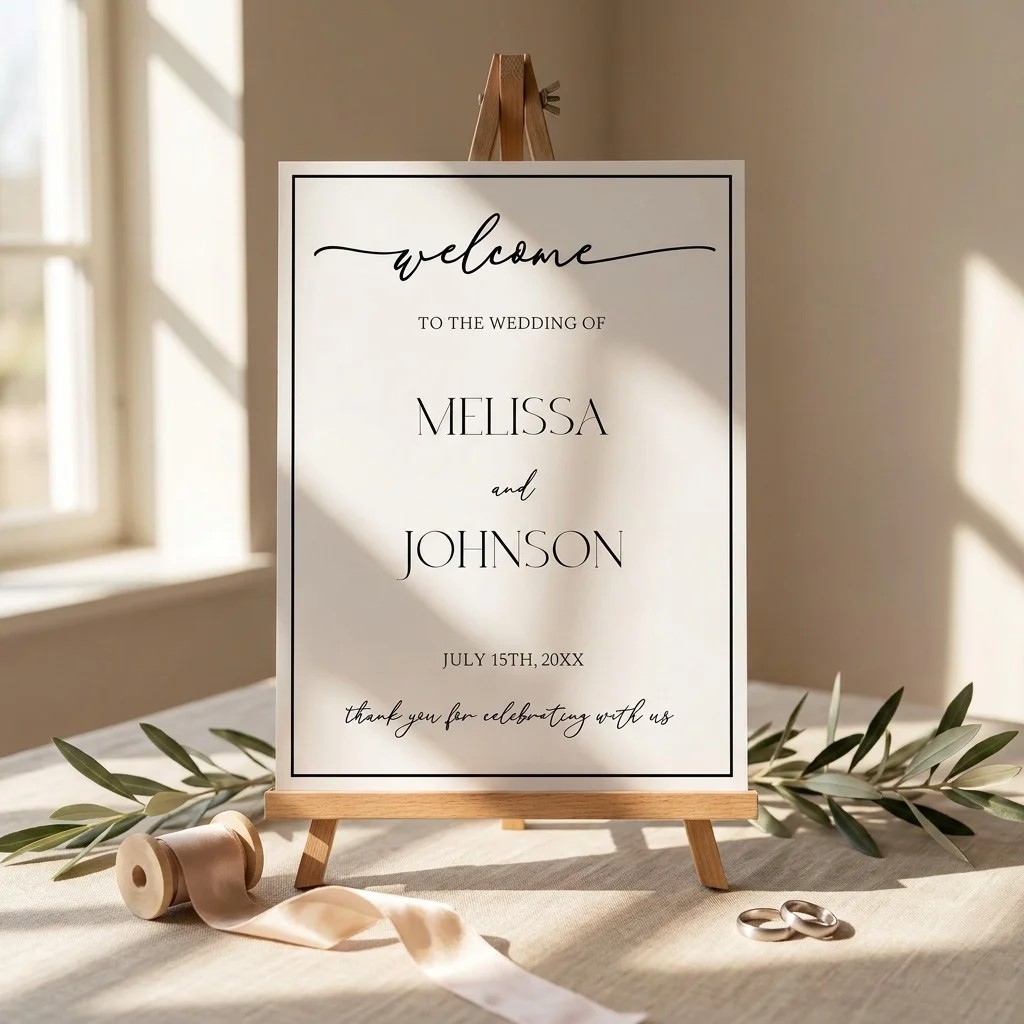
Formal serif typography, calligraphy scripts, monograms, and timeless palettes define our classic wedding welcome signs - the first piece guests see when they arrive at your venue. Choose from elegant signs with classical type and ivory cardstock, formal black-and-white signs with high-contrast typography, gold-foil signs with metallic typography on cream backgrounds, sophisticated black-tie signs in deep burgundy or navy with gold accents, monogram welcome signs with the wedding initials anchoring the design, or formal welcome signs with a Roman numeral schedule of the day. Available in 18x24 inches for intimate venues, 24x36 for medium weddings, and 36x48 for grand weddings - displayed in substantial gilt gold frames, antique brass frames, or polished mahogany frames for the most formal classic presentation. Designed to coordinate with classic place cards, seating charts, and menus, every template is fully editable in our free browser-based editor and downloads as print-ready PDF, JPEG, and PNG files.



About Our Classic Wedding Welcome Signs
Our classic wedding welcome sign templates are built around formal serif typography, calligraphy scripts, monograms, and timeless color palettes. Choose from elegant signs with classical type and ivory cardstock, formal black-and-white signs with high-contrast typography, gold-foil signs with metallic typography on cream backgrounds, sophisticated black-tie signs in deep burgundy or navy with gold accents, classy welcome signs with formal type and centered symmetrical layouts, monogram welcome signs with the wedding initials prominently anchored at the top of the design, or formal welcome signs with a Roman numeral schedule of the day for the most traditionally formal weddings. Whether you are looking for navy-and-gold welcome signs, ivory-and-gold designs, classic black-and-white, or burgundy-and-gold for fall and winter weddings, every template is fully editable in our free browser-based editor and downloads as print-ready PDF, JPEG, and PNG files. Print at home for the smaller sizes, or send the digital files to a print shop for premium production on heavy cardstock or letterpress cotton, displayed in substantial gilt gold frames, antique brass frames, or polished mahogany for the most formal classic presentation.
Three Classic Palette Options at Equal Weight - Choose Based on Wedding Formality
Classic weddings span a range of formality levels, and each level pairs naturally with a different palette for the welcome sign. Unlike Classic Table Numbers where gold dominates as the single strongest palette signal, classic welcome signs work equally well in three palette configurations - the choice depends on the overall wedding aesthetic and venue:
Black-and-white classic - the most traditionally formal classic palette, particularly fitting for black-tie weddings, hotel ballroom receptions, and formal city weddings. The high-contrast palette reads as the most architecturally classic and works at every venue type. Most affordable to produce - black ink on white cardstock at any print shop.
Gold and ivory classic - the most luxurious classic palette, particularly fitting for country club weddings, holiday weddings (gold reads as deliberately festive), and weddings with substantial floral installations (gold complements floral arrangements). Production: gold foil printing or metallic gold ink elevates this palette beyond what cardstock alone achieves.
Navy or burgundy with gold accents - the seasonal classic palette, particularly fitting for autumn weddings (burgundy with gold), winter weddings (navy with gold), and weddings with seasonal venue character (vineyards in autumn, mountain lodges in winter). Reads as deliberately seasonal while maintaining classic formality.
All three palettes work at every venue type - choose based on the overall wedding's seasonal character, formality level, and your invitation suite palette. The welcome sign should match the invitation palette exactly to maintain stationery cohesion across the suite.
Ornate Frame Conventions Make Classic Welcome Signs Distinctive
At the welcome sign format size (18x24 to 36x48 inches), the frame becomes a substantial visual element - sometimes more visible than the sign itself when guests approach from a distance. Classic welcome signs benefit from substantial frames in a way that minimalist or boho signs do not. Four frame options that work especially well for classic welcome signs: gilt gold frames (antique-style ornate gold-leaf frames - the most traditionally classic, particularly fitting for gold-and-ivory palette signs at country club or hotel ballroom venues, $40-$150 depending on size and antique vs reproduction), antique brass frames (vintage brass with patina - reads as deliberately heritage-classic, particularly fitting for navy-and-gold or burgundy-and-gold seasonal palettes, $30-$100), polished mahogany or walnut wood frames (substantial dark wood frames with classical molding - reads as understated formal, particularly fitting for classic country club weddings or weddings at heritage estate venues, $25-$80), or thin black metal frames with gold accents (the modern classic option - cleaner than the ornate options but still substantial, particularly fitting for black-and-white classic palettes at modern formal venues, $20-$60). Match the frame style to the venue's existing decor: ornate gold for ornate venues (ballrooms, country clubs), antique brass for heritage venues, mahogany for traditional venues, modern frames for modern formal venues. The welcome sign frame is one of the most-photographed details at classic weddings - guests photograph the sign as part of arrival photos, and the frame becomes part of the wedding's visual identity.
Pairs With
Browse all wedding welcome signs by aesthetic. For matching classic day-of wedding stationery, see our classic wedding place cards, classic wedding seating charts, and classic wedding menus.
Frequently Asked Questions
Should I use black-and-white, gold-and-ivory, or navy-and-gold for my classic wedding welcome sign?
Choose based on the overall wedding's formality level, seasonal character, and venue type. Black-and-white classic is the most traditionally formal palette, particularly fitting for black-tie weddings, hotel ballroom receptions, and formal city weddings - the high-contrast palette reads as architecturally classic and works at every venue type. Gold-and-ivory classic is the most luxurious palette, particularly fitting for country club weddings, holiday weddings (gold reads as festive), and weddings with substantial floral installations (gold complements florals). Navy-and-gold or burgundy-and-gold is the seasonal classic palette, particularly fitting for autumn weddings (burgundy), winter weddings (navy), and weddings at venues with seasonal character. All three work at every venue type - the strongest decision factor is matching your invitation suite palette exactly. If your invitations were navy-and-gold, your welcome sign should be navy-and-gold; if your invitations were black-and-white, the welcome sign should be black-and-white. Stationery cohesion across the suite matters more than picking the technically most-formal palette.
What frame should I use for a classic wedding welcome sign?
Classic welcome signs benefit from substantial frames - the frame becomes a significant visual element at the welcome sign format size (18x24 to 36x48 inches) and reads almost as much as the sign itself from a distance. Four frame options that work for classic weddings: gilt gold frames (antique-style ornate gold-leaf, $40-$150, most traditionally classic, particularly for gold-and-ivory palettes at country club or hotel ballroom venues), antique brass frames ($30-$100, vintage brass with patina, particularly for navy-and-gold or burgundy-and-gold seasonal palettes), polished mahogany or walnut wood frames ($25-$80, substantial dark wood with classical molding, particularly for traditional venues and heritage estate weddings), or thin black metal frames with gold accents ($20-$60, the modern classic option for black-and-white palettes at modern formal venues). Match the frame style to the venue's existing decor and the wedding's overall aesthetic - ornate gold for ornate venues, antique brass for heritage, mahogany for traditional, modern frames for modern formal. The frame is one of the most-photographed details at classic weddings.
Should I include a Roman numeral schedule on my classic wedding welcome sign?
For very formal classic weddings - particularly black-tie weddings, country club weddings, and weddings with multiple ceremony spaces - a Roman numeral schedule on the welcome sign reads as deliberately formal and provides useful guest navigation. The format: "Welcome to the wedding of [names], [date]. I. Ceremony 4pm. II. Cocktail Hour 5pm. III. Reception 6:30pm. IV. Dancing 8pm. V. Send-off 11pm." The Roman numerals continue the convention from Classic Wedding Menus (Roman numeral course numbering) to Classic Wedding Table Numbers and now to the welcome sign - creating a consistent classical formality across all printed pieces at the wedding. For elegant-but-relaxed classic weddings (informal classic country club receptions, modern classic weddings), Arabic numbers (1pm, 4pm, 6:30pm) feel more appropriate, or skip the schedule entirely and let separate directional signs handle wayfinding. The Roman numeral schedule is strongest for weddings where the formality is fully committed across the entire stationery suite.
Should my classic wedding welcome sign match my invitation suite?
Yes - classic weddings benefit MOST from coordinated stationery suites, and the welcome sign is the first piece guests see at the venue. Multi-generational classic weddings include guests who notice and appreciate stationery cohesion, and the repeating typography + monogram + palette from invitation through welcome sign through menu through table numbers creates one of the strongest visual signatures at a classic wedding. If your invitations featured navy with gold foil monograms, your welcome sign should use the same navy with the same gold foil monogram and the same typography family. The monogram especially should match exactly - the same design appearing on every printed piece becomes a coordinated visual signature that traditional guests recognize as well-designed and intentional. Many couples buy matching invitation suites + day-of stationery suites together specifically to ensure this cohesion across the entire wedding journey, and for classic weddings where the formal aesthetic is fully committed, this stationery coordination is part of the overall wedding presentation that guests recognize.