
Floral Wedding Table Numbers
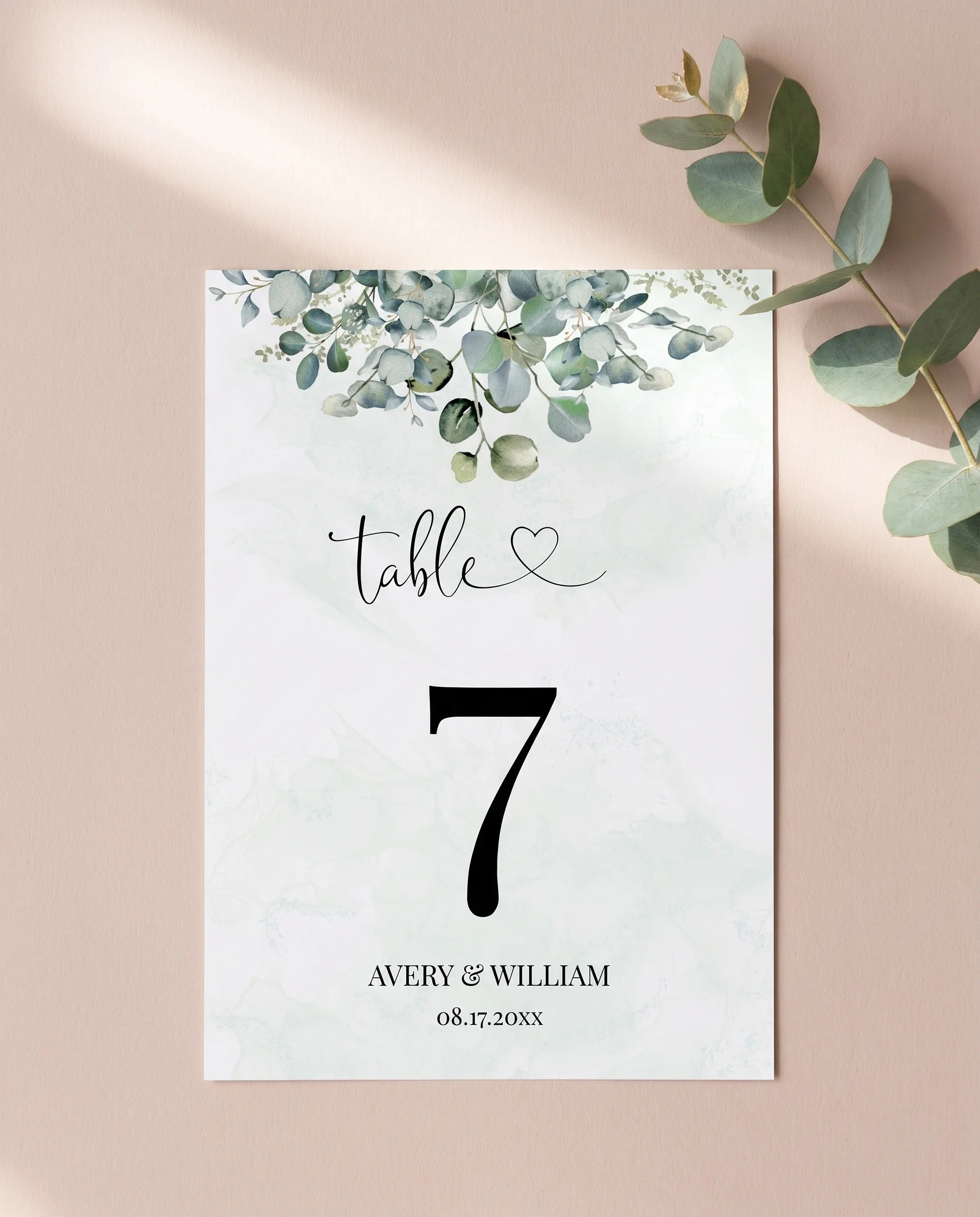
Soft watercolor florals, hand-painted botanicals, and natural greenery define our floral wedding table numbers. Choose from peony-led romantic numbers in dusty rose and ivory, eucalyptus and sage greenery numbers, watercolor numbers with loose hand-painted floral borders, garden numbers with mixed wildflower accents, or modern botanical numbers with refined typography and corner sprigs. The table number sits at the heart of every centerpiece for the entire reception - so the floral motif on the number should match the flowers in your centerpieces (peonies on the number if peonies anchor the centerpiece, eucalyptus on the number if eucalyptus runs through it). Print double-sided so guests at every seat can see the number, standard format 4x6 or 5x7 displayed in a clear acrylic frame. Designed to coordinate with floral place cards, seating charts, and menus, every template is fully editable in our free browser-based editor and downloads as print-ready PDF, JPEG, and PNG files.



About Our Floral Wedding Table Numbers
Our floral wedding table numbers feature soft watercolor florals, hand-painted botanicals, and natural greenery in romantic palettes. Choose from peony-led romantic numbers in dusty rose and ivory, eucalyptus and sage greenery numbers, watercolor numbers with loose hand-painted floral borders, garden numbers with mixed wildflower accents, modern botanical numbers with refined typography and corner sprigs, or romantic floral wreath numbers framing the numeral itself. Whether you are looking for table numbers to coordinate with peony-anchored centerpieces, table numbers in eucalyptus and greenery palettes for garden-aesthetic weddings, or table numbers in dusty rose and blush for romantic weddings, every template is fully editable in our free browser-based editor and downloads as print-ready PDF, JPEG, and PNG files. Print at home as flat double-sided cards displayed in clear acrylic frames or send the digital files to a print shop for premium production.
Floral Table Numbers Must Match Your Centerpiece Flowers
Table numbers integrate uniquely with floral centerpieces - the number sits AT the centerpiece (often inside the floral arrangement, behind it, or beside it on the table) for the entire reception. This makes centerpiece coordination essential for floral weddings: guests see the table number in direct visual relationship with the centerpiece flowers, and a mismatch reads as visual fragmentation. The strongest floral table numbers use the same flowers that anchor the centerpieces. If your centerpieces feature peonies and eucalyptus in dusty rose and sage, your table numbers should feature the same peonies and eucalyptus in the same dusty rose and sage. If your centerpieces are wildflower-led with mixed seasonal blooms, your table numbers should use the same wildflower mix. Coordinate with your florist 6 to 8 weeks before the wedding to confirm the exact flowers that will appear in the centerpieces - the table number motif should match these specifically rather than featuring generic floral imagery. The repeating flower from centerpiece to table number to invitation suite creates one of the strongest visual through-lines in the floral wedding aesthetic.
Floral Framing for Small-Format Table Number Cards
Wedding table numbers are a small format (typically 4x6 or 5x7 inches) where the numeral itself must read clearly from across the table - guests need to find their assigned table easily as they navigate the reception. This constrains how much floral imagery can fit without obscuring the number. Three approaches that work well for floral table numbers: corner floral sprigs (a single watercolor stem at the top corner with the numeral filling the central space), a top floral wreath or arch crowning the numeral (with the number large below), or a delicate floral border framing the entire card with the numeral centered inside. The approach that does NOT work: full floral background coverage - at table number size, full coverage swallows the numeral and makes the number hard to read at a distance. Watercolor florals as accent or frame, not as background. The numeral should be the largest element on the card; floral imagery should support rather than compete with it. For large-format reception centerpieces with elaborate florals, the table number can feature minimal floral accent - the centerpiece itself does the floral work, and the table number simply needs to harmonize without competing.
Pairs With
Browse all wedding table numbers by aesthetic. For matching floral day-of wedding stationery, see our floral wedding place cards, floral wedding seating charts, and floral wedding menus.
Frequently Asked Questions
Should the flowers on my table numbers match the flowers in my centerpieces?
Yes - matching is essential for floral weddings. The table number sits AT the centerpiece for the entire reception, and guests see the table number in direct visual relationship with the centerpiece flowers. A mismatch (peonies on the table number when the centerpiece features dahlias) reads as visual fragmentation. The strongest floral table numbers use the same flowers that anchor the centerpieces - if peonies and eucalyptus dominate your centerpieces, your table number motifs should feature peonies and eucalyptus. Coordinate with your florist 6 to 8 weeks before the wedding to confirm the exact flower selections - the centerpieces depend on seasonal availability and the florist's sourcing, so locking in the specific flowers before designing the table numbers ensures the cohesion. The repeating flower from invitation suite to centerpiece to table number creates one of the strongest visual through-lines in the floral wedding aesthetic.
What size and substrate work best for floral wedding table numbers?
Standard floral table number sizes are 4x6 inches or 5x7 inches, printed double-sided so every guest at the table can see the number from any seat. The smaller 4x6 size works for elegant intimate floral weddings where the table number is unobtrusive; 5x7 works for weddings where the table number serves as a small visual feature alongside the centerpiece. Substrate options for floral table numbers: heavy cardstock (110-130 lb cream or ivory) displayed in a clear acrylic frame is the standard floral choice ($2-$6 per number) - the cream cardstock with watercolor florals reads as deliberately romantic, the clear frame keeps the focus on the design; printed acrylic cards with watercolor florals printed directly on the surface ($4-$12 per number) for a more modern floral look; heavy cardstock with letterpress floral border ($5-$15 per number) for very formal floral weddings. For destination floral weddings, the cardstock-in-frame option travels better than acrylic - acrylic is heavy and fragile during transit.
How should I coordinate floral table numbers with my centerpiece florist?
Coordinate with your florist 6 to 8 weeks before the wedding, after you've selected your centerpiece florals but before you finalize the table number designs. Bring the florist your invitation suite, place card design, and any other floral stationery so they can match the centerpiece flowers to your existing design language - or use the florist's centerpiece concept to inform the table number flower choice. Confirm the specific flowers (not just flower categories - 'David Austin garden roses' rather than 'roses,' 'silver dollar eucalyptus' rather than 'greenery') and the exact palette colors. Some florists provide swatches or sample arrangements 4 weeks before the wedding to help you finalize stationery details. For weddings where seasonal availability changes the centerpiece flowers closer to the date, design the table numbers around the broader floral aesthetic and palette rather than specific flowers - this gives flexibility if the florist needs to substitute on the day.
Should my floral wedding table numbers match my invitation florals?
Yes - matching is essential for visual cohesion across the full wedding stationery suite. If your wedding invitations featured watercolor peonies and dusty rose, your wedding table numbers should use the same peonies and the same dusty rose. Beyond the invitation match, the table numbers must ALSO coordinate with the centerpieces (which usually means the centerpieces, invitations, and table numbers all use the same flowers). The strongest floral wedding suites use 1 to 3 specific flower types consistently across every piece - one anchor flower (peonies, garden roses, or anemones) plus 1 to 2 supporting elements (eucalyptus, wildflowers, baby's breath). This through-line from invitation through centerpiece through table number through place card creates one of the strongest visual signatures in floral weddings. The repetition becomes part of the design language guests notice and appreciate, particularly for couples who put effort into a coordinated stationery suite.