
Minimalist Wedding RSVP Cards
Clean lines, modern typography, and restrained palettes define our minimalist wedding RSVP card templates. Choose from photo RSVP cards, text-only response cards in black, white, and neutral palettes, or postcard formats with editorial layouts. Designed to coordinate with minimalist wedding invitation suites and capture guest responses elegantly, every template skips decorative ornaments in favor of typography that does the design work. Fully editable in our free browser-based editor and downloads as print-ready PDF, JPEG, and PNG files. Print at home or share digitally with guests.




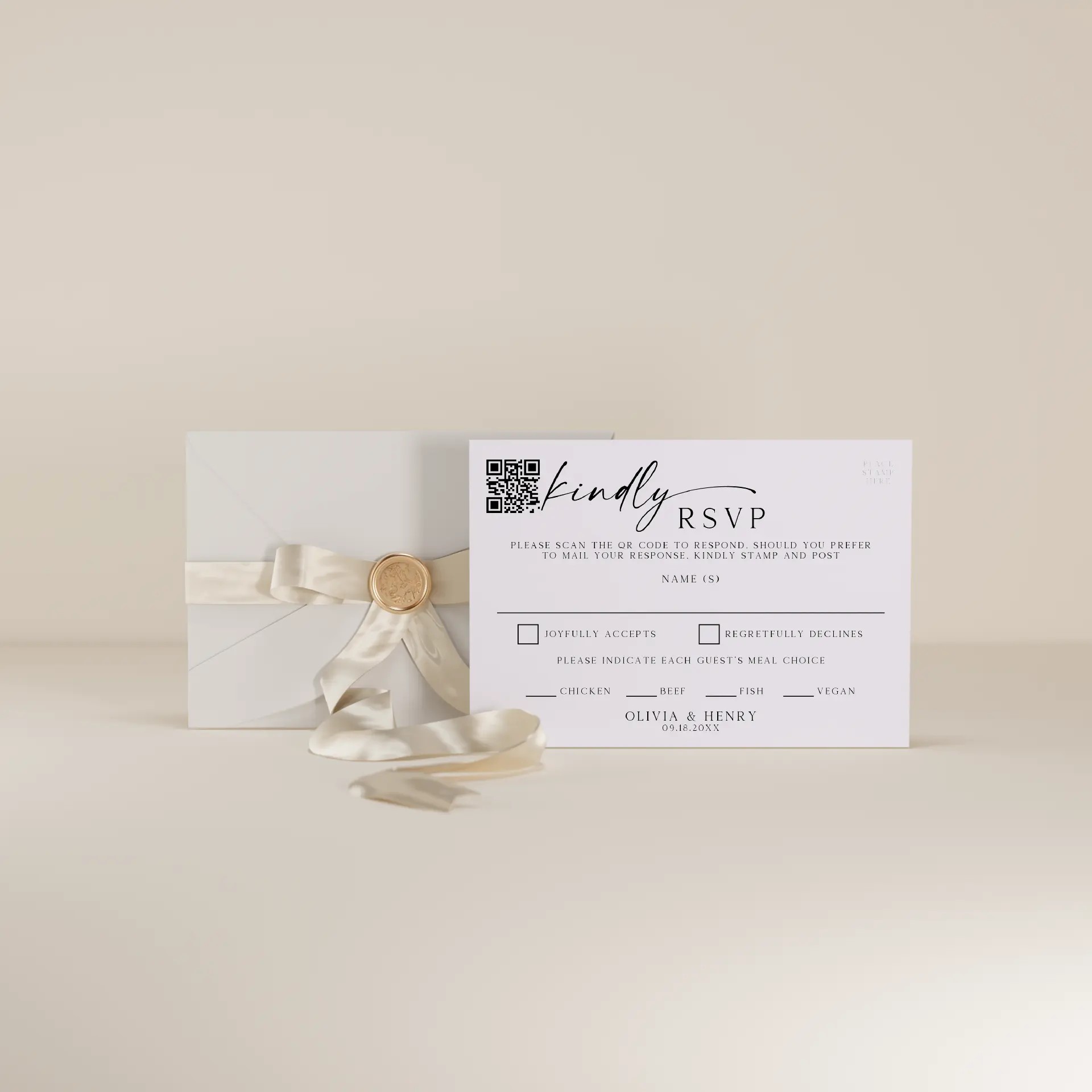
About Our Minimalist Wedding RSVP Cards
Our minimalist wedding RSVP card templates are built around clean typography, restrained color palettes, and modern editorial layouts. Choose from text-only response cards with checkbox layouts in black, white, and neutral palettes, modern wedding RSVP cards with sleek serif typography, contemporary wedding RSVP cards with editorial alignment, or simple wedding RSVP cards with minimal decoration. Whether you are looking for chic wedding RSVP cards in black and white, modern wedding response cards with single-accent palettes, or minimalist wedding RSVP cards that coordinate with the rest of your minimalist wedding stationery, every template is fully editable in our free browser-based editor and downloads as print-ready PDF, JPEG, and PNG files.
What Makes a Wedding RSVP Card Minimalist
The minimalist aesthetic is defined by what it leaves out as much as what it includes. Specifically:
Restrained color palette. Most minimalist RSVP cards use 2 to 3 colors maximum: black on white, charcoal on cream, or a single accent like sage, dusty blue, or warm beige.
Modern serif or sans-serif typography. Clean, readable, contemporary type takes the place of decorative scripts.
Generous white space. The layout uses large margins and breathing room around the response checkboxes and write-in lines.
Functional simplicity. The RSVP card has a job to do (collect attendance, meal preference, song requests). Minimalist designs let the function come through clearly without decorative interference.
Editorial layout sensibility. Clean grids, deliberate alignment, and a sense of restraint that feels closer to magazine design than traditional wedding stationery.
Wedding RSVP Card vs Wedding Invitation: What is the Difference?
A wedding RSVP card (also called a wedding response card) is the small reply card included with the wedding invitation that guests fill out and return to confirm their attendance. The RSVP card is smaller than the invitation and includes only response-related information: a place for guests to write their names, checkboxes for accept/regret, optional meal selection (chicken/fish/vegetarian), optional song requests, and a deadline by which to respond. The wedding invitation provides the formal request to attend with all the wedding details (date, venue, time, dress code); the RSVP card collects guest responses. Together they form the core of the wedding invitation suite, joined by a details card or website URL for additional logistics. Minimalist couples often choose stamped postcards over enclosed RSVP cards to save on envelopes and simplify the guest's response process.
Pairs With
Browse all wedding RSVP cards by aesthetic. For matching minimalist wedding stationery across the entire suite, see our minimalist wedding invitations, minimalist wedding invitation suites, and minimalist save the dates.
Frequently Asked Questions
What is the typical RSVP deadline for a wedding?
Set the RSVP deadline 3 to 4 weeks before the wedding date. This gives you time to follow up with non-respondents (always 10 to 20% of the guest list, in our experience), finalize the headcount with the venue and caterer (most require final numbers 7 to 14 days before the event), and complete the seating chart. For destination weddings, set the RSVP deadline 6 to 8 weeks before the wedding to allow more time for guests to coordinate travel and for you to follow up with no-responses. Print the deadline clearly on the RSVP card itself, often phrased as "Kindly respond by [date]" or "Please reply by [date]."
What information should I include on a minimalist wedding RSVP card?
A standard wedding RSVP card includes 5 elements: a write-in line for the guest's name (M______ formatted line), checkboxes for accept and regret responses ("Joyfully accepts" and "Regretfully declines" in formal language, or "Yes, I will attend" and "No, I cannot attend" for casual), optional meal selection (chicken, fish, vegetarian), optional song request line, and the RSVP deadline. For minimalist designs specifically, keep checkbox layouts clean and aligned, use a single typography family, and avoid decorative borders or ornaments. The functional clarity is part of the minimalist aesthetic.
Should I use a stamped postcard or an enclosed RSVP card?
Either works, but each has tradeoffs. Stamped enclosed RSVP cards (the traditional format) come in a small envelope inside the invitation envelope - guests fill out the card and mail it back in the included return envelope. This is the formal etiquette standard but adds cost and weight to the invitation suite. Stamped postcards skip the return envelope entirely - guests fill out the postcard and mail it back directly. Postcards work especially well for minimalist designs because the simpler format matches the aesthetic, save on envelope and postage costs, and reduce environmental impact. For very formal weddings, enclosed RSVP cards remain the etiquette standard; for modern or casual weddings, postcards are increasingly popular.
Should my minimalist RSVP card match my wedding invitation?
Yes - matching is essential because the RSVP card and wedding invitation are typically packaged and mailed together as a stationery suite. Use the same typography family, the same accent color, and the same layout sensibility across both pieces. For minimalist couples specifically, this coordination is part of the aesthetic - the unified design language signals an intentional, well-designed wedding from the moment guests open the envelope. If your wedding invitation features black-on-white typography with sage accents, your RSVP card should use the same combination. Most couples buy invitation suites that include matching invitation, RSVP card, and details card together.