
Floral Wedding Place Cards
Soft watercolor florals, hand-painted botanicals, and natural greenery define our floral wedding place card templates. Choose from peony-led romantic designs, rose and eucalyptus garden palettes, watercolor place cards with loose hand-painted blooms, single-stem accents in dusty rose and sage, or modern botanical layouts with refined typography. Designed to coordinate with floral wedding menus, table numbers, and seating charts as a unified day-of stationery suite, every template is fully editable in our free browser-based editor and downloads as print-ready PDF, JPEG, and PNG files. Print at home in tent fold or flat formats.



About Our Floral Wedding Place Cards
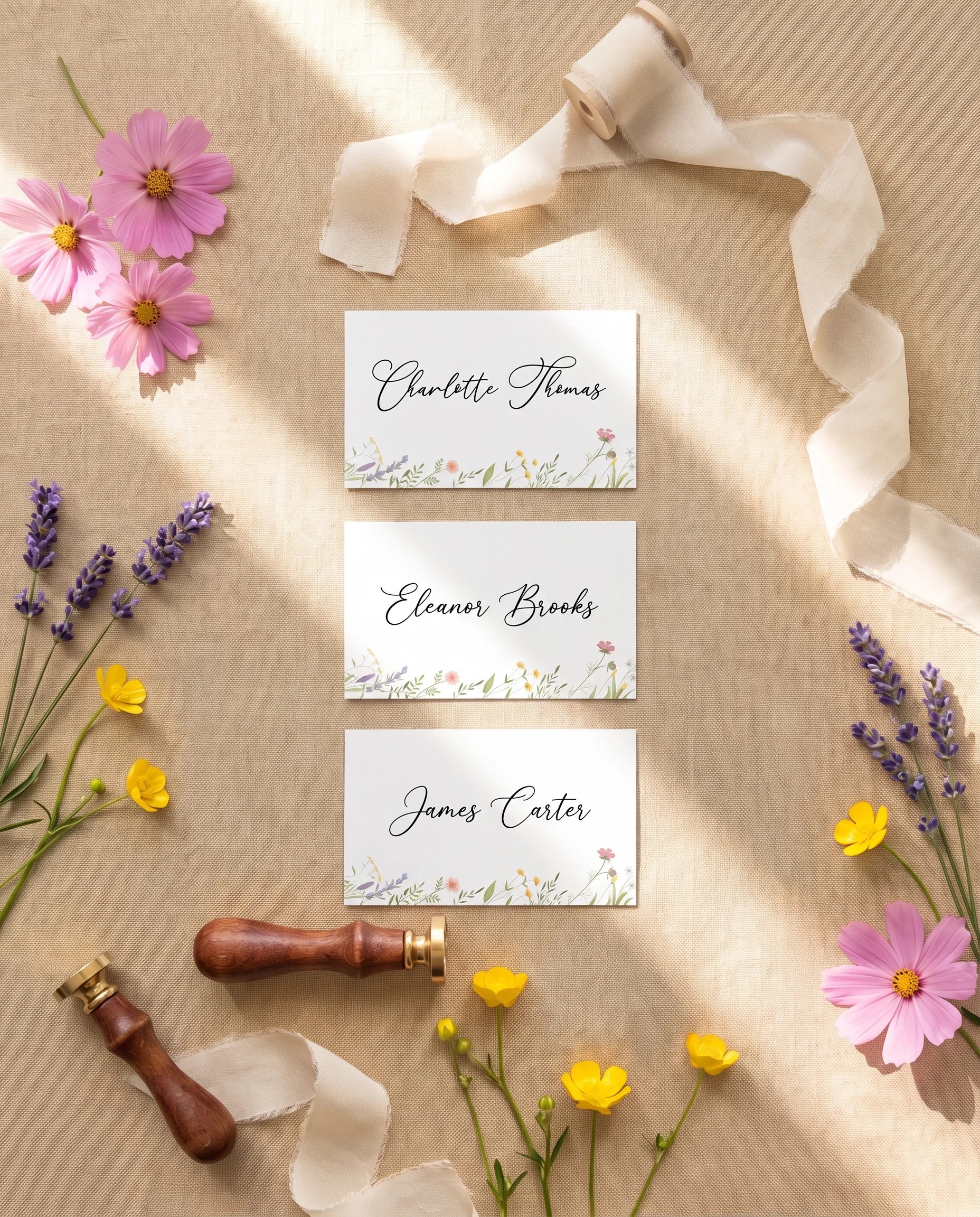
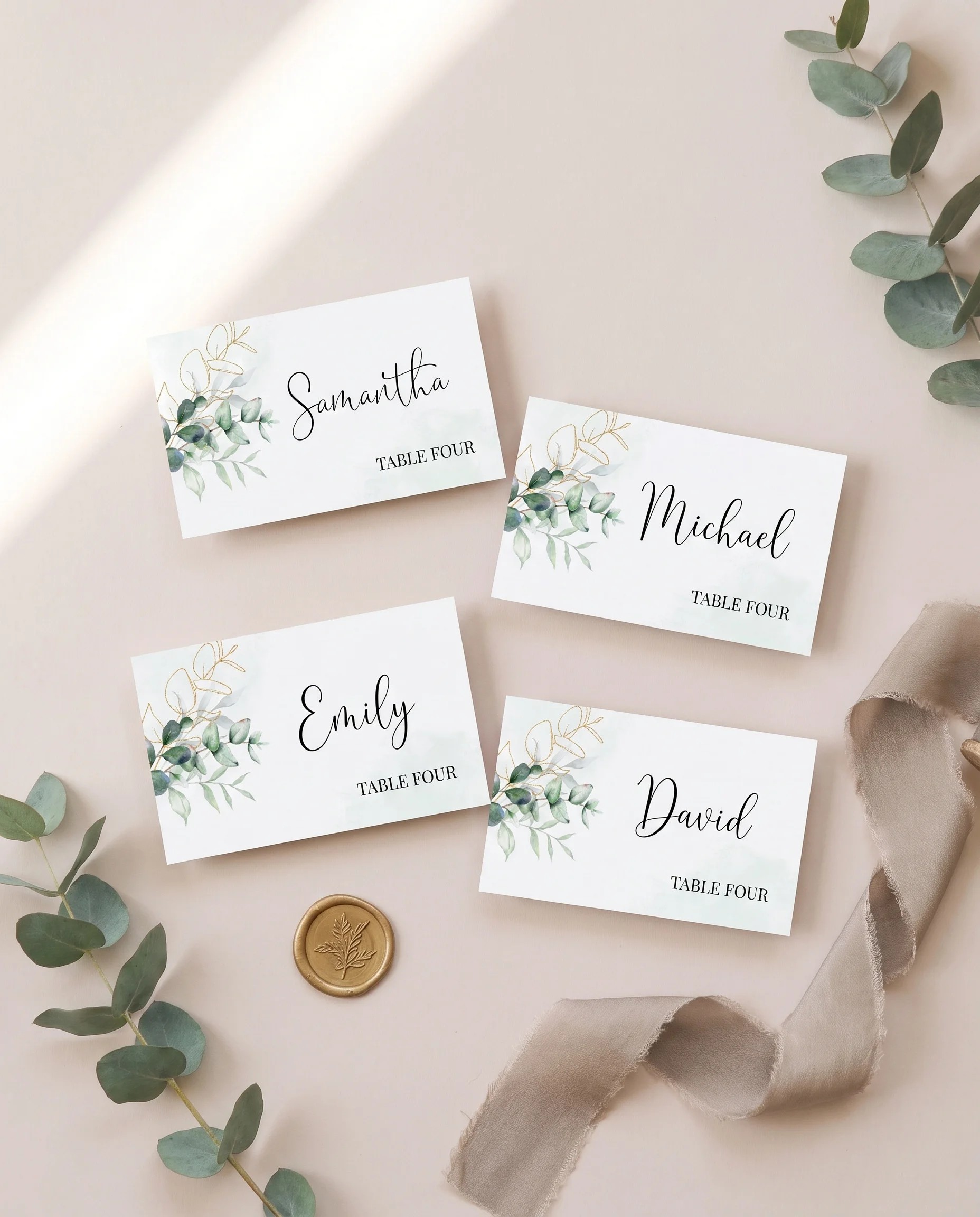
Our floral wedding place card templates feature soft watercolor florals, hand-painted botanicals, and natural greenery in romantic palettes. Choose from peony-led designs in dusty rose and ivory, rose and eucalyptus garden place cards, single-stem botanical accents in sage and white, watercolor wedding place cards with loose hand-painted blooms, or modern botanical place cards with refined typography. Whether you are looking for greenery wedding place cards in sage and cream, romantic wedding place cards with floral corner accents, or garden wedding place cards with simple botanical stems, every template is fully editable in our free browser-based editor and downloads as print-ready PDF, JPEG, and PNG files. Print at home in tent fold or flat formats.
Why Single-Stem Accents Work Best on Floral Place Cards
Floral place cards have a unique design challenge that minimalist place cards do not have: the guest's name has to remain clearly readable against the floral background. Full floral borders or large peony backgrounds compete with the typography for visual attention, making it harder for guests to find their name at a glance. Single-stem botanical accents (one peony in a corner, an eucalyptus sprig along the bottom edge, a small floral spray to one side of the name) work much better - the floral aesthetic comes through, but the name remains the visual focus. This is the same principle that applies to floral RSVP cards, where the response checkboxes need to remain clearly readable. For floral wedding stationery, less floral on small functional pieces (place cards, RSVP cards) is more readable than full coverage.
What Makes a Wedding Place Card Floral
The floral aesthetic for wedding place cards follows the same conventions as floral wedding stationery, scaled to the smaller place card format:
Watercolor or hand-painted technique. Most floral place cards are illustrated in watercolor.
Specific flower motifs. Peonies, roses, eucalyptus, wildflowers, and seasonal greenery as accents.
Romantic, soft color palettes. Dusty rose, sage green, blush pink, ivory, and muted gold.
Single-stem accents preferred. Place cards have less space than invitations, so single-stem florals work better than full borders.
Functional clarity. The guest's name must remain the primary visual focus.
Coordinating Place Cards With Floral Day-Of Stationery
Place cards work as part of the wedding day stationery suite alongside menus, table numbers, seating charts, and welcome signs. For floral couples specifically, choosing matching watercolor florals across every reception piece creates a unified day-of design language. Use the same flower types (the same peonies on every piece), the same palette, and the same typography family. The result is a reception that looks coordinated rather than like a collection of separately-purchased stationery. Many couples buy invitation suites + day-of stationery suites together specifically to ensure this cohesion across the entire wedding journey.
Pairs With
Browse all wedding place cards by aesthetic. For matching floral day-of wedding stationery, see our floral wedding menus, floral wedding table numbers, and floral wedding seating charts.
Frequently Asked Questions
When should I order and print my floral wedding place cards?
Place cards are typically the LAST piece of wedding stationery couples produce because they require the final seating chart, which depends on the final RSVP responses. Most couples finalize the seating chart 1 to 2 weeks before the wedding, then print place cards in the remaining days. With our free editor, you can update names, fix typos, and re-print as needed without re-ordering, which is particularly valuable for floral place cards because last-minute RSVP changes are common - and reprinting an entire watercolor batch from a print shop can be expensive. Plan to print place cards 5 to 7 days before the wedding to allow time for any last-minute corrections.
What flowers and colors work best for floral wedding place cards?
The most popular flowers for floral place cards are peonies (lush, romantic, work well as single-stem accents), eucalyptus (modern, soft, versatile across palettes), roses (classic), and wildflowers (relaxed, suited to spring and summer weddings). The dominant palette is soft and romantic: dusty rose, sage green, blush pink, ivory, and muted gold. Match the flowers and palette to the wedding invitation and the bride's wedding bouquet for maximum coordination across the wedding stationery suite. For place cards specifically, single-stem accents preserve name readability better than full florals.
What is the difference between a place card and an escort card?
An escort card is displayed at the reception entrance and tells each guest which TABLE they are at - guests pick up the escort card on arrival and walk to the assigned table. A place card is placed at the specific SEAT and assigns each guest to a particular chair. Most modern weddings use escort cards only (assigned tables, open seating within the table) and skip place cards entirely. Formal classic weddings, multi-course seated dinners, and head tables typically use both. For floral weddings specifically, both escort cards and place cards typically use matching watercolor florals and palette for visual coordination at the reception entrance and table settings.
Should my floral place cards match my wedding invitation?
Yes - matching is essential for visual cohesion across the full wedding stationery suite. If your wedding invitations featured watercolor peonies and dusty rose, your place cards should use the same peonies and the same dusty rose. The typography family should match, the flower types should match, and the palette should match. The result is a unified design language from invitation through reception that signals an intentional, well-designed wedding. Many couples buy matching invitation suites + day-of stationery suites together specifically to ensure this cohesion - the place cards complete the visual story that began with the save the date.