
Classic Wedding Seating Charts
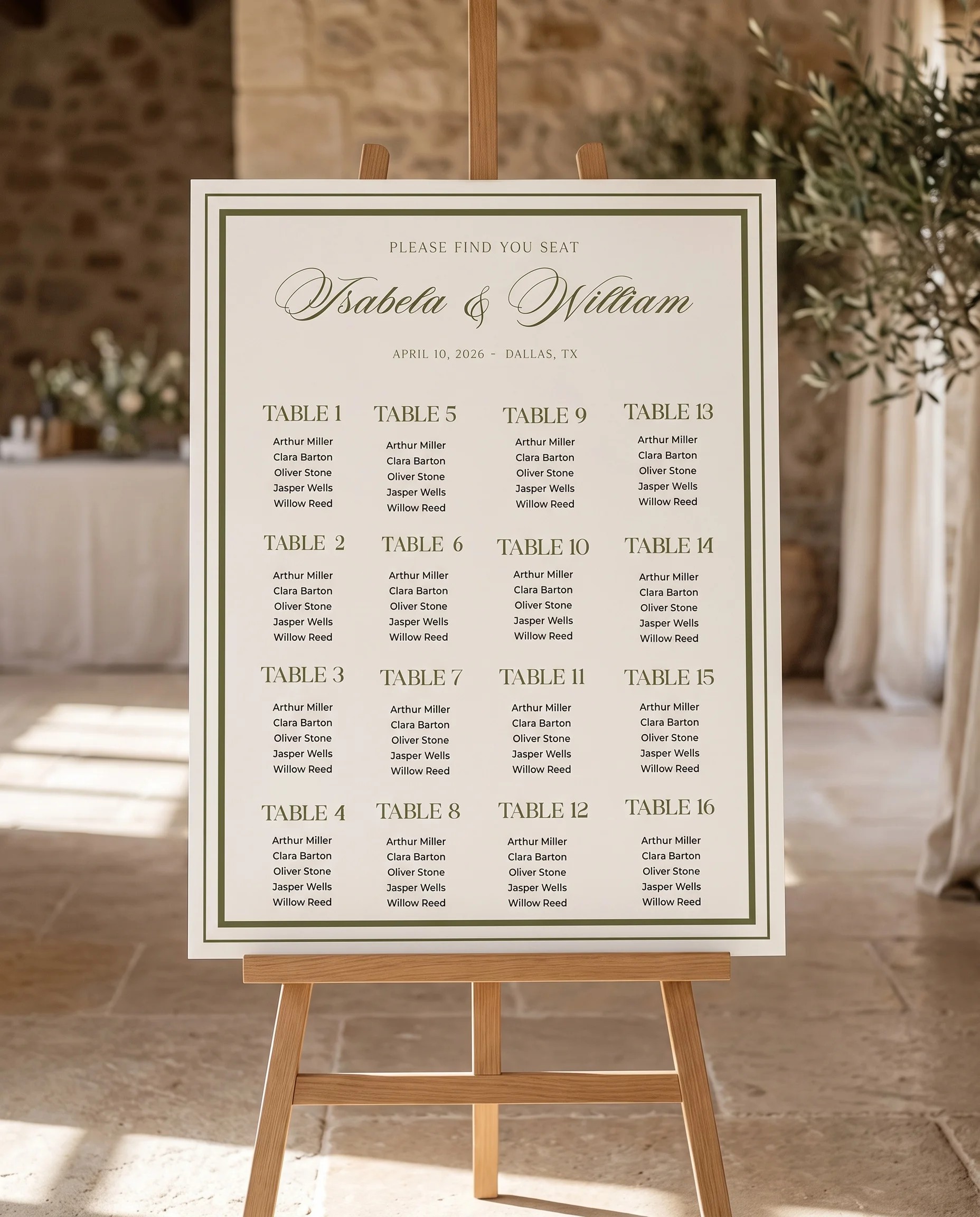
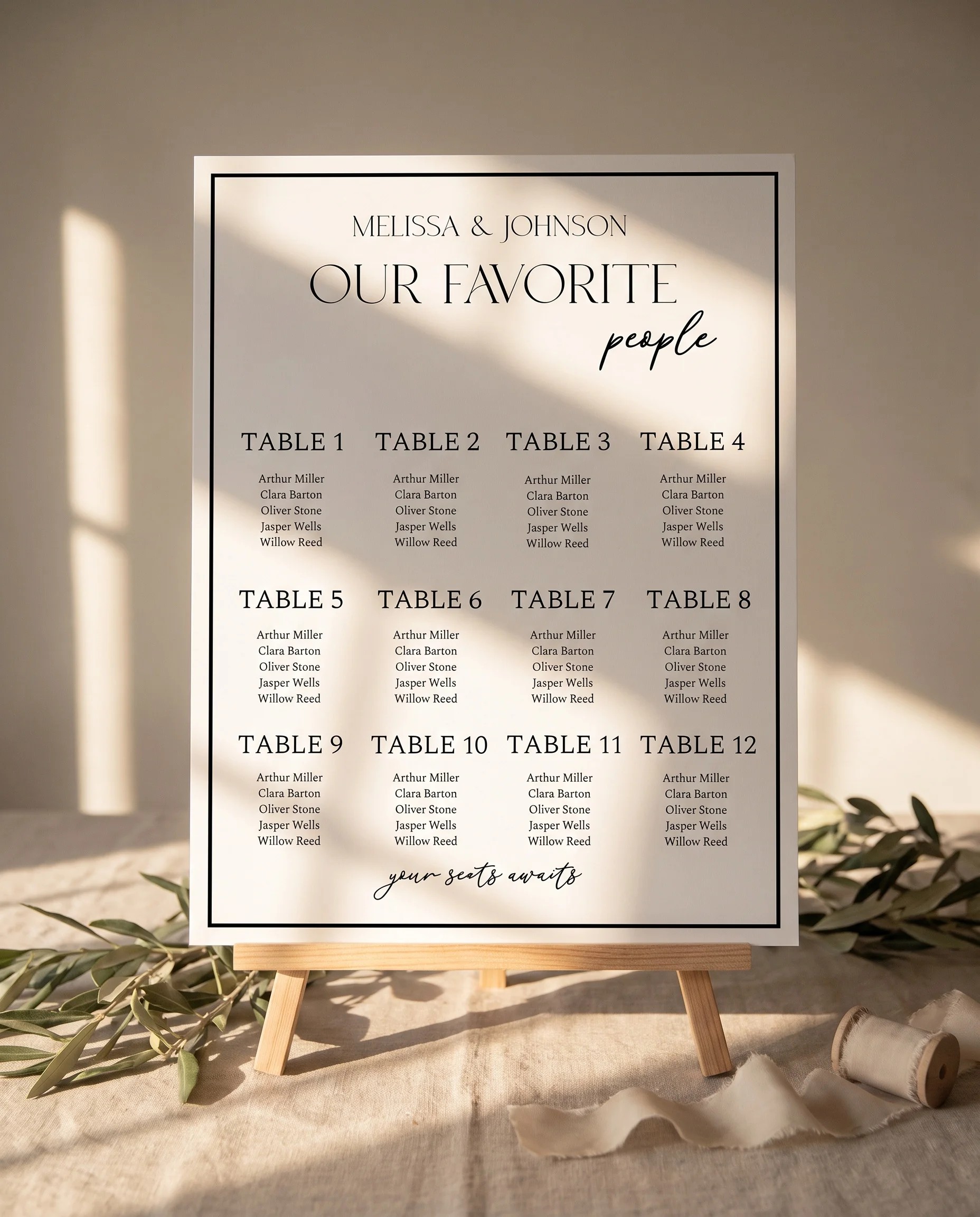
Formal serif typography, calligraphy scripts, monograms, and timeless palettes define our classic wedding seating chart templates. Choose from elegant wedding seating charts with classical type and ivory cardstock, formal wedding seating charts with navy and gold accents, traditional wedding seating charts in black and white, sophisticated charts in deep burgundy or evergreen, or monogram wedding seating charts with the bride's wedding initials at the top. Designed to coordinate with classic menus, place cards, and welcome signs as a unified day-of stationery suite, every template is fully editable in our free browser-based editor and downloads as print-ready PDF, JPEG, and PNG files. Print at large format (16x20, 18x24, or 24x36) on cardstock, foam board, acrylic, or vintage mirror.



About Our Classic Wedding Seating Charts
Our classic wedding seating chart templates are built around formal serif typography, calligraphy scripts, monograms, and timeless color palettes. Choose from elegant wedding seating charts with classical type and ivory cardstock, formal wedding seating charts with navy and gold accents, traditional wedding seating charts in black and white, sophisticated charts with deep burgundy or evergreen palettes, or monogram wedding seating charts with the bride's wedding initials at the top. Whether you are looking for navy wedding seating charts, gold wedding seating charts, ivory wedding seating charts, or modern classic seating charts with refined contemporary type, every template is fully editable in our free browser-based editor and downloads as print-ready PDF, JPEG, and PNG files. Print at large format (16x20, 18x24, or 24x36) on cardstock, foam board, acrylic, or have the chart hand-lettered on a vintage mirror by a calligrapher.
The Calligraphy Convention on Classic Seating Charts
The seating chart is the most visible piece of calligraphy at a classic wedding because every guest interacts with it on arrival. Many classic couples hire a professional calligrapher to hand-letter the chart - either entirely (full hand-lettering on a vintage mirror or large white cardstock) or partially (the digital template provides borders, monogram, and table headers, while the calligrapher hand-letters each guest name). Professional calligraphy on a seating chart typically costs $200 to $500 depending on guest count and calligrapher experience - more than the $2 to $5 per place card because the seating chart is a single substantial commission rather than dozens of small ones. For couples who want the calligraphy aesthetic without the cost, our calligraphy-style fonts approximate hand-lettering on the printed template - the result is more uniform than true hand-lettering but visually consistent with the formal classic aesthetic. The calligraphy choice is one of the few classic conventions where the cost difference between professional and templated approaches is significant; many couples splurge on calligraphy specifically for the seating chart because of its visibility and prefer to economize on smaller pieces.
What Makes a Wedding Seating Chart Classic
The classic aesthetic for wedding seating charts follows the same conventions as classic wedding stationery, scaled to the large-format chart:
Formal serif typography or calligraphy. Traditional serif fonts (Garamond, Didot, Bodoni, Caslon) for printed charts, hand-lettered calligraphy or calligraphy-style fonts for table headers and guest names.
Centered, symmetrical layouts. Tables listed with deliberate symmetry, often with the monogram at the top center as a focal mark.
Restrained classic palette. Black on white or ivory is most traditional. Navy and gold, charcoal and cream, or deep burgundy and ivory work for fall and winter weddings.
Optional custom monogram. The bride's wedding monogram appears at the top center, ideally matching the monogram from the wedding invitation.
Substrate options: cardstock, foam board, vintage mirror (especially traditional for classic), or acrylic with serif typography.
Pairs With
Browse all wedding seating charts by aesthetic. For matching classic day-of wedding stationery, see our classic wedding place cards, classic wedding menus, and classic wedding programs.
Frequently Asked Questions
When should I order and print my classic wedding seating chart?
Print your classic wedding seating chart 1 to 2 weeks before the wedding. The chart depends on final RSVP responses, which lock in 3 to 4 weeks before the wedding. For classic formal weddings specifically, plan for slightly longer lead time than other styles - if you are hiring a professional calligrapher to hand-letter the chart, the calligrapher needs the final guest list 2 to 3 weeks before the wedding, plus 7 to 14 days for the lettering work itself. Vintage mirror seating charts need additional time for sourcing the mirror and any frame finishing. With our free editor, you can update last-minute changes to the digital template without re-ordering. Lock the chart at least 2 weeks before the wedding if you are using calligraphy or specialty substrates.
Should I hire a calligrapher for my classic wedding seating chart?
Calligraphy on the seating chart is one of the most traditional classic wedding conventions, and many couples splurge on it specifically for this piece because of its visibility - every guest interacts with the chart on arrival. Professional calligraphers typically charge $200 to $500 for a full seating chart depending on guest count and calligrapher experience. Some couples hire calligraphy for the seating chart only and use the printed template approach for smaller pieces (place cards, menus). Other couples economize across the board with calligraphy-style fonts on the digital template - more uniform than true hand-lettering but visually consistent with the classic aesthetic. Both approaches work; the calligraphy choice signals investment in the most visible piece while the printed approach delivers the same aesthetic at lower cost.
What size and substrate work best for a classic wedding seating chart?
Choose 16x20 inches for weddings up to 80 guests, 18x24 inches for 80 to 130 guests, and 24x36 inches for over 130 guests. Substrate options for classic weddings: cardstock (most common, paired with formal calligraphy or serif typography), foam board (most affordable for displaying on an easel), vintage mirror (especially traditional for classic - text printed or hand-lettered directly on the mirror surface in white or gold), and clear acrylic with serif typography (modern classic). Vintage mirror seating charts have a particularly classic aesthetic - they read as substantial and intentional, fitting multi-generational classic weddings where parents and grandparents appreciate the formal traditional feeling. The mirror also reflects the reception lighting and adds visual depth at the entrance display.
Should my classic wedding seating chart match my wedding invitation?
Yes - classic weddings benefit MOST from coordinated stationery suites, more so than other styles. Multi-generational classic weddings include grandmothers, mothers, future mothers-in-law, and traditional guests who notice and appreciate stationery cohesion. If your wedding invitation features formal serif typography, a custom monogram, and a navy and gold palette, your seating chart should use the same monogram, the same typography family, and the same palette. The seating chart is one of the most visible pieces at the reception - every guest interacts with it on arrival - so cohesion with the rest of the suite is especially important. For formal classic weddings, this stationery coordination is part of the overall wedding presentation that traditional guests recognize as well-designed and intentional.