
Minimalist Wedding Programs
Clean typography, restrained palettes, and clear hierarchy define our minimalist wedding program templates. Choose from simple wedding programs in folded bi-fold or tri-fold formats, modern wedding programs with single-page layouts, contemporary chic programs in black and white palettes, or modern minimalist programs designed for outdoor summer ceremonies as a fan format. Designed to coordinate with minimalist menus, place cards, and seating charts as a unified day-of stationery suite, every template is fully editable in our free browser-based editor and downloads as print-ready PDF, JPEG, and PNG files. Print at home and hand to guests as they arrive at the ceremony.

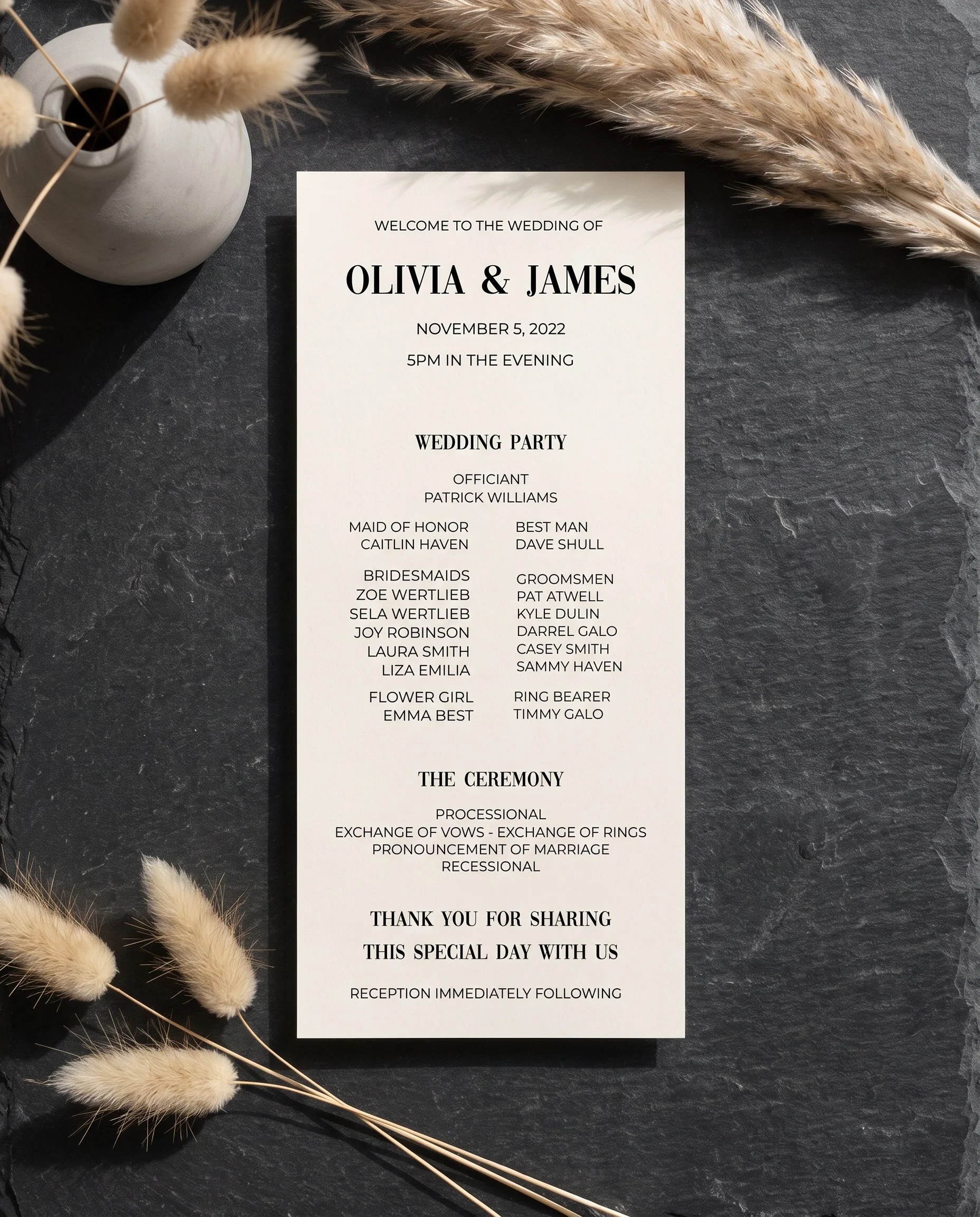
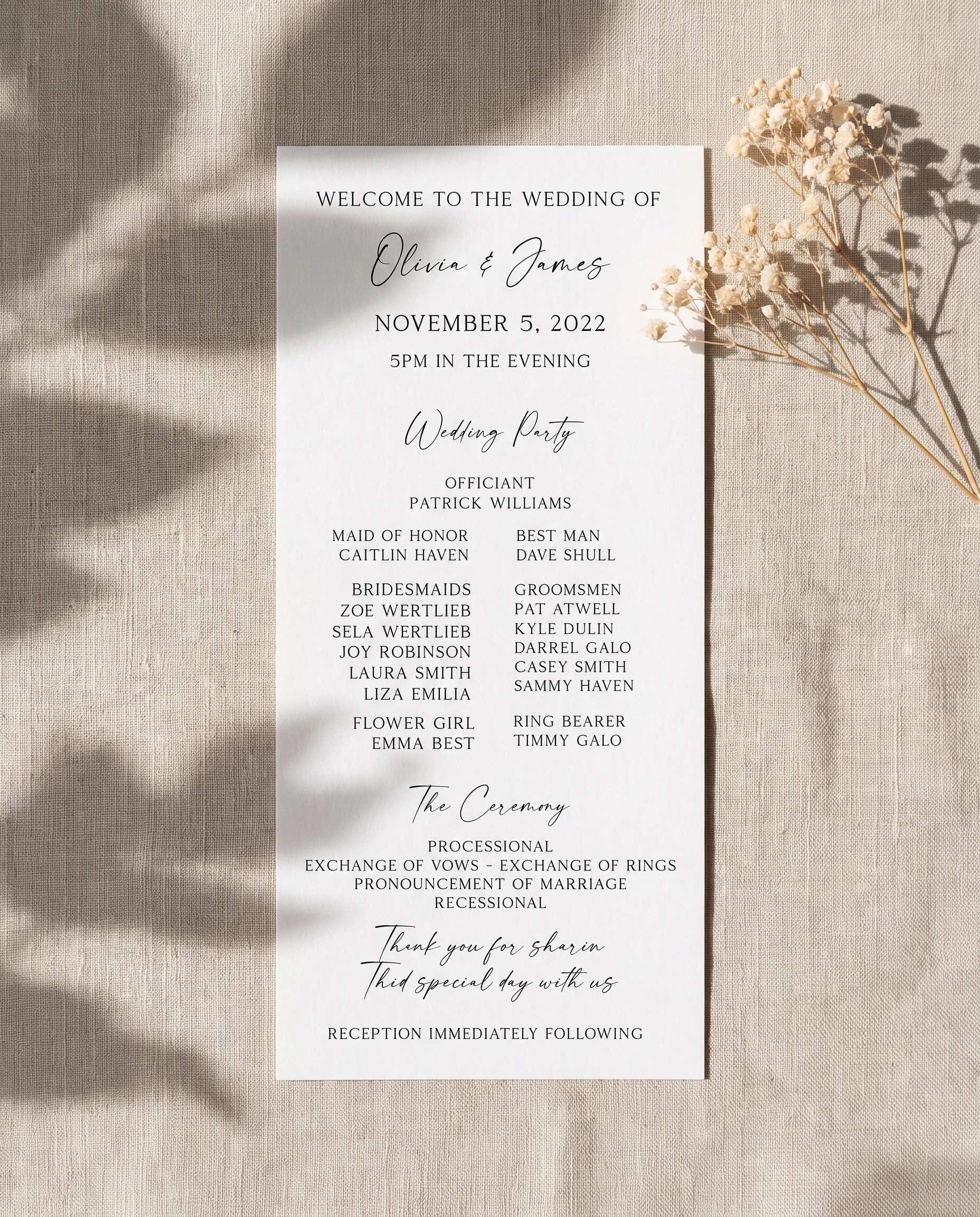
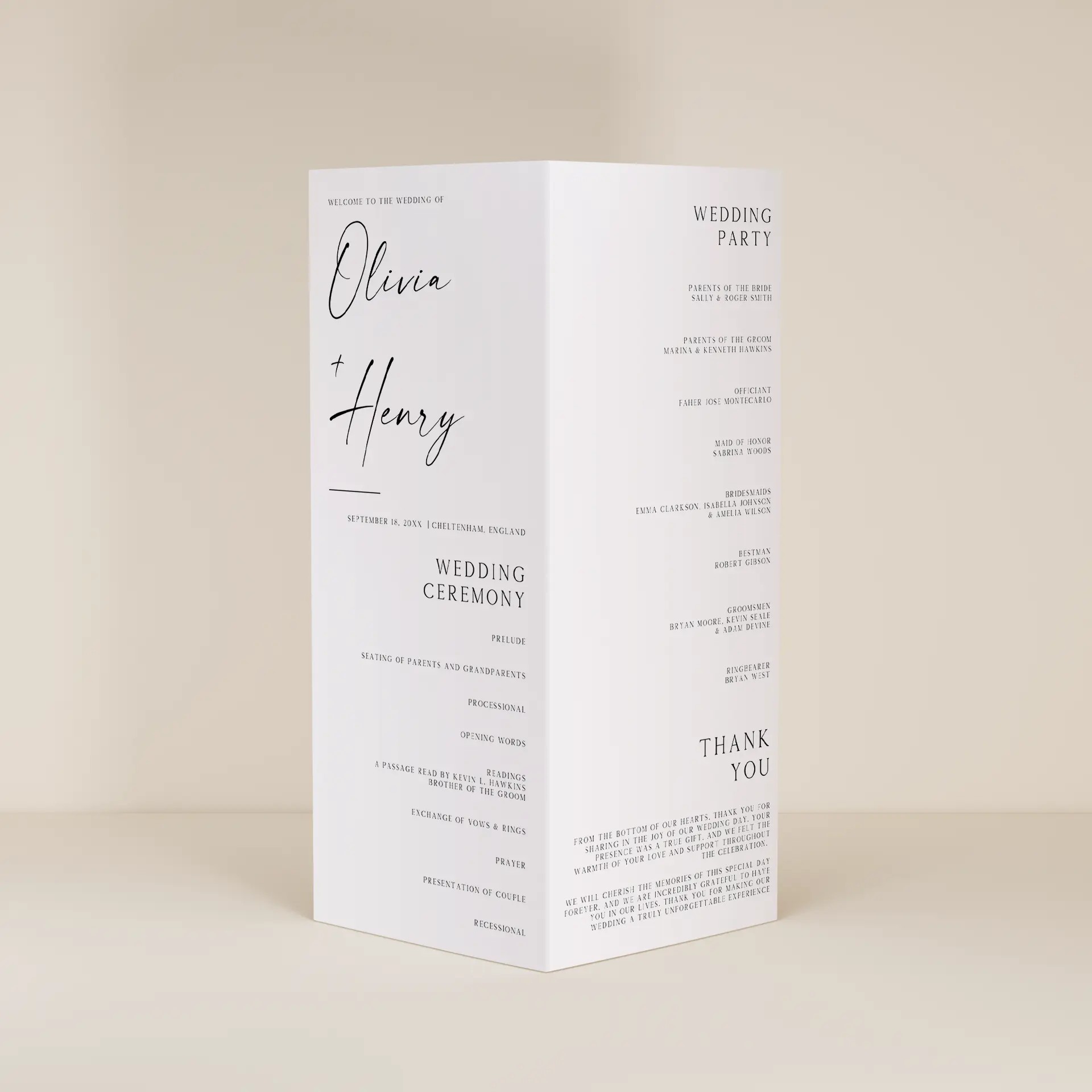
About Our Minimalist Wedding Programs
Our minimalist wedding program templates are built around clean typography, restrained palettes, and clear visual hierarchy. Choose from simple wedding programs in folded bi-fold or tri-fold formats, modern wedding programs with single-page layouts, contemporary chic programs in black and white palettes, or modern minimalist programs in fan format for outdoor summer ceremonies. Whether you are looking for clean wedding programs that organize the order of ceremony at a glance, simple wedding ceremony programs in elegant typography, or modern minimalist programs that coordinate with minimalist menus and place cards, every template is fully editable in our free browser-based editor and downloads as print-ready PDF, JPEG, and PNG files. Print at home in standard letter or fold-to-fit dimensions and hand to guests as they arrive at the ceremony.
Why Minimalism Works for Wedding Programs
A wedding program serves a functional purpose: it tells guests what is happening, when, who is involved, and what to expect. The content is dense - order of ceremony, wedding party names, readings, music selections, officiant, often a thank-you note or memorial dedication. The minimalist aesthetic is well-suited to this functional density because clear visual hierarchy is exactly what makes dense content scannable. Restrained typography (a single serif for body text, a slightly larger weight for section headers, a subtle accent color or rule line between sections) creates a program that guests can actually read during the ceremony. By contrast, a heavily decorated program competes with the content - the florals, borders, and ornamentation pull attention away from the order of events. For programs specifically, the minimalist constraint produces the more useful artifact.
Common Wedding Program Formats
Wedding programs come in more formats than any other piece of wedding stationery. The format choice depends on the ceremony length, guest count, and venue:
Folded bi-fold (4 panels). The most popular format. Front cover with names and date, three interior panels for order of ceremony, wedding party, and additional content. Standard size: 5x7 inches folded from 7x10 flat.
Folded tri-fold (6 panels). For longer ceremonies with more readings, music selections, and wedding party members. More content space at the cost of a slightly more complex layout.
Single-page flat. Print only the front, or print front and back. The simplest and most modern format - works particularly well for shorter ceremonies (15 to 25 minutes) and minimalist aesthetics.
Fan programs. The program is printed on a stiff cardstock attached to a small wooden handle, doubling as a hand fan. Practical for outdoor summer ceremonies in hot weather - guests use the program to cool themselves while waiting for the ceremony to begin.
Booklet (multiple pages stitched or stapled). For long traditional ceremonies (Catholic, Orthodox, Hindu, Sikh) with multiple readings, songs, and ritual elements.
Half-page. Smaller flat format, often used for civil ceremonies or shorter receptions where the program needs to communicate the basics without taking up much space.
Pairs With
Browse all wedding programs by aesthetic. For matching minimalist day-of wedding stationery, see our minimalist wedding place cards, minimalist wedding menus, and minimalist wedding seating charts.
Frequently Asked Questions
What should I include in a wedding program?
A standard wedding program includes the couple's names and wedding date on the front, the order of ceremony (processional, welcome, readings, vows, ring exchange, pronouncement, recessional), the wedding party names with their relationship to the couple (maid of honor, best man, bridesmaids, groomsmen, parents, officiant), and any music selections or readings being performed. Optional additions include a thank-you note from the couple, a dedication or memorial for absent loved ones ("in loving memory of"), the reception venue and time for guests who don't have the invitation handy, and a brief explanation of any unfamiliar ceremony elements (unity candle, sand ceremony, handfasting). Keep the program one or two readable pages - guests should be able to read it during the ceremony without losing focus.
When should I print my wedding programs?
Print wedding programs 1 to 2 weeks before the wedding. The program content (order of ceremony, wedding party names) is typically finalized 4 to 6 weeks before the wedding when the rehearsal-dinner planning happens, so printing can wait until the last minute. With our free editor, you can update last-minute changes (a wedding party member who can no longer attend, a reading that was swapped, a music selection that changed) without re-ordering. Plan to print 5 to 10 days before the ceremony to leave time for final corrections. Print 10 to 15 percent more programs than your guest count to account for guests taking multiple, family members keeping copies as keepsakes, and any printing errors.
Folded vs flat vs fan programs - which format should I choose?
Choose folded (bi-fold) for traditional ceremonies of 25 to 45 minutes with full content (full wedding party, readings, music). It is the standard format and works for most weddings. Choose single-page flat for shorter modern ceremonies (15 to 25 minutes) where you only need the basic order of ceremony - it is the most minimalist option. Choose fan programs for outdoor summer ceremonies in hot weather (June through September in most climates) - they double as hand fans and are genuinely appreciated by guests waiting in the sun. Choose booklets for long traditional religious ceremonies (Catholic mass, Orthodox liturgy, Hindu ceremony, Sikh ceremony) where the content significantly exceeds what fits on a folded program.
Should my minimalist wedding programs match my wedding invitation?
Yes - matching is essential for visual cohesion across the full wedding stationery suite. If your wedding invitations were minimalist with black-on-white typography and sage accents, your wedding programs should use the same combination. The typography family should match (the same serif from the invitation, possibly in different weights), the accent color should match, and the layout sensibility should match. The result is a unified design language from save the date through reception. Programs are particularly visible at the ceremony - they are the first physical piece of wedding stationery many guests touch on the wedding day - so cohesion with the rest of the suite is especially important.