
Classic Wedding Bar Menus
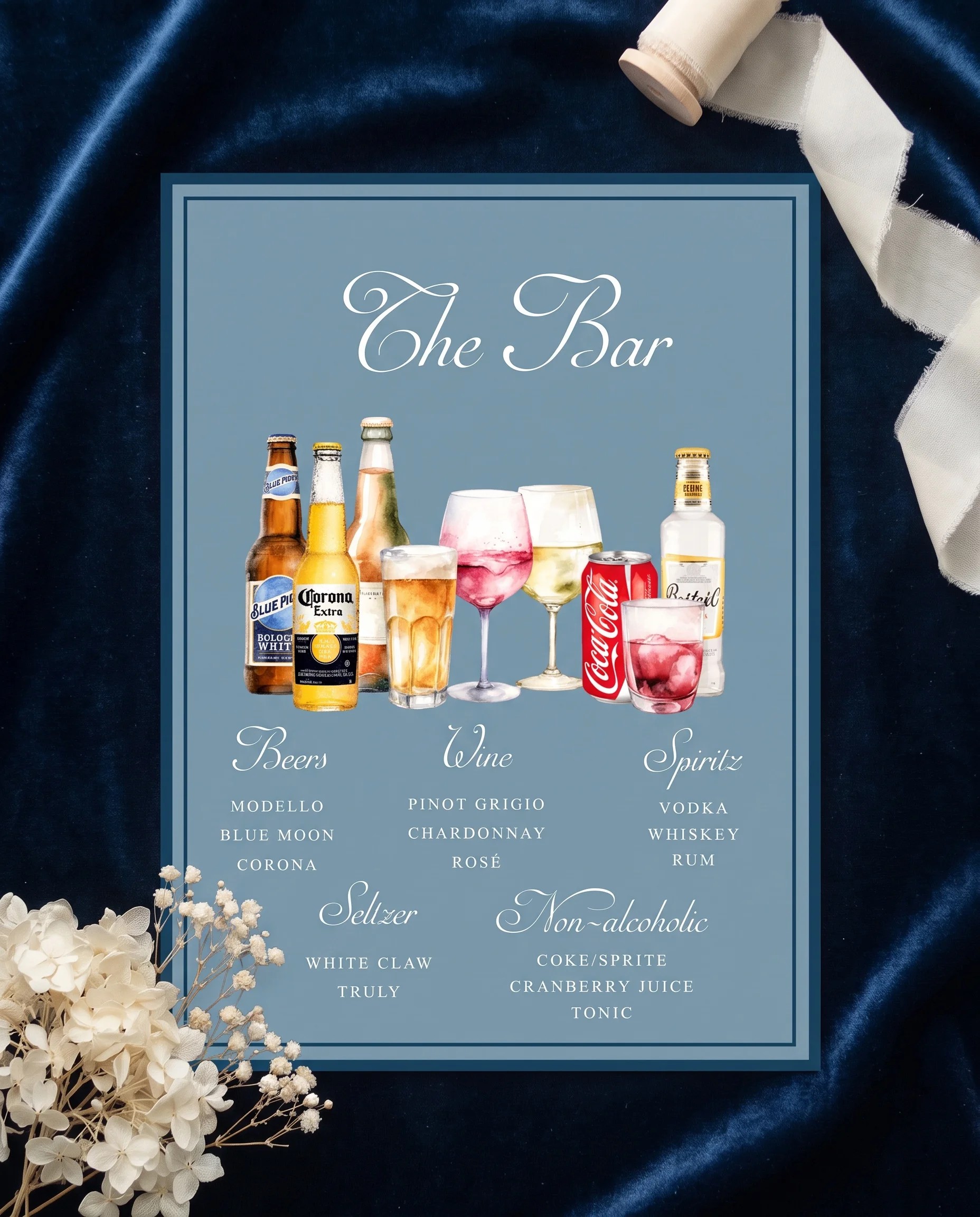
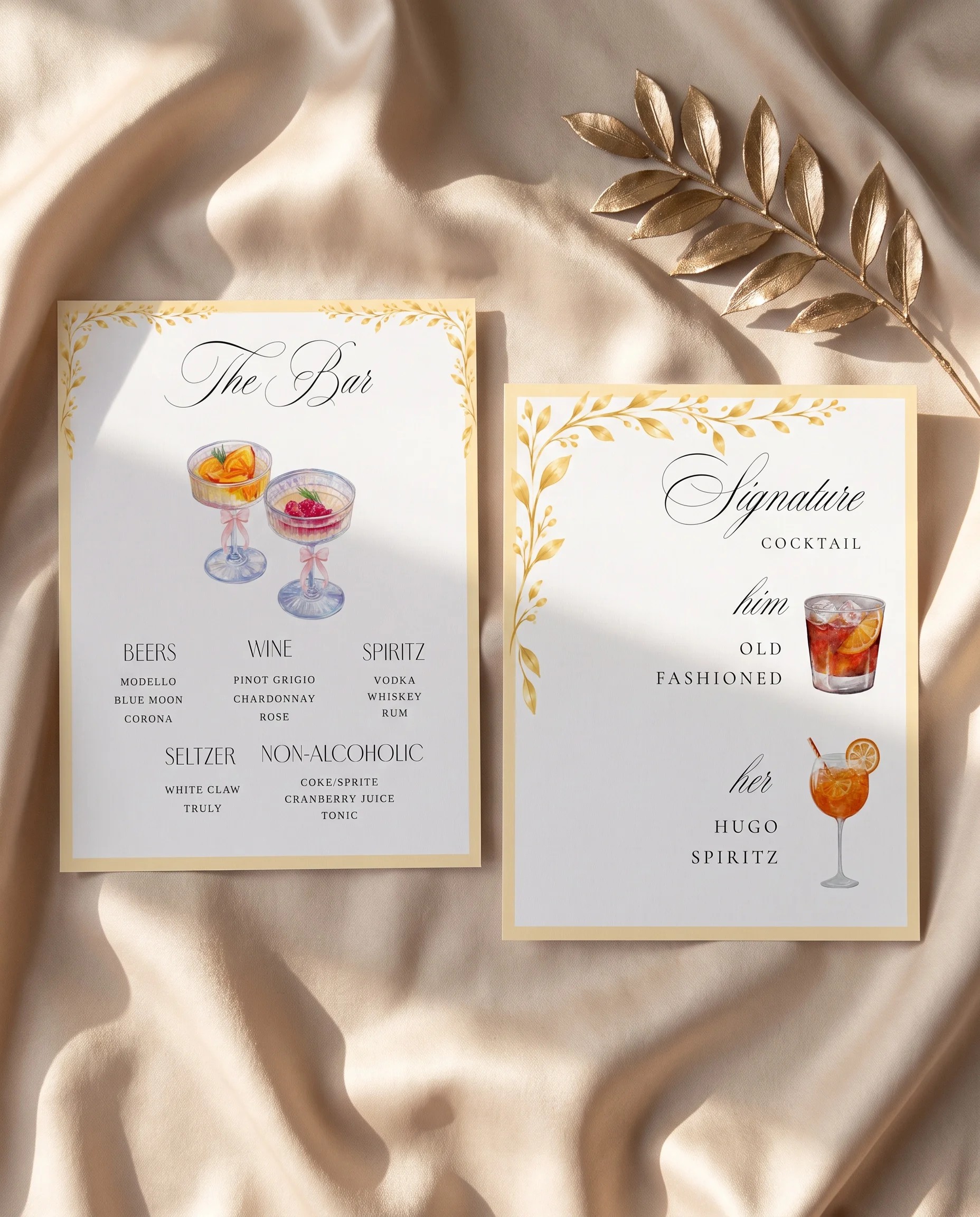
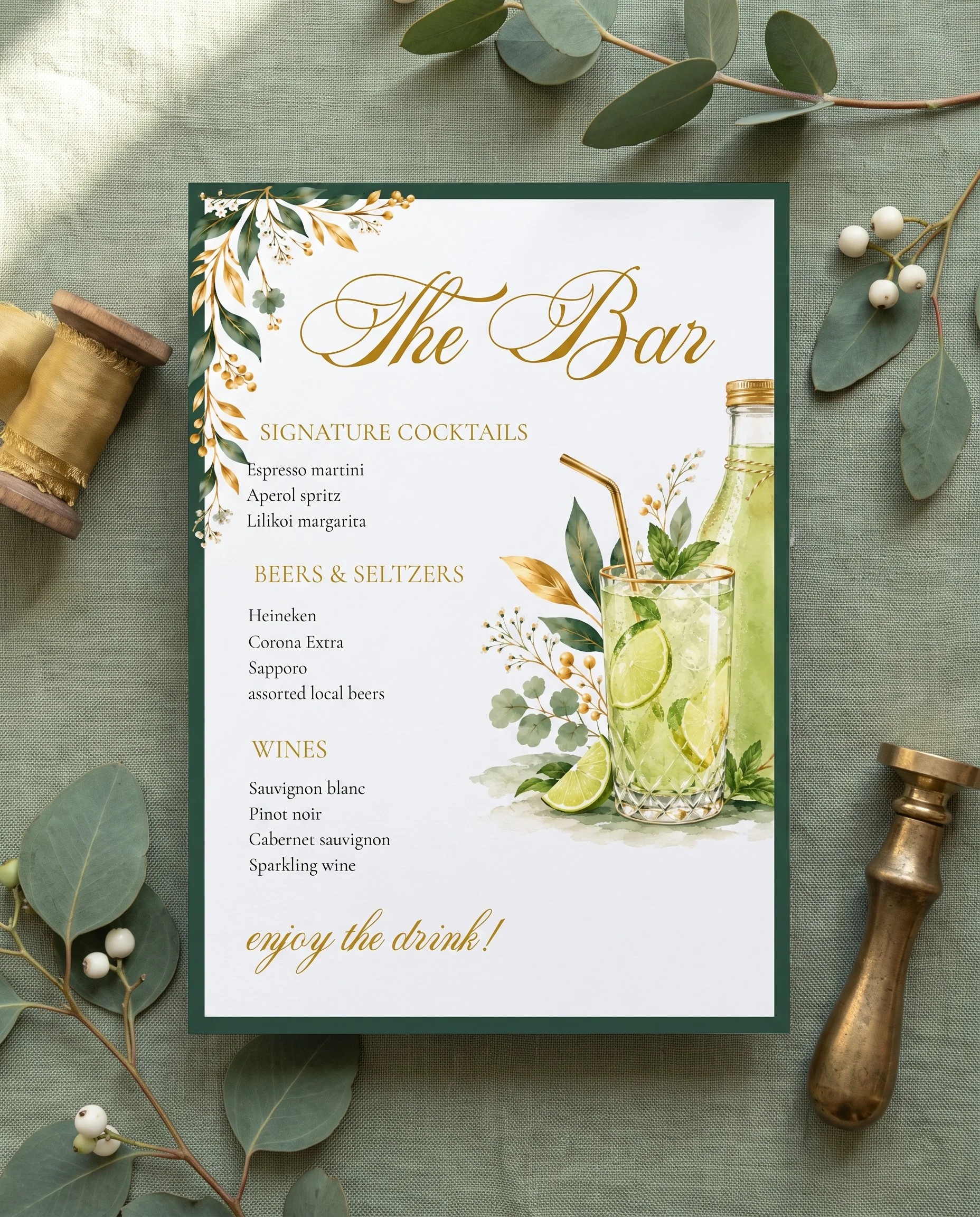
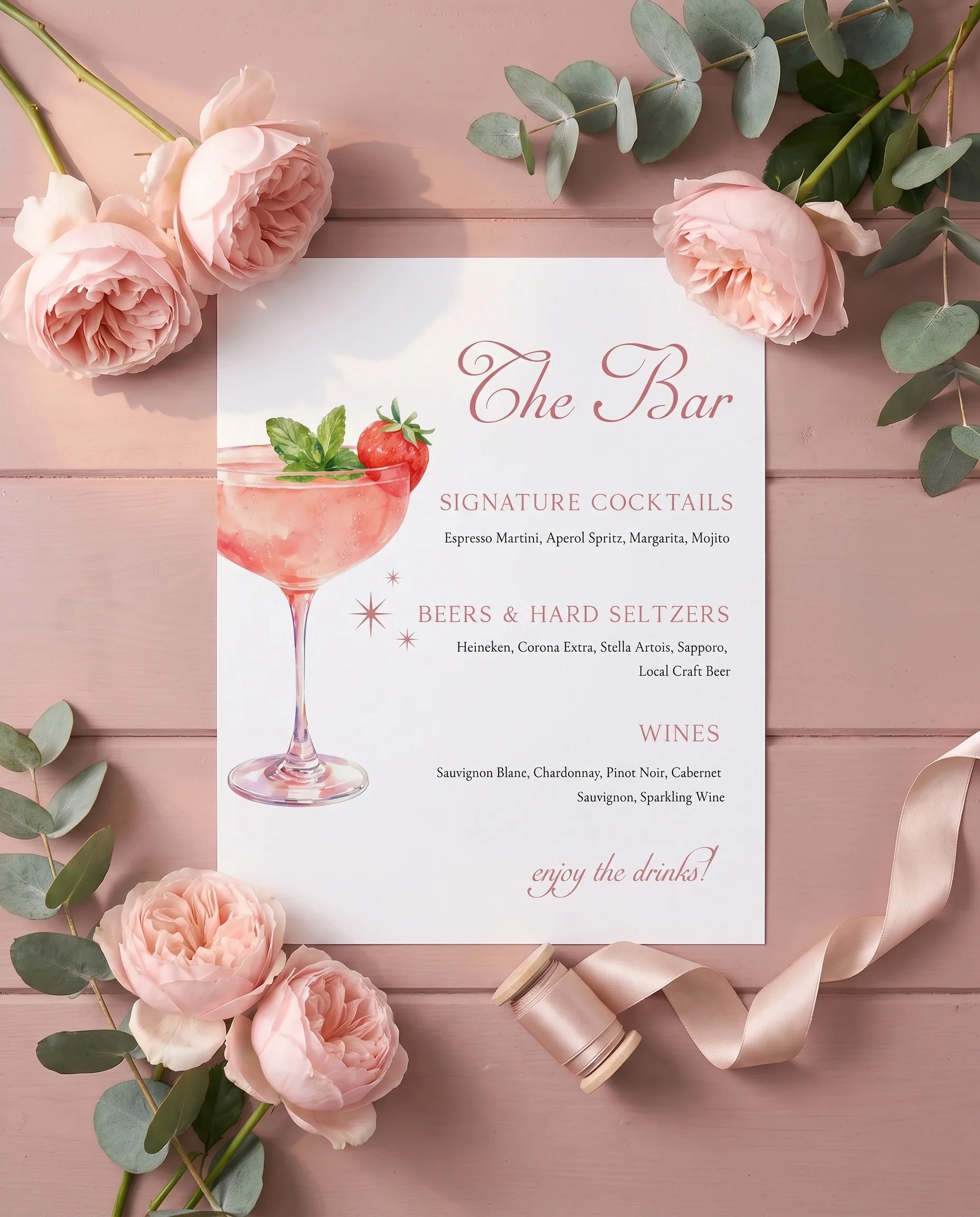
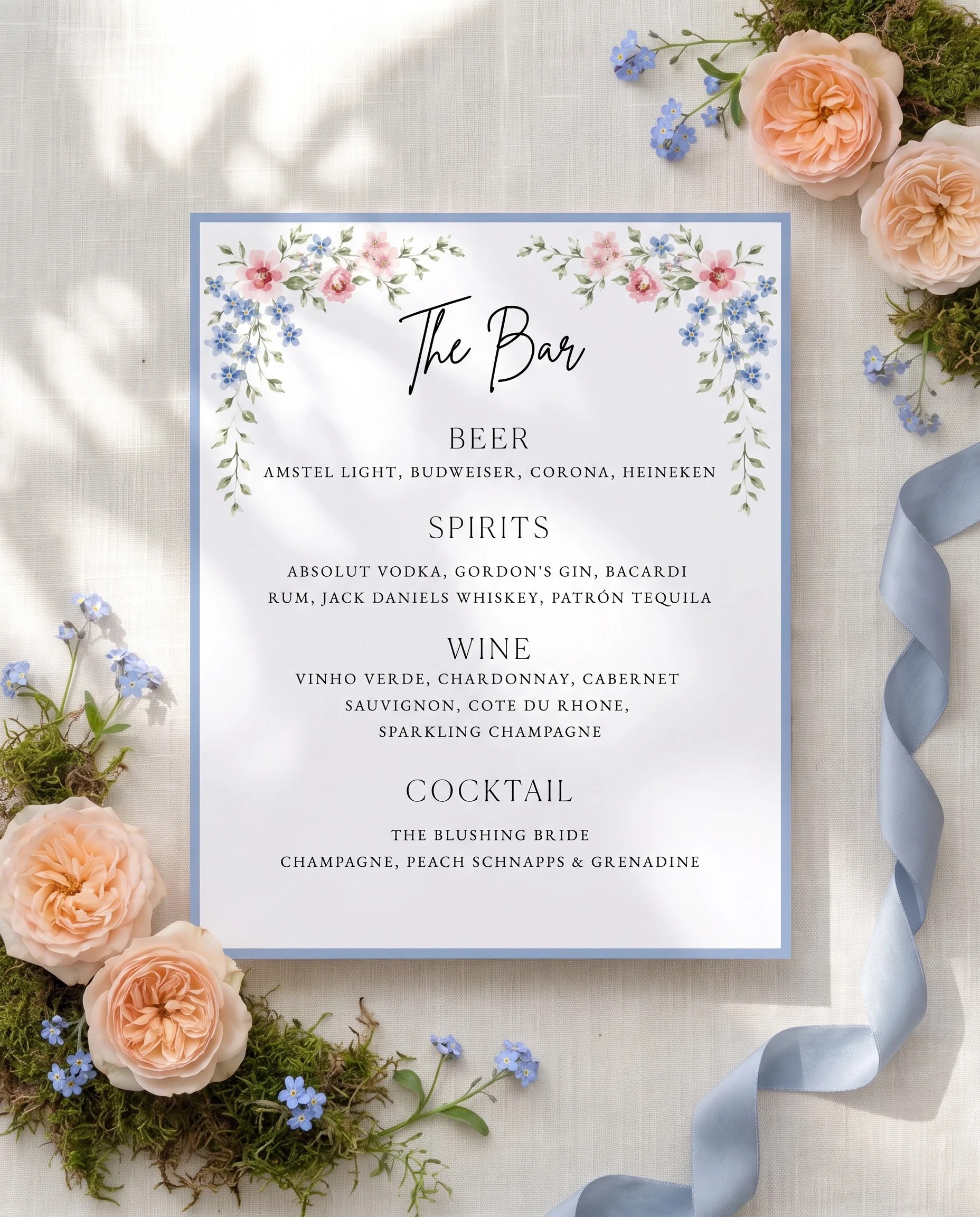
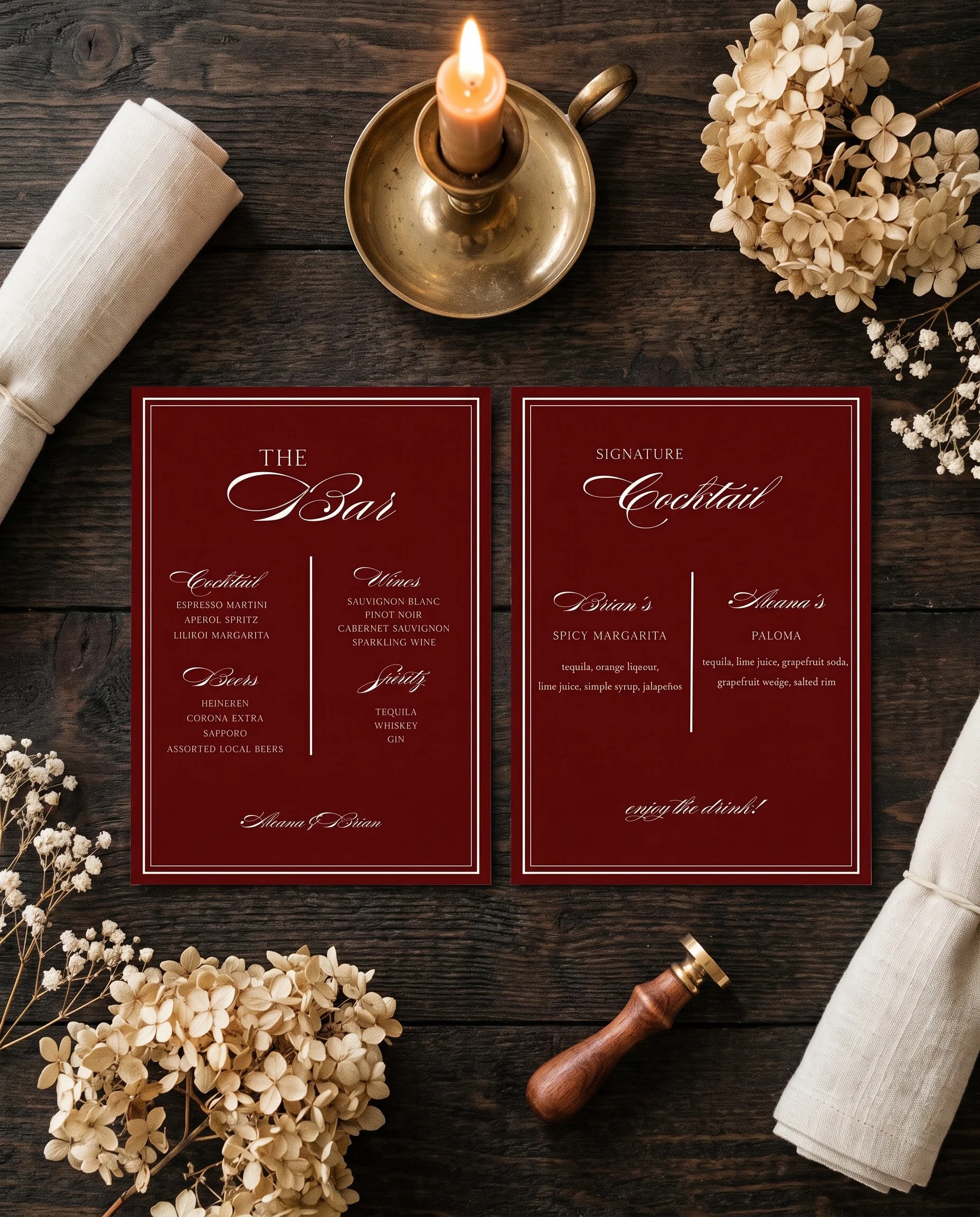
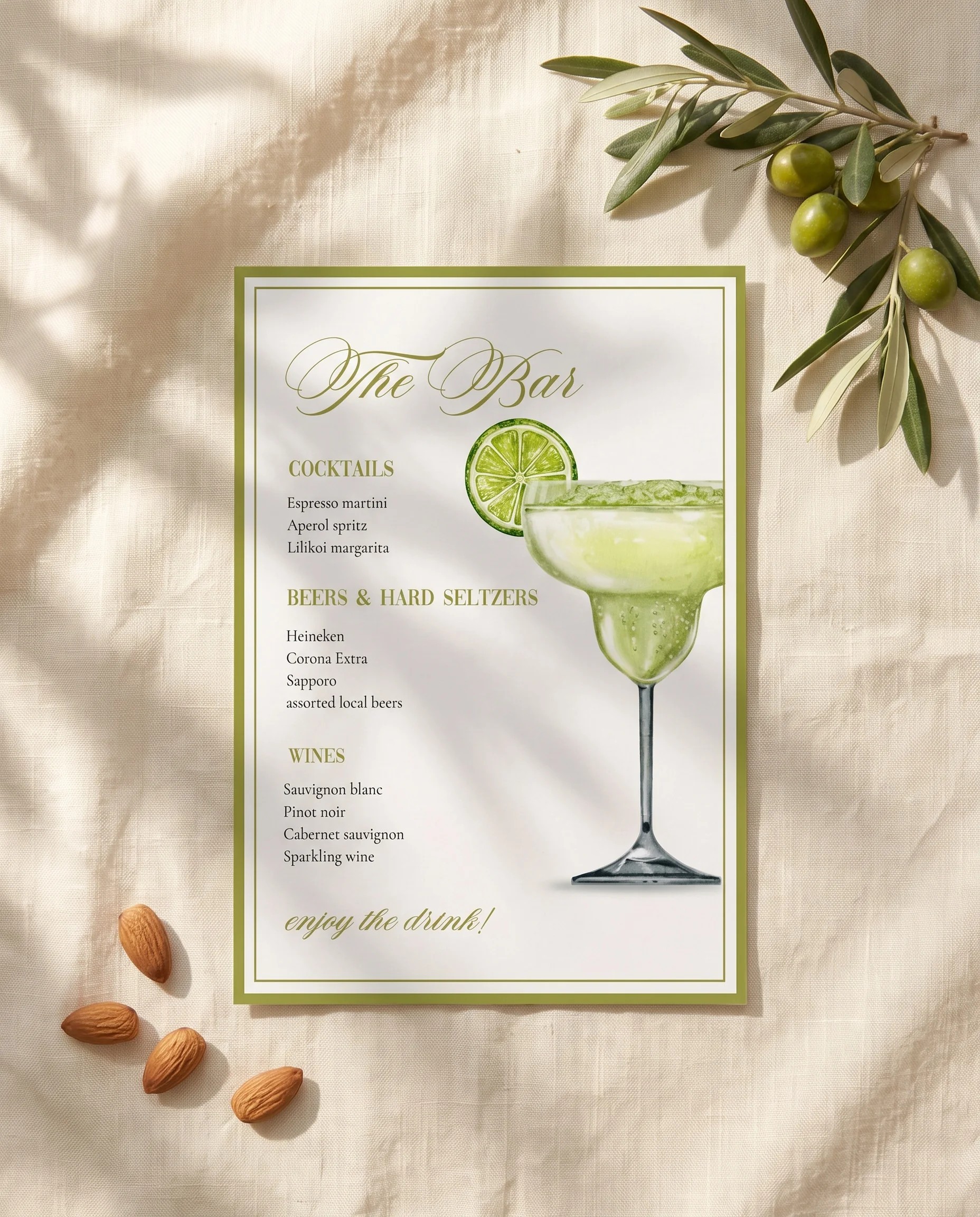
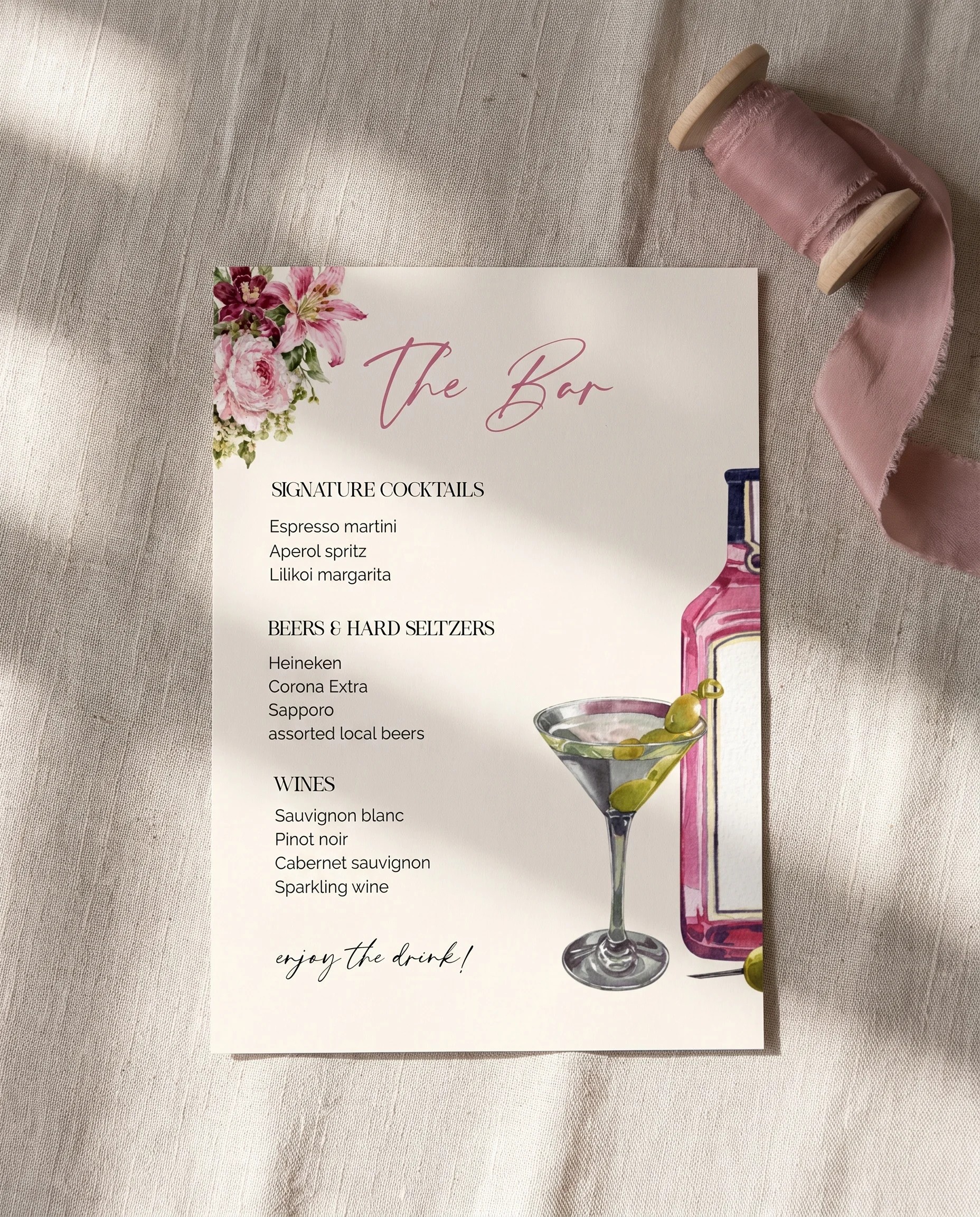
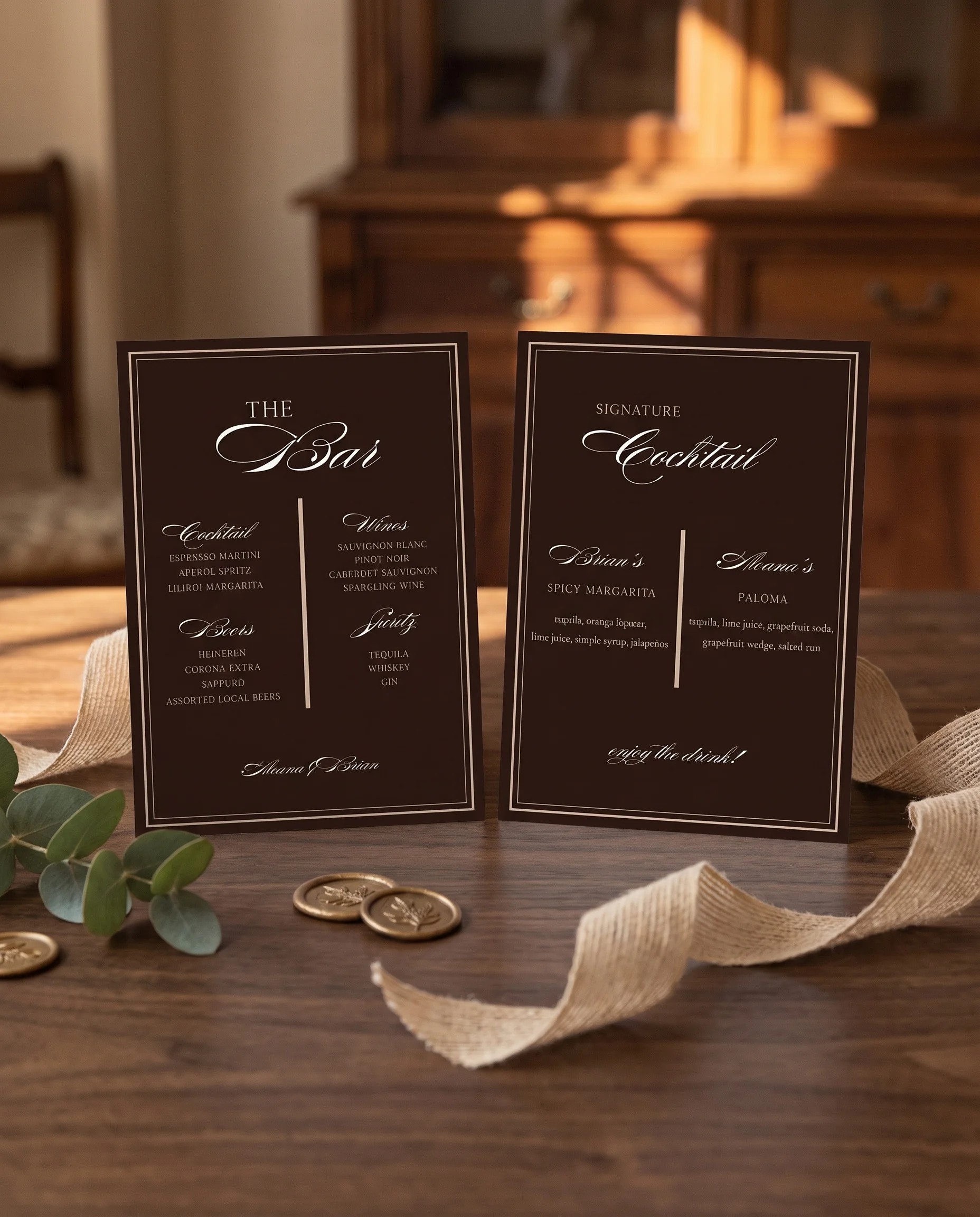
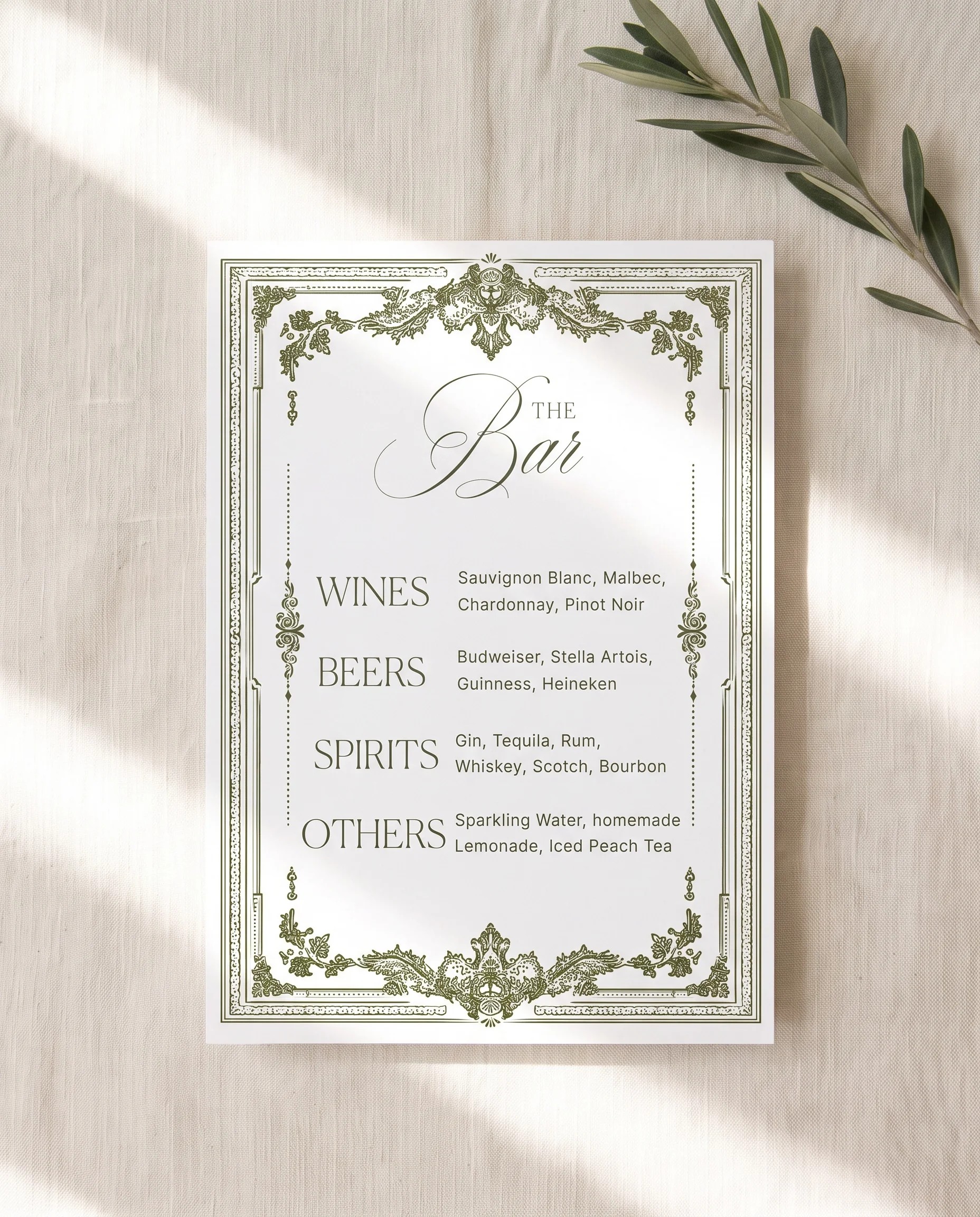
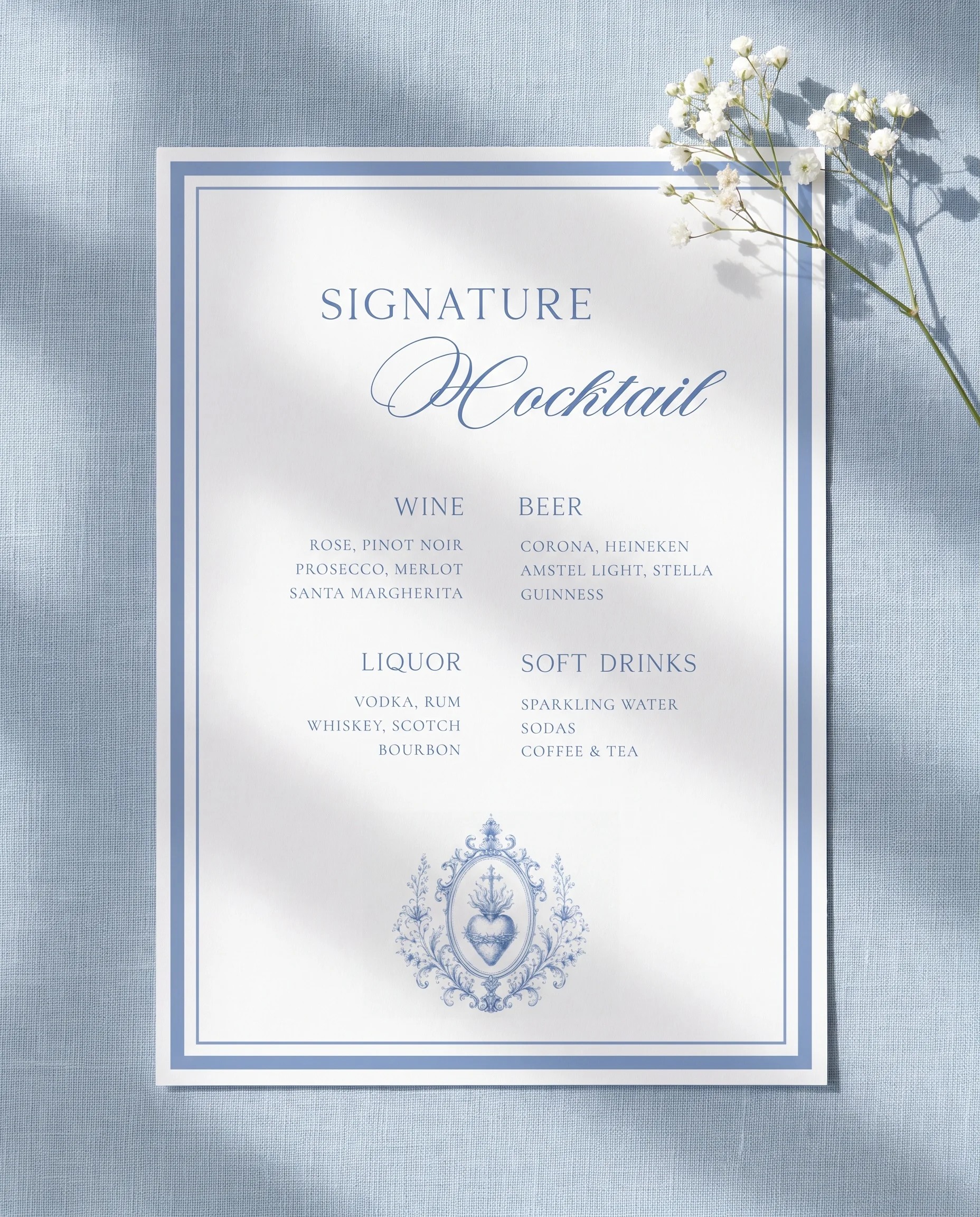
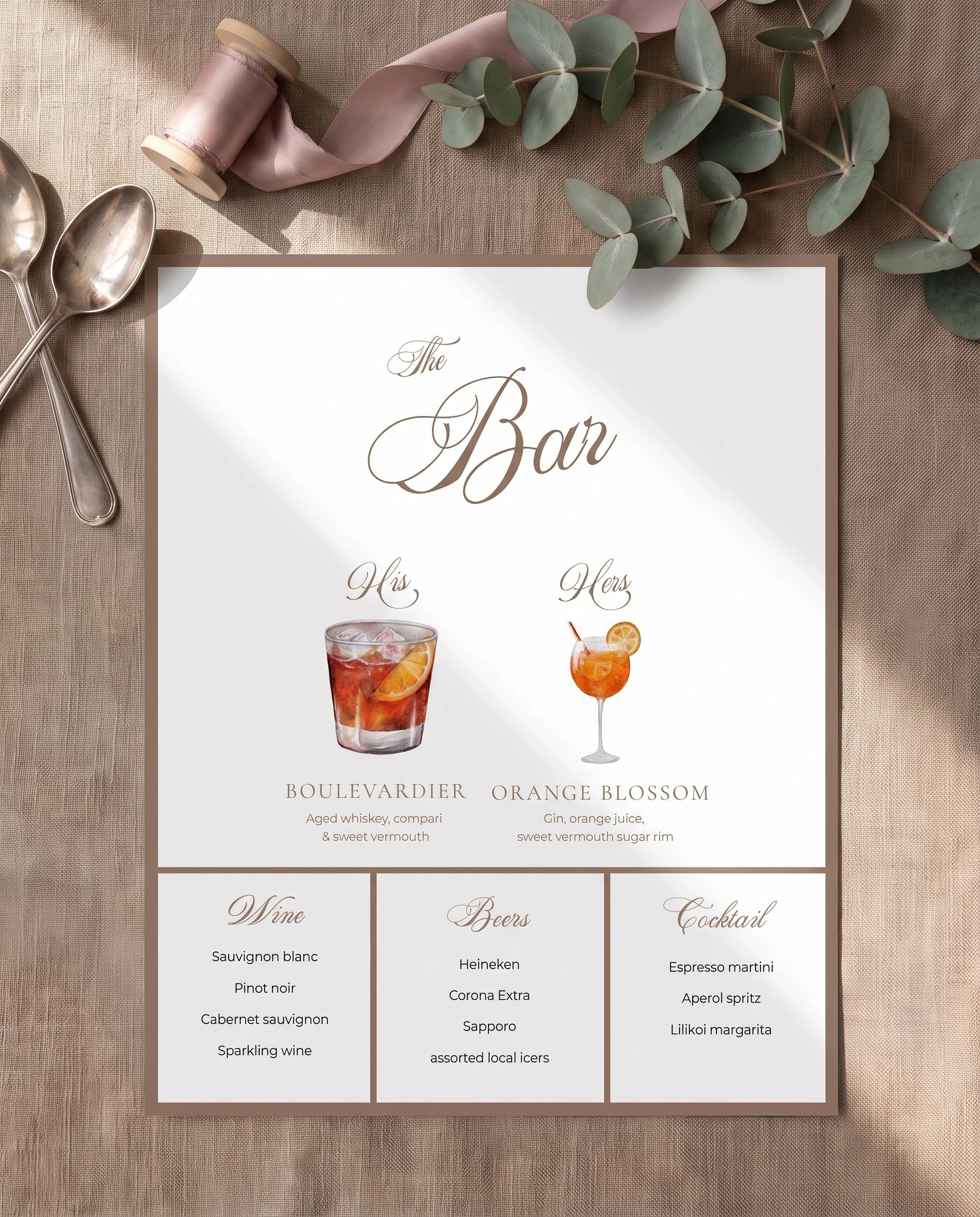
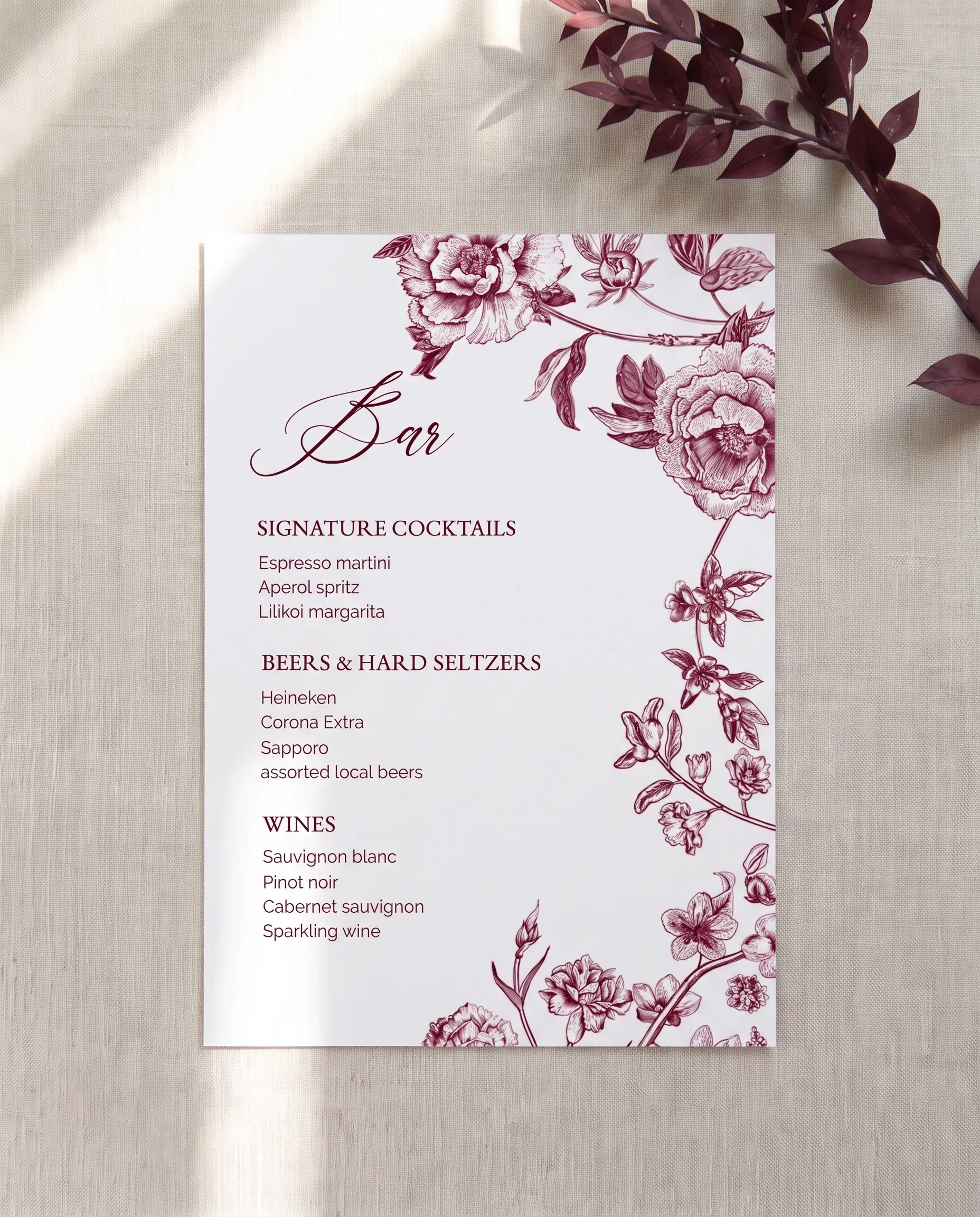
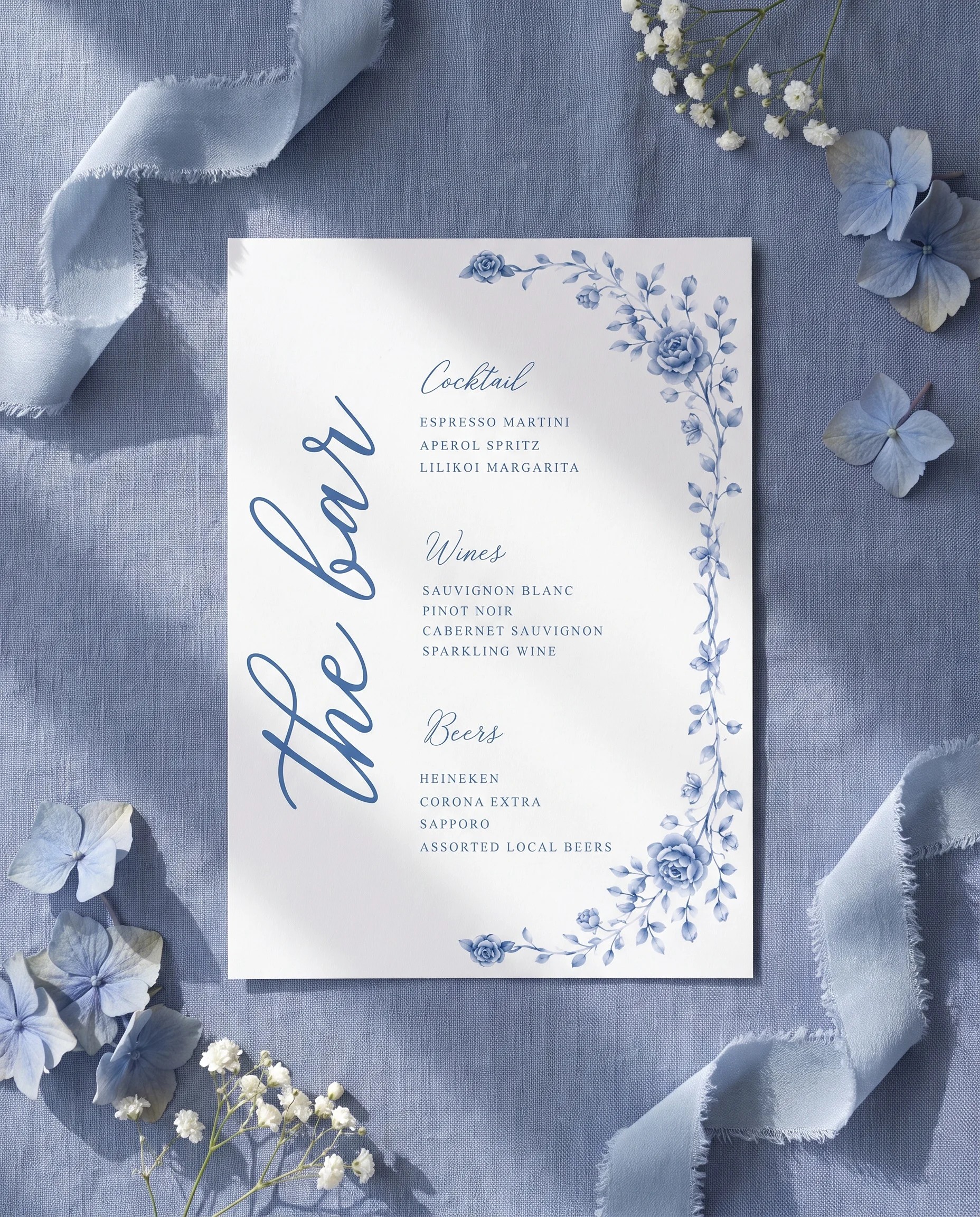
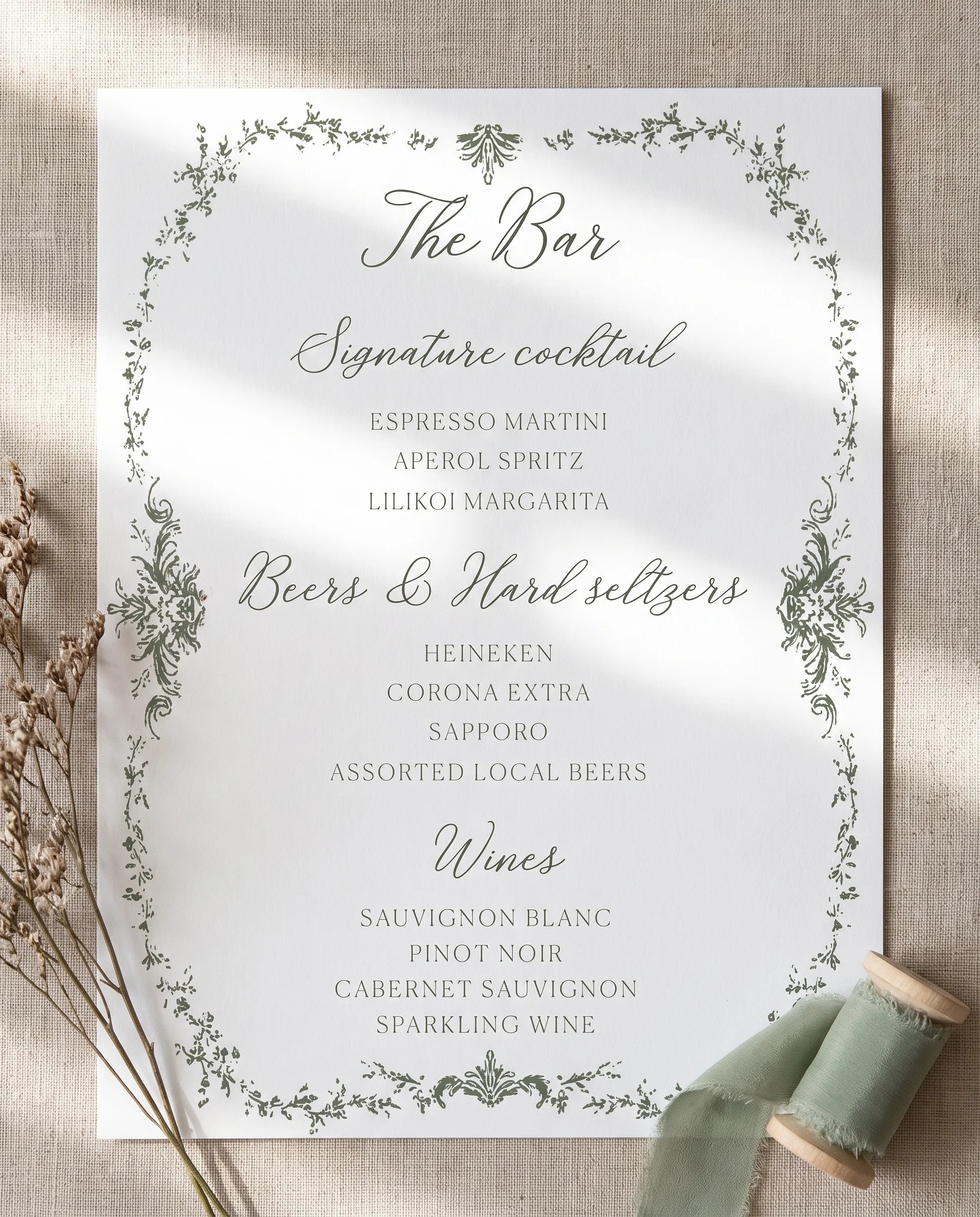
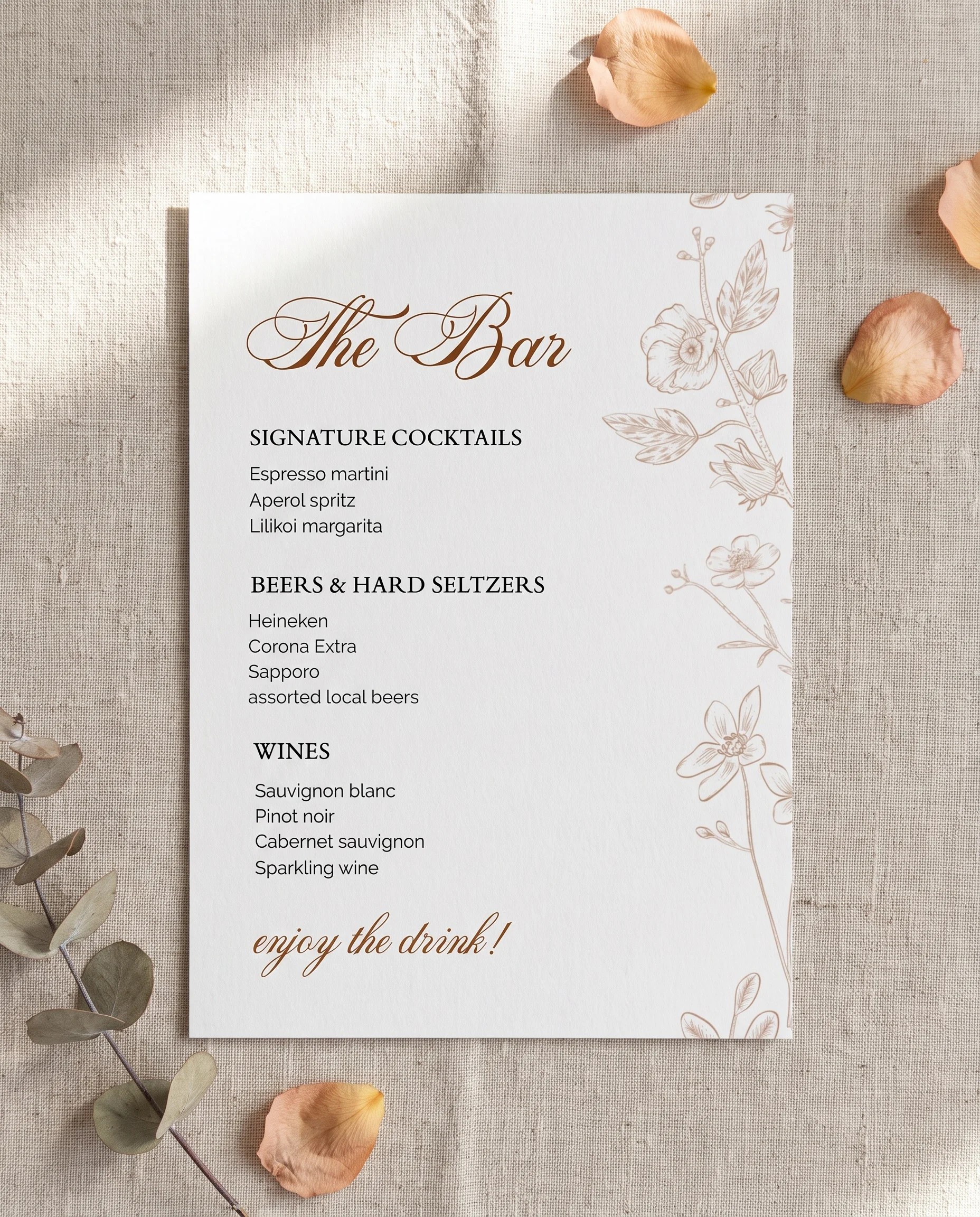
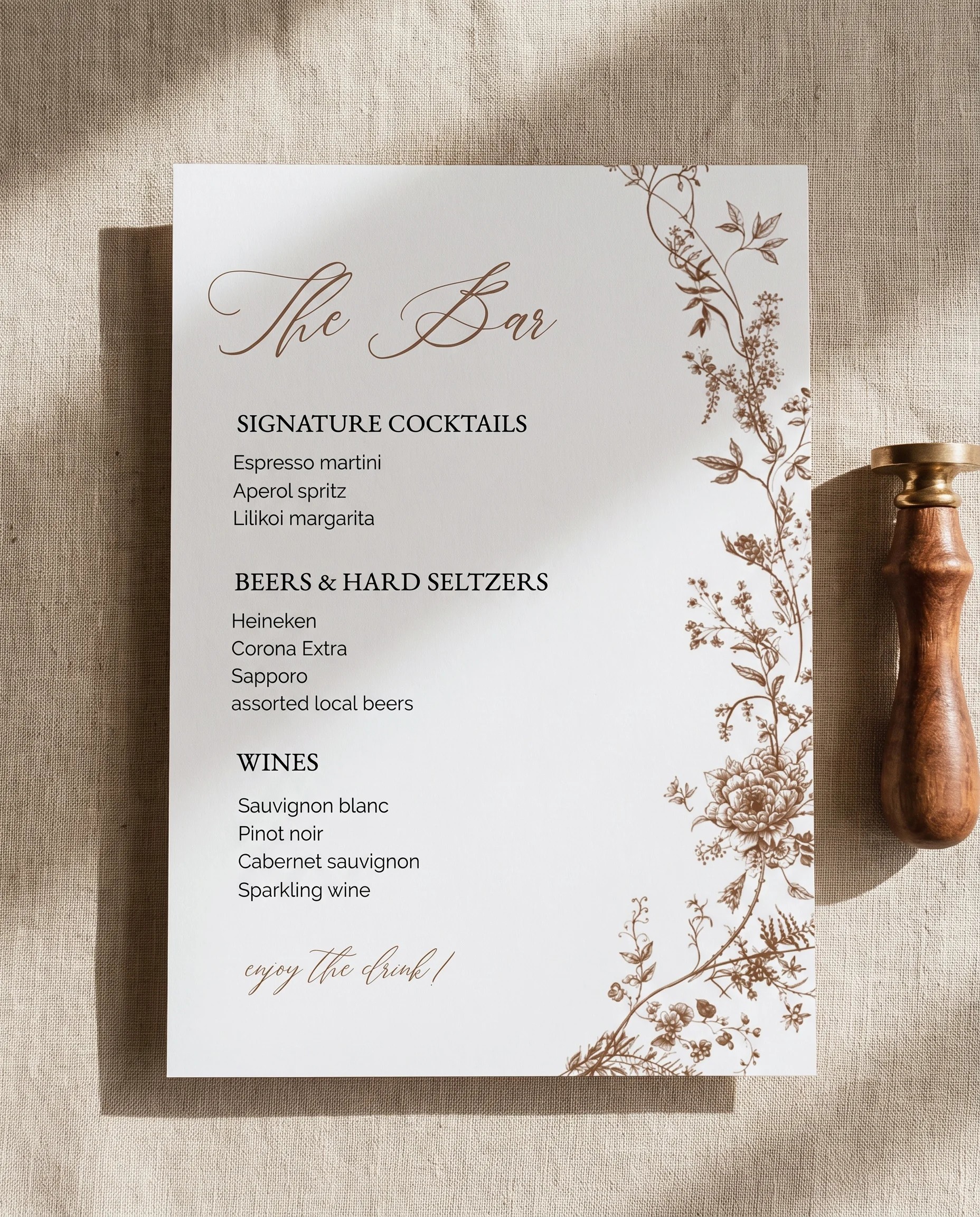
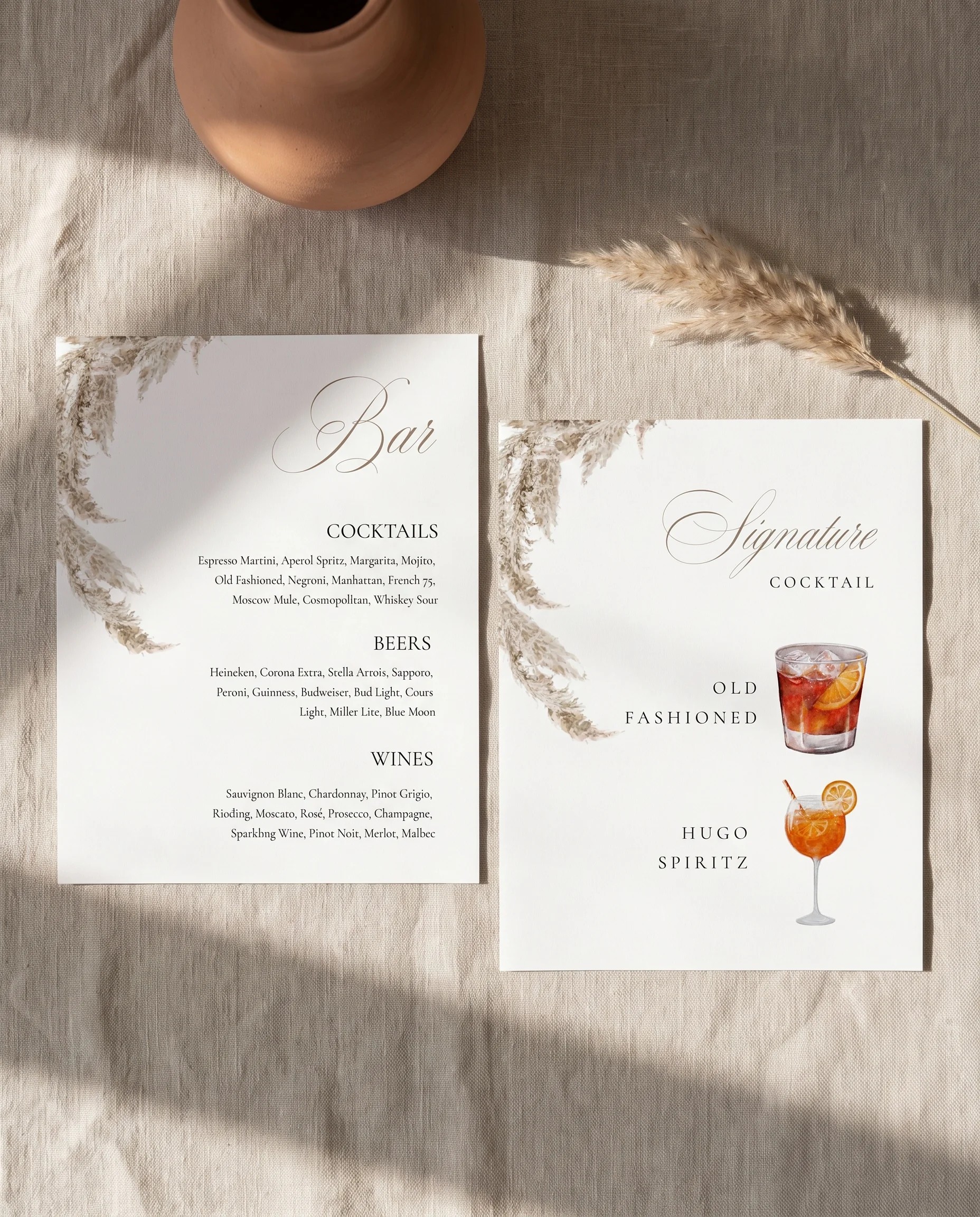
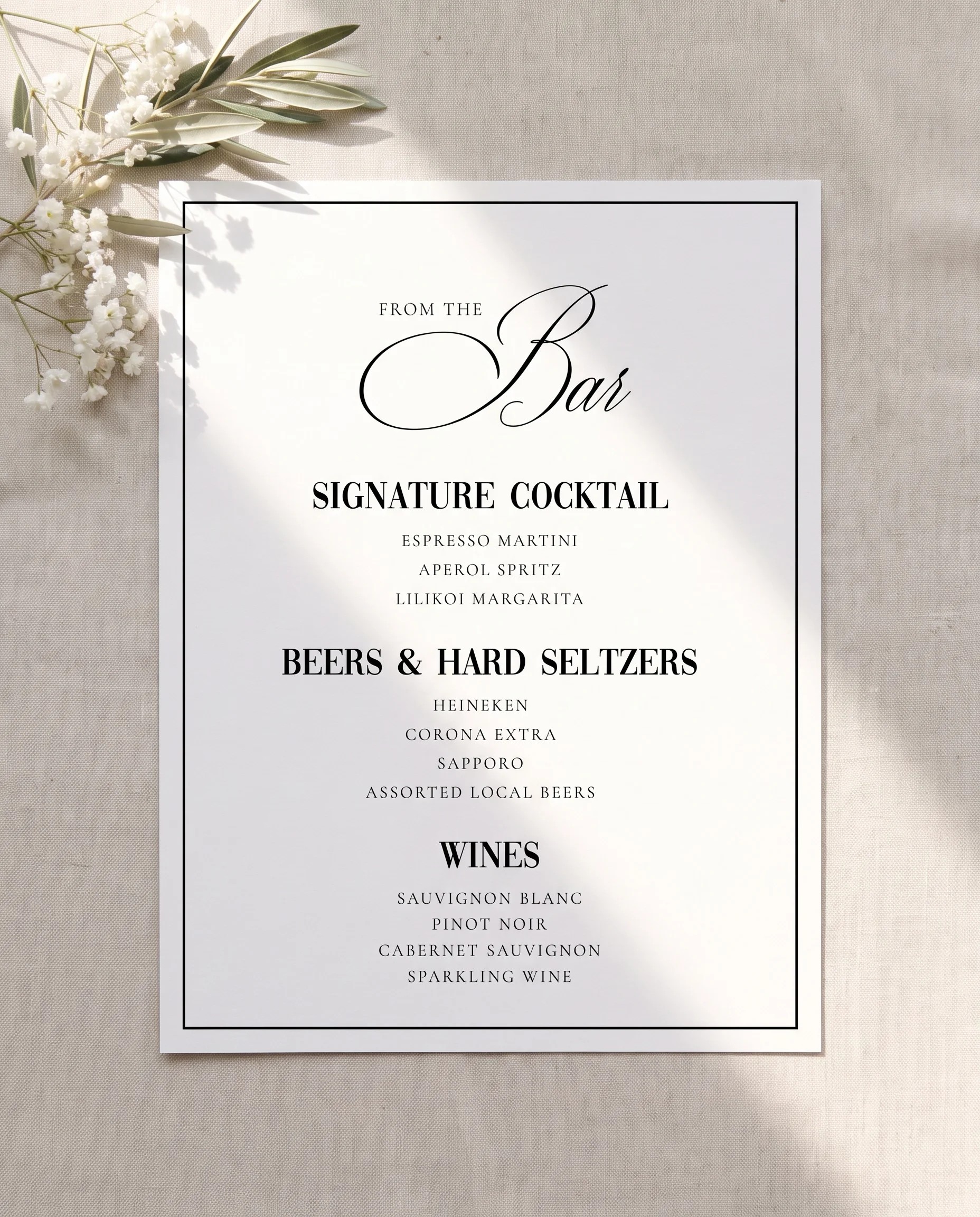
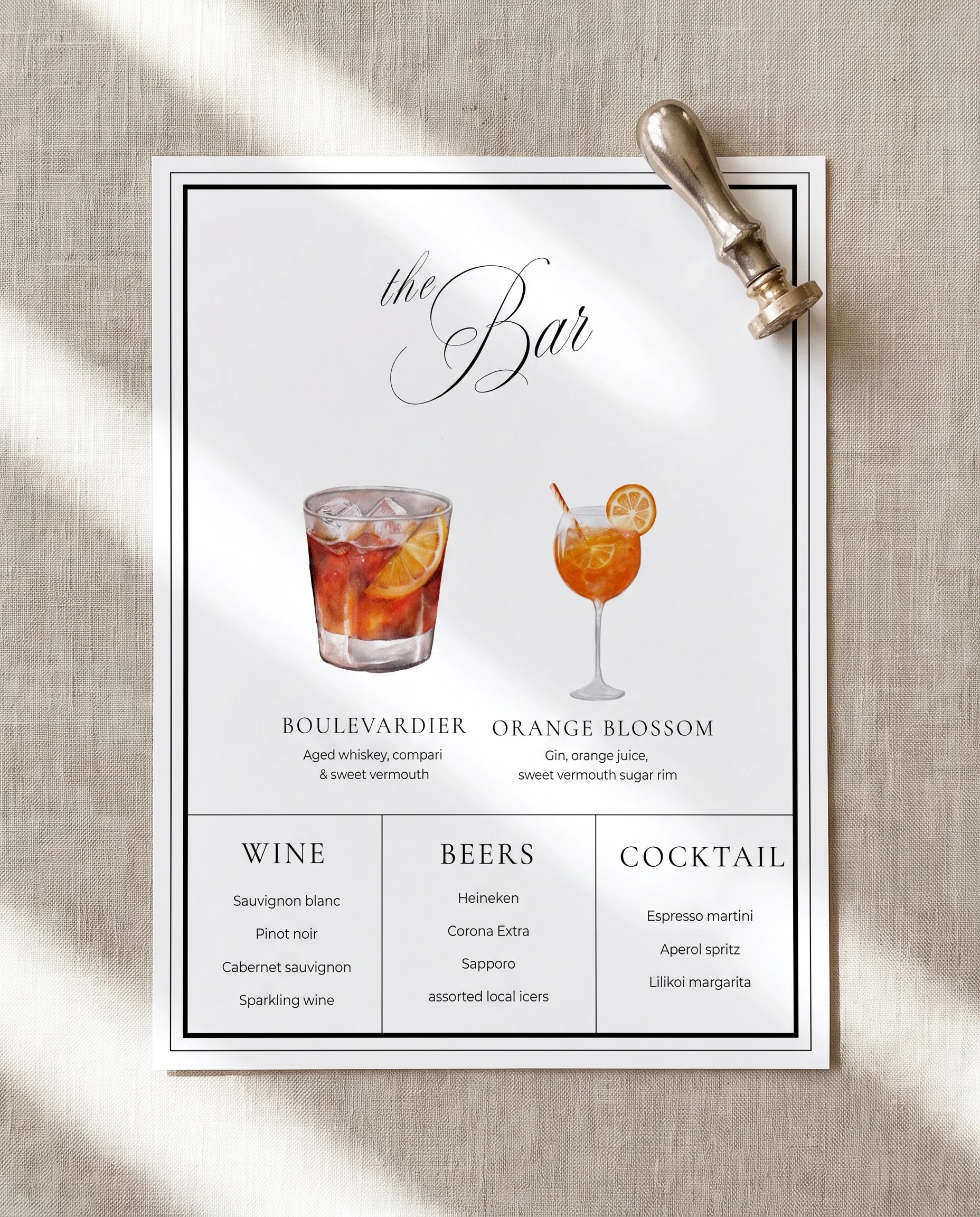
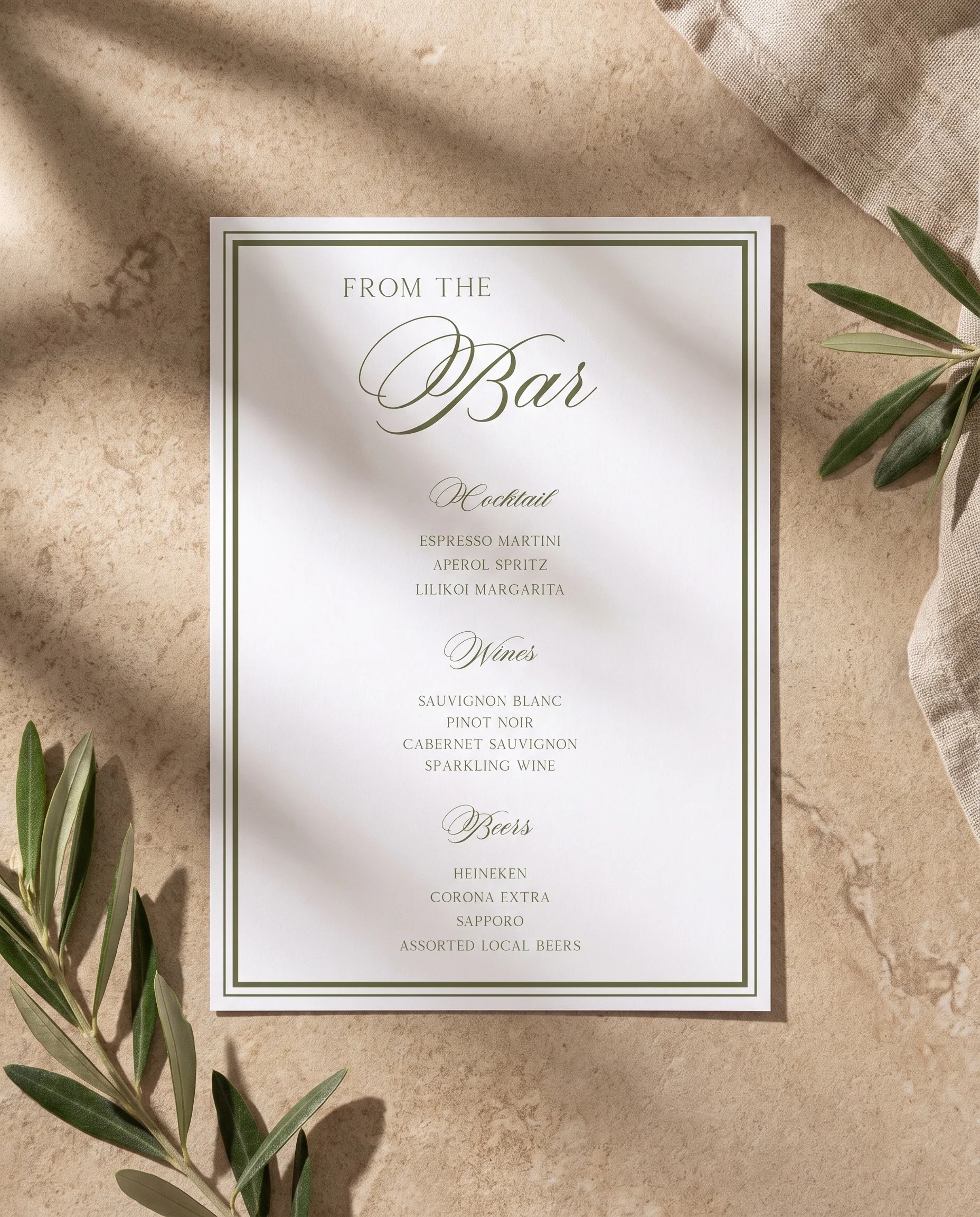
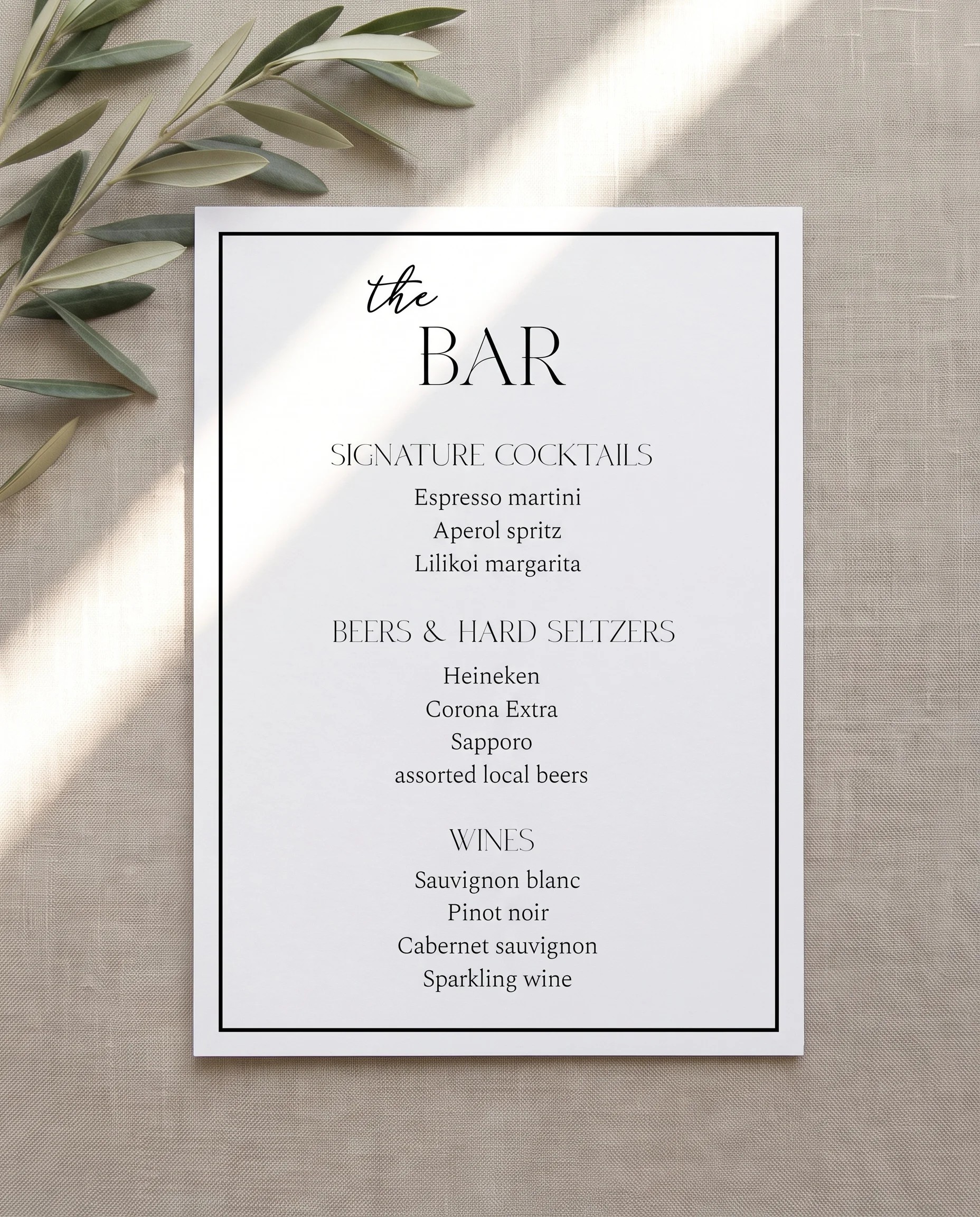
Formal serif typography, calligraphy scripts, monograms, and timeless palettes define our classic wedding bar menu templates. Choose from elegant bar menus that highlight iconic classic cocktails (The Manhattan, French 75, Sidecar, Old Fashioned), formal bar menus with curated wine programs listing producer and vintage, traditional black-and-white bar signs in serif typography, sophisticated black-tie bar menus in deep burgundy or evergreen, or monogram bar menus with the wedding monogram at the top of each card. Designed to coordinate with classic place cards, seating charts, and welcome signs as a unified day-of stationery suite, every template is fully editable in our free browser-based editor and downloads as print-ready PDF, JPEG, and PNG files. Print at home as flat cards or as bar display signs on cardstock or acrylic.

About Our Classic Wedding Bar Menus
Our classic wedding bar menu templates are built around formal serif typography, calligraphy scripts, monograms, and timeless color palettes. Choose from elegant bar menus that highlight iconic classic cocktails (The Manhattan, French 75, Sidecar, Old Fashioned, Negroni), formal bar menus with curated wine programs listing producer and vintage notes, traditional black-and-white bar signs in serif typography, sophisticated black-tie bar menus in deep burgundy or evergreen, classy bar menus with formal type and centered symmetrical layouts, or monogram bar menus with the wedding monogram prominently placed at the top of each card. Whether you are looking for a bar sign that displays the cocktail and wine selections at the bar itself, smaller take-home cards guests can keep, or a coordinated set of both, every template is fully editable in our free browser-based editor and downloads as print-ready PDF, JPEG, and PNG files. Print at home as flat cards on heavy cardstock or letterpress cotton, or at a print shop on acrylic for the bar display sign.
Iconic Classic Cocktails Define Classic Wedding Bar Menus
Where boho weddings invent desert-inspired cocktail names and floral weddings name drinks after specific flowers, classic weddings traditionally serve iconic classic cocktails with established recipes - the cocktails themselves carry historical weight that signals the formal aesthetic. Common classic wedding cocktail selections: The Manhattan (whiskey, sweet vermouth, bitters), the French 75 (gin, lemon, sugar, champagne), the Sidecar (cognac, orange liqueur, lemon), the Old Fashioned (whiskey, sugar, bitters), the Negroni (gin, Campari, sweet vermouth), the Aviation (gin, maraschino, violet, lemon), the Vesper (gin, vodka, Lillet), the Boulevardier (whiskey, Campari, sweet vermouth), the Champagne Coupe, the Tom Collins (gin, lemon, soda, sugar), or the classic Martini (gin or vodka, dry vermouth, olive). Most classic weddings serve 1 to 2 of these as the bar's featured cocktails - guests recognize the names and the signal of formal hospitality. Some couples include a brief history or origin note in italic below each cocktail name (e.g., "Created at the Hotel Ritz Paris, 1915" for the French 75) - particularly fitting for classic weddings where heritage and tradition matter. The convention works because these cocktails are the universally-recognized formal bar menu vocabulary.
Wine Program Often Replaces Signature Cocktails at Formal Classic Weddings
Many formal classic weddings emphasize the wine program over creative signature cocktails - particularly black-tie weddings, weddings at country clubs and fine dining venues, and weddings where the dinner course is the centerpiece of the reception. The bar menu becomes more like a sommelier's wine list than a creative cocktail menu. The wine program format on a classic bar menu: list wines by category (sparkling / white / red / rosé / dessert) with each wine's producer and vintage in formal serif typography. Example: "Sparkling: Veuve Clicquot Brut Yellow Label, NV / White: Sancerre Domaine Vacheron 2022 / Red: Brunello di Montalcino Argiano 2018 / Dessert: Sauternes Château Coutet 2015." Pair the wine selections with brief tasting notes in italic if the wedding is particularly wine-focused (e.g., "crisp, citrus-forward"). The bar sign displays the wine selections at the bar; the take-home cards become small keepsakes guests can reference. Some classic weddings combine the wine program with 1 to 2 iconic classic cocktails (Manhattan + curated wine list) - this is a common balance for formal weddings that want both wine sophistication and a featured cocktail moment.
Pairs With
Browse all wedding bar menus by aesthetic. For matching classic day-of wedding stationery, see our classic wedding menus, classic wedding seating charts, and classic wedding place cards.
Frequently Asked Questions
Should I serve iconic classic cocktails or invent custom signature drinks for my classic wedding?
Iconic classic cocktails (The Manhattan, French 75, Sidecar, Old Fashioned, Negroni) are typically the better choice for formal classic weddings because the cocktails themselves carry historical weight that signals the formal aesthetic. Guests recognize the names and the signal of formal hospitality - serving "The Manhattan" reads as more formal than serving "Sarah's Spritz." Custom signature drinks work better for relaxed-classic weddings (informal classic country club receptions, modern classic weddings with a younger guest list) where the couple wants a personal touch. For most formal classic weddings, the strongest approach is 1 to 2 iconic classic cocktails on the bar menu (Manhattan + Champagne Coupe is a common pairing) plus the curated wine selection. Some classic couples include a brief history note in italic below each cocktail name ("Created at the Hotel Ritz Paris, 1915") - this works for weddings where heritage matters and reads as deliberate rather than fussy.
How should I list the wine program on a classic wedding bar menu?
The classic wine program format lists wines by category (sparkling / white / red / rosé / dessert) with each wine's producer and vintage in formal serif typography. Example formatting: 'Sparkling: Veuve Clicquot Brut Yellow Label, NV / White: Sancerre Domaine Vacheron 2022 / Red: Brunello di Montalcino Argiano 2018 / Dessert: Sauternes Château Coutet 2015.' For classic weddings particularly focused on the wine experience, add brief tasting notes in italic below each wine (e.g., 'crisp, citrus-forward' or 'rich black cherry, soft tannin'). Coordinate with the venue's sommelier or your caterer 4 to 6 weeks before the wedding to lock in specific wine selections. The wine program signals classic formality more than any other element of the bar menu - particularly at country club and fine dining venues where wine sophistication is part of the expected experience.
What size and substrate work best for a classic wedding bar sign?
Choose 8x10 inches for small intimate weddings under 60 guests, 11x14 inches for 60 to 130 guests, and 16x20 inches for larger weddings. The bar sign needs to be readable from 5 to 8 feet away as guests approach. Substrate options for classic bar signs: heavy cardstock (110-130 lb cream) mounted in a frame is the standard option ($0.20-$0.40 per sign), letterpress cotton paper (220 lb) for very formal classic weddings ($3-$8 per sign), and clear acrylic with serif typography for modern classic aesthetics ($60-$120). For black-tie weddings where the most formal substrate is appropriate, consider letterpress on heavy cotton paper - the texture and weight signal formal investment. Take-home cards (5x7 or 4x6) work well as smaller keepsakes guests can keep, particularly for the wine program where guests may want to reference the producers later. For multi-bar venues (cocktail hour bar plus reception bar), consider duplicate bar signs at each location for consistent guest experience.
Should my classic wedding bar menu match my wedding invitation?
Yes - classic weddings benefit MOST from coordinated stationery suites. Multi-generational classic weddings include grandmothers, mothers, future mothers-in-law, and traditional guests who notice and appreciate stationery cohesion. If your wedding invitation features formal serif typography, a custom monogram, and a navy and gold palette, your wedding bar menu should use the same monogram, the same typography family, and the same palette. The bar menu sits at the bar and is one of the most photographed pieces at the wedding (guests often photograph their cocktails) - cohesion with the rest of the suite is essential. Many classic couples include the wedding monogram at the top of the bar sign and on the take-home cards, creating a coordinated visual signature across every printed piece at the wedding. The monogram on the bar menu should exactly match the monogram on the invitation, place cards, seating chart, menus, and directional signs - the same monogram appearing on every piece is one of the strongest design signals at a classic wedding.