
Floral Digital Wedding RSVP
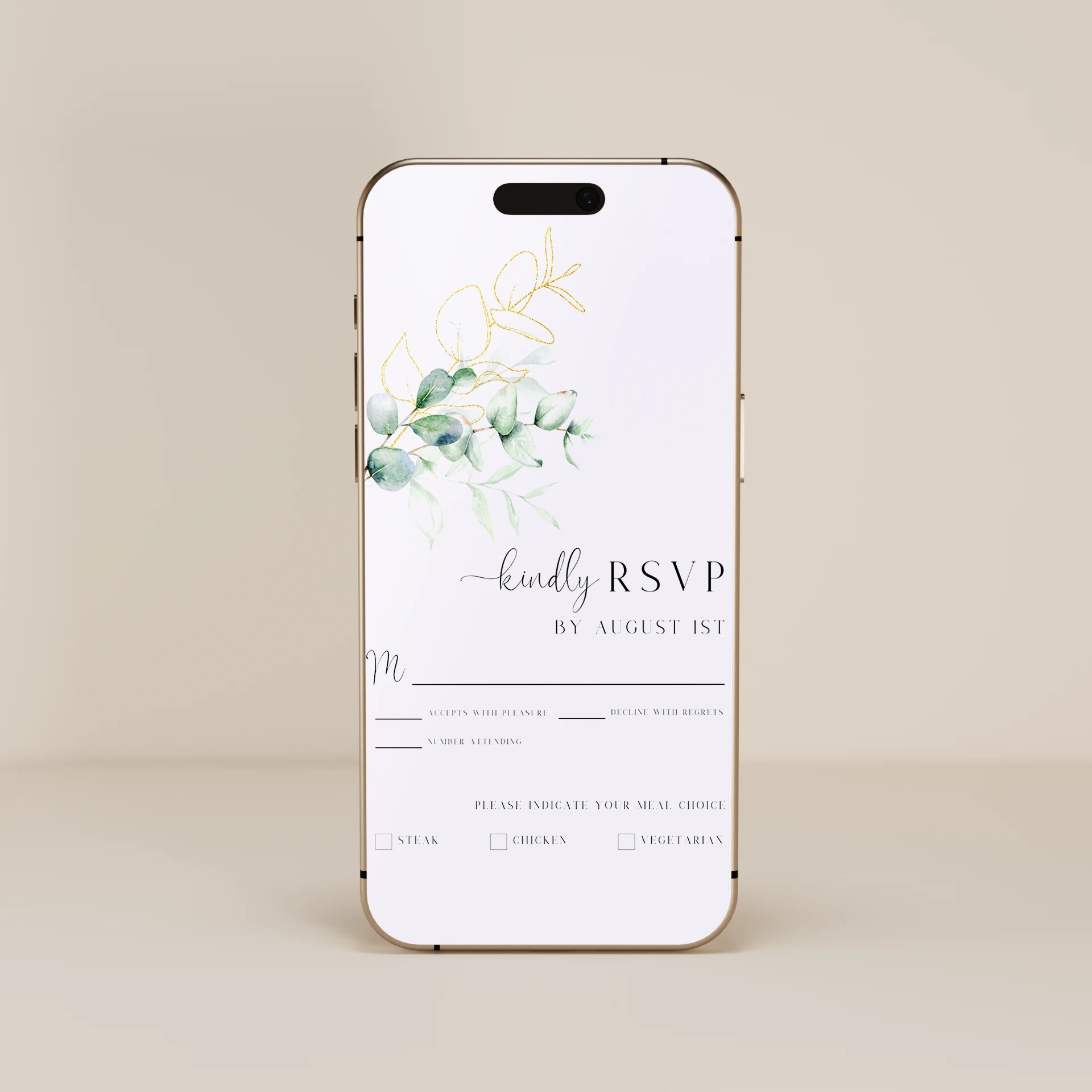
Restrained watercolor florals, hand-painted botanical accents, and natural greenery define our floral digital wedding RSVPs - delivering the response collection mechanism with the warm romance of watercolor while keeping form fields clean, readable, and mobile-friendly. Choose from watercolor border accents (corners or top-and-bottom strips that frame the form without competing with field readability), header-only floral wreaths (full watercolor wreath above the form, clean fields below), greenery-only RSVPs with eucalyptus or sage sprigs as field dividers (modern-floral aesthetic with minimal form interference), peony-anchored designs with a single bloom centering the page header, dusty rose and blush palette forms, or wildflower border designs in mixed seasonal palettes. Coordinate the floral elements with your save the date and wedding invitation - the same flowers, same watercolor, same typography across the suite. Send instantly via email, text, shareable link, or QR code. Every template is fully editable in our free browser-based editor.
About Our Floral Digital Wedding RSVPs
Our floral digital wedding RSVPs feature restrained watercolor florals, hand-painted botanical accents, and natural greenery framing forms designed to maintain the floral aesthetic through-line from save the date through invitation through guest response submission. Choose from watercolor border accents that frame the form perimeter without competing with field readability, header-only floral wreaths with clean form fields below, greenery-only RSVPs with eucalyptus or sage sprigs serving as visual field dividers in modern-floral aesthetics, peony-anchored designs with a single bloom centering the page header, dusty rose and blush palette forms with restrained watercolor accents, wildflower border designs in mixed seasonal palettes, or animated forms with subtle petal-drift or watercolor color-bleed effects on submission confirmation. Whether your wedding is at a Napa or Sonoma vineyard, an English country garden, an outdoor spring ceremony with peonies and roses, or a moody autumn celebration with dahlias and dried botanicals, every template is fully editable in our free browser-based editor and includes mobile-optimized form fields with conditional reveal patterns (dietary preferences and song requests appear only after the guest selects accepting).
Watercolor as Accent, Not Dominant Element - Form Comes First
The functional design challenge specific to floral RSVPs is balancing the floral aesthetic with form usability. Different from floral save the dates (where watercolor wreath framing can dominate the design because there are no functional fields competing for visual priority) and floral wedding invitations (where the multi-page suite gives the formal invitation page space for elaborate watercolor while reserving simpler floral accents for practical content pages), the floral RSVP must prioritize form usability above all else - guests are submitting responses, not admiring florals, and an overloaded form decreases response rates. Three watercolor approaches that maintain the floral aesthetic without compromising form usability: watercolor border accents (delicate sprigs in the corners or thin watercolor bands across the top and bottom of the form, leaving the central form area clean and readable - reads as restrained and lets the form dominate), header-only floral wreath (a substantial watercolor wreath sits above the form fields as a visual anchor, the form fields below stay completely clean - reads as deliberately layered and creates a strong visual through-line back to the wedding invitation suite), or greenery-only field dividers (eucalyptus stems or sage sprigs serve as visual separators between form sections instead of standard horizontal lines, providing floral character without taking up visual space - reads as the most form-functional approach and works particularly well for greenery-aesthetic weddings). For floral weddings specifically, the watercolor accent treatment is the practical compromise that maintains the floral aesthetic through-line from save the date through invitation through RSVP without compromising the response rate that defines a successful RSVP page.
Pairs With
Browse all digital wedding RSVPs by aesthetic. For matching floral online wedding stationery, see our floral digital save the dates, floral digital wedding invitations, and floral digital thank you cards.
Frequently Asked Questions
Should I use watercolor florals on my wedding RSVP form?
Yes if your wedding has a floral aesthetic and you want suite cohesion across save the date, invitation, RSVP, and thank you cards - but use the watercolor as accent, not as dominant element. The functional design challenge is balancing the floral aesthetic with form usability: an overloaded form decreases response rates. Three approaches that maintain the floral aesthetic without compromising usability: watercolor border accents (delicate sprigs in corners or thin watercolor bands across top/bottom only - form area stays clean), header-only floral wreath (substantial watercolor wreath above the form, fields below stay clean), or greenery-only field dividers (eucalyptus stems or sage sprigs as visual separators between form sections instead of horizontal lines - most form-functional approach). For couples planning floral-heavy weddings with elaborate ceremony arches and centerpieces, the watercolor accent treatment is the practical compromise - the RSVP maintains the floral through-line without sacrificing the response rate.
Should I use greenery-only or include flowers on my floral RSVP?
Match the RSVP design to the floral aesthetic established on your save the date and invitation. Greenery-only RSVPs (eucalyptus, sage, olive branches as field dividers and accents - no flowers) work for couples whose save the date and invitation used greenery-only floral aesthetics, and pair particularly well with garden ceremonies, vineyard receptions, and outdoor weddings where greenery is the dominant ceremony installation. Flower-anchored RSVPs (peony, rose, dahlia, anemone accents in corners or as header wreath) work for couples whose save the date and invitation used flower-heavy floral aesthetics, and pair with weddings featuring substantial bloom installations. Continuing the same design language from save the date through invitation through RSVP creates the strongest visual signature for floral weddings - if your save the date featured peonies and watercolor wreath framing, your RSVP should use the same peonies (smaller, as accent) with the same watercolor treatment.
Should my floral digital wedding RSVP match my save the date and full stationery suite?
Yes - matching is essential for visual cohesion across the full wedding stationery suite. The save the date establishes the visual signature with specific flowers and palette, the wedding invitation reinforces it across multiple pages, and the RSVP closes the digital communication loop with the same signature. If your save the date used peonies, watercolor framing, and a dusty rose palette, your wedding invitation should use the same peonies (across all pages of the multi-page suite), the same watercolor treatment, and the same dusty rose palette - and your RSVP should use those same elements as accents on the form. The strongest floral wedding suites use 1 to 3 specific flower types consistently across every piece - one anchor flower (peonies, garden roses, anemones) plus 1 to 2 supporting elements (eucalyptus, wildflowers, baby's breath) - through save the date, invitation, RSVP, accommodations, schedule, day-of stationery, and thank you cards. Many couples coordinate from save the date forward, choosing the save the date design first and commissioning matching invitations, RSVPs, and day-of pieces from the same template style or designer.