



Windsor Crown — Invitation Set
$26.95

The template collection
Search by style, occasion or template type.
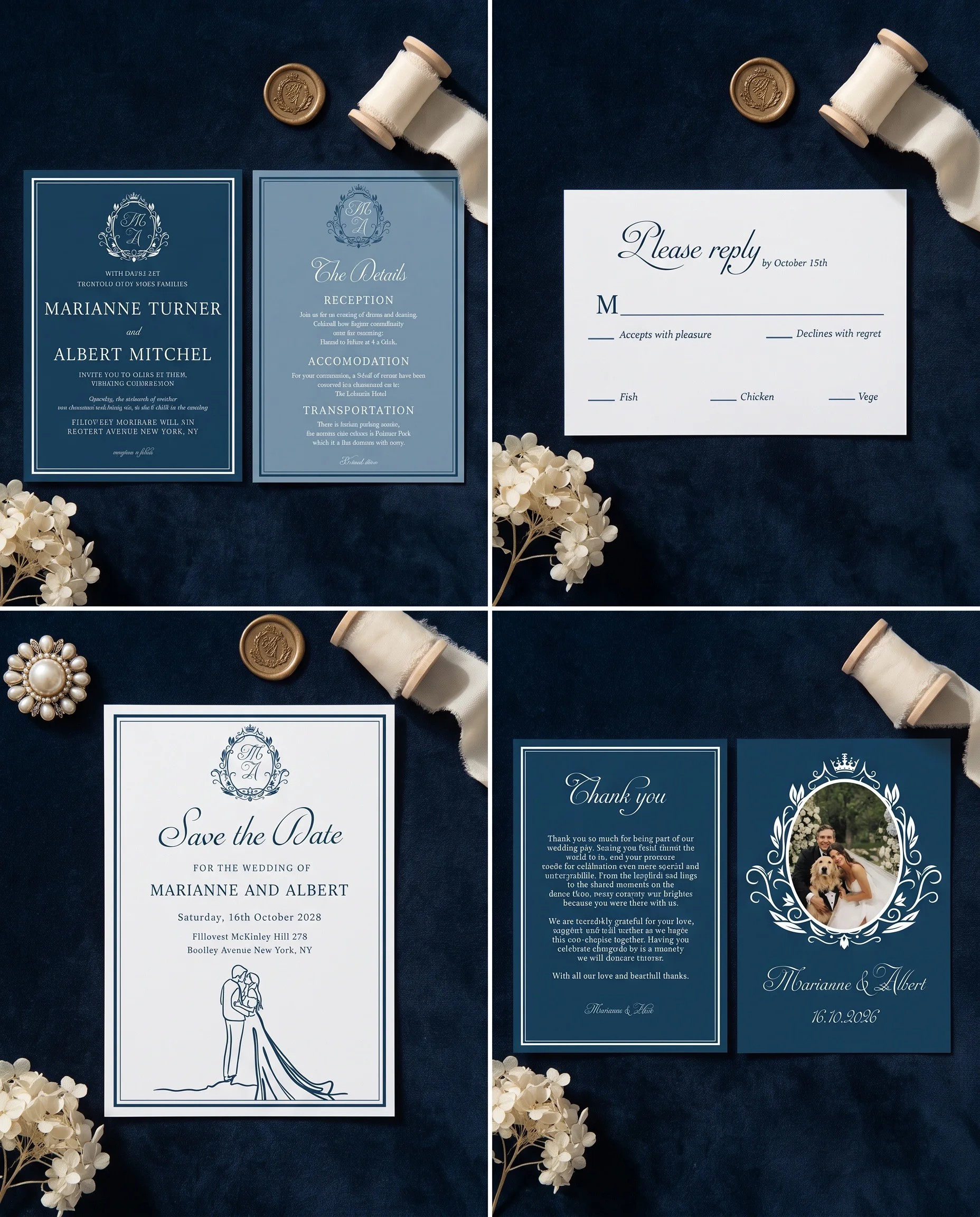
Formal typography, traditional layouts, and timeless black, white, gold, or ivory palettes define our classic wedding invitation sets. Each is a 5-piece coordinated stationery suite with save the date, invitation, RSVP card, details card, and thank you card. All five pieces share the same elegant design language so your stationery feels coordinated from the first announcement through to the post-wedding thank you. Every set is fully editable in our free browser-based editor and downloads as print-ready PDF, JPEG, and PNG files.
21 templates
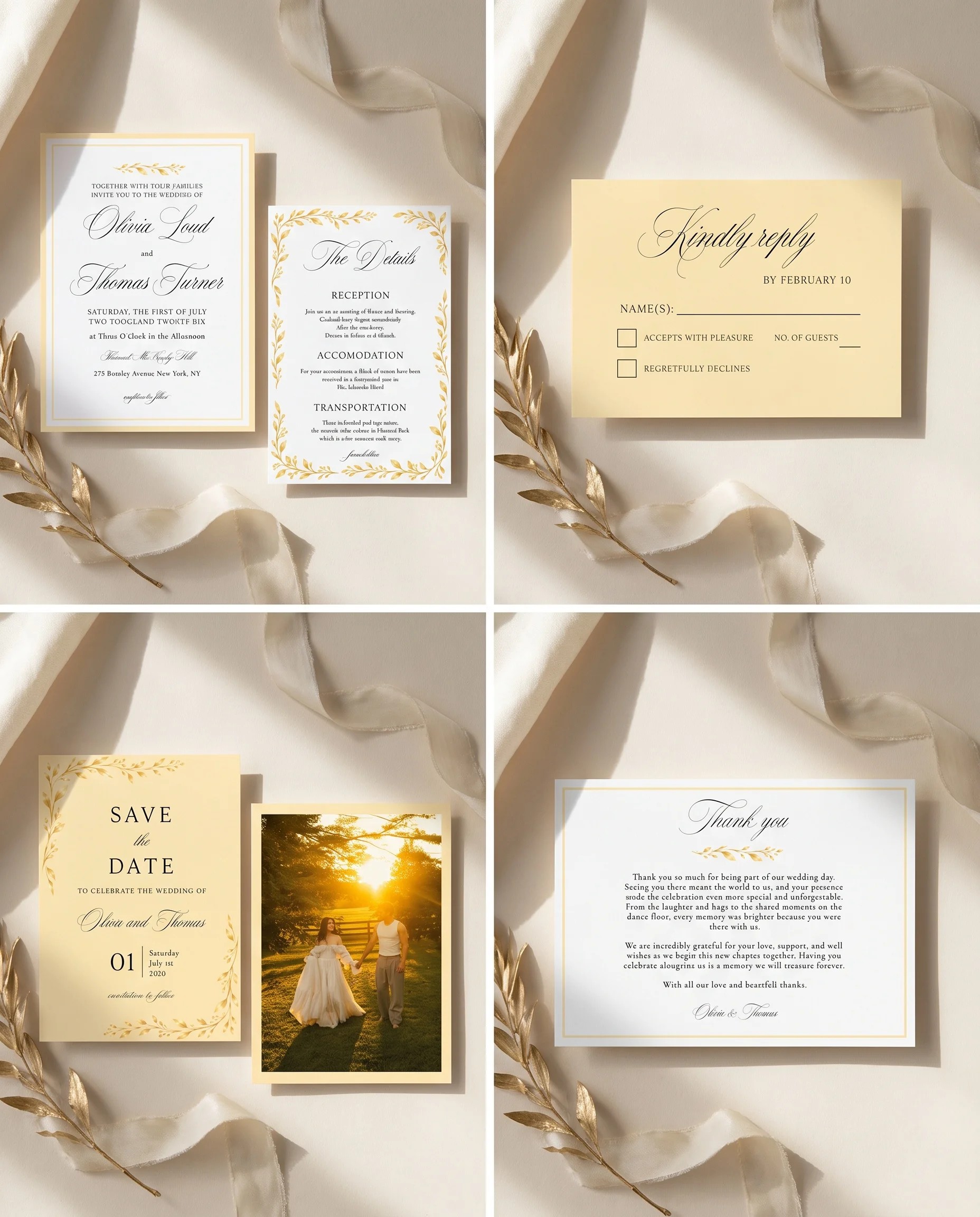
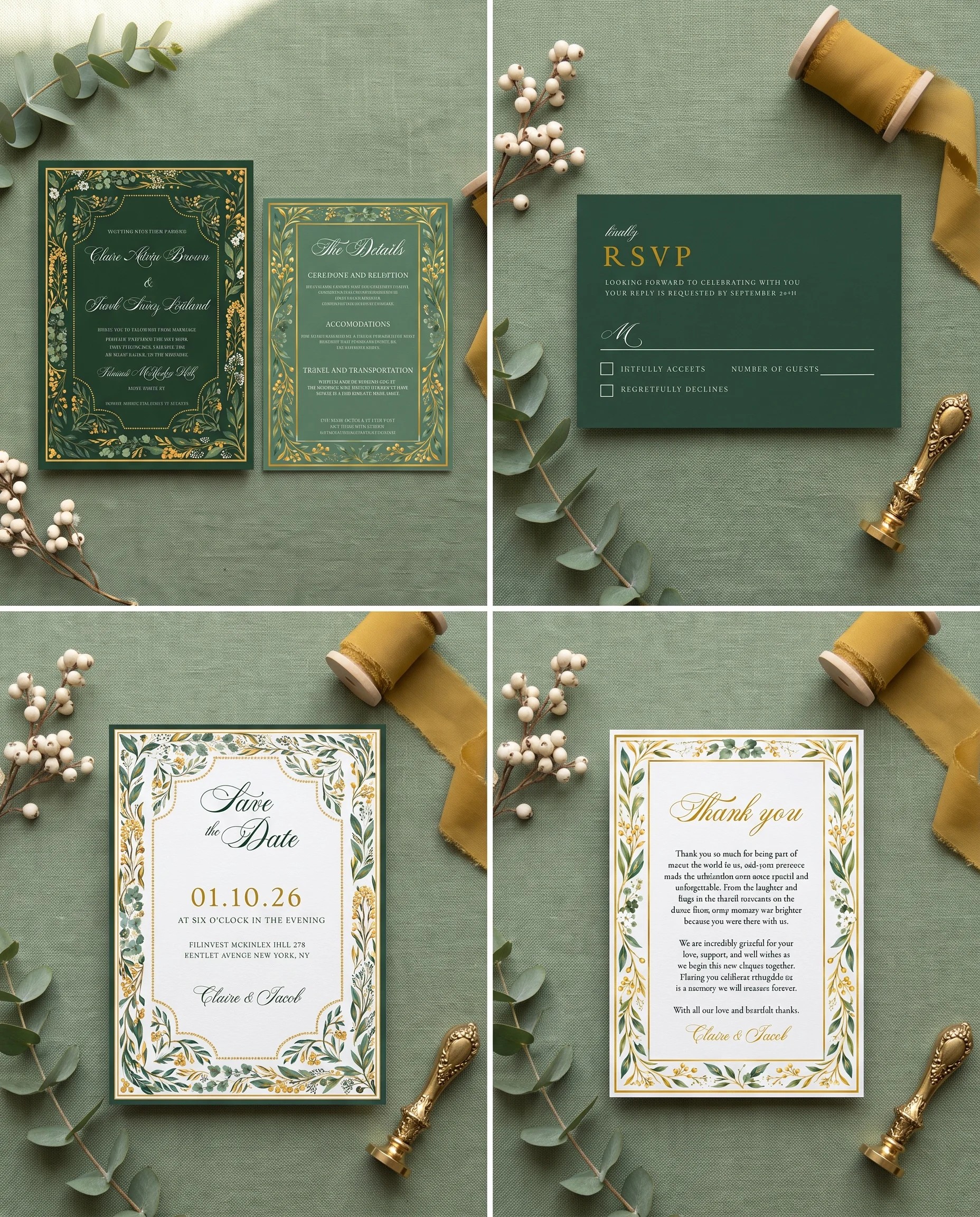
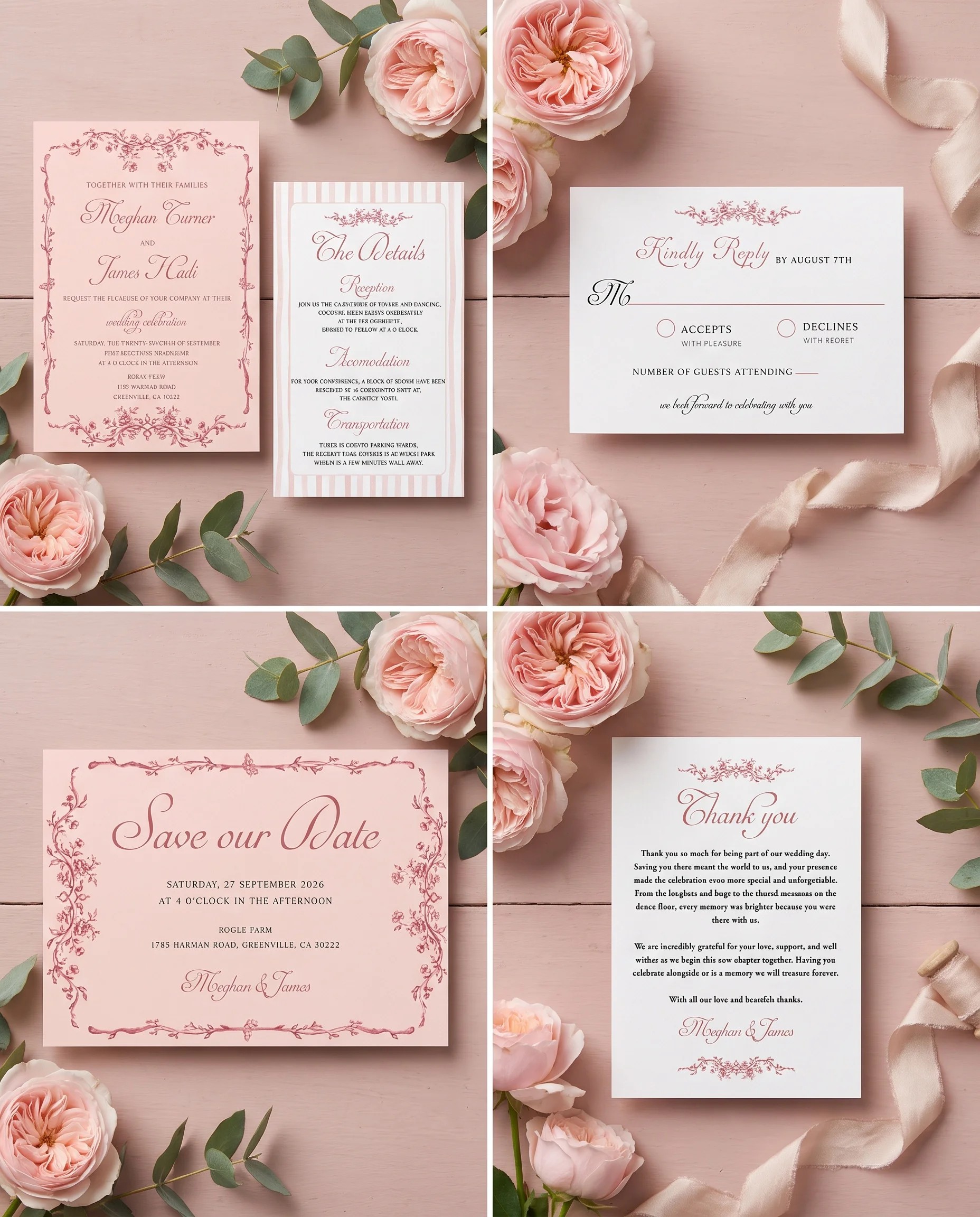
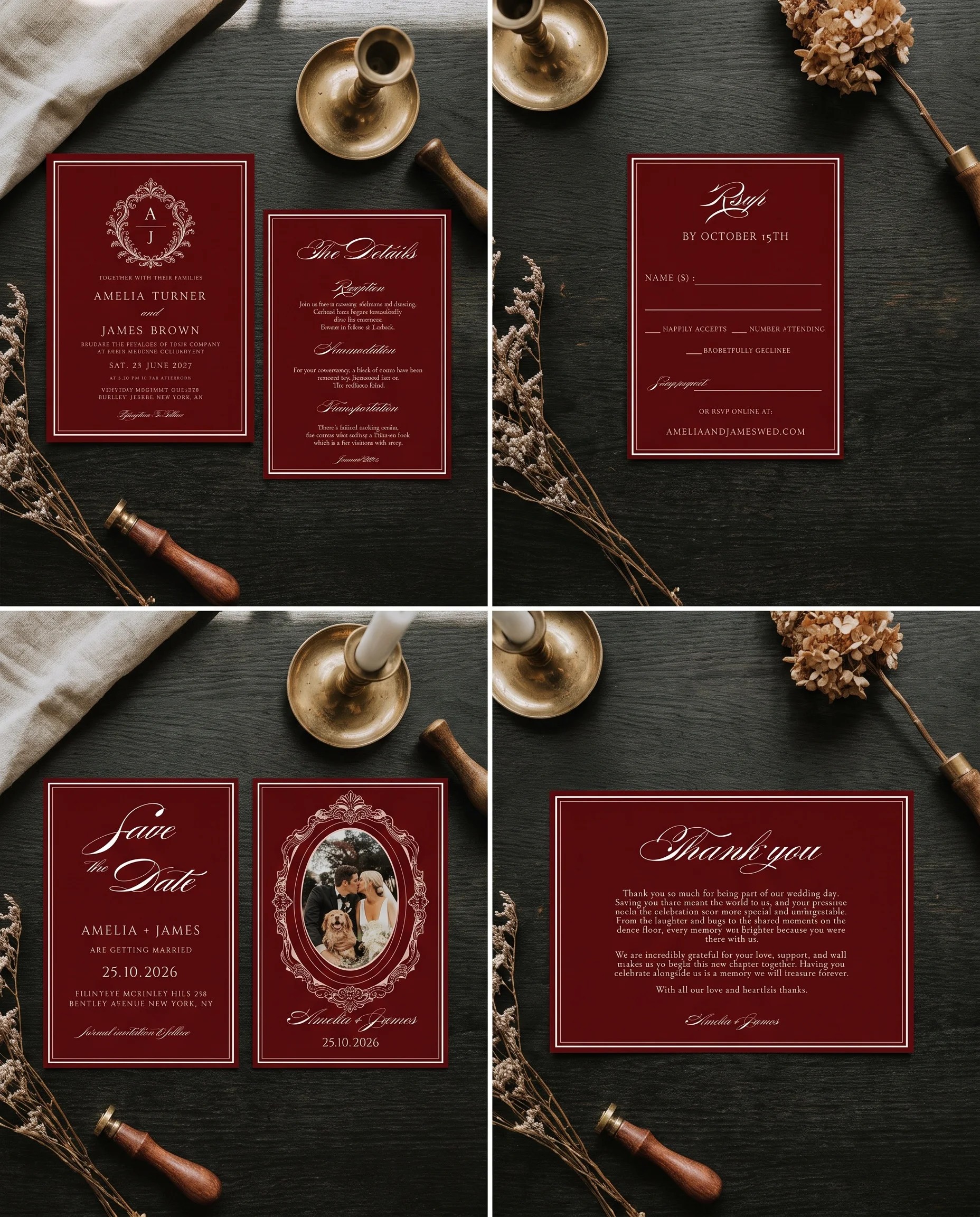
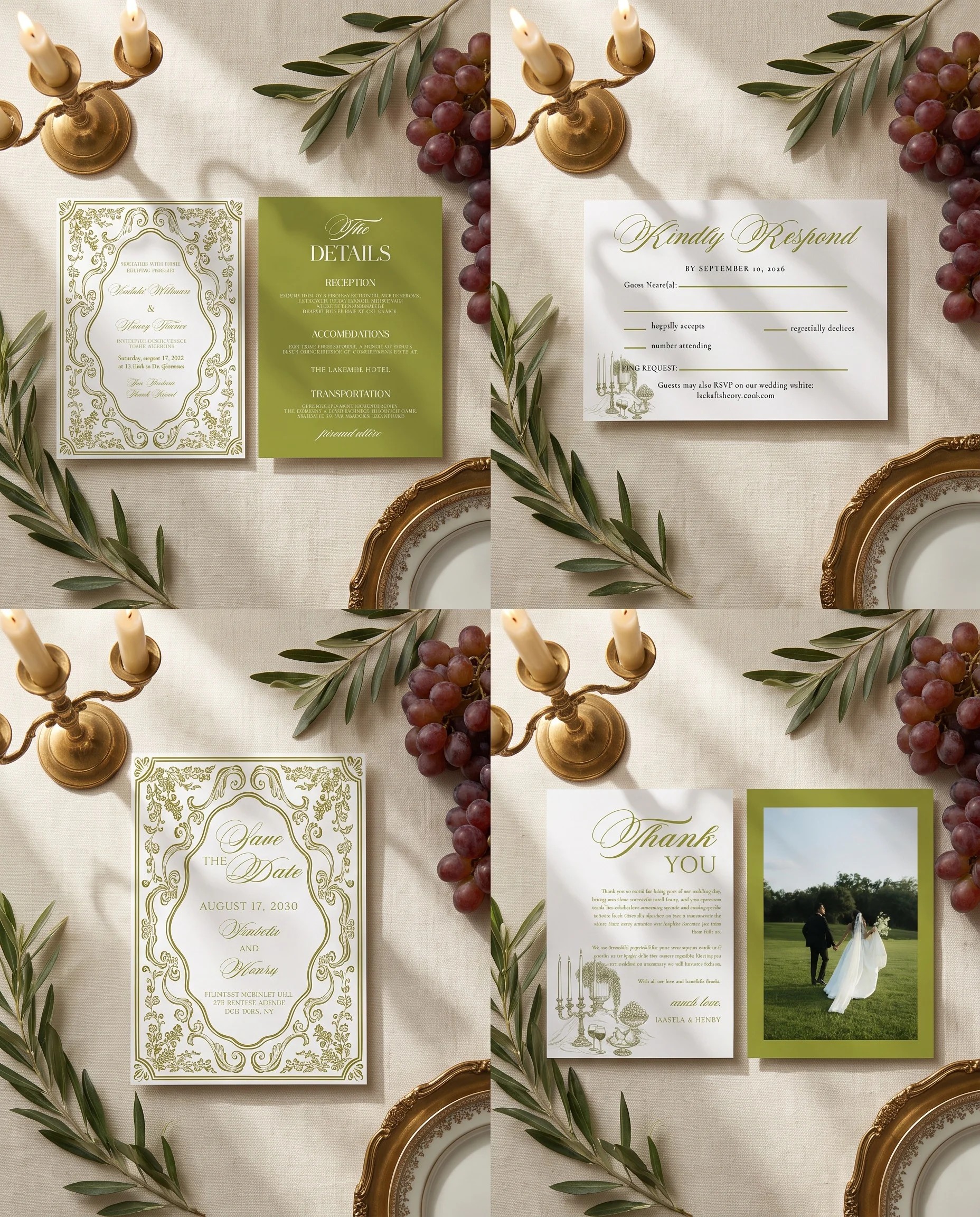
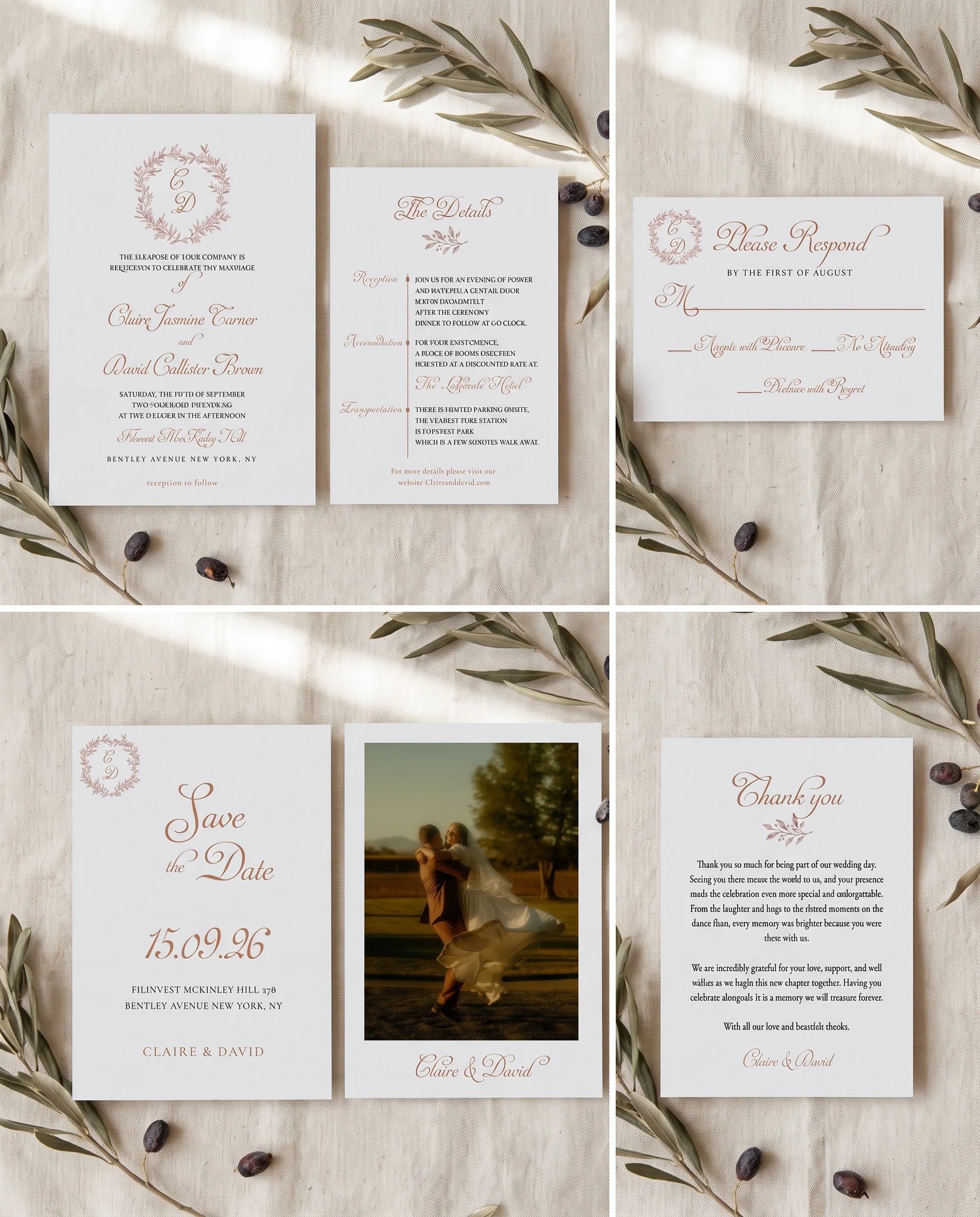
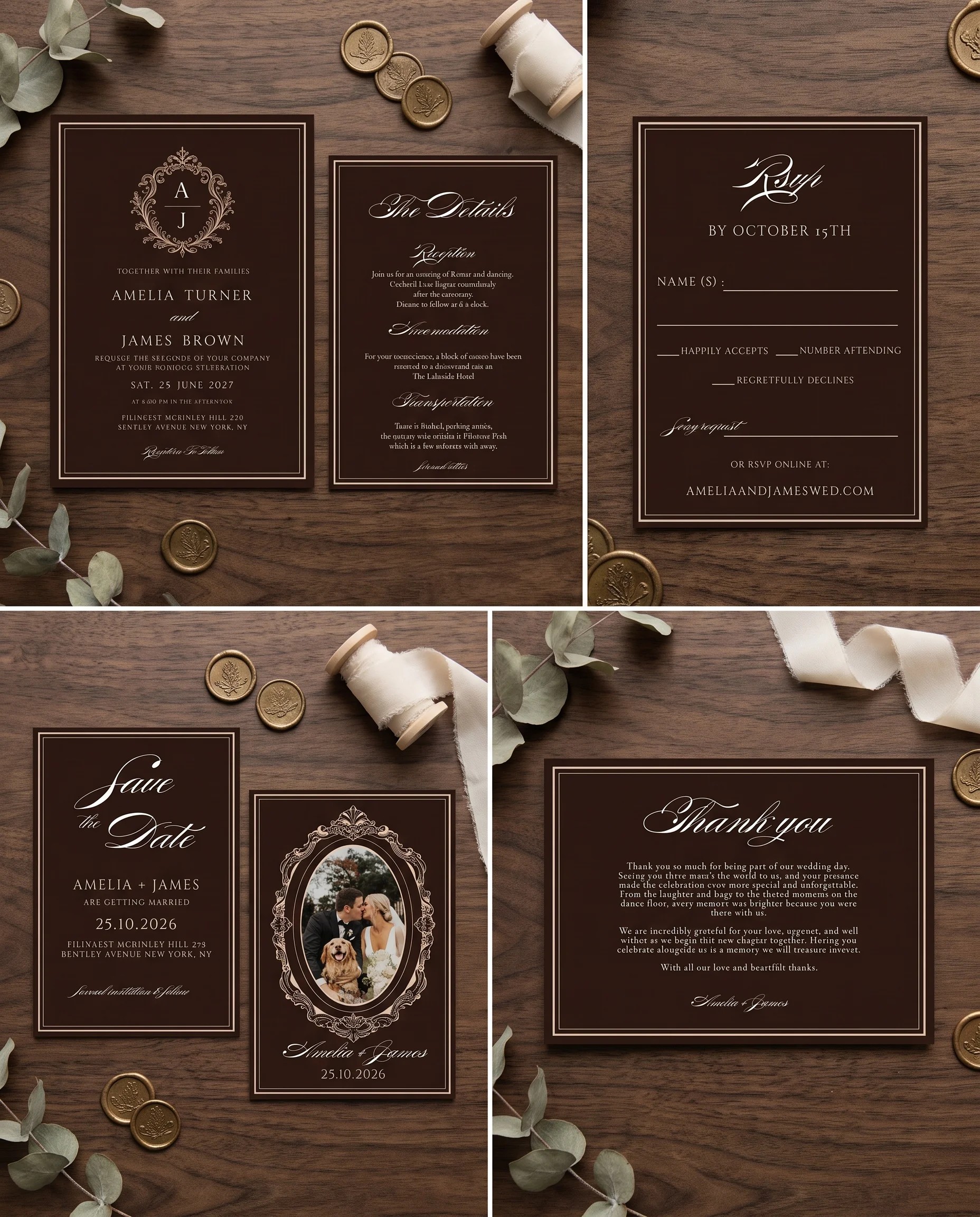
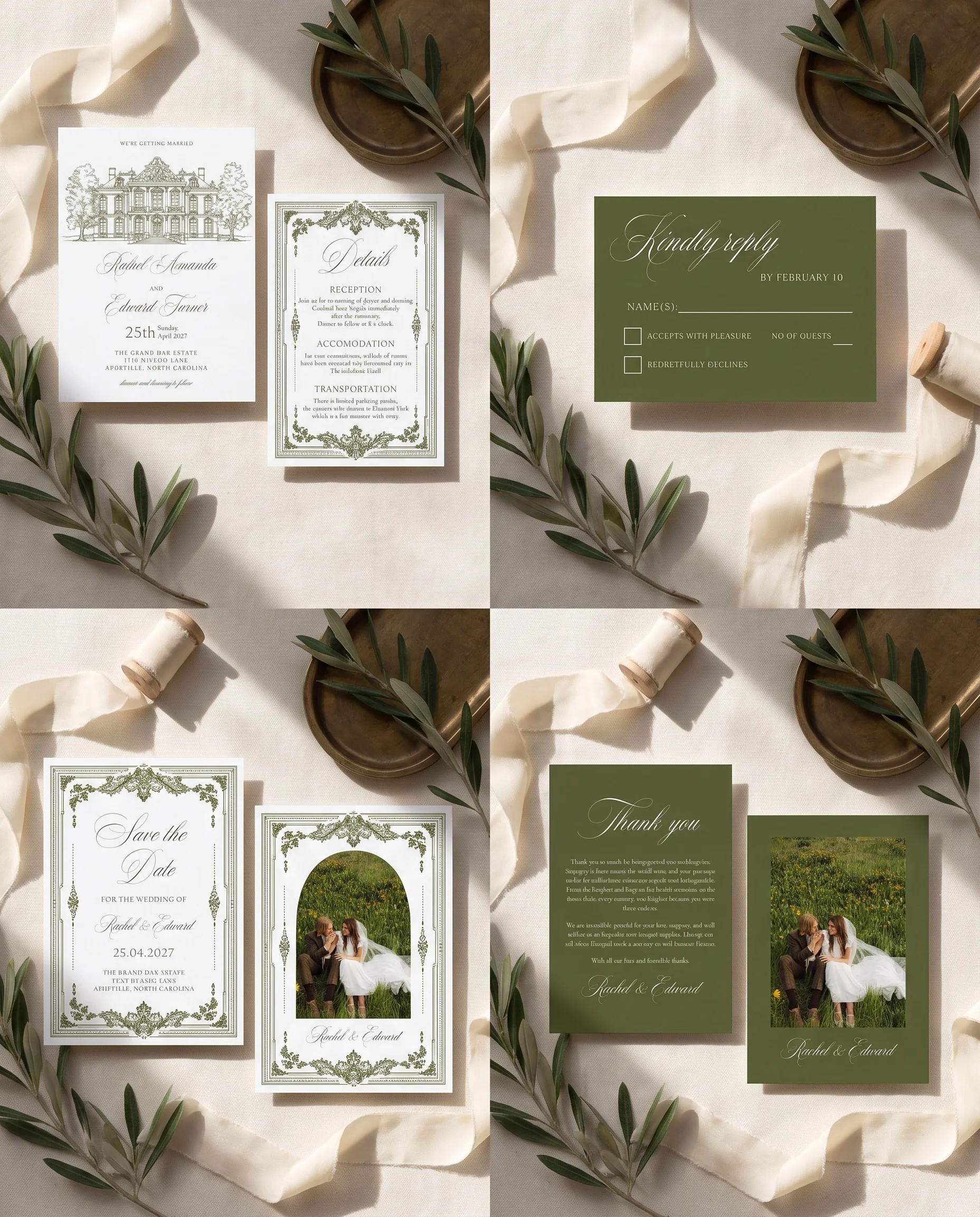
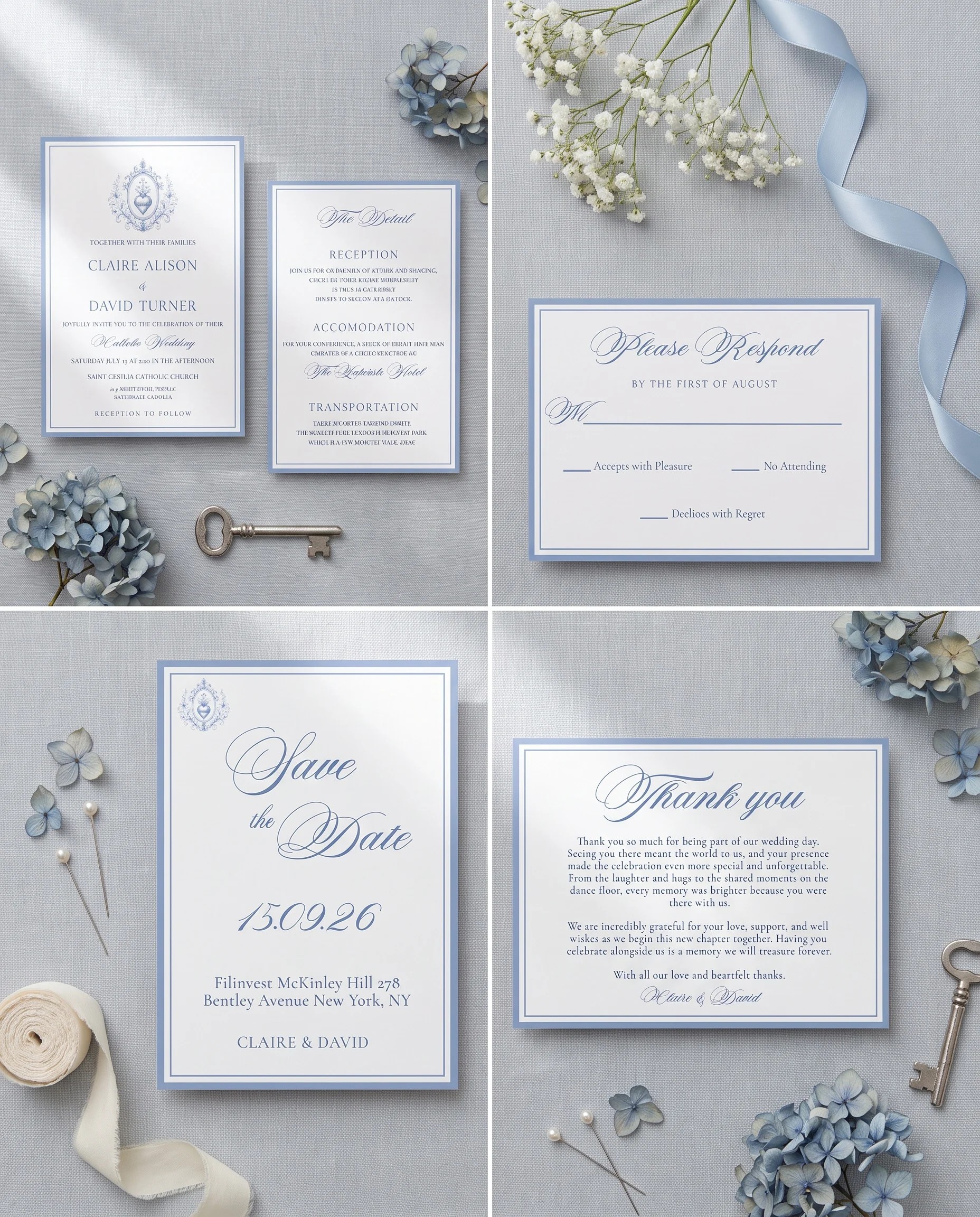
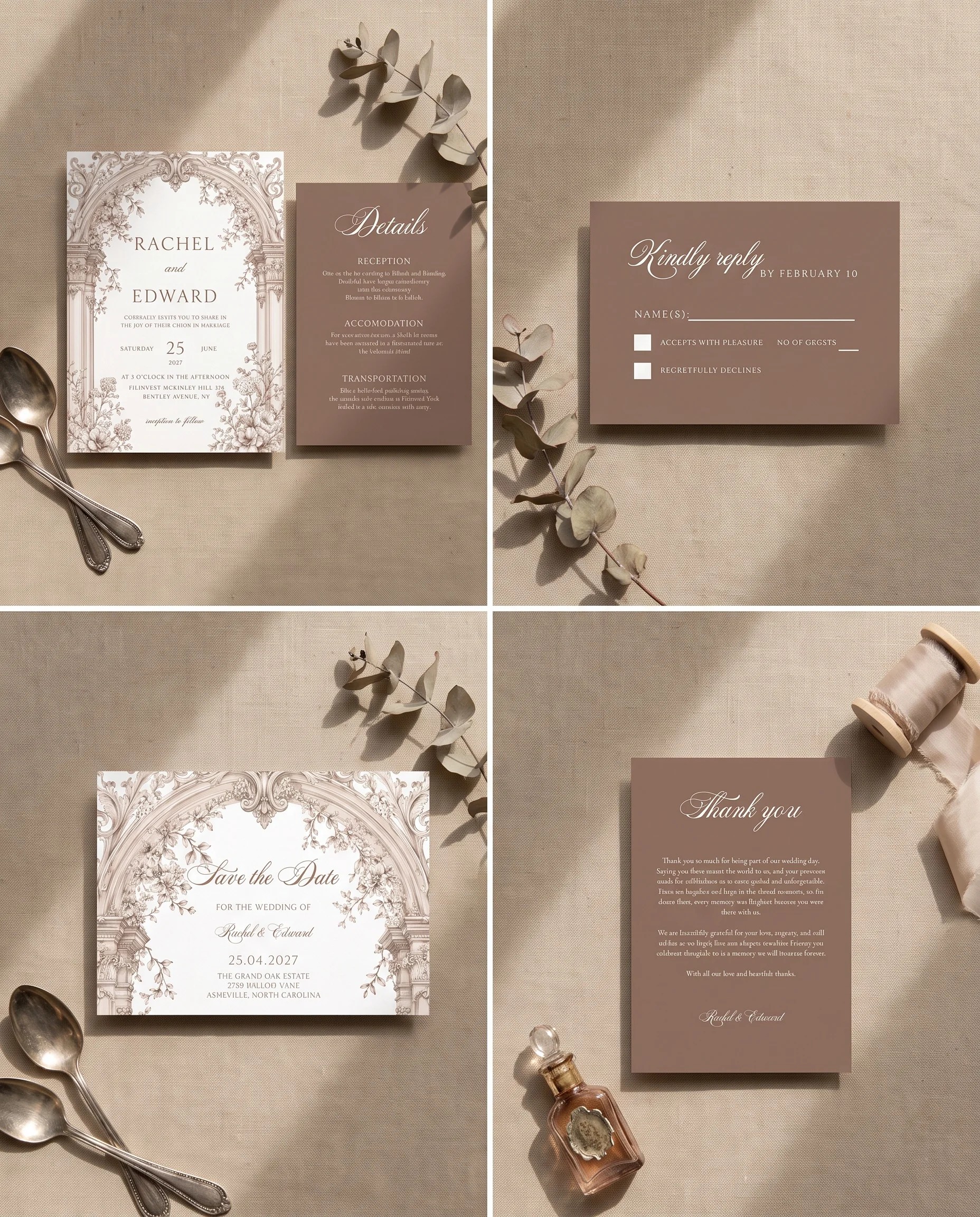
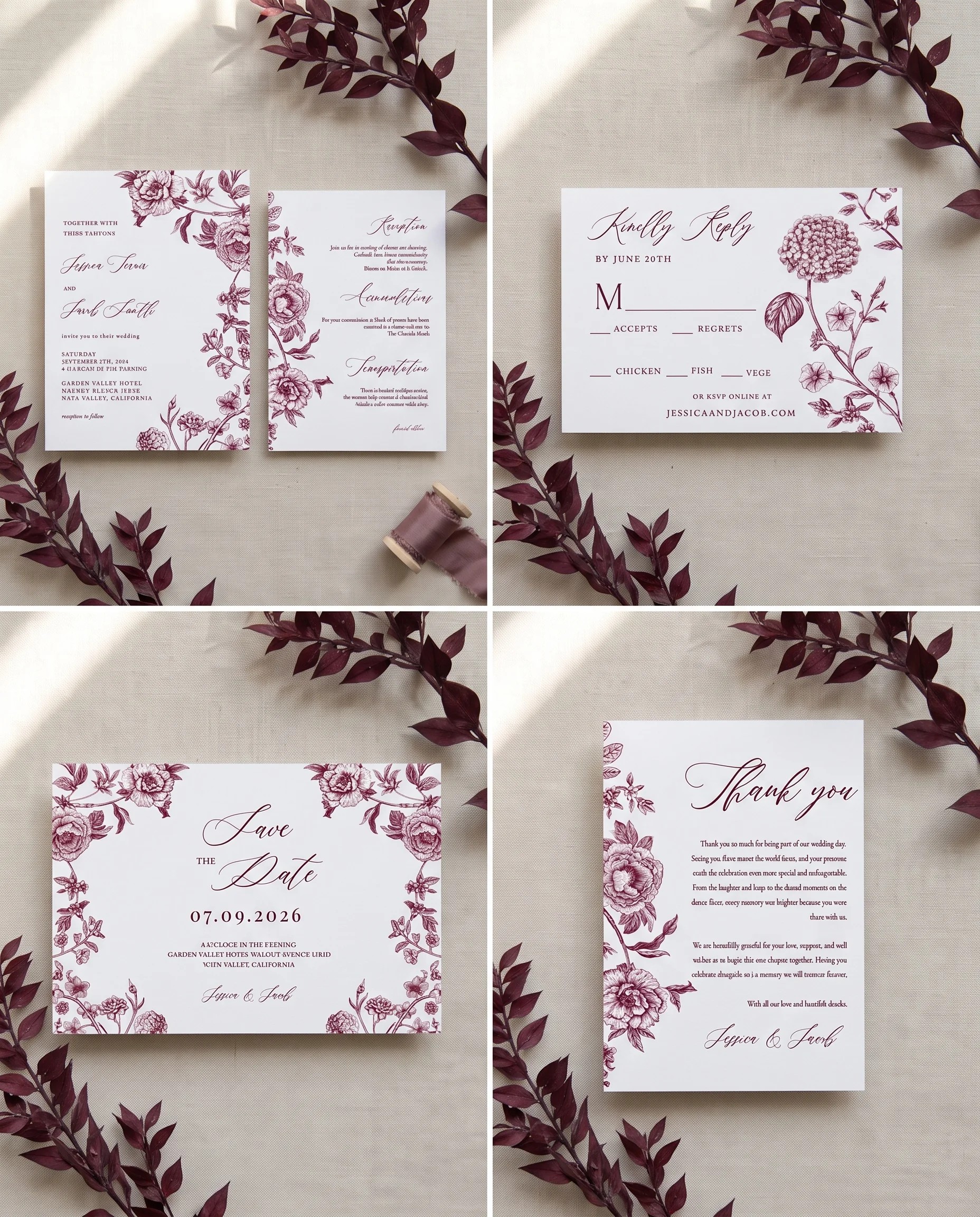
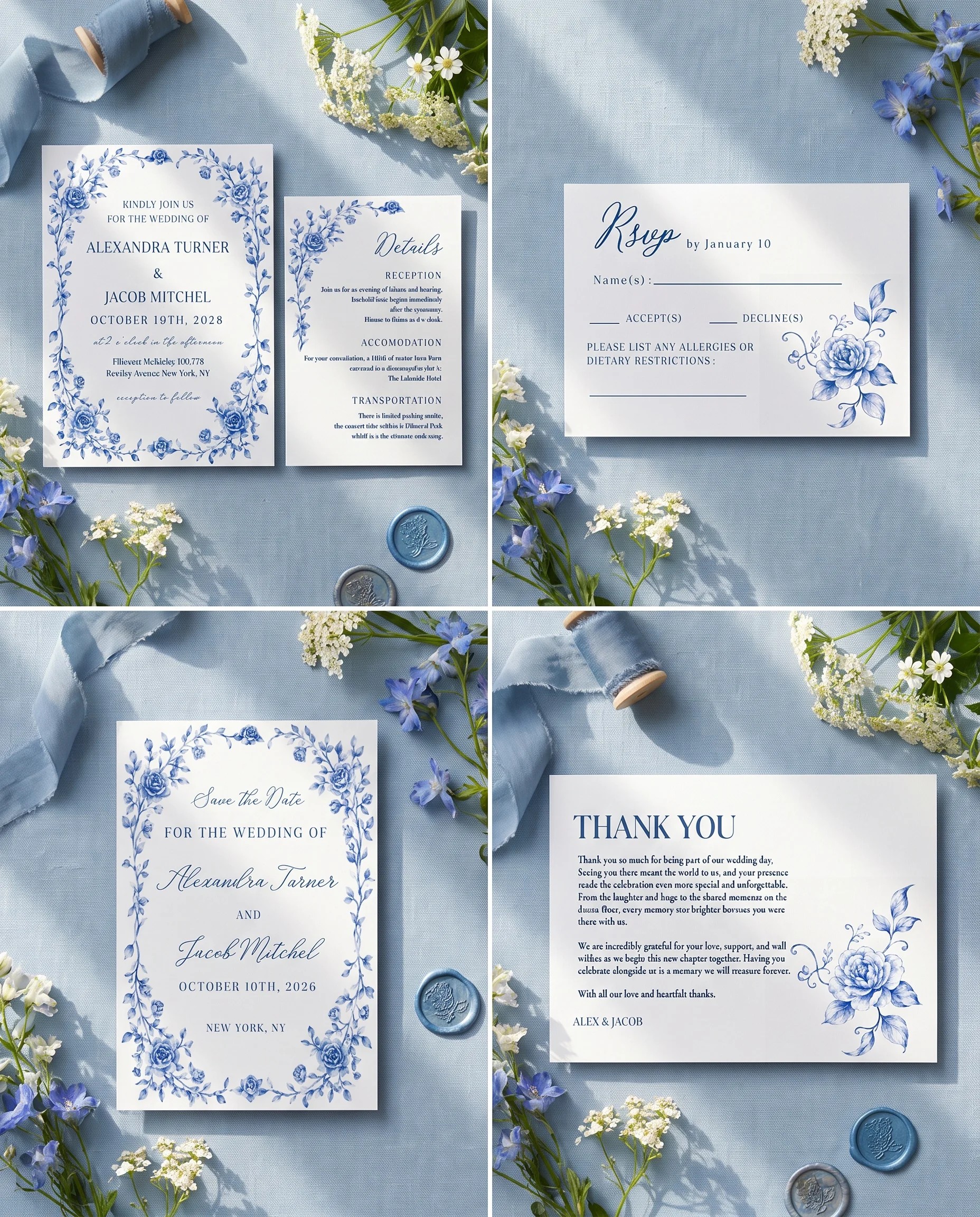
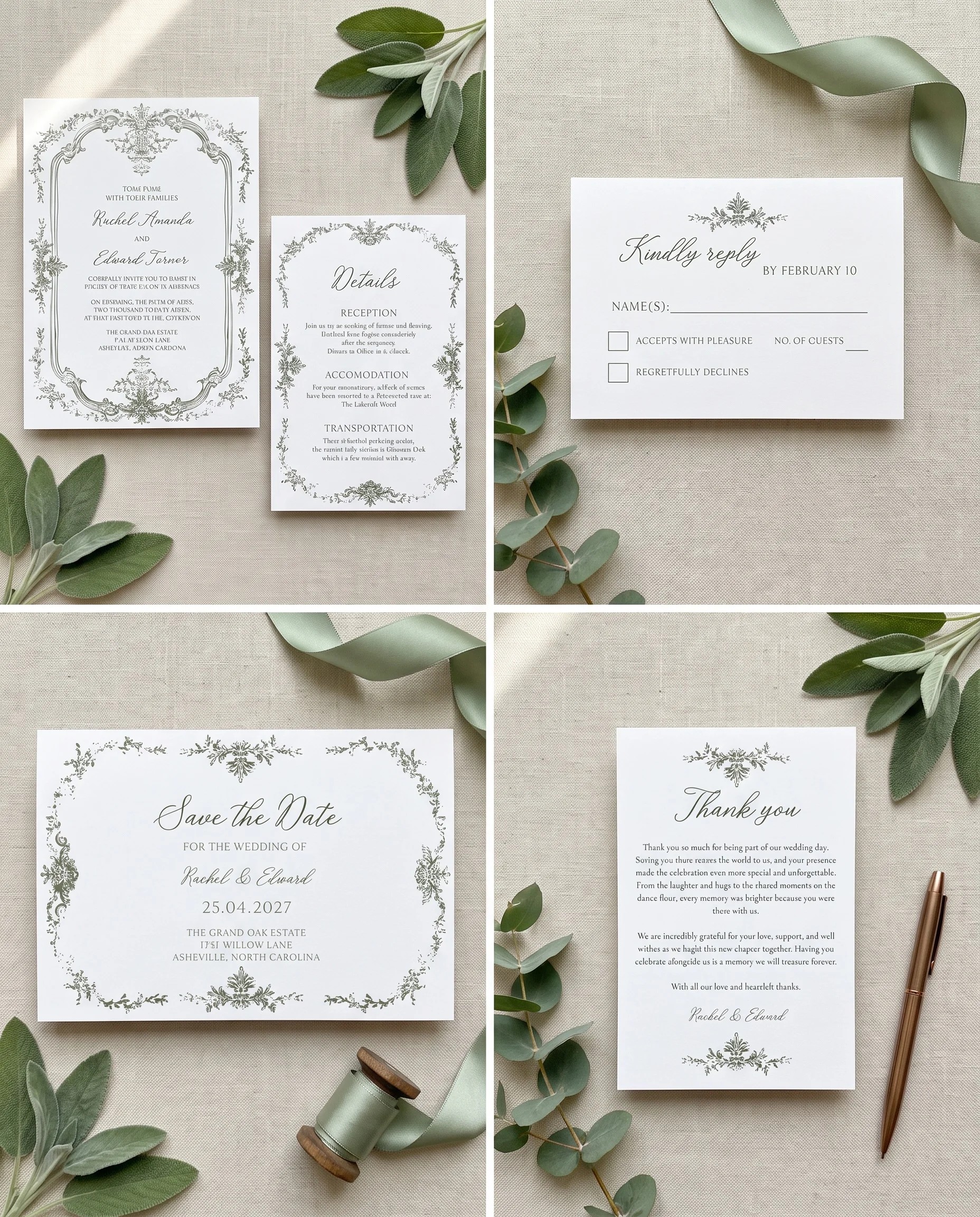
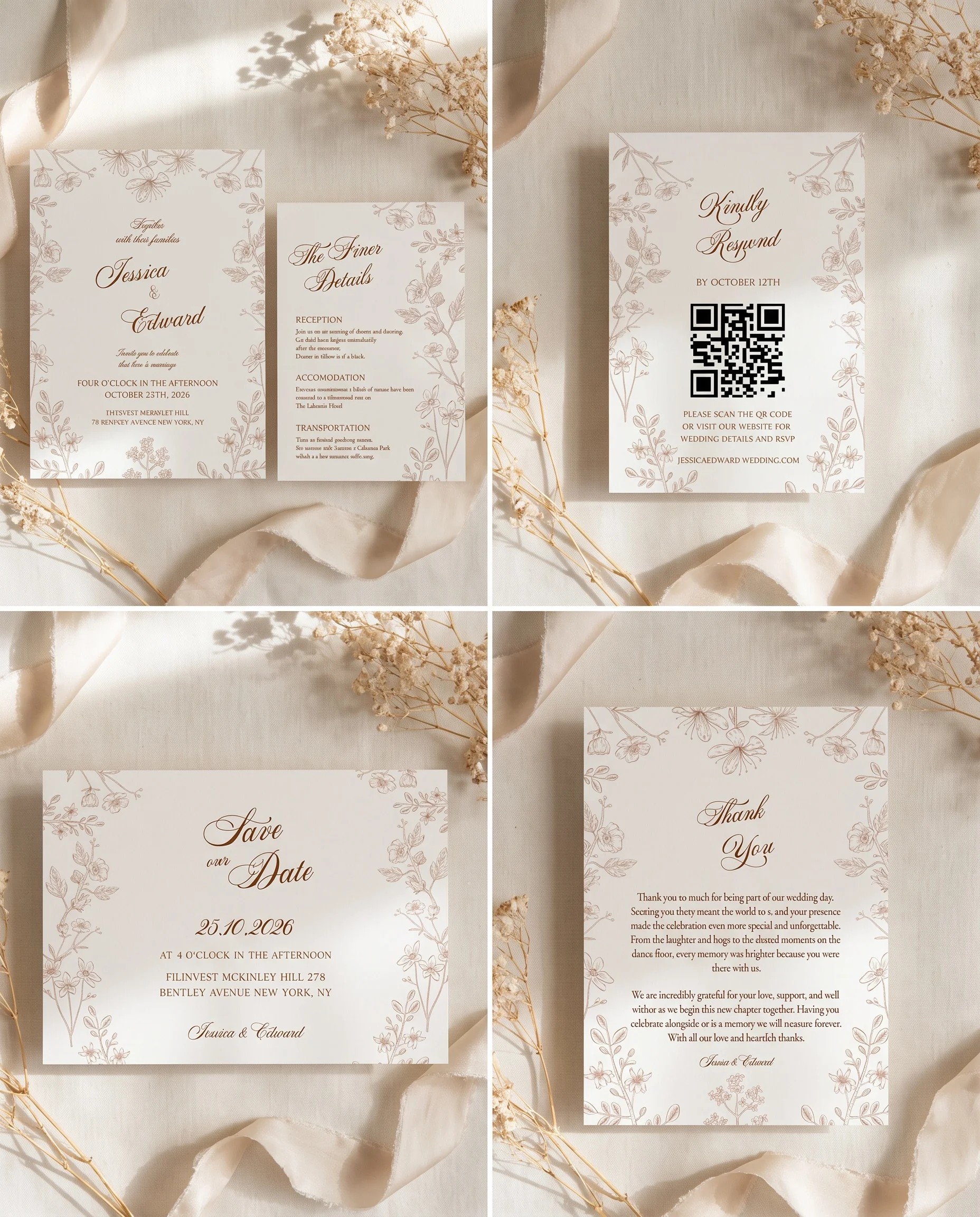
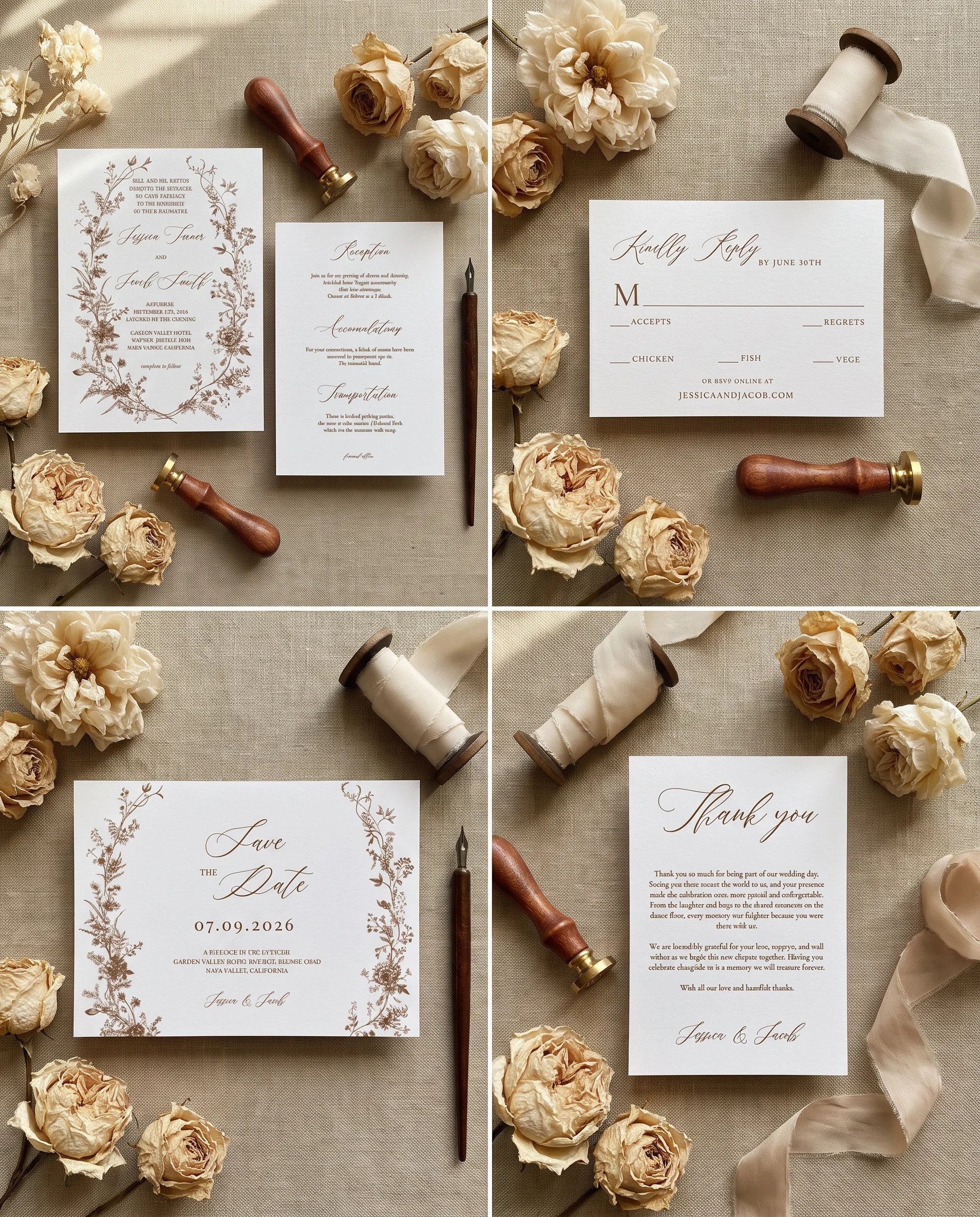
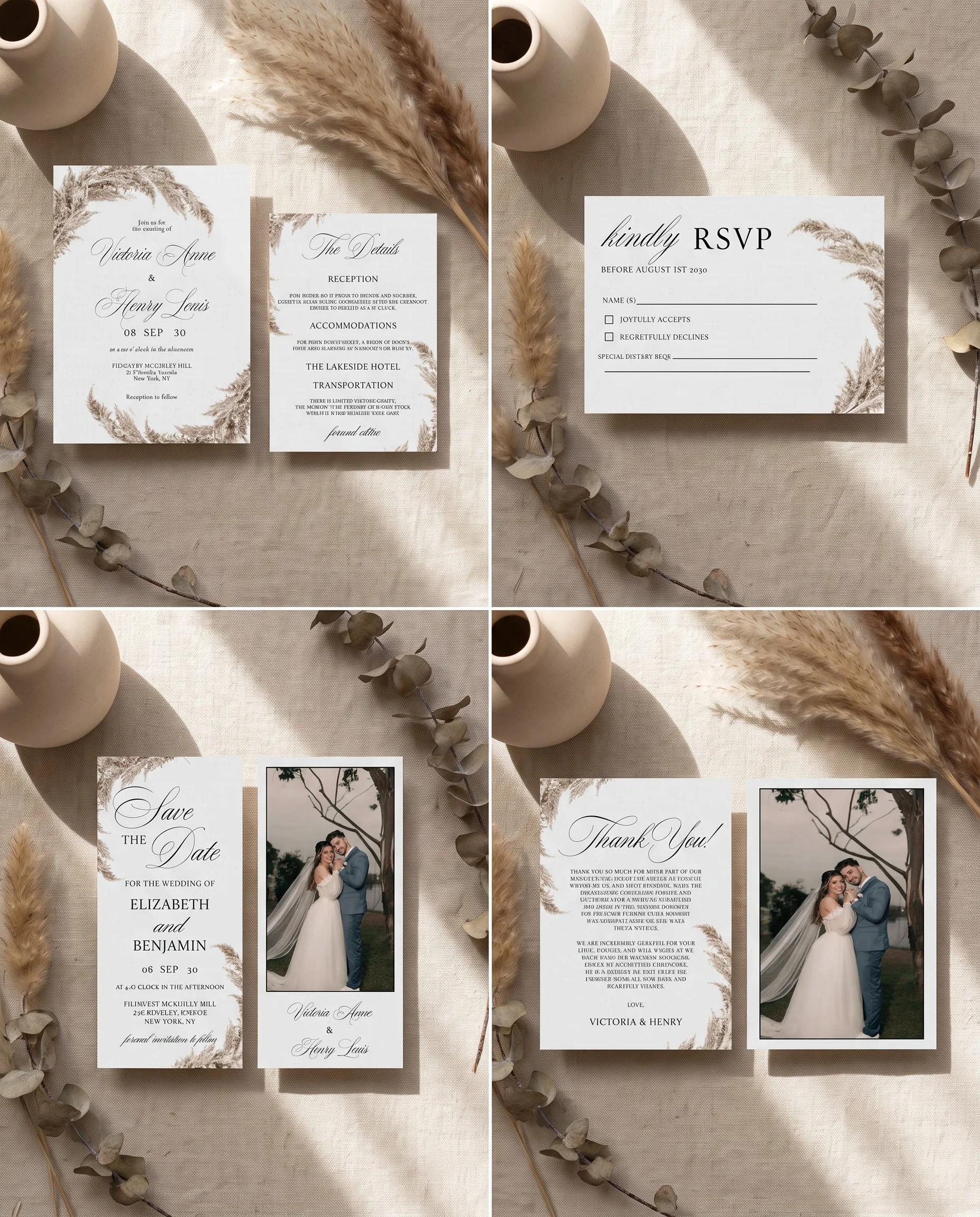
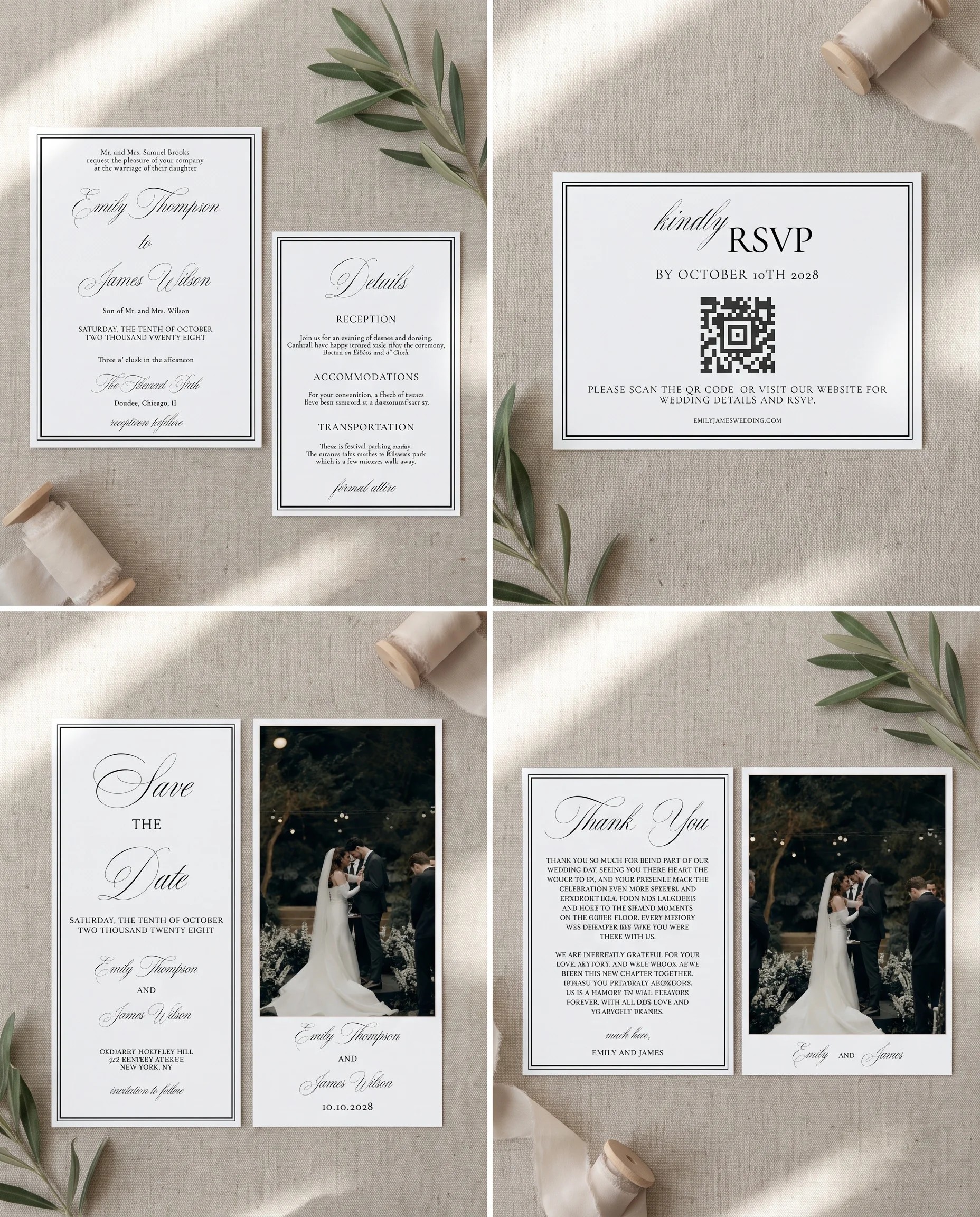
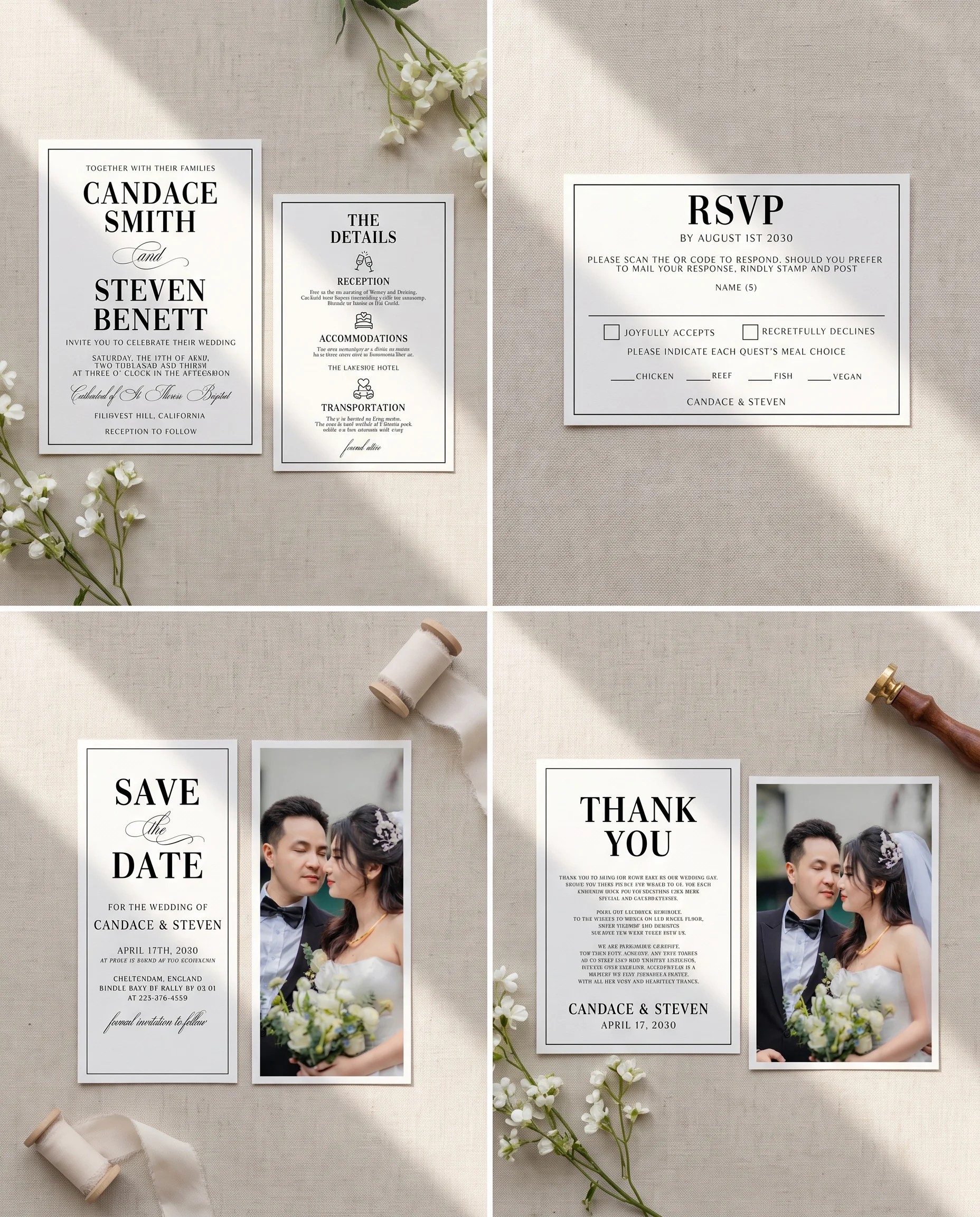
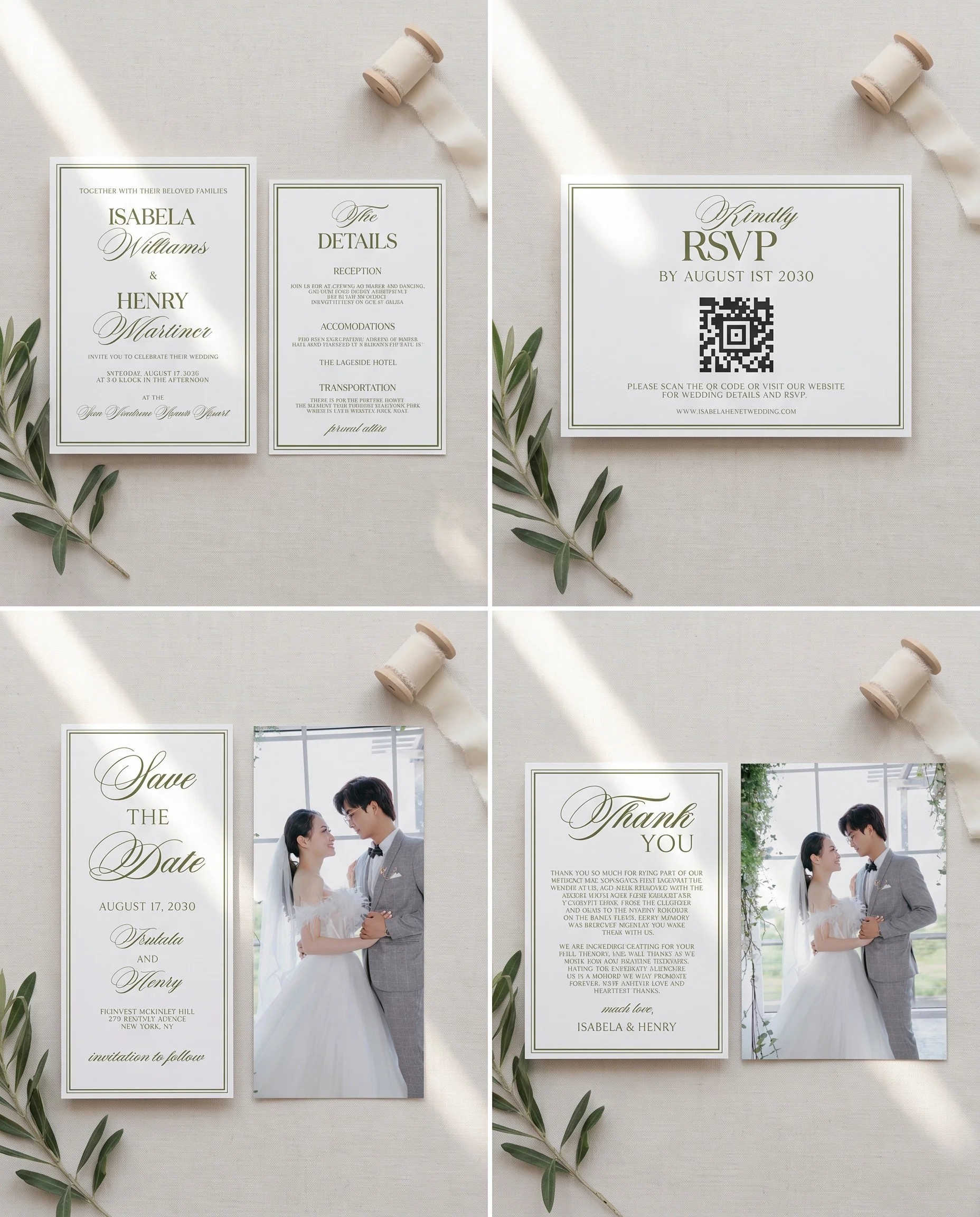
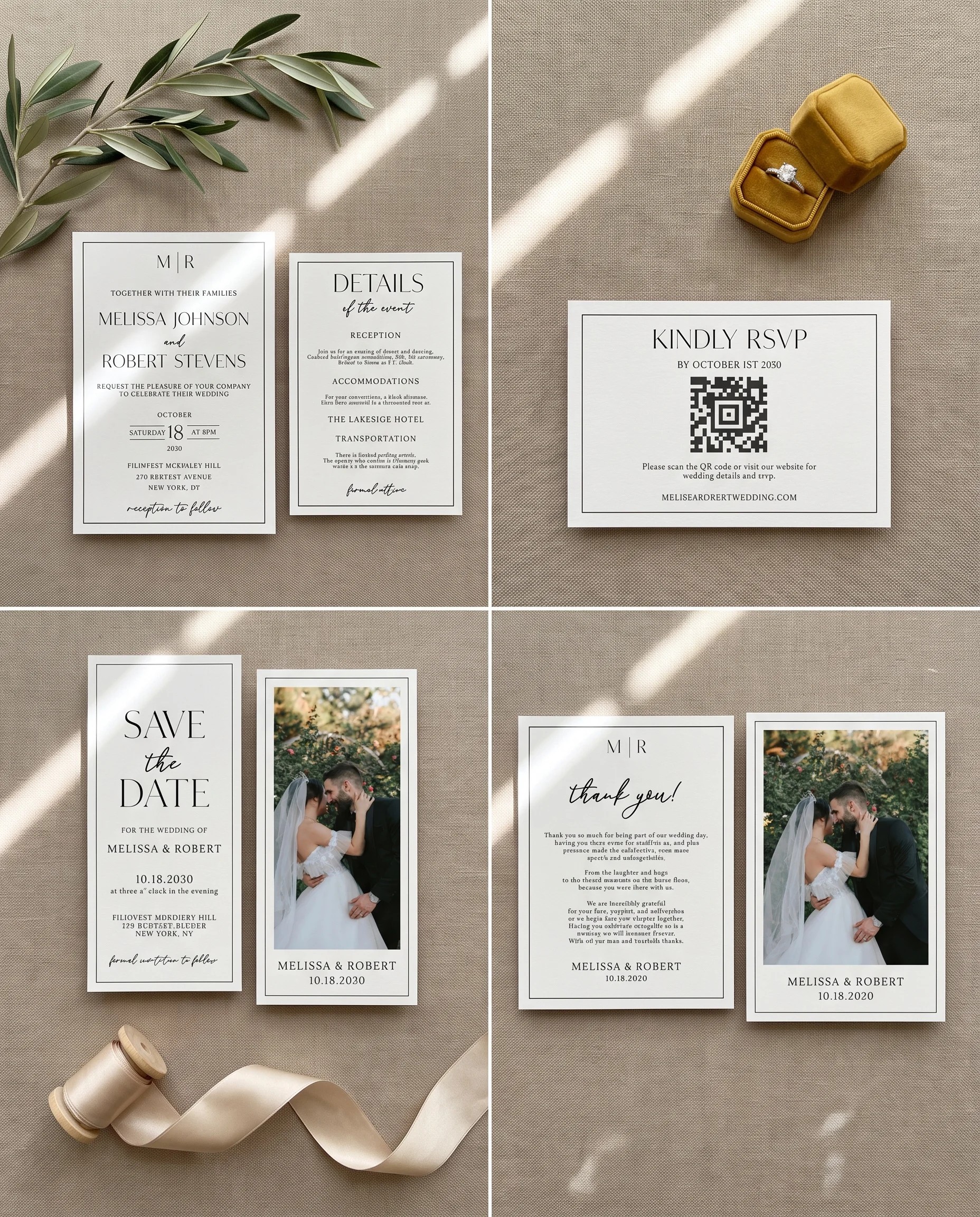
Our classic wedding invitation sets are 5-piece coordinated stationery suites built around formal typography, traditional layouts, and timeless color palettes. Each set includes a save the date card, the main wedding invitation, an RSVP card, a details card with venue or registry information, and a thank you card. All five pieces share the same elegant design language, color palette, and typography so your stationery feels coordinated from the first announcement through to the post-wedding thank you. Whether you are looking for traditional wedding invitations, formal wedding invitations, black and white wedding invitations, monogram wedding invitations, or timeless black-tie wedding stationery, every set here is fully editable in our free browser-based editor and downloads as print-ready PDF, JPEG, and PNG files.
The classic aesthetic is defined by formal design conventions that have remained recognizable for generations. Specifically:
Formal serif typography. Classic invitations use traditional serif fonts (Garamond, Didot, Bodoni) or refined script fonts. The typography itself signals formality before any other design element.
Centered, symmetrical layouts. Text is centered on the page with deliberate symmetry, often with the bride and groom's names in larger script or italics as the visual focal point.
Restrained classic palette. Black on white or ivory is the most traditional. Other classic palettes include navy and gold, charcoal and cream, or deep burgundy and ivory. Two colors maximum, often plus a metallic accent.
Optional monogram or motif. Many classic sets include a custom monogram (the couple's initials in a decorative arrangement) at the top, or a small classical motif like a laurel wreath, ribbon, or emblem.
Formal phrasing conventions. Classic sets pair best with traditional invitation wording: hosts named at top, formal request to attend, date written in long form ("Saturday, the fifteenth of June"), full address spelled out.
Classic sets work best for couples whose wedding has a formal aesthetic and who want stationery that will feel timeless rather than trend-driven. Common matches include ballroom and country club weddings, black-tie events, religious ceremonies, multi-generational celebrations where parents and grandparents are heavily involved, and any wedding at a historic venue (castle, estate home, manor house). The classic style is also the default choice for couples who want to honor traditional invitation etiquette and conventions, regardless of venue. If your wedding leans formal and you want stationery that will look as elegant in 30 years as it does today, classic is the right style.
If you prefer a different style, browse our other wedding invitation sets by aesthetic. For just the 3-piece invitation suite (without save the date and thank you card), see our classic wedding invitation suites. For matching day-of stationery in the same classic style, browse our Ceremony & Reception Essentials collection filtered by classic style.
Our classic wedding invitation sets include 5 coordinated pieces: a save the date card (sent 4 to 9 months before the wedding), the main wedding invitation card, an RSVP card with response deadline, a details card with venue address and registry or accommodation information, and a thank you card. All 5 pieces share the same classic design language (formal typography, traditional layout, refined color palette) so your full wedding stationery suite feels coordinated from save the date through to the post-wedding thank you.
The most traditional classic palette is black on white or ivory, which never feels dated. Other classic palettes include navy and gold (formal and contemporary), charcoal and cream (softer than black and white), and deep burgundy or forest green with ivory for fall and winter weddings. Most classic sets use 2 colors plus an optional metallic accent (gold or silver foil look). Avoid more than 3 colors total to keep the aesthetic feeling timeless rather than trendy.
Classic and elegant overlap heavily, but with subtle distinctions. Classic emphasizes traditional design conventions: formal serif typography, centered symmetrical layouts, traditional color palettes (black, white, ivory, gold, navy), and often a monogram or classical motif. Elegant is broader and can include classic but also extends to luxe modern designs (sleek modern serifs with metallic accents) or refined floral designs (watercolor florals with formal typography). Most couples searching "elegant wedding invitations" are looking for classic-style invitations specifically.
A monogram is optional but classic. Wedding monograms typically combine the couple's first-name initials, sometimes with the shared last-name initial in the center. They appear at the top of the invitation, on the back of the envelope, or as a small motif on each piece of the set. If your wedding is very formal (black-tie, ballroom, religious ceremony), a monogram reinforces the traditional aesthetic. If your wedding is classic but slightly more relaxed, the typography and layout alone carry the classic feel without needing a monogram.