
Minimalist Wedding Place Cards
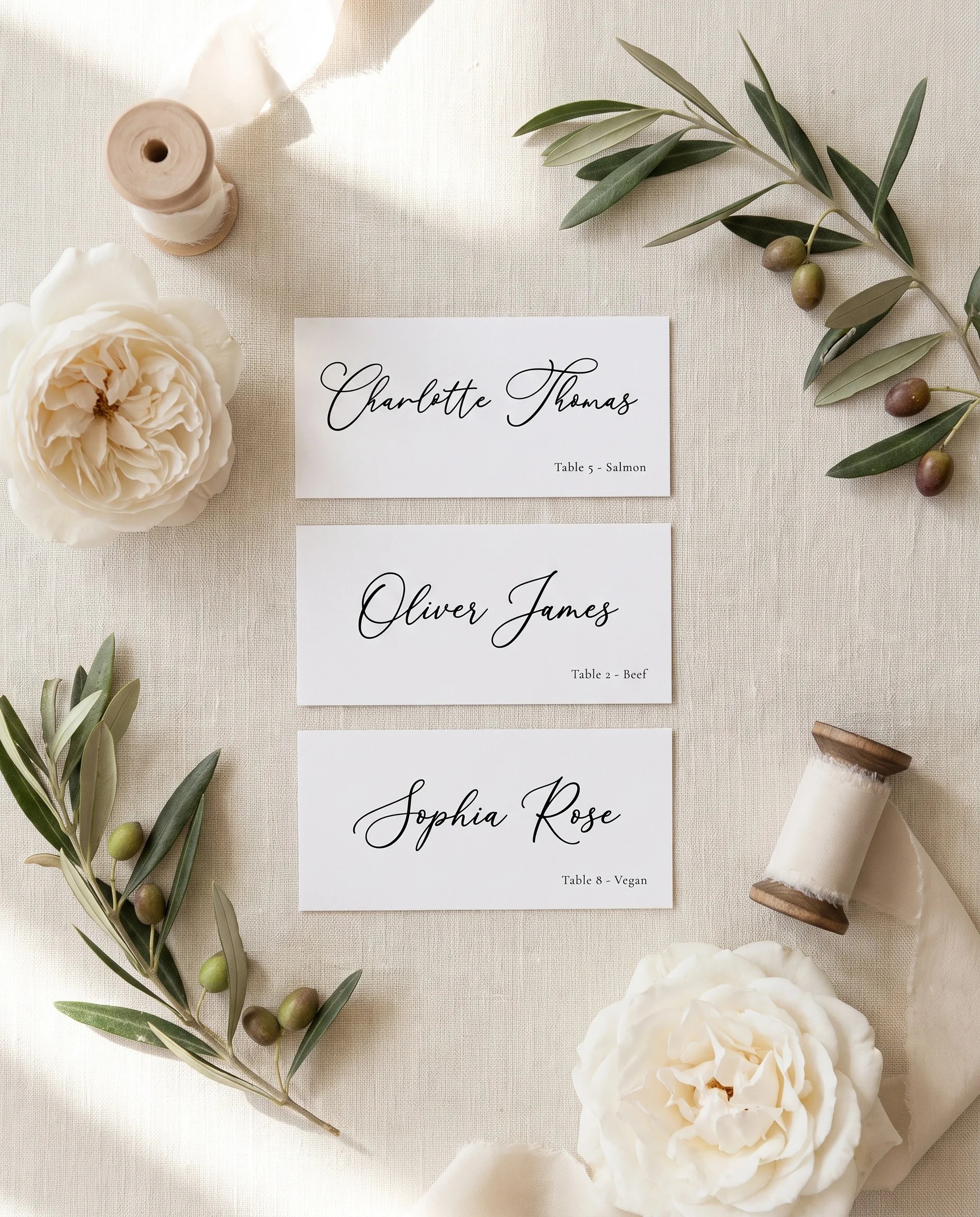
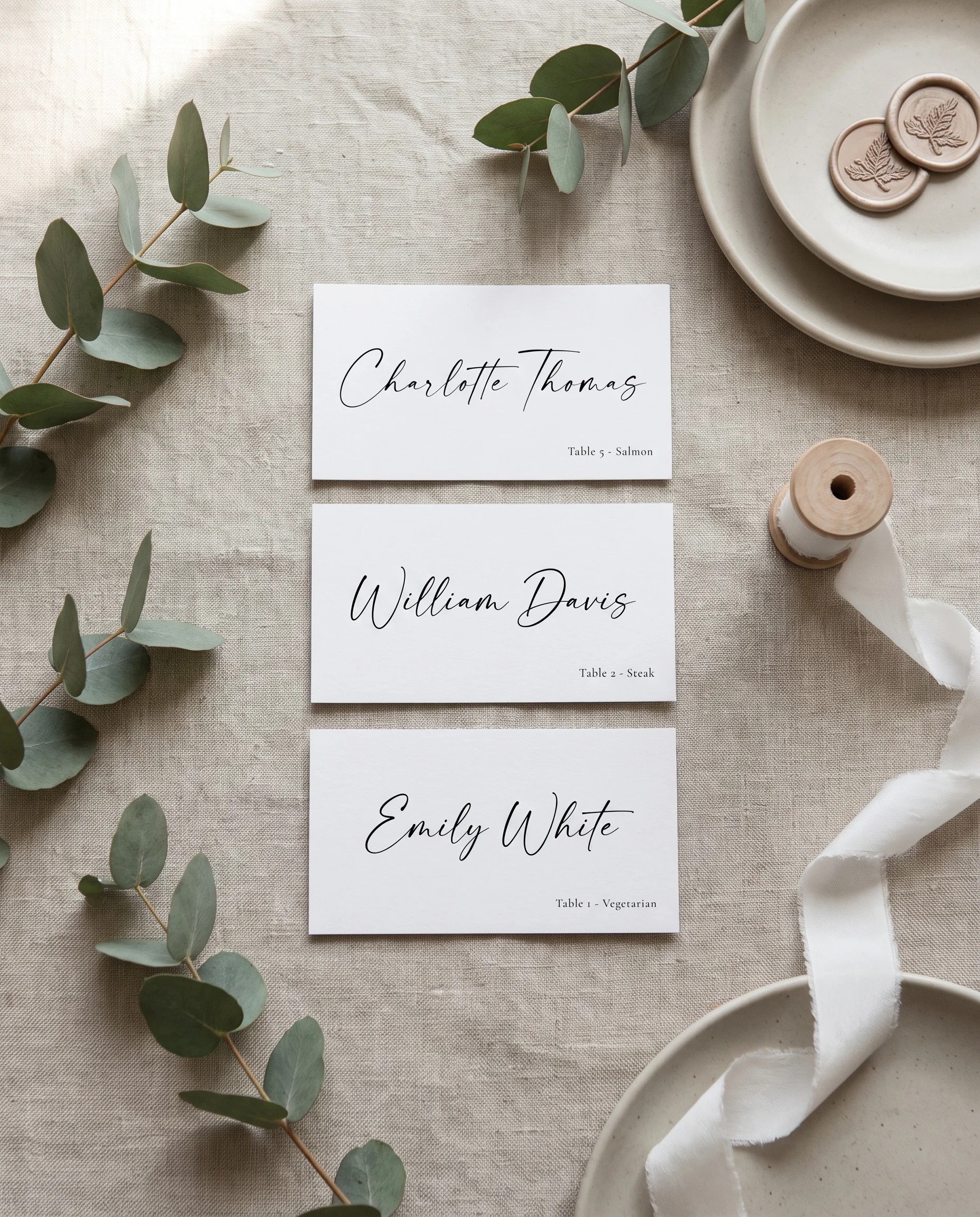
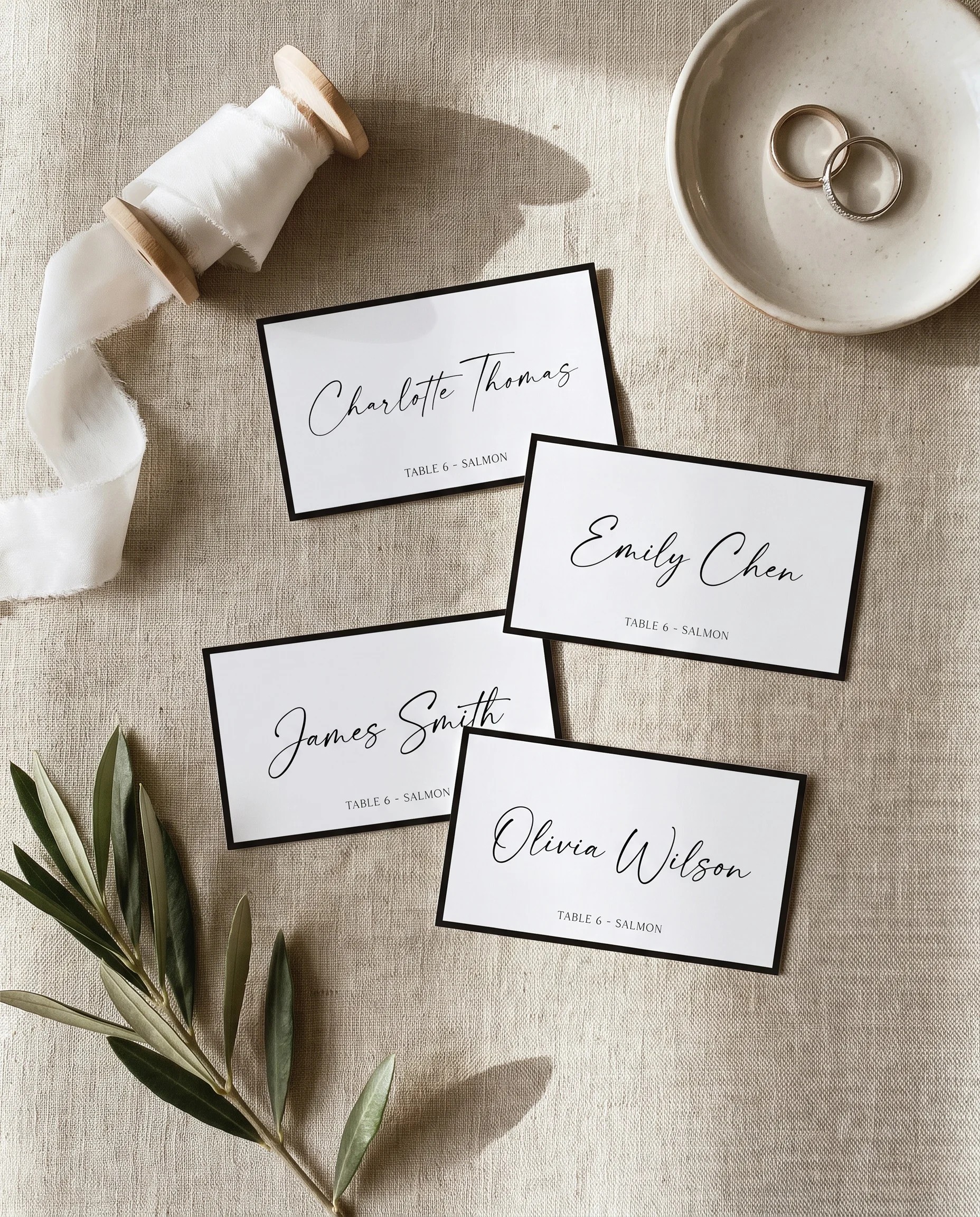
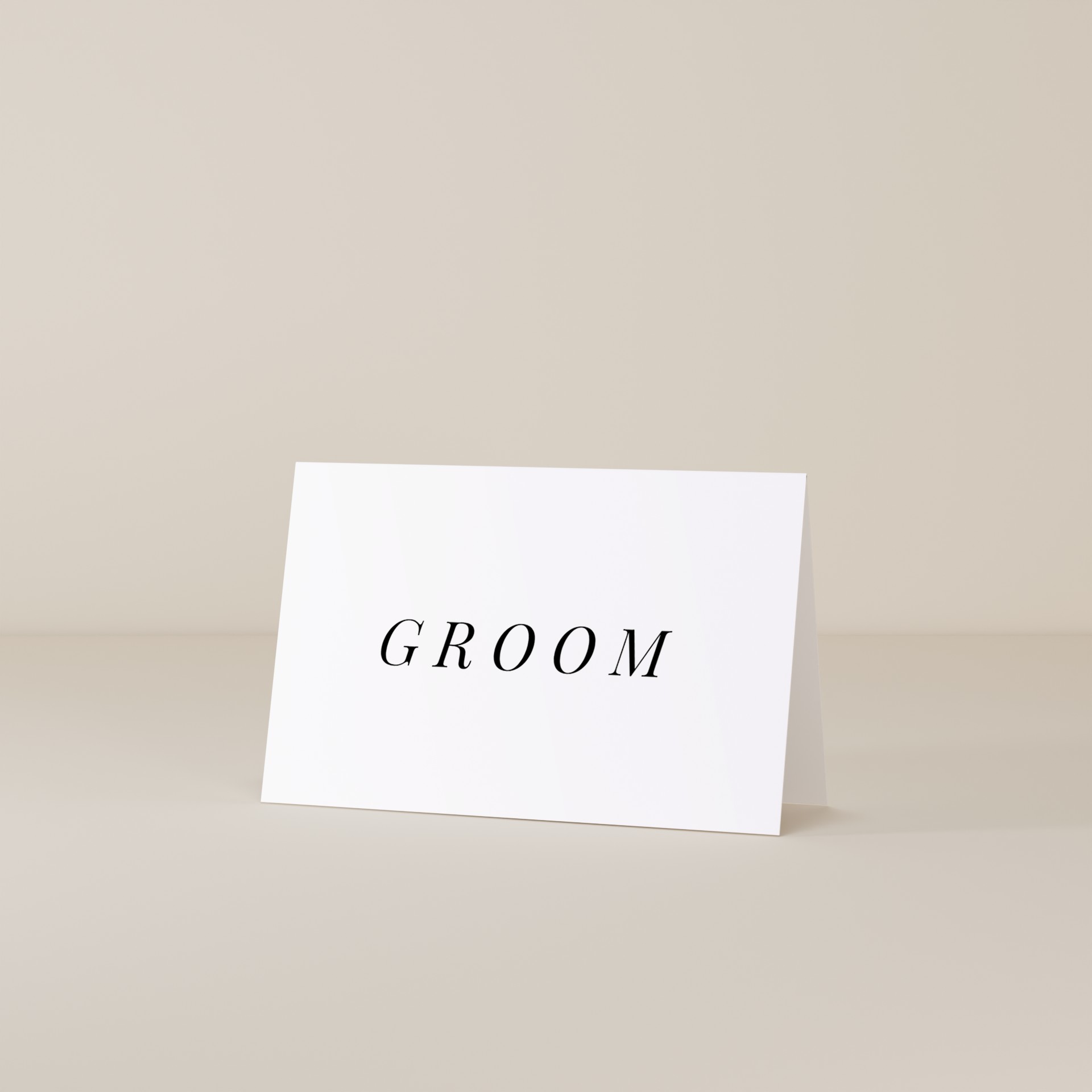
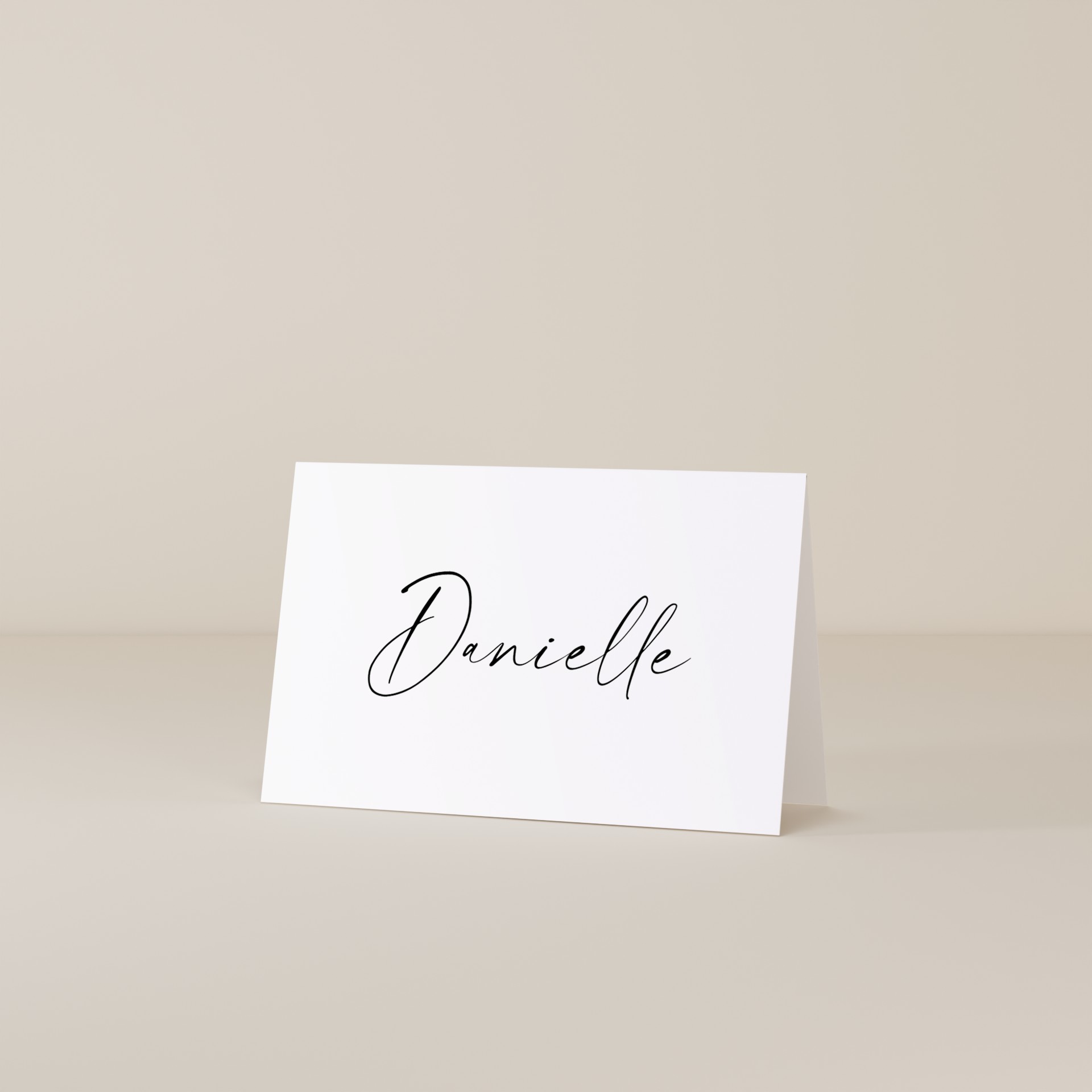
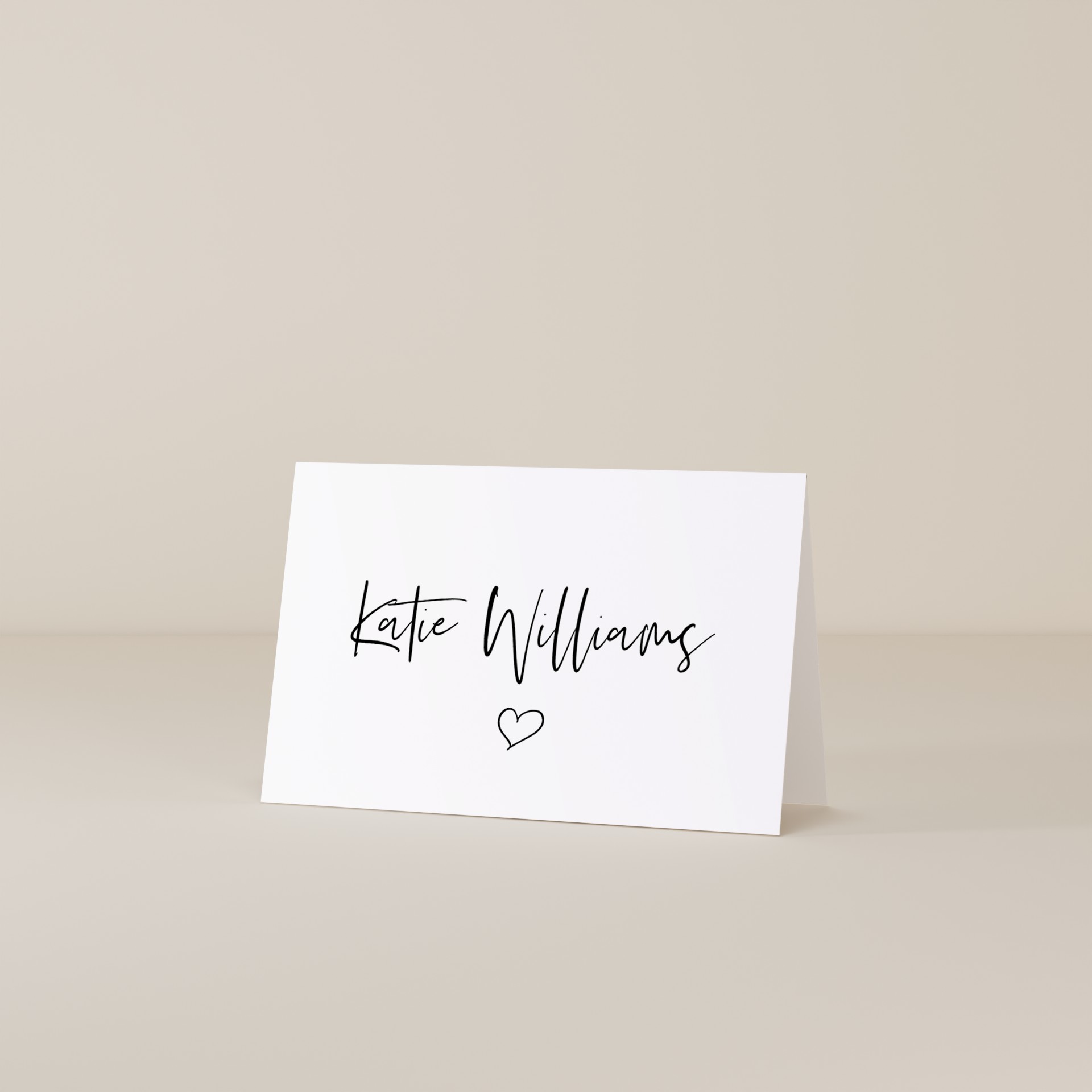
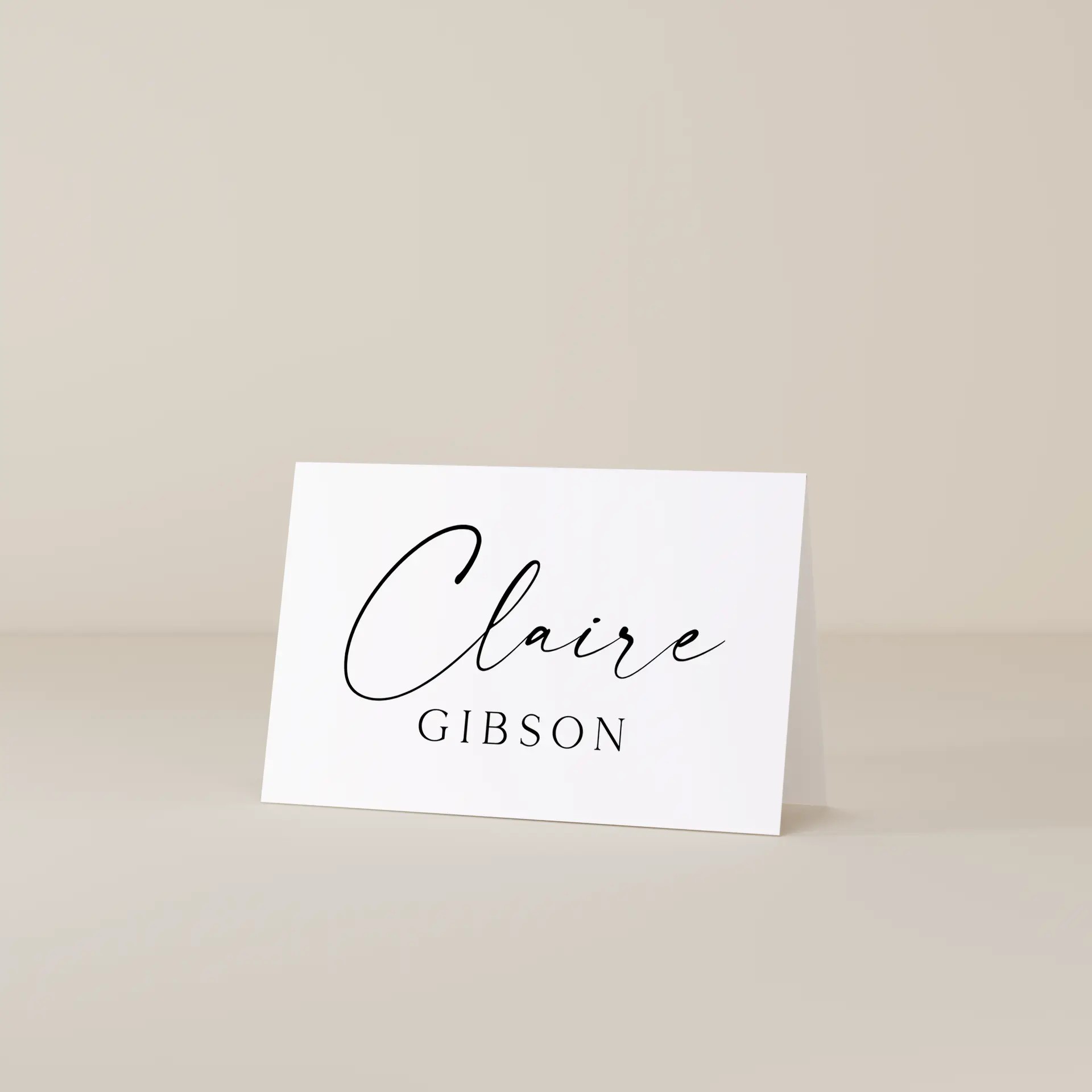
Clean typography, restrained palettes, and modern editorial layouts define our minimalist wedding place card templates. Choose from text-only place cards in black, white, and neutral palettes, modern wedding place cards with sleek serif typography, simple wedding place cards with single-accent color, or contemporary chic designs with editorial sensibility. Designed to coordinate with minimalist menus, table numbers, and seating charts as a unified day-of stationery suite, every template is fully editable in our free browser-based editor and downloads as print-ready PDF, JPEG, and PNG files. Print at home, including double-sided tent fold formats.




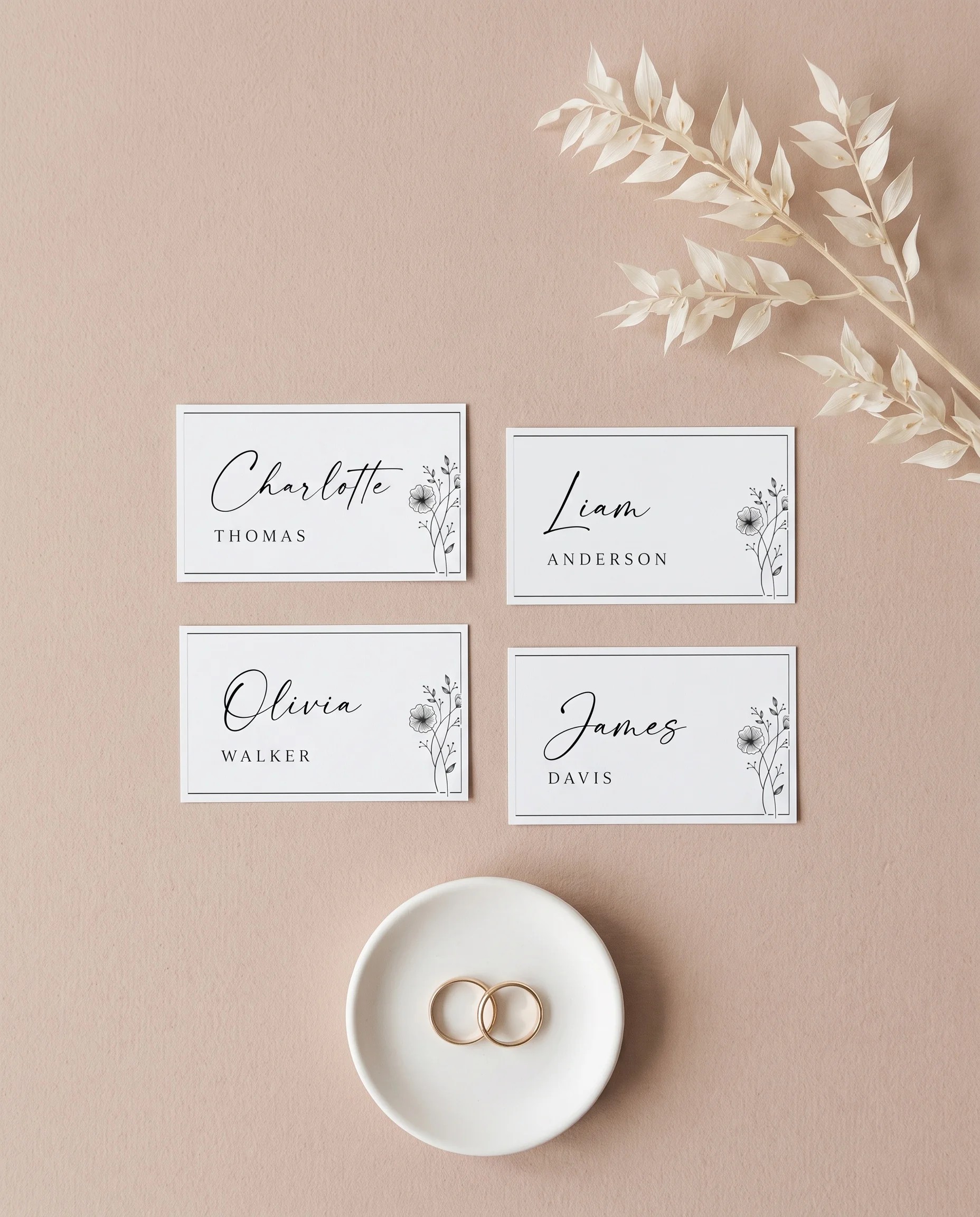
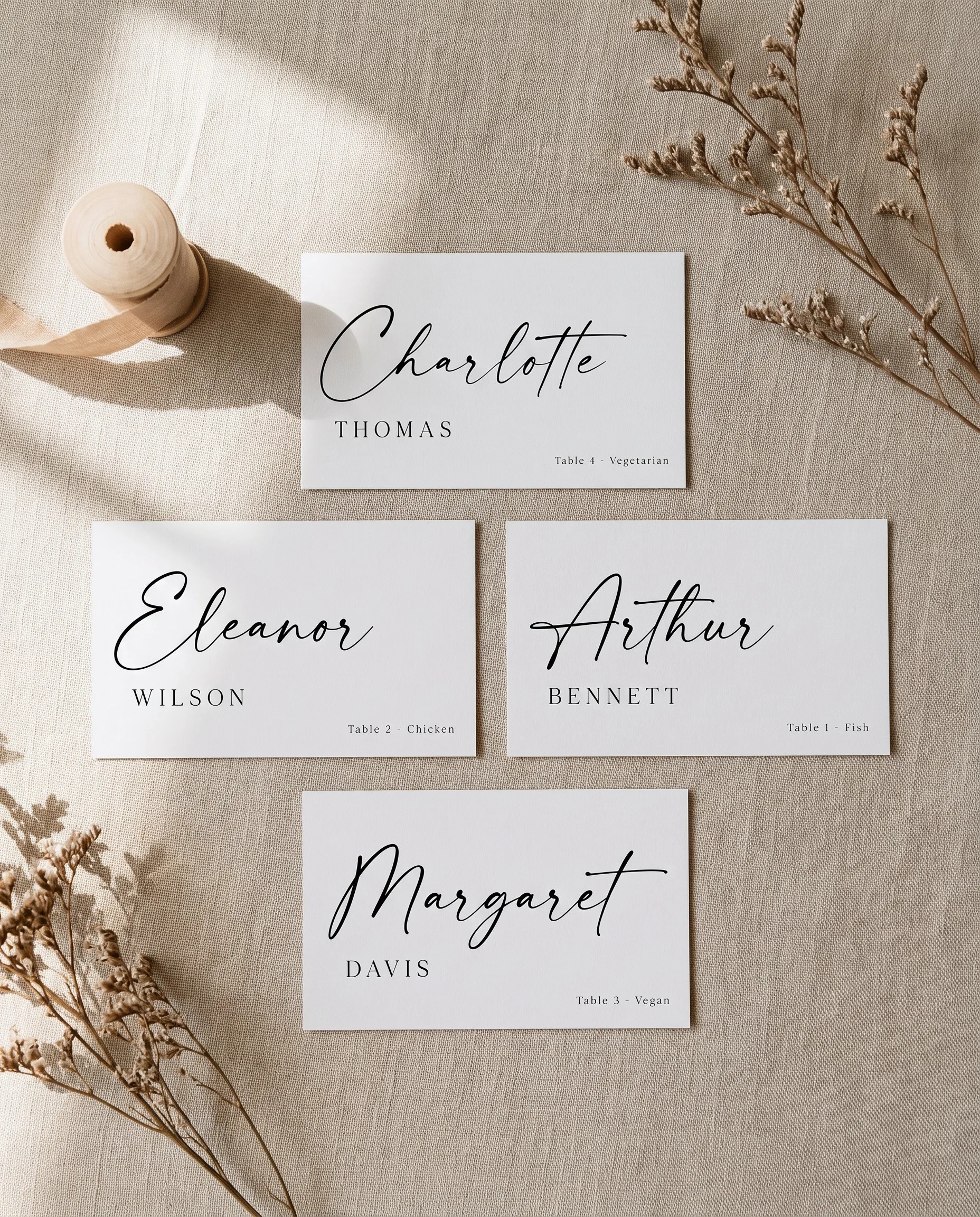
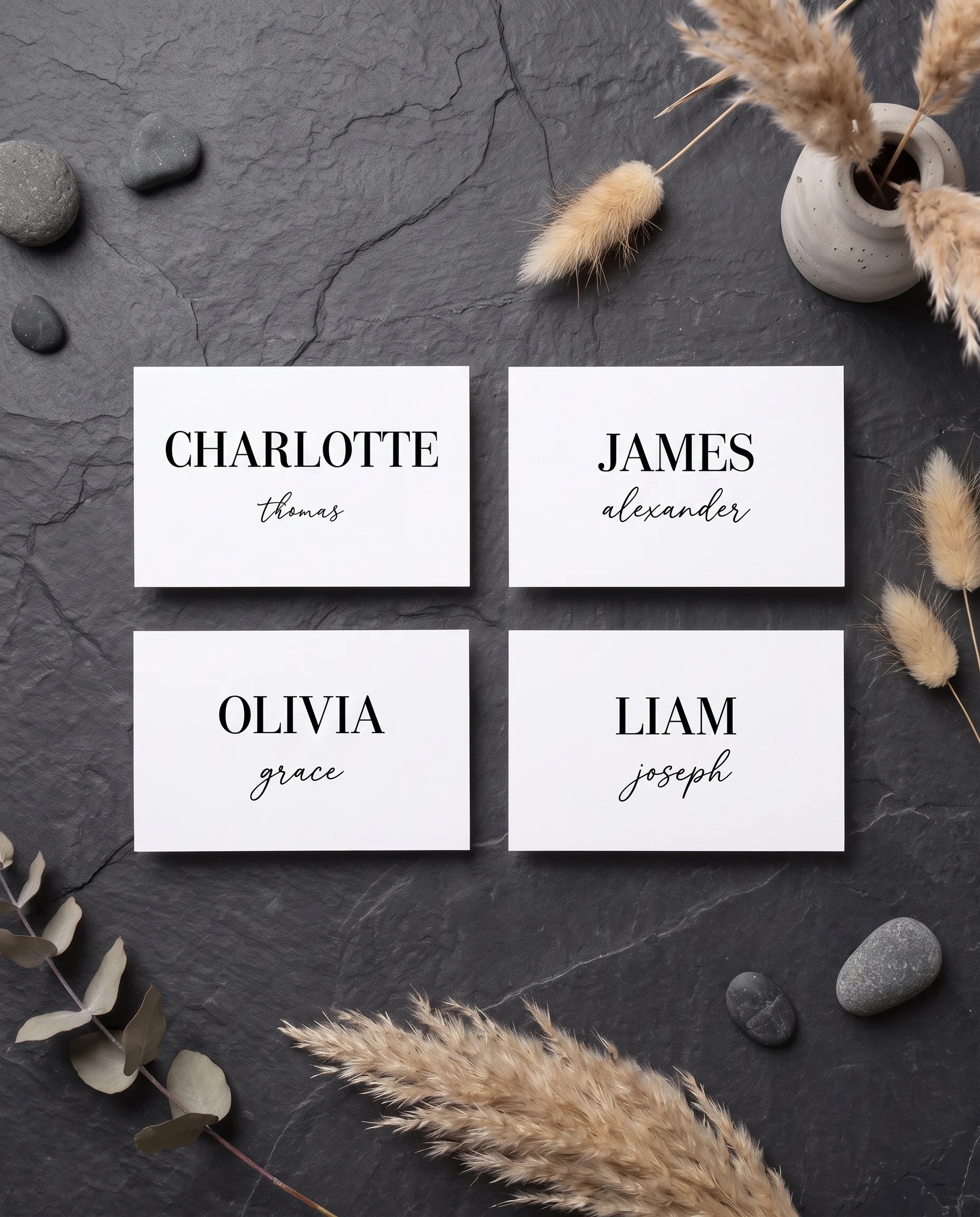
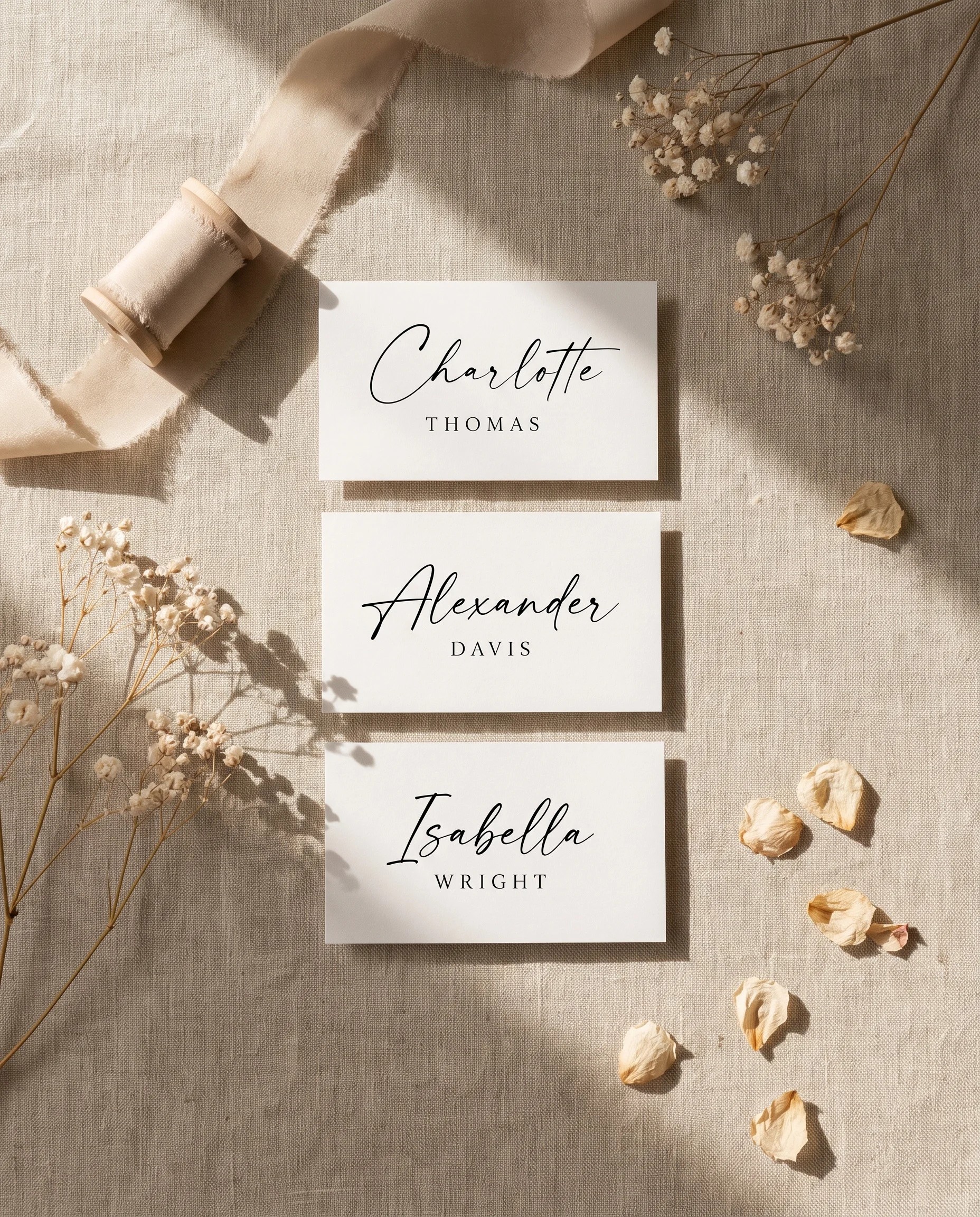
trending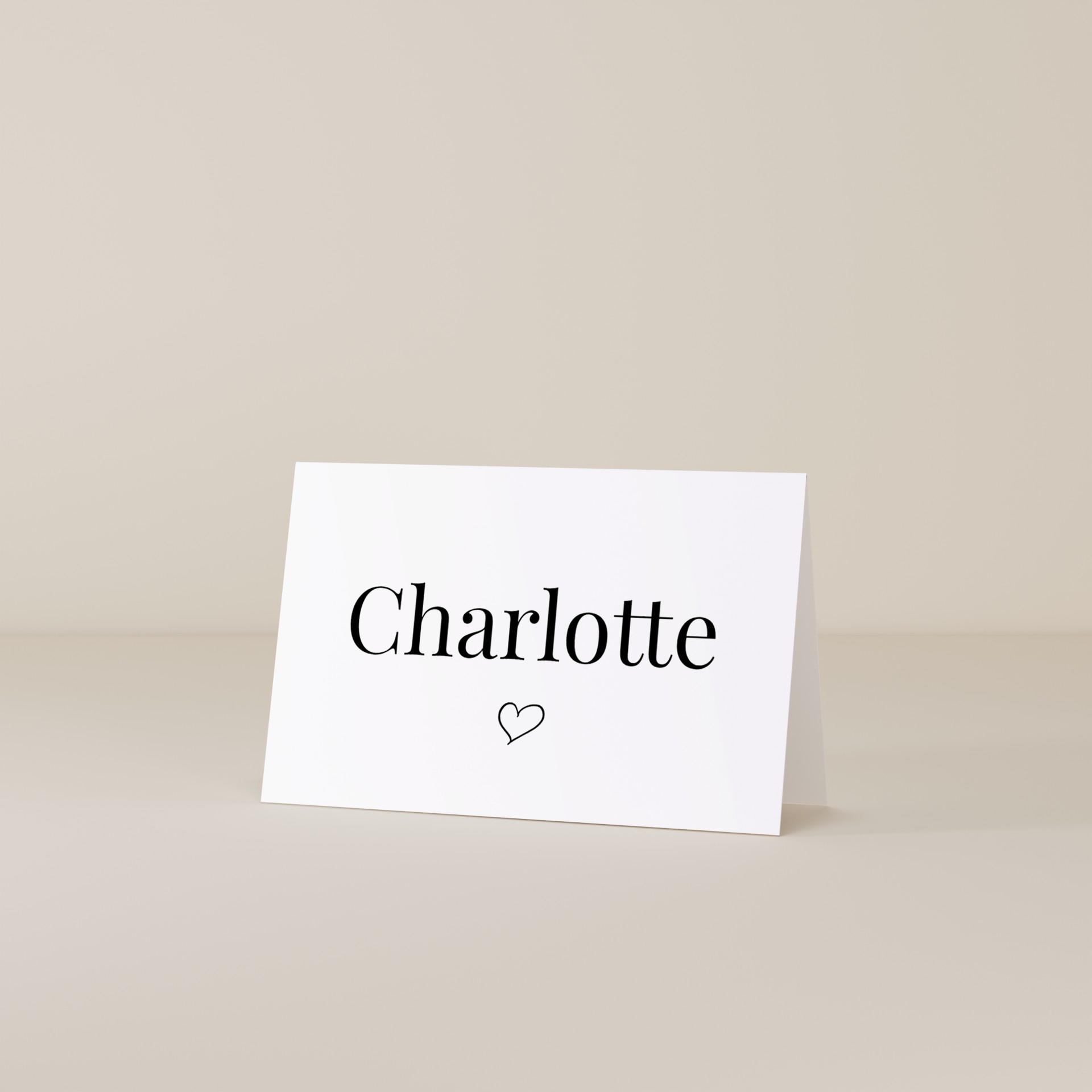
About Our Minimalist Wedding Place Cards
Our minimalist wedding place card templates are built around clean typography, restrained color palettes, and modern editorial layouts. Choose from text-only place cards in black, white, and neutral palettes, modern wedding place cards with sleek serif typography, simple wedding place cards with single-accent color, contemporary chic place cards with editorial alignment, or modern minimalist place cards with refined typographic hierarchy. Whether you are looking for black and white wedding place cards that match modern wedding stationery, clean wedding place cards in tent fold or flat formats, or minimalist place cards that coordinate with minimalist menus and table numbers, every template is fully editable in our free browser-based editor and downloads as print-ready PDF, JPEG, and PNG files.
Why Place Cards Are Naturally Minimalist
The only content on a place card is the guest's name - sometimes accompanied by their meal selection or table number. This makes typography the entire design, which aligns perfectly with the minimalist aesthetic. Where minimalist invitations require restraint (resisting the urge to add decoration), minimalist place cards have nothing to subtract - the format is already as minimal as it can be. The designer's job is choosing the right typography, the right size and weight balance, and the right amount of breathing room around the name. This is one of the few stationery pieces where minimalism is the natural default rather than a deliberate choice.
Place Card vs Escort Card vs Name Card: What Is the Difference?
These three terms are often used interchangeably but they refer to slightly different items at a wedding reception:
Place card. A small card placed at each individual seat at the reception table, indicating the specific seat assigned to a specific guest. Used at formal seated receptions where every seat is assigned. The card is read AFTER the guest has been directed to their table.
Escort card. A card displayed at the reception entrance (usually in alphabetical order on a tray or display) telling each guest which TABLE they are at. The guest picks up the escort card on arrival, walks to the assigned table, and finds their seat. Escort cards do NOT specify a particular seat.
Name card (or place setting card). The same as a place card, just a different name. Some couples use "name card" colloquially when they mean place card.
If your reception has assigned tables but open seating within each table, you need escort cards only. If your reception has assigned seats at each table, you need both escort cards (to direct guests to the table) and place cards (to assign specific seats). Most modern weddings use escort cards only and skip place cards. Formal classic weddings, multi-course seated dinners, and head tables typically use both.
Wedding Day Stationery: Coordination With Other Reception Pieces
Place cards work as part of the wedding day stationery suite: menus, table numbers, seating chart, welcome signs, and bar menus all need to coordinate visually. For minimalist couples specifically, choosing matching minimalist place cards plus matching minimalist menus, table numbers, and welcome signs creates a unified day-of design language that signals an intentional, well-designed reception. Use the same typography family, the same accent color, and the same layout sensibility across every reception piece. The result is a reception that looks coordinated rather than like a collection of separately-purchased stationery.
Pairs With
Browse all wedding place cards by aesthetic. For matching minimalist day-of wedding stationery, see our minimalist wedding menus, minimalist wedding table numbers, and minimalist wedding seating charts.
Frequently Asked Questions
When should I order and print my wedding place cards?
Place cards are typically the LAST piece of wedding stationery couples produce because they require the final seating chart, which depends on the final RSVP responses. Most couples finalize the seating chart 1 to 2 weeks before the wedding, then print place cards in the remaining days. With our free editor, you can update names, fix typos, and re-print as needed without re-ordering, which is particularly valuable for place cards because last-minute RSVP changes are common. Plan to print place cards 5 to 7 days before the wedding to allow time for any last-minute corrections.
What is the difference between a place card and an escort card?
An escort card is displayed at the reception entrance and tells each guest which TABLE they are at - guests pick up the escort card on arrival and walk to the assigned table. A place card is placed at the specific SEAT and assigns each guest to a particular chair at the table. Most modern weddings use escort cards only (assigned tables, open seating within the table) and skip place cards entirely. Formal classic weddings, multi-course seated dinners, and head tables typically use both. If you have open seating with no assigned tables at all, you need neither escort cards nor place cards.
Should I use tent fold place cards or flat place cards?
Tent fold place cards (also called folded place cards) stand up at each seat without needing a holder - the card is folded in the middle and sits like a tent, with the guest's name visible from both sides. Flat place cards lay on the table and either rest on top of the napkin, are tucked into a holder (like a small clip or stand), or are anchored by a place card holder figurine. Tent fold is more practical (no extra holders to buy or carry) and works for most receptions. Flat place cards work better when paired with menu cards or napkin treatments, since the flat format integrates into a layered place setting more cleanly. Most minimalist couples choose tent fold for simplicity.
Should my minimalist place cards match my wedding invitation?
Match for cohesion across your full wedding stationery suite. If your wedding invitations were minimalist with black-on-white typography and sage accents, choose matching minimalist place cards in the same combination. The typography family should match (or at least come from the same family - swap a regular weight for a small caps, for example), the accent color should match, and the layout sensibility should match. The result is a unified design language from invitation through reception that signals an intentional wedding. Many couples buy matching invitation suites + day-of stationery suites together specifically to ensure this cohesion.